Барселоны бие даасан их сургуулийн судлаачид Пиренейн нурууны өндөр уулын бүсэд хүн төрөлхтөн 10,000 жилийн турш тасралтгүй ирж очин амьдарч ирснийг баталжээ.
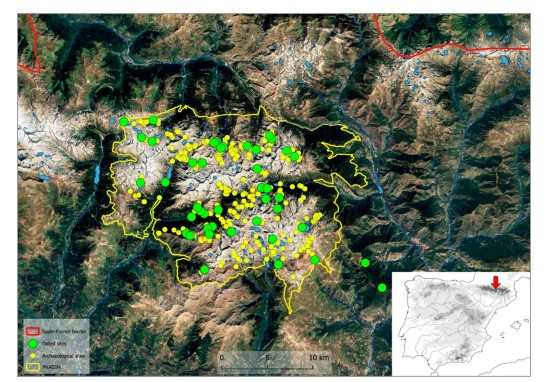
Барселоны бие даасан их сургуулийн эрдэмтэд Агуэстортес-и-Эстани-де-Сант-Мауриси үндэсний цэцэрлэгт хүрээлэнгийн нутаг дэвсгэрт археологийн судалгаа явуулж, хүн амын суурьшлын анхны өргөн хүрээтэй он цагийн дарааллыг тогтоосон байна. Судлаачид 45 археологийн дурсгалт газраас олдсон 124 дээжид нүүрстөрөгчийн он цаг тогтоох аргыг ашиглан нээлттэй мэдээллийн сан үүсгэжээ. Энэхүү сан нь мөстлөгийн үеийн дараах анчин-түүвэрлэгчдээс эхлээд орчин үе хүртэлх хүний үйл ажиллагааны ул мөрийг баримтжуулсан байна.
Далайн түвшнээс дээш 2,320 метрийн өндөрт орших Обагес-де-Ратера хадны хоргодох байрнаас хамгийн эртний олдворууд олдсон нь 10,000 жилийн тэртээх үед хамаарч байна. Уг байршил нь Мезолит, Неолит, Хүрэл, Төмрийн үе болон Дундад зуун, улмаар 19, 20-р зуун хүртэлх урт хугацааны суурьшлын түүхийг хадгалж үлдсэн онцгой дурсгал юм. Үүнээс гадна Кова-дель-Сардо, Портарро зэрэг өндөр уулын бүсийн бусад цэгүүдээс 7,000 гаруй жилийн өмнөх үйл ажиллагааны ул мөр илэрсэн нь эдгээр газрыг хүн төрөлхтөн үе дамжин ашиглаж ирснийг нотолж байна.
Археологич Гильем Сальвадор болон түүний багийнхны мэдээлснээр, Неолитийн үеийн сүүлч буюу 5,300-4,500 жилийн өмнөх үед уулын бүс дэх хүний идэвхжил эрс нэмэгдсэн байна. Тухайлбал, Портарро хадны хоргодох байрнаас олдсон хуурай чулуу, модон суурьтай байгууламж нь Пиренейн нуруунд бүртгэгдсэн чулуун архитектурын хамгийн эртний жишээнд тооцогддог. Судалгааны үр дүн нь Эци хэмээх мөсөн хүний амьдарч байсан үетэй давхцан, далайн түвшнээс дээш 2,000 метрээс дээш өндөрт хүний суурьшил эрс нэмэгдэж байсныг харуулж байна.
Дэлгэрэнгүйг эх сурвалжаас харах
↓Эх сурвалжийг нээх ↓
Archaeologists have found evidence that people have been returning to the high Pyrenees for more than 10,000 years. A new study reveals that these mountain landscapes were repeatedly used by human communities, with traces of activity stretching from prehistoric hunter-gatherers to modern times.
Researchers from the Universitat Autònoma de Barcelona (UAB) have created the first large-scale chronological record of human occupation in a high-mountain area of the southern Pyrenees. The research focuses on the Aigüestortes i Estany de Sant Maurici National Park (PNAESM), where archaeological surveys have identified hundreds of sites containing evidence of past activity.
The team compiled 124 radiocarbon dates from 45 archaeological sites, creating an open database that tracks when people were present in these mountains. The resource includes laboratory reports, information about dated materials, archaeological contexts and the analytical methods used by researchers.
Humans Reached The High Pyrenees Thousands Of Years Ago
The oldest evidence comes from the Obagues de Ratera rock shelter, located at 2,320 meters above sea level. Researchers dated the first occupation of the site to around 10,000 years ago, shortly after the end of the last glacial period.
The study published by the Universitat Autònoma de Barcelona shows that this shelter preserves an unusually long history of occupation. The site was used during the Mesolithic, the transition toward the Neolithic, later prehistoric periods, the Bronze Age, the beginning of the Iron Age, the High Middle Ages, and activity continued into the 19th and 20th centuries.
Other locations reveal similar patterns. The Cova del Sardo, located at 1,780 meters, contains evidence dating back around 7,500 years, while the Portarró rock shelter, at 2,280 meters, shows occupation beginning around 7,300 years ago.
“This is an exceptional temporal sequence that very few sites in Catalonia have, not only in the high mountains,” said Guillem Salvador, co-author of the research.
Ancient Shelters Reveal 10,000 Years of Human Activity
The study team identified several periods when activity in the high mountains became more frequent. One of these periods occurred at the end of the Neolithic, between around 5,300 and 4,500 years ago, while other increases were linked to late antiquity and the beginning of the medieval period.
Ermengol Gassiot, director of the High Mountain Archaeology Group (GAAM) at UAB, explains that many locations that seem difficult to access today contain evidence of repeated human occupation.

The archaeological remains include shelters, possible living areas, stone enclosures and other structures. At the Portarró rock shelter, excavations uncovered a structure made from a dry stone base and wood dating back around 5,000 years. Researchers consider it the oldest known example of stone architecture in the Pyrenees.
The discoveries also show that prehistoric groups were visiting alpine areas while the environment was still recovering from the last ice age. Excavations at Obagues de Ratera indicate that small hunter-gatherer groups reached these high landscapes as temperatures increased and small cirque glaciers remained in the area.
A New Tool Reveals the Hidden Past of the Pyrenees
The new research comes from more than two decades of archaeological work carried out by Gassiot and collaborators at PNAESM. The open database allows scientists to examine patterns of human activity and compare them with environmental changes recorded in mountain ecosystems.
The study also highlights a period connected with Ötzi the Iceman, who died around 5,300 years ago while crossing the Tisenjoch glacier. He notes that:
“The data points to the fact that when Ötzi crossed the Tisenjoch glacier (and was killed) some 5,300 years ago, other high-mountain areas such as the PNAESM experienced a marked increase in human presence above 2,000 meters.”

The findings provide a different view of the Pyrenees. The landscape preserved traces of communities that explored, used and returned to these high-altitude areas across many generations.
Enjoyed this article? Subscribe to our free newsletter for engaging stories, exclusive content, and the latest news.


