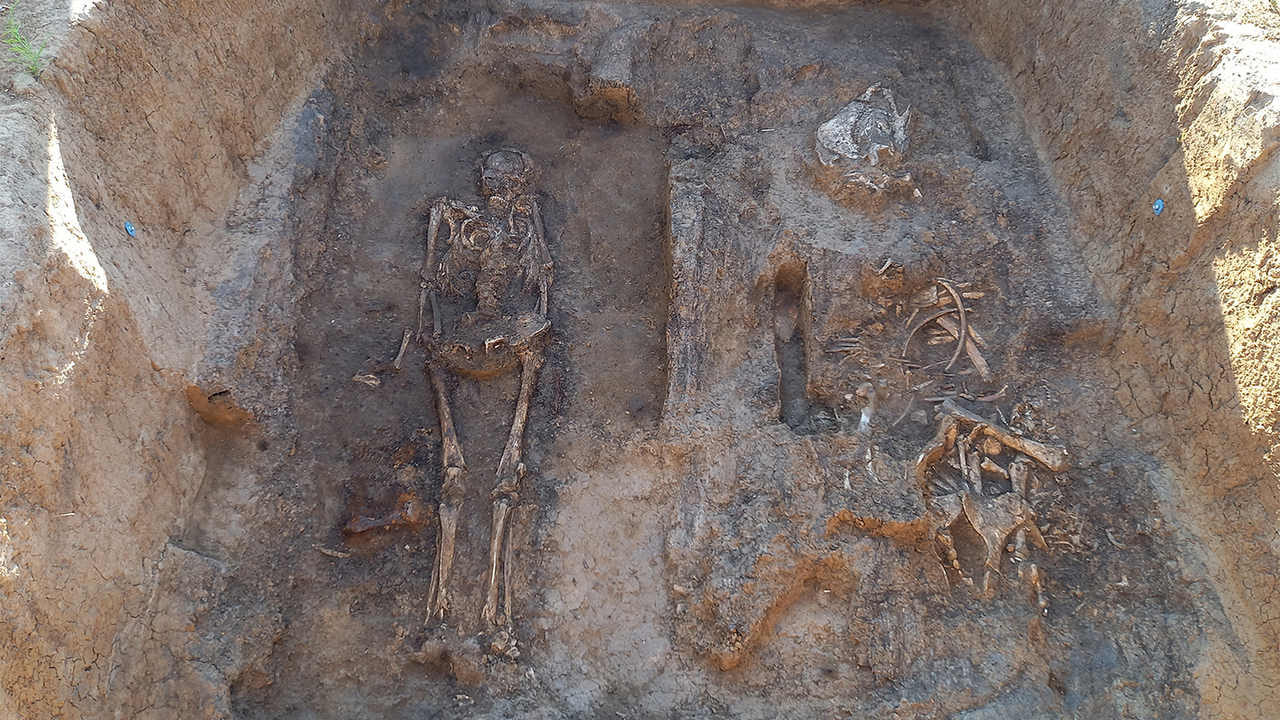
Археологичид морь болон нохойтой хамт оршуулагдсан элит эр хүний ясыг Оросын Суздаль хотын ойролцоогоос олсон байна.
Оросын Шинжлэх ухааны академийн Археологийн хүрээлэнгийн мэдээлснээр, Гнездилово дахь дундад зууны үеийн оршуулгын газраас 3.1 метр урт, 2.7 метр өргөн модон бунхан бүхий булшийг малтан илрүүлжээ. Энэхүү булш нь газрын гүнээс нэг метрийн зайд олдсон бөгөөд дээвэр нь нурсан байдалтай байсан ч харьцангуй сайн хадгалагдсан байна. Булшнаас 25-35 орчим насны эрэгтэй хүний араг яс, морь, нохойн үлдэгдэл болон зэвсэг, морины хэрэгсэл зэрэг олон тооны эд зүйлс олдсон юм.
Тус булшнаас олдсон төмөр хутга, дөрөө, байлдааны сүх болон хүзүүний орчимд нь байсан мөнгөн товруу нь тухайн хүнийг тухайн нийгэмдээ өндөр байр суурьтай байсныг илтгэж байна. X зууны үед Скандинавын орнуудаас гаралтай ийм төрлийн модон бунхант оршуулгын заншил нь Киевт төвлөрсөн “Киевийн Русь” улсын язгууртнуудын дунд дэлгэрч байжээ.
Өмнө нь ийм төрлийн ердөө 80 орчим булш Оросын баруун хэсгийн хотуудаас олдсон бөгөөд энэ удаагийн олдвор нь Суздаль хотыг тухайн үеийн цэргийн болон захиргааны чухал төв байсныг баталж байна. Энэ зун тус газарт хийсэн малтлагаар нийт 15 оршуулга илэрсний ихэнх нь энгийн шороон булш байсан бол язгууртны энэхүү бунхан нь бүс нутгийн түүхийг судлахад чухал ач холбогдолтой юм.
Дэлгэрэнгүйг эх сурвалжаас харах
↓Эх сурвалжийг нээх ↓
Archaeologists in Russia have unearthed a rare wooden tomb containing the remains of an elite man who was buried with a horse and a dog. The remarkably preserved burial, which dates to the 10th century, suggests that medieval Russian and Northern European nobility shared funeral customs a millennium ago.
The horseman’s burial was discovered unexpectedly this summer during excavations in the medieval cemetery at Gnezdilovo, an archaeological site in Suzdal, Russia, about 137 miles (220 kilometers) northeast of Moscow, according to an Aug. 15 translated statement from the Institute of Archaeology of the Russian Academy of Sciences.
In the late ninth century, what is now western Russia was ruled by the Kievan Rus’ (also spelled Kyvian Rus’), a conglomeration of settlements and territories that included Baltic, eastern Slavic and Norse peoples. By the 10th century, the custom of burying medieval Rus’ nobility in underground wooden crypts with a multitude of grave goods was imported from Scandinavia.
But the newfound and remarkably well preserved chamber tomb at Suzdal is a rare and early example of the burial type. Only 80 other medieval chamber burials have been found across western Russia, according to the statement.
The wooden burial chamber was found about 3.3 feet (1 meter) underground and measured 10.2 by 8.9 feet (3.1 by 2.7 m). The wooden roof of the chamber had decayed and collapsed onto the deceased in the tomb. Archaeologists found the skeleton of a man who was about 25 to 35 years old when he died, along with the remains of a horse and a dog.
Also included in the burial were an iron knife, stirrups and other riding gear, as well as a comb made of bone and a battle ax. The man was buried wearing a garment secured by a silver, horseshoe-shaped brooch near his neck. The assemblage of the grave goods signifies that the man held high status in his community, according to the statement.
All of the previously excavated chamber tombs were found in urban centers of the Kievan Rus’ territory, suggesting that the nobility formed relationships of power across the land. The newly discovered chamber tomb at Suzdal therefore points to the site being an important center of the Rus’ polity, which was previously unknown.
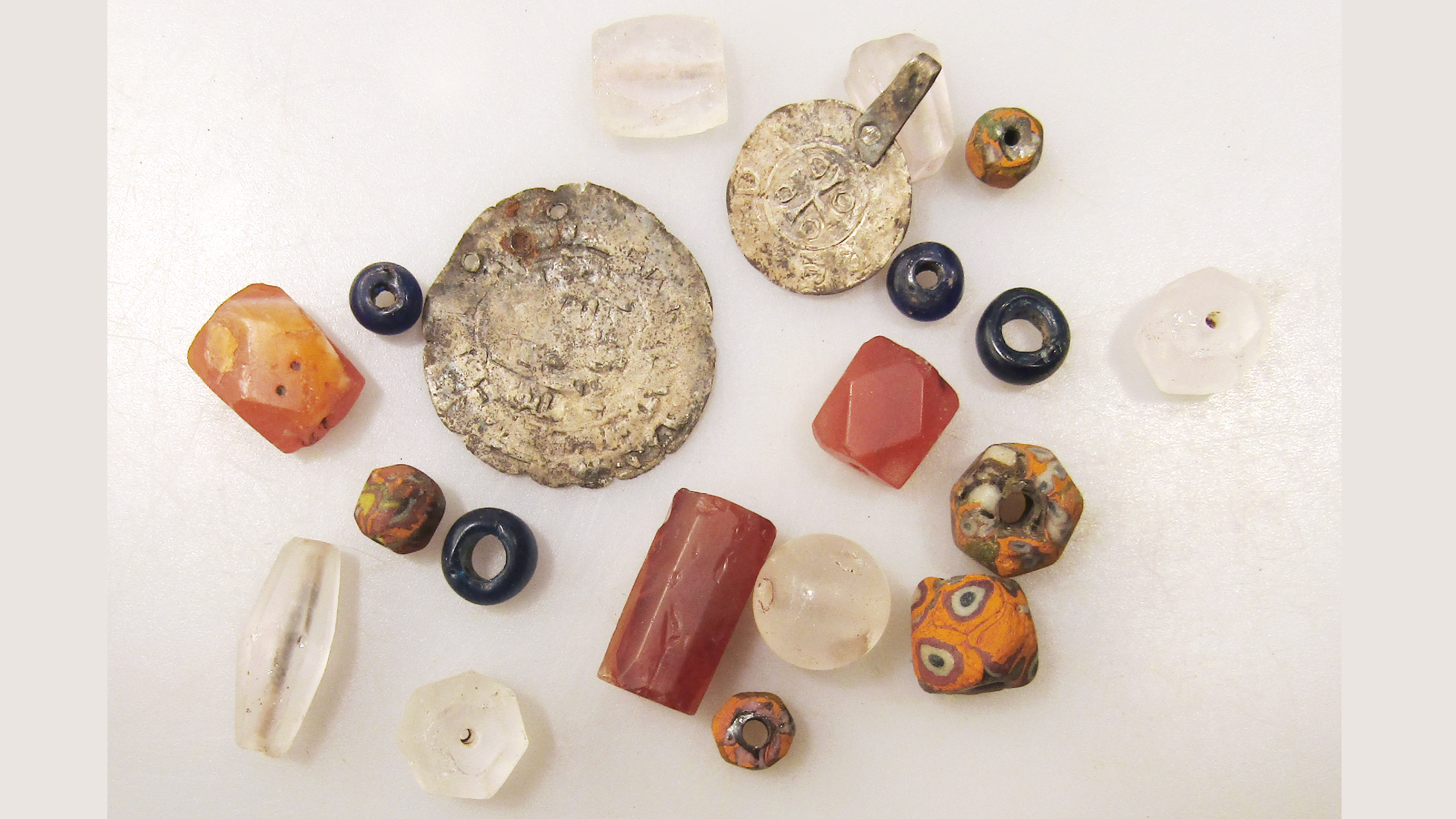
In total, archaeologists unearthed 15 burials at Suzdal this summer. Most were simple burials in earthen pits, while others had been covered with barrow mounds of dirt. Female burials included silver rings and necklaces with rock-crystal beads, while male burials included weapons and horse-riding equipment.
The unique chamber tomb discovered at Suzdal shows that “as early as the 10th century, it was already a magnet for the Old Rus’ nobility (bearers of a new identity) and served as a center of military-administrative control over the northeastern territories of Rus’,” according to the statement.
What do you know about the bones in your body? Test your knowledge with our human skeleton quiz!

