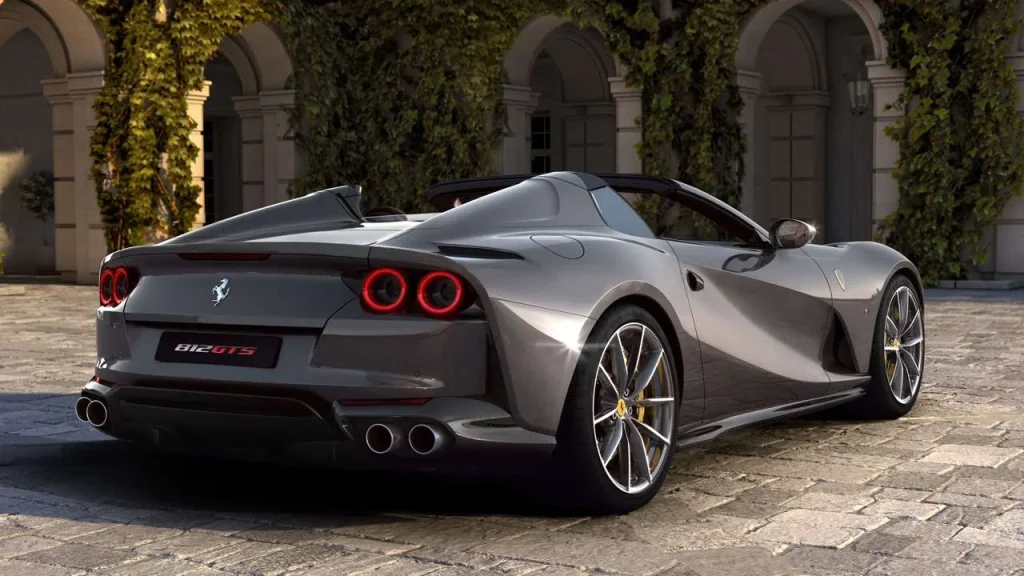
Ferrari 812 GTS загварын арын цонх нь дээвэр хаалттай үед ч онгойх боломжтой бөгөөд энэ нь жолоочид 6.5 литрийн V12 хөдөлгүүрийн дууг илүү тод сонсох боломжийг олгодог өвөрмөц шийдэл юм.
Энэхүү суперкар нь 789 морины хүч болон 530 фунт-фут эргэлтийн момент бүхий V12 хөдөлгүүрээр тоноглогдсон. Ferrari компанийн зүгээс хэрэглэгчдэдээ хөдөлгүүрийн дууг салхины чимээгүйгээр сонсгохын тулд арын цонхыг онгойх механизмтай зохион бүтээжээ.
Арын цонхыг эвхэгддэг дээврийн системийн нэг хэсэг болгон нэмэхдээ автомашины их биеийн бат бөх чанарыг алдагдуулахгүй байхад онцгой анхаарсан байна. Ингэснээр жолооч нар урд талын цонхыг онгойлгон салхины чимээ үүсгэх шаардлагагүйгээр хөдөлгүүрийн дууг бүрэн таашаах боломжтой болжээ.
Дэлгэрэнгүйг эх сурвалжаас харах
↓Эх сурвалжийг нээх ↓
The Ferrari 812 GTS supercar has a special rear window that was designed to open for one very specific reason, even with the roof up.
Convertible Ferrari supercars are nothing new, but one with a rear window that can open with the roof up is.
Adding in a rear window that can open might sound clever, but equally not exactly necessary.
However, there was a good reason for the Ferrari 812 GTS to have it.
Why does the 812 GTS have a folding rear window?
Maranello knew that its customers loved to hear the noise of its engines; in this case, it was a 6.5-liter V12 engine.
That engine produced 789hp and 530lb-ft of torque, and a glorious screaming soundtrack.
To hear that engine noise, you can, of course, simply roll down the driver and passenger windows.
But that does create wind noise, and can get in the way of truly enjoying the glorious V12 music behind you.
So Ferrari decided that, to alleviate this problem, the rear window should roll down too.
Ferrari wanted customers to experience maximum noise
The idea was to allow those in the car to hear as much noise as possible.
With the rear window lowered, the V12 soundtrack of the Ferrari 812 GTS would filter straight into the cabin.
The bonus here is that wind noise is almost nonexistent, as you can leave the front windows rolled up.
This did take a clever bit of thinking from the Italian manufacturer.
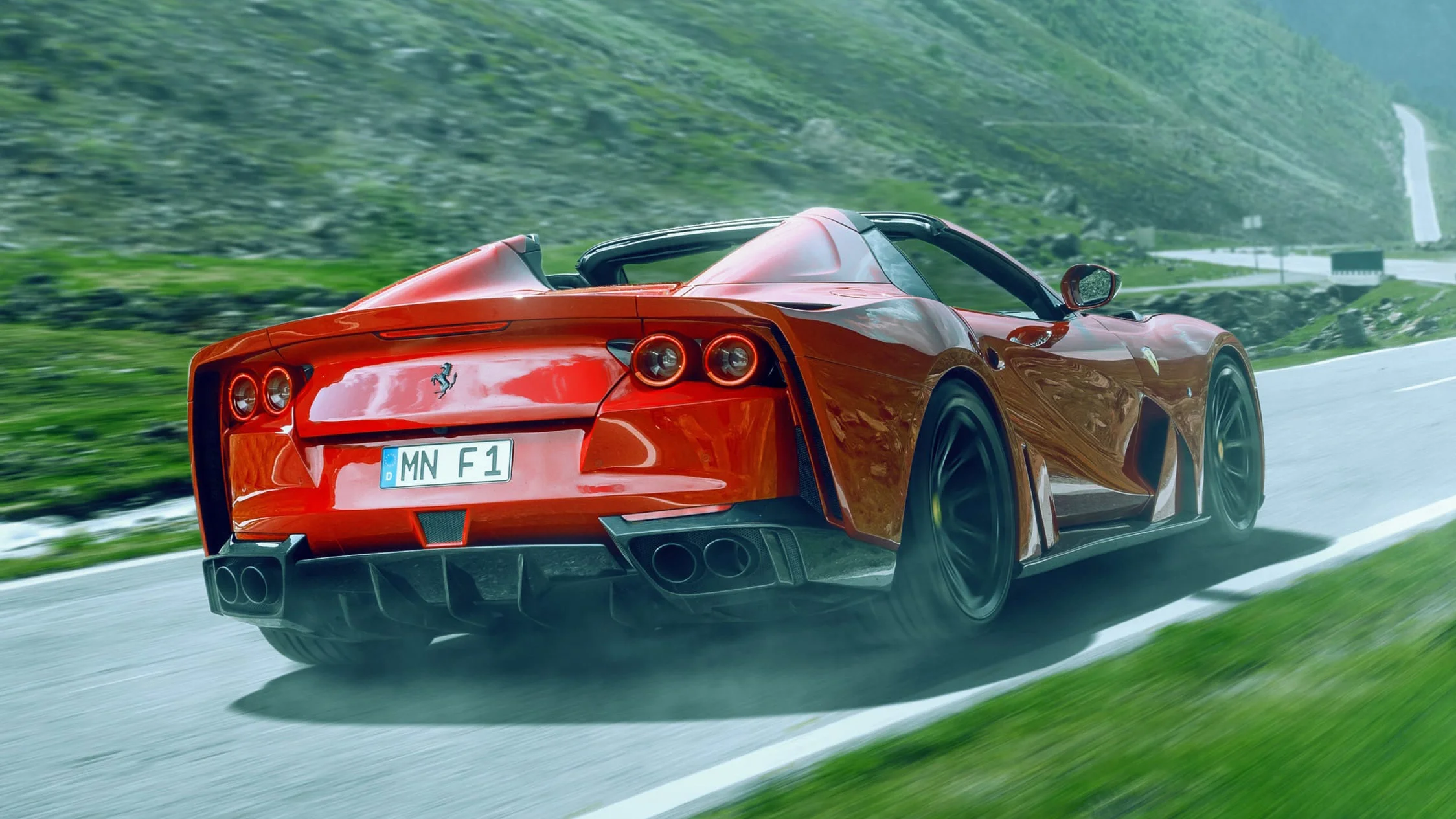
As the small rear window was part of the folding roof mechanism, they needed to make sure the structural integrity of the roof wasn’t compromised.
They managed to achieve this, and you could even lower the window with the roof still up.
That is certainly one way to ensure customers get the most out of a V12 engine.
Ferrari’s fastest cars
1947 | 125 S: The automaker’s very first creation set the baseline with a 1.5-liter V12 engine producing roughly 118 horsepower
1962 | 250 GTO: This legendary racing homologation model pushed output to 300 hp with a highly tuned 3.0-liter V12
1984 | 288 GTO: Igniting the modern supercar era, this lightweight twin-turbo V8 machine delivered an impressive 400 hp
1987 | F40: The final vehicle approved by Enzo himself produced 478 hp and famously broke the 200 mph barrier
1995 | F50: Bringing Formula 1 technology to the street, this halo car generated 513 hp from a naturally aspirated 4.7-liter V12
2002 | Enzo: Named after the company’s founder, it pushed boundaries by extracting 660 hp from an all-new 6.0-liter V12
2013 | LaFerrari: The company’s first hybrid hypercar combined a massive V12 with an electric motor for a combined 950 hp
2023 | SF90 XX Stradale: This track-focused plug-in hybrid broke the 1,000 hp barrier by delivering 1,016 hp via a V8 and three electric motors
2024 | F80: The current performance pinnacle unleashes 1,184 hp using a highly advanced twin-turbo V6 hybrid system


