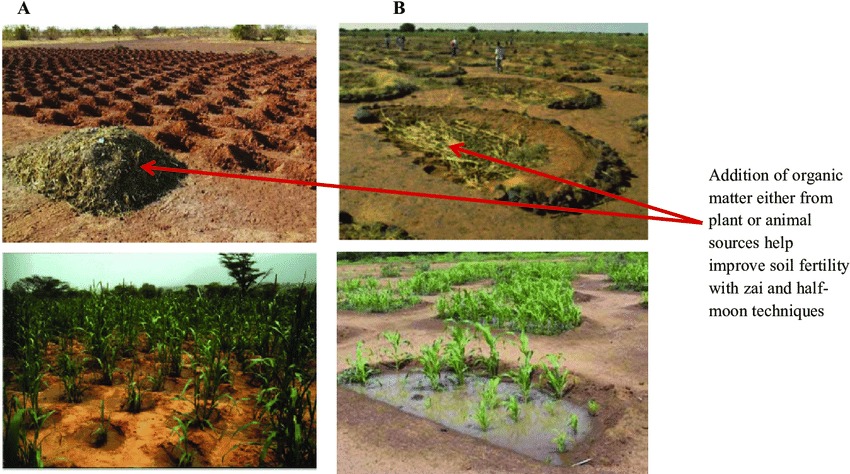
Нигерийн хойд хэсэгт явуулсан судалгаагаар борооны ус хураах энгийн арга нь доройтсон газрын ургамалжилтыг сэргээхэд үр дүнтэй болохыг харууллаа.
Нигерийн Абдуллахи Фодио их сургуулийн судлаачид 2025 оны хур тунадасны улиралд доройтсон хоёр талбайд хагас сар хэлбэртэй нүх ухаж, борооны ус хураах туршилт хийжээ. Ойролцоогоор дөрвөн метр диаметртэй, 15-25 см гүн эдгээр нүх нь гадаргын урсацыг саатуулж, хөрсөнд чийг нэвчих боломжийг бүрдүүлсэн байна. Мөн ургалтыг дэмжихийн тулд органик бордоо ашигласан нь туршилтын нэгэн чухал хүчин зүйл болжээ.
Туршилтын үр дүнд хөрсний чийгшил хадгалагдах чадвар сайжирч, ургамалжилтын идэвхжил мэдэгдэхүйц нэмэгдсэнийг гэрэл зургаар баримтжуулсан байна. Өмнө нь тус бүс нутагт хийгдсэн судалгаануудаар ийм төрлийн арга нь ус нэвчих хурдыг 20-70 хувиар нэмэгдүүлж, хөрсний элэгдлийг 50 гаруй хувиар бууруулдаг болохыг тогтоож байв.
Гэсэн хэдий ч судлаачид энэхүү ажлыг өргөн хүрээний баталгаа гэхээсээ илүүтэй жижиг хэмжээний туршилтын судалгаа хэмээн тодорхойлж байна. Судалгаа нь зөвхөн хоёр талбайд, нэг жилийн хугацаанд хийгдсэн тул илүү өргөн хүрээтэй, урт хугацааны нарийвчилсан статистик шинжилгээ шаардлагатай байгаа юм.
Хэдийгээр хязгаарлагдмал хүрээтэй ч энэхүү энгийн арга нь Сахарын цөлийн бүс нутагт доройтсон газрыг нөхөн сэргээх, уур амьсгалын өөрчлөлтөд дасан зохицох үндэсний хөтөлбөрүүдэд нэмэлт шийдэл болох боломжтойг судлаачид онцолж байна. Сахарын өмнөх бүс нутгийн хөдөө аж ахуйн газрын 60 гаруй хувь нь доройтсон гэх тооцоолол байгаа нь энэ төрлийн бага оврын технологийн ач холбогдлыг нэмэгдүүлж байна.
Дэлгэрэнгүйг эх сурвалжаас харах
↓Эх сурвалжийг нээх ↓
A low-tech, small-scale study in northern Nigeria demonstrated the potential of simple rainwater harvesting (using crescent-shaped earth pits) to restore vegetation to degraded lands. Researchers conducted this small 2025 study on two separate plots in which half-moon water harvesting was tested.
Half-moon water harvesting is a method of catching rainfall that would normally flow across a hard, degraded ground surface. The study was conducted during the 2025 wet season on the campus of Abdullahi Fodio University of Science and Technology in Aliero, Kebbi State, and the methodology was based on prior research regarding this technique as well as others located throughout the Sahel region (the semi-arid region just south of the Sahara).
Although there is no direct evidence from the study itself that demonstrates how effective this technique will be in restoring large amounts of degraded land in northern Nigeria, the small amount of data collected does provide evidence for its effectiveness in this particular location and suggests that this technique may be useful as part of a larger program to restore degraded land in this region.
Small-Scale Study Conducted in Northern Nigeria
Between August and September 2025, researchers constructed approximately four meter (diameter), 15-25 cm (deep) half-moon shaped basins in two areas of degraded land at the university. Each basin contained approximately two meters between rows of basins and 1-1.5 meters between each basin.
In addition to constructing the half-moons, workers applied organic manure to both basins, providing nutrient supplementation to stimulate plant growth. Therefore, the study examined both improvements in rainwater collection and nutrient availability, thereby examining the effects of multiple variables.
Prior to the initiation of the project, the authors described the land as “marginal” with little to no visible vegetative cover. Additionally, the authors noted that approximately 70% of the surface area of the land had been eroded through surface runoff. Following completion of the project, photographs clearly depicted rainwater collecting in the treated area and the researchers noted significant increases in vegetative activity.
Operation of Half-Moons
The basic operation of these basins is to impede movement of water along the soil’s surface. By creating a barrier to prevent surface water from running off, the half-moons allow more water to infiltrate into the soil thus maintaining higher levels of soil moisture adjacent to vegetation growing within these areas.
The researchers indicated that their results demonstrated improved soil moisture retention, decreased runoff and provided better growing conditions for plants and trees to grow. The researchers stated that construction of these basins is a relatively simple process and can be used by local communities attempting to rehabilitate degraded dryland soils.

Additionally, the researchers referenced previous research from other countries including Burkina Faso, Niger and Mali indicating increases in water infiltration rates ranging from 20-70% and decreases in soil erosion rates exceeding 50% when utilizing similar methods to those used in their own study.
These estimates are very valuable; however, they were generated from other studies and not directly related to the 2025 study conducted in Nigeria.
Evidence Provided Through Nigerian Study
The authors documented evidence of improved moisture retention and observable vegetation recovery following installation of the half-moons. The authors’ description of vegetation recovery after treatment is described as significantly different relative to pre-treatment vegetation cover.
However, the six-page document contains a limited number of results, primarily describing observations/photographs rather than detailed tabulations of soil moisture measurements, vegetative density measures or statistical analysis. Only two degraded plots were studied during a single rainy season.
Therefore, this study should be viewed as a small pilot study versus empirical evidence demonstrating the extent of improvement resulting from application of this technique in restoring degraded land across northern Nigeria.

Despite limitations associated with this pilot study, the authors argued that incorporation of half-moon water harvesting systems could be included in national efforts directed toward restoration of degraded lands and adaptation to climate changes.
Additionally, the authors referenced estimates suggesting that over 60% of agricultural land in sub-saharan Africa is degraded. This degradation limits crop production while making agriculture more susceptible to impacts associated with climate variability. The authors suggested that despite extensive knowledge of the use of this technique among other parts of West Africa, it has seen limited adoption in Nigeria.
Low-Tech Methodology with Limitations
The study confirmed a clear conclusion: on two degraded plots in northern Nigeria, semicircle basins retained rainfall that would have flowed across the surface of the land prior to installation of the basins and subsequent improvements in vegetative growth were documented.
While these results suggest that such methodologies may be beneficial in restoring degraded drylands (especially locations experiencing limited precipitation), due to limited scope (only two plots) and duration (only one year), more comprehensive studies measuring outcomes over longer durations are needed to substantiate broader implications for utilization of this technique as part of an overall program for dryland restoration.
Enjoyed this article? Subscribe to our free newsletter for engaging stories, exclusive content, and the latest news.


