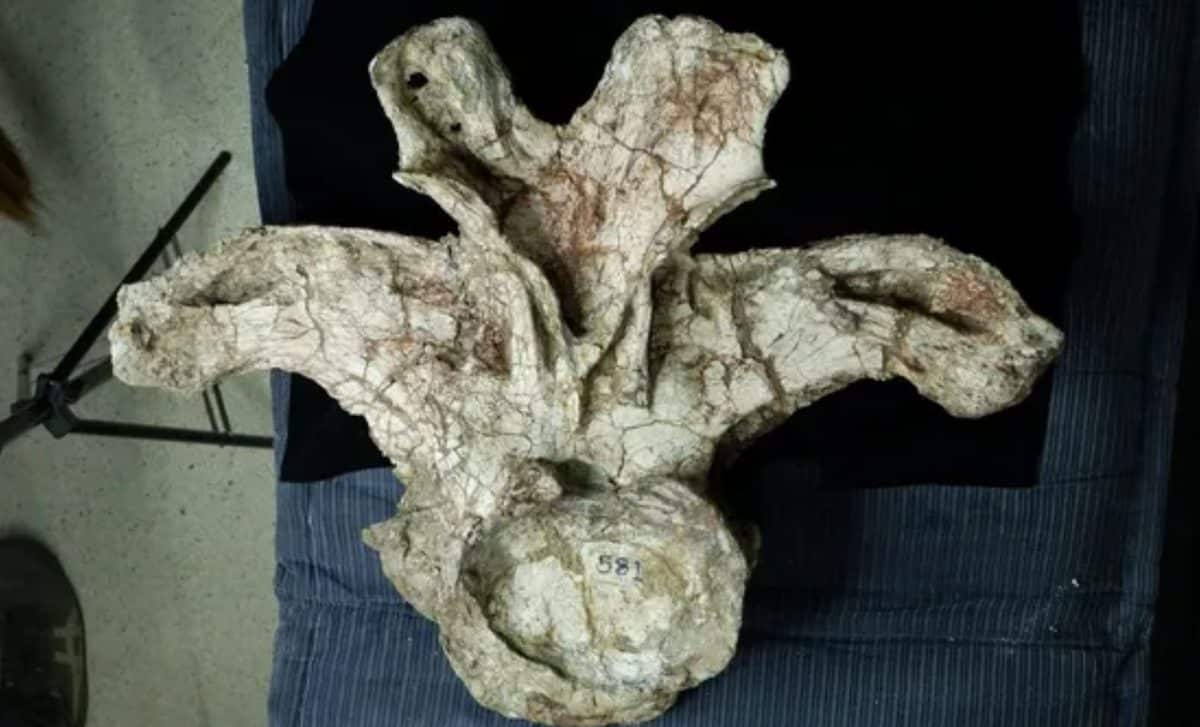
Тайландын нутгаас олдсон шинэ төрлийн үлэг гүрвэлийн ясны бүтэц нь аварга том биетэй амьтад хэрхэн урт хүзүүгээ дааж байсныг шинжлэх ухааны үндэслэлтэйгээр харууллаа.
Тайландын зүүн хойд хэсэгт орших Фу Крадунг геологийн тогтоцоос олдсон нугаламын олдвор нь Маменчизаврид (Mamenchisauridae) овогт хамаарах цоо шинэ төрлийн үлэг гүрвэлийг тодорхойлох боломж олгожээ. Uragasaurus kalasinensis гэж нэрлэсэн уг олдвор нь Зүүн Өмнөд Азийн бүс нутагт энэ төрлийн үлэг гүрвэл амьдарч байсныг гэрчилж буй анхны албан ёсны баримт юм. Уг олдвор нь шинжлэх ухааны хувьд ач холбогдолтой бөгөөд Маменчизаврид овгийн үлэг гүрвэлүүд ихэвчлэн Хятадын нутгаас олддог байсан юм.
Судлаачид уг нугаламыг компьютер томограф (CT) шинжилгээнд оруулснаар түүний дотоод бүтцийг нарийвчлан судалжээ. Ясны Y хэлбэрийн бүтэц болон доторх агаараар дүүрсэн хөндийнүүд нь энэхүү үлэг гүрвэлийн хүзүүний жинг мэдэгдэхүйц хөнгөлж, механик ачааллыг бууруулдаг байсныг тогтоов. Энэхүү агааржуулалтын систем нь өнөөгийн шувуудын ясны бүтэцтэй төстэй бөгөөд 50 гаруй фут урт хүзүүг даах боломжийг олгодог байжээ.
Махасаракам их сургуулийн палеонтологич Комсорн Лаупрасертын тайлбарласнаар, энэхүү нээлт нь Юрийн галавын үед Ази тивд амьдарч байсан үлэг гүрвэлүүдийн тархалт болон хувьслын түүхийг илүү тодорхой болгож байна. Фу Крадунг тогтоц нь Хятадын бүс нутагтай харьцуулахад харьцангуй бага судлагдсан тул цаашдын малтлагын ажлаар илүү олон төрөл зүйл илрэх магадлалтай гэж үзэж байна. Уг судалгааны үр дүнг Scientific Reports сэтгүүлд нийтэлжээ.
Дэлгэрэнгүйг эх сурвалжаас харах
↓Эх сурвалжийг нээх ↓
A fossilized vertebra unearthed in northeastern Thailand has led paleontologists to identify an entirely new species of long-necked dinosaur, Uragasaurus kalasinensis. The bone’s unusual Y-shaped structure and hollow, air-filled chambers reveal how this sauropod managed to hold up one of the longest necks in natural history. The find also marks the first time this dinosaur family has been formally documented in this corner of Southeast Asia.
Long-necked sauropods have long fascinated scientists for their sheer scale, but the mechanics behind their improbable anatomy are just as compelling as their size. It belongs to Mamenchisauridae, a family whose fossils have almost exclusively turned up in China, making any discovery beyond that region scientifically significant.
That’s precisely what makes this new specimen noteworthy. Described in a study published in Scientific Reports, the dinosaur was identified from a single anterior dorsal vertebra recovered from the Phu Kradung rock formation. It’s a modest amount of material to build a new species on, but as researchers explain, the bone itself carries an outsized amount of information.
A Rare Find Outside China
Mamenchisaurid fossils, generally dated to the Middle and Late Jurassic, are overwhelmingly associated with the Sichuan Basin in southwestern China. The very first specimen, belonging to Mamenchisaurus constructus, turned up at a construction site back in 1952, and the region has since yielded several additional species tied to the family.
Outside China, evidence of mamenchisaurids has been scarce, though not entirely absent. Some vertebrae from Tanzania, once attributed to the Late Jurassic sauropod Janenschia robusta, were later reclassified as belonging to a mamenchisaurid instead, hinting that the family’s range extended into Africa as well as Asia.
Uragasaurus kalasinensis now stands as the first formally named mamenchisaurid sauropod from northeastern Thailand. Its name draws on the Sanskrit word for “snake” or “serpent,” Uraga, paired with a nod to Kalasin province, where the fossil was discovered. As study author Komsorn Lauprasert, a paleontology professor at Thailand’s Mahasarakham University, said:
“Combined with other material from the Phu Kradung Formation, it reveals that Southeast Asia was an important center of mamenchisaurid diversity, filling a critical gap in understanding the biogeographic distribution and evolutionary radiation of this sauropod group across the Asian continent during the Jurassic period.”
What CT Scans Revealed Inside the Bone?
The vertebra’s Y-shaped configuration is considered a distinguishing trait of the species, but researchers didn’t stop at its outward appearance. CT scans allowed the team to examine the bone’s internal architecture, turning up elongated, teardrop-shaped depressions known as fossae, along with a pneumatic structure, meaning the vertebra contains air-filled chambers rather than solid bone throughout.
This kind of pneumaticity shows up in most sauropod vertebrae, mamenchisaurids included. A 2025 study in Cretaceous Research found that the hollowed vertebral columns of sauropods housed extensive air sac systems, not unlike those seen in birds today. Functionally, this reduced the bone density sauropods had to carry while also cutting down on mechanical stress running through their necks.

Why Neck Length Varied So Dramatically Among Dinosaurs
Pneumatic vertebrae weren’t unique to sauropods, since theropods and pterosaurs had them too. Yet neither group came close to matching sauropod neck lengths. As reported by PeerJ, theropod necks measured only around 6 to 8 feet, while some pterosaurs reached necks as long as 9 feet. Sauropods dwarfed both, with at least one species carrying a neck longer than 50 feet.
Also, many modern birds still retain pneumatic vertebrae inherited from their dinosaur ancestors. Giraffes, by contrast, the tallest-necked animals alive today, lack both the air-sac system and the pneumatic bone structure that made such extreme sauropod necks possible, relying on an entirely different anatomical solution to their height.

The Phu Kradung Formation, and Thailand’s broader Jurassic sedimentary record, remain comparatively underexplored next to China’s well-studied deposits. As Lauprasert put it:
“Given Thailand’s extensive Jurassic sedimentary deposits and limited paleontological exploration compared to China, future excavations will likely uncover more mamenchisaurid specimens, potentially revealing new species.”
Enjoyed this article? Subscribe to our free newsletter for engaging stories, exclusive content, and the latest news.

