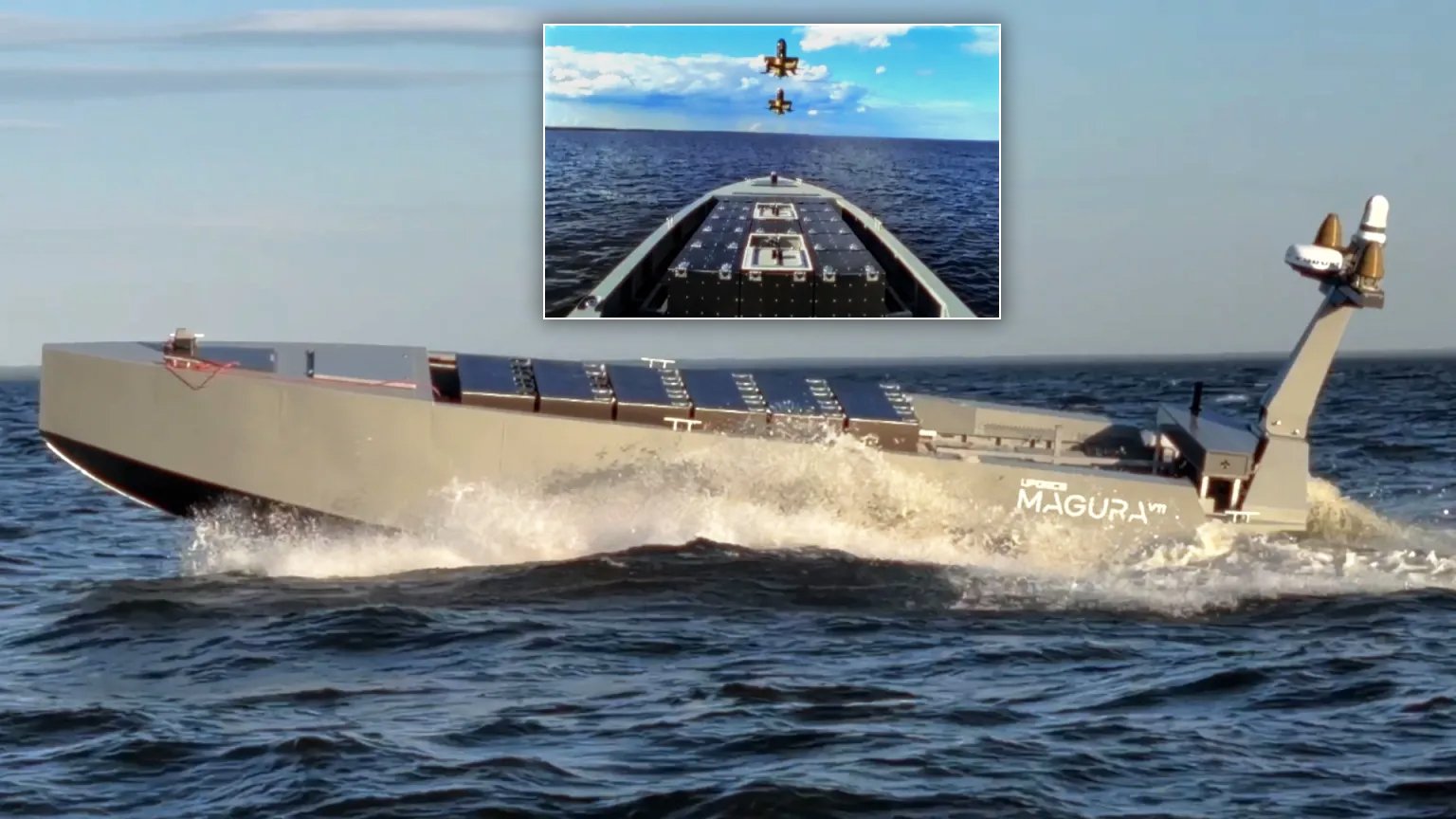
Энэхүү шинэ загварын усан онгоц нь далайн нээлттэй усанд долоо хоног хүртэлх хугацаанд үүрэг гүйцэтгэх чадвартай бөгөөд олон төрлийн нисгэгчгүй системийг тээвэрлэн хөөргөх боломжтой юм.
Украины “UFORCE” компани тус улсын тусгаар тогтнолын баярын парадын үеэр “Magura” цувралын хамгийн том загвар болох MV11 хөлгийг анх удаа олон нийтэд үзүүллээ. Энэхүү хөлөг нь 2,200 хүртэлх килограмм ачаа тээвэрлэх хүчин чадалтай бөгөөд одоогоор 18 ширхэг “Sting” загварын нисгэгчгүй онгоц эсэргүүцэгч системээр тоноглогдсон байна. “Sting” систем нь цахилгаан хөдөлгүүртэй, дөрвөн сэнстэй, 3D хэвлэлээр бүтээгдсэн бүрэлдэхүүн хэсгүүдээс бүрдэх бөгөөд “Shahed-136” зэрэг дайралтын нисгэгчгүй онгоцуудыг устгахад үр дүнтэй болох нь батлагджээ.
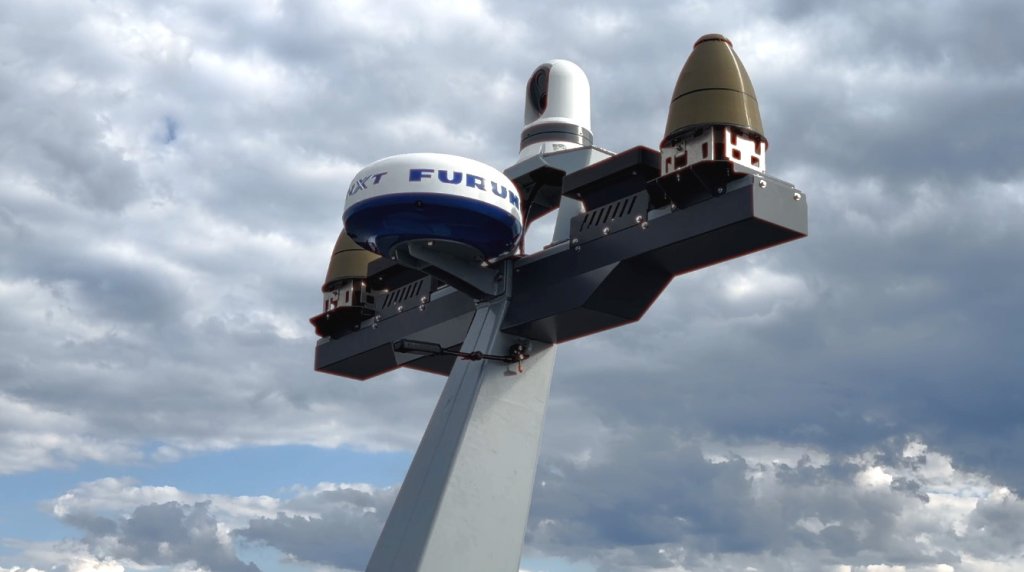
“UFORCE” компанийн гүйцэтгэх захирал Олег Рогинскийн мэдээлснээр, MV11 нь зөвхөн тэнгисийн цэргийн дрон бус, харин далайн эргээс алслагдсан бүсэд бусад нисгэгчгүй системийг тээвэрлэж, ажиллагаанд оруулах чадвартай олон зориулалттай тавцан юм. Хөлөг онгоцны ачаа тээвэрлэх их багтаамж нь түүнийг тагнуул, ажиглалт, ачаа тээвэр болон десантын ажиллагааг дэмжих зэрэг бусад үүрэгт ашиглах боломжийг олгож байна. Одоогийн байдлаар тус хөлгийг удирдлагын болон байг илрүүлэх системээр хэрхэн бүрэн тоноглосон нь тодорхойгүй байгаа ч камер, навигацийн радар болон хиймэл дагуулын холбооны терминалуудаар тоноглогдсон нь илт байна.
Украины зэвсэгт хүчин тэнгисийн болон хуурай замын нисгэгчгүй системийн чадавхийг эрчимтэй хөгжүүлж байгаа бөгөөд энэ нь агаарын довтолгооноос хамгаалах нэгжид ирж буй ачааллыг бууруулахад чухал ач холбогдолтой юм. Олон улсын түвшинд, тухайлбал АНУ болон Персийн булангийн орнууд Украины нисгэгчгүй системүүд болон тэдгээрийг эсэргүүцэх технологиудыг сонирхож эхэлжээ. MV11 хөлөг нь ирээдүйд далайн бүс нутагт хийгдэх цэргийн ажиллагаанд гол үүрэг гүйцэтгэх боломжтой хэмээн мэргэжилтнүүд үзэж байна.
Дэлгэрэнгүйг эх сурвалжаас харах
Эх сурвалжийг нээх ↓
Ukraine’s combat-proven Magura family of uncrewed surface vessels (USV) has gained its largest member to date. The new MV11 is designed for open-ocean operations lasting up to a week and can carry payloads weighing up to 4,850 pounds (2,200 kilograms). The drone boat has so far been shown in one configuration, loaded with 18 small vertically launched Sting interceptors, turning it into a small floating counter-drone battery. Given its significant payload capacity and other capabilities, it could be utilized in other roles, too.
The MV11 made its public debut yesterday at Ukraine’s Independence Day parade in the country’s capital, Kyiv. The uncrewed air, ground, and maritime systems were the centerpieces of this event, underscoring the central place they now hold in the Ukrainian armed forces. The maritime portion of the parade, which took place along a section of the Dnipro River, featured additional members of the Magura family, as well as other USVs, including kamikaze types and ones armed with repurposed air-to-air missiles. A drone boat with a launcher for first-person-view (FPV) type aerial kamikaze drones and another with an array of small domed antennas (possibly tied to an electronic warfare system or for use as a communications node) were also present. Various types of aerial kamikaze drones, as well as uncrewed ground vehicles (UGV) armed with anti-tank guided missiles, automatic grenade launchers, and machine guns, were also showcased at the event.
The video below shows the various USVs, as well as other uncrewed platforms showcased at Ukraine’s Independence Day parade in Kyiv yesterday.
“We are proud to present the MV11 on Ukraine’s Independence Day. This is not just the largest naval drone – it is a platform that delivers multi-domain capability: a single carrier that transports and launches other unmanned systems far from shore, enabling operations across all domains,” Oleg Roginsky, CEO of UFORCE, said in a statement. “At UFORCE, we are focused on building the best capabilities for Ukraine and its allies who stand for freedom. We are confident the MV11 will become the foundation for many successful missions and for pushing the enemy back even further.”
UFORCE was founded in Ukraine, but has its main headquarters in London in the United Kingdom. It is often described as an uncrewed-focused defense conglomerate with several different enterprises operating under its umbrella. Many of its components are also located outside of Ukraine. For instance, the main design, research, and development bureau for the Magura family is located in Portugal.
As mentioned, the configuration the MV11 has been shown in so far, both at the parade yesterday and in other marketing material released by UFORCE, features a payload of 18 Sting interceptors. They are loaded individually in box-like launchers, which can also be employed in other domains, including mounted on trucks or positioned on the ground. Weighing roughly nine pounds, the Sting interceptor is an electrically powered quad-rotor system with a small explosive warhead. It makes heavy use of 3D-printed components, and each one has a reported cost of around $2,100.
The Ukrainian developer, Wild Hornets, says Sting can reach altitudes up to nearly 23,000 feet (7,000 meters) and has a maximum range of around 23 miles (37 kilometers), depending “on battery capacity, weather conditions, payload weight, and operator flight style.” Typical flying time is said to be shorter, and the system can be recovered for reuse if it does not intercept a target after launch. Sting has proven itself effective at intercepting Russian variants and derivates of the Iranian-designed Shahed-136 one-way attack drone and other similar designs.
Sting is manually operated by a human controller via a wireless link. How this works exactly with the MV11 as the launch platform is unclear, and TWZ has reached out for more information. Wild Hornets has said in the past that the interceptors can be remotely operated from locations up to (2,000 kilometers) away from the launch point via a user interface that can be installed on a laptop.
What capabilities the MV11 has onboard to spot and track targets to begin with is also unknown. However, the USV does have a mast at the rear, and images available so far show it equipped with a camera turret, navigation radar, and two other horn-like antennas. The camera system could be used for target detection and tracking, as well as just to help with situational awareness. The additional antennas might allow for passive detection of aerial targets via their signal emissions, or serve some other purpose. As noted, Ukraine does already have USVs armed with traditional anti-air missiles, which the country has claimed to have used to successfully down Russian fixed-wing jets and helicopters.
The MV11 also has a fixed-forward camera on top of the bow, which is a common feature on drone boats to aid general navigation. There are what appear to be a pair of rectangular satellite communications (SATCOM) terminals in the open main deck area, as well. A reliable SATCOM link would be key to linking the Sting interceptors with their operators.
With their own range and endurance, Sting-armed MV11s could offer Ukraine valuable forward-deployed counter-drone nodes out in the Black Sea and along other waterways. Being able to thin out groups of incoming Russian drones further away from their intended targets could help reduce the pressure on land-based forces, including more traditional surface-to-air missile batteries. It is well established at this point that Ukrainian air defense units are under heavy strain from Russia’s constant barrages of drones and missiles on targets across the country.
With a 4,850-pound (2,200-kilogram) payload capacity, the MV11 could easily be adapted to other roles. This could include launching groups of uncrewed aerial one-way attack drones at targets at sea or on land, or conducting direct attacks using other mounted weapon systems. These are capabilities that Ukraine has already demonstrated in real combat using smaller USVs.
Another ‘no-analogue’ scrap metal.
Ukrainian drones destroyed a Pantsir-S1 air defense system in the Kherson region.
: UA Navy pic.twitter.com/Nr01VCzumZ
— Defense of Ukraine (@DefenceU) January 6, 2025
MV11s could use their ample payload capacity in other ways, possibly including carrying sensor, electronic warfare, or communications packages. In a press release today, UFORCE said that the MV11 could be employed for more general surveillance and reconnaissance missions, as well as to support amphibious operations or transport cargo. In July, video emerged of Ukrainian forces using a smaller USV to land an armed UGV into a Russian-occupied area. While the exact outcome of that mission is still unclear, it did clearly serve as a proof-of-concept that could be a sign of things to come that could be further enabled by larger USVs.
On a more general level, the MV11 underscores the pace at which Ukraine continues to expand and evolve its uncrewed capabilities in the maritime, as well as air and ground domains. Other countries, including the United States, are taking notice and even moving to acquire Ukrainian-developed drone and counter-drone capabilities. Gulf Arab States have notably sought assistance from Ukraine in the wake of Iranian drone attacks this year. In that particular context, an MV11 loaded with Stings could be a very useful and lower-cost system for intercepting Shaheds and other one-way-attack drones heading across the Persian Gulf and the Gulf of Oman, especially when tied in with even a basic early warning network.
Now that the MV11 has been shown publicly, we could well see it in action soon as a counter-drone platform and/or in other roles.
Contact the author: joe@twz.com
The post Ukraine’s Newest USV Is A Super Sized Mothership Packed With Anti-Drone Interceptors appeared first on TWZ.


