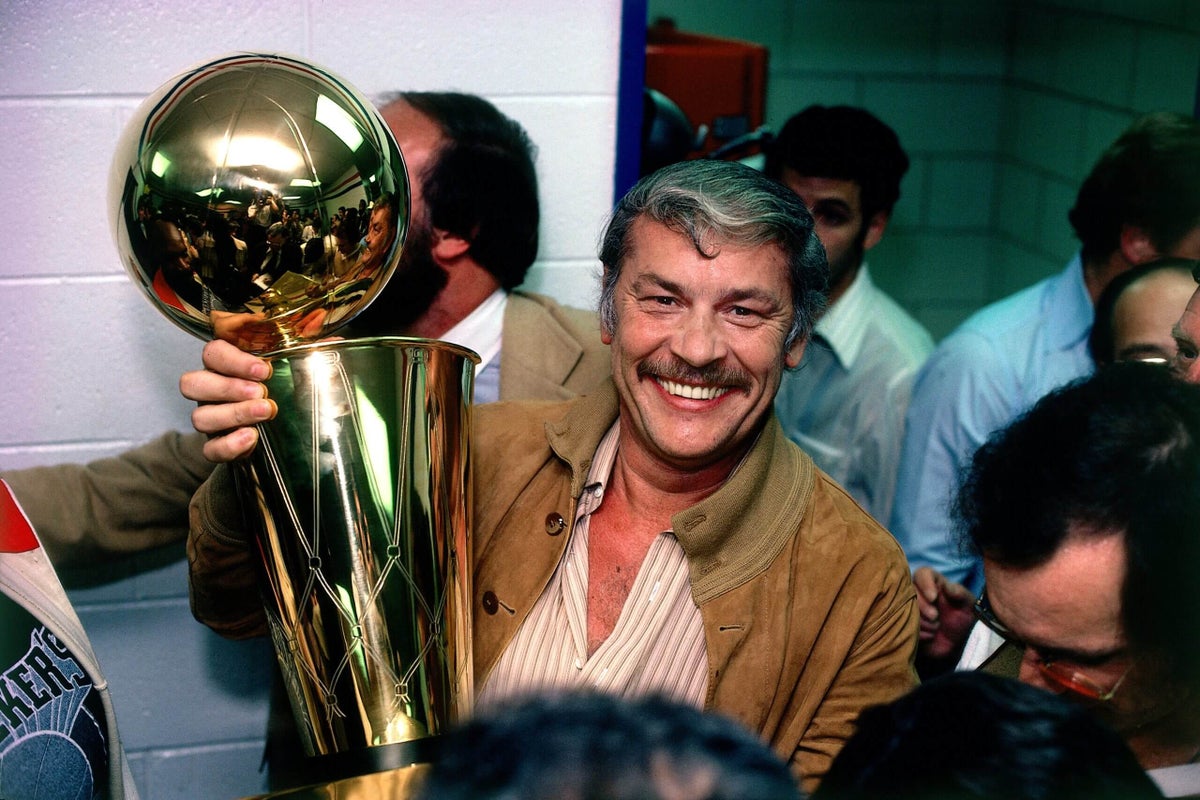
Лос Анжелес Лэйкерсийн өв залгамжлагчид багийн хувьцааг худалдах санал хураалт явуулсан нь тус багийн онцгой соёлыг хадгалан үлдэх эсэх дээр эргэлзээ төрүүлж байна
Лос Анжелес Лэйкерсийн үүсгэн байгуулагч Жерри Бассын таван өв залгамжлагч баг дахь 17.8 хувийн хувьцаагаа худалдах санал хураалтыг өнгөрөгч наймдугаар сард явууллаа. Энэхүү хэлцэл нь Диснейн хуучин гүйцэтгэх захирал Боб Айгер болон тэрбумтан хөрөнгө оруулагч Жошуа Кушнер нараар удирдуулсан бүлэгт 12.5 тэрбум гаруй ам.доллароор зарагдах юм. Ингэснээр өв залгамжлагч тус бүр татварын өмнө 370 сая орчим ам.долларын ашиг олох тооцоо гарч байна.

Гэвч багийн захирагч Жеание Басс өөрийн гэр бүлийн гишүүдийн энэхүү шийдвэрийг эсэргүүцэж байгаа аж. Тэрээр 2013 онд эцгийгээ нас барснаас хойш Лэйкерсийн үнэт зүйлсийг хамгаалж ирсэн бөгөөд гэр бүлээ багийн удирдлагын бүтцээс бүрмөсөн гаргахгүй байхын төлөө тэмцэж байна. Өнгөрсөн аравдугаар сард Марк Уолтерт 10 тэрбум ам.доллароор багийн хяналтын багцыг зарах үед Жеание Басс үргэлжлүүлэн ажиллахаар хүлээгдэж байсан юм.
Хэрэв Лэйкерс багийн удирдлагад Бассын гэр бүл үлдэхгүй бол тус багийн Холливудын соёл, өвөрмөц уур амьсгал өөрчлөгдөх эрсдэлтэй гэж шинжээчид үзэж байна. NBA-ийн түүхэнд баг бүр өөрийн хот, эздийнхээ онцлогийг шингээсэн байдаг тул 47 жилийн турш бүрэлдэн тогтсон Лэйкерсийн соёл ирээдүйн хөрөнгө оруулагчдын гарт хэрхэн өөрчлөгдөх нь лигийн хувьд анхаарал татсан асуудал боллоо. Орчин үеийн их хэмжээний хөрөнгө оруулалт багийн үнэ цэнийг өсгөж байгаа хэдий ч энэ нь багийн уламжлалт зан чанар, сэтгэл хөдлөлийг үгүй хийх вий гэсэн болгоомжлол байна.
Дэлгэрэнгүй эх сурвалжийг харах
Эх сурвалжийг нээх ↓
We’re perennially entertained by the Buss family drama, encapsulated in the show “Winning Time.” The NBA’s version of “Succession” — wealthy siblings at war over their father’s legacy. The dysfunction of the rich satisfies like a guilty pleasure.
Five heirs of Jerry Buss, architect of the Los Angeles Lakers, voted to sell their 17.8 percent stake in the franchise as part of the sale to a group led by former Disney CEO Bob Iger and billionaire venture capitalist Joshua Kushner. With the Lakers going for more than $12.5 billion, that’s a smooth $2 billion-plus — or $370 million per sibling before taxes.
But Jeanie Buss opposes her kin. The governor of the Lakers — who was expected to remain the franchise’s top representative when the family sold to Mark Walter for $10 billion last October — doesn’t want to leave. The steward of this American treasure since the patriarch died in 2013, Jeanie Buss dug in her Christian Louboutin heels in a fight to keep her family in the hierarchy of the purple and gold.
Everything we know about the Lakers being sold again
Dan Woike
But while grabbing the proverbial popcorn, ponder this alternate universe: What if the Buss family legacy is the expertise of curating vibes? What if the element that makes the Lakers special, and their games feel like a makeout session between basketball and an awards show, boils down to an art form perfected by the Buss family?
That idea elevates this from Lakers drama to potential NBA concern. It’s worth considering that the stakes of this family feud aren’t just control of the Lakers and their billion-dollar inheritance. Somewhere inside this transition of power is a question for the entire league.
What happens if the Lakers stop feeling like the Lakers?
The Buss family could disappear from the NBA’s power structure altogether if Jeanie Buss loses this sibling war. The next owners will be richer, perhaps even smarter, more sophisticated. Probably less dramatic. Maybe they will run a better business and make more money. The danger, however, lies in whether maximizing the profits on this $12 billion purchase drifts the Lakers closer to a luxurious cliche.
For nearly half a century, a Buss figure presided over Hollywood’s hardwood. Even after selling the team 10 months ago, morphing the Lakers from a relative mom-and-pop shop to a massive corporation, the presence of the Buss family still couldn’t be missed. Watching Jeanie Buss make her rounds underscored the artistry of hosting, of choreographing experiences, of cultivating culture. It’s clear they’ve been excelling at this for decades, surviving change and transitioning through eras.
So if the Lakers are indeed a product of Buss savvy, and that gets removed from the equation with the family no longer in control, how does that land?
Can the man who’s run Disney for nearly two decades maintain the tradition of glitz and swag? Not that anyone needs to see Iger courtside at Crypto.com Arena with models on either side and his shirt unbuttoned to the taco meat. But can he maintain or even elevate the je ne sais quoi of the Lakers? Can Kushner’s billions of dollars and unlimited access deliver the kind of magnetic appeal that began with the Showtime Lakers in 1979?
Jeanie Buss with Mark Walter, who bought a $10 billion controlling share in the Lakers in Oct. 2025. He’s now selling to Bob Iger and Joshua Kushner. (Allen Berezovsky / Getty Images)
If not, the NBA risks losing an incredible feature in its repertoire.
The Buss family’s legacy includes pioneering basketball as both a game and a party, a refined beauty and a gaudy extravaganza. The NBA, for most of its history, has been like a bracelet with each franchise a unique charm shaped by its community’s culture. Teams wear the personalities of their cities and, sometimes, their owners. The Boston Celtics’ rivalry with the Lakers gets juice from their contrasting auras. The New York Knicks should feel different from the San Antonio Spurs. The scene in Salt Lake City shouldn’t mimic Miami’s ambiance.
Maybe it’s the location that gives the Lakers their special sauce. Maybe it’s the presence of celebrities in the crowd, the proximity to Hollywood, fueling most of their distinctiveness. Or maybe it’s so established after 47 years that a Harvard-groomed businessman from the East Coast who wears T-shirts that cost a mortgage can’t kill their California vibe.
If so, the NBA will be fine.
But NBA franchises have become so valuable. And history proves something changes when a basketball team becomes an 11-figure asset. Family inheritance gives way to investment groups. Eccentricity gives way to sophistication. The owner who bought a team because he desperately wanted to own one gives way to capital that expects an extraordinary asset to behave like one.
Owners with personal connections to the team, to the city, to the local culture feel like a dying breed. They understood their people. That’s why the Pittsburgh Steelers’ style of play, their essence, doesn’t change. Why James Dolan gives away the most expensive seats in the house to likes of Timothée Chalamet, Mariska Hargitay and Tracy Morgan. Whether loved or hated, those owners earned roles as central characters in the sport we love.
Jerry Buss embodied that old-school era. He wanted to make money, for sure. Every owner does. But he came from an era when money funded the imagination that crafted the experience. Often excessive. Occasionally ridiculous. Forever innovative. The imagination then established a brand worth so much money.
We’ve certainly seen how ownership change, even with a major capital injection, shifts a team’s feel. Chase Center, the Golden State Warriors’ home in San Francisco, is a different world from Oracle Arena at its peak. Portland’s new owner, Tom Dundon, runs the Blazers like a Dollar General, escalating fears he’ll move the franchise and the NBA will lose one of the best charms on its bracelet.
It’s not just the NBA. The New York Yankees haven’t been the New York Yankees since George Steinbrenner stepped down in 2008, the team getting bullied by the L.A. Dodgers in the free-agency game. The Raiders moved to Las Vegas for the cash windfall and sacrificed their once-legendary home-field advantage in Oakland. And let’s see how Premier League giant Manchester United — which already morphed from its local character into a global brand in the early 2000s — reforms when it leaves storied Old Trafford for its new 100,000-seat stadium.
That means this Lakers drama could leave the NBA with consequences for its success. The league has never been richer, its franchises never more expensive. But value can be a homogenizing force. Only so many people on earth can afford these teams, and fewer still can stomach letting sentimentality govern a business worth billions.
Modern capital isn’t adept at contentment. More revenue. More inventory. More development. More efficiency. The price of these franchises demands operating with that paradigm and thus lures those who see growth like hammers see nails.
The question facing the NBA is whether the next generations of owners who can afford these franchises can also afford to protect their time-honored identities. And do they even want to? Does the feel and passion even register when a profit must be made on these astronomical investments?
The Lakers evolving into some corporatized version of what the Busses built could be the start of an unspoken resignation to the luxury-box lifestyle, or proof the battle’s already been lost.
The Lakers have never really been a basketball team in the conventional sense. Not really. They are an idea about what basketball could look like if you added Hollywood lights and California affluence. Jerry Buss understood that before almost anyone. He gave the Lakers and their fans an appetite for stars, championships, excess. For nearly half a century, his family remained the imperfect keeper of that appetite. Whether dynastic or dysfunctional, the Lakers remained the NBA’s swankiest soiree.
They made the franchise worth a historic price by making the Lakers feel priceless. Should the Buss family indeed exit the picture, the question becomes whether the new billions can preserve that feeling. Or what the NBA becomes if it fades — the bracelet still there, appreciating in value while risking its charm.

