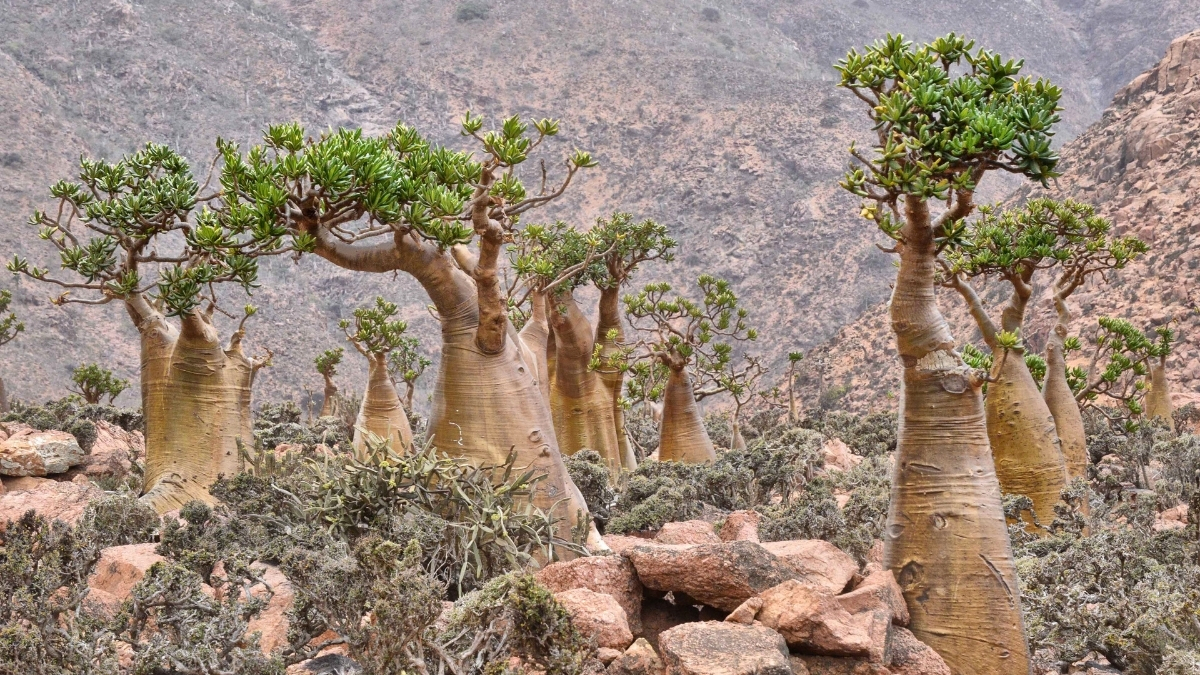
Энэтхэгийн далайд орших Сокотра арлын уугуул, Adenium obesum буюу цөлийн сарнай нь ус хадгалах өвөрмөц бүтэцтэй, эмчилгээний болон хордуулах шинж чанартай ургамал юм.
Сокотра арлын хад чулуурхаг орчинд ургадаг энэ ургамал нь бүдүүн их бие, нарийн мөчир, тод ягаан цэцгээрээ бусдаас ялгардаг. Их бие болон үндсэндээ ус нөөцлөх чадвартай нь хуурай, ширүүн уур амьсгалд дасан зохицсон хувьслын үр дүн юм. Жил бүрийн гуравдугаар сараас дөрөвдүгээр сарын хооронд цэцэглэдэг энэ ургамал нь байгалийн архитектурын гайхамшиг гэгддэг.
Apocynaceae овгийн энэ ургамал нь зүрхний үйл ажиллагаанд нөлөөлөхүйц “кардиакийн гликозид” хэмээх биологийн идэвхт нэгдлийг агуулдаг. Энэхүү нэгдэл нь зүрхний дутагдлыг эмчлэхэд тустай байж болох ч их хэмжээгээр хэрэглэвэл хүн болон амьтанд маш аюултай хор болдог. Судалгаагаар тус ургамлын үр, үндэс нь хорны хамгийн өндөр агууламжтай хэсэг болохыг тогтоожээ.
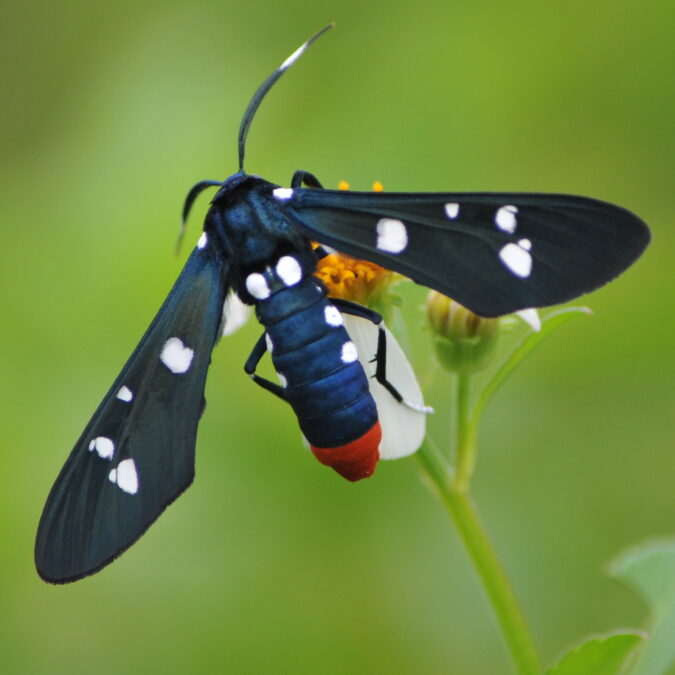
Хэдийгээр хортой ч гэсэн энэ ургамал нь экосистемд чухал үүрэг гүйцэтгэдэг. Тухайлбал, Syntomeida epilais эрвээхэйн авгалдай нь энэ ургамлын навчаар хооллодог бол, насанд хүрсэн эрвээхэйнүүд нь түүнийг тоос хүртээхэд гол үүрэг гүйцэтгэдэг байна. Мөн олон улс оронд уламжлалт анагаах ухаанд шарх сорви, арьсны өвчин, халдвар болон паразит өвчнийг эмчлэхэд ашигладаг уламжлалтай.
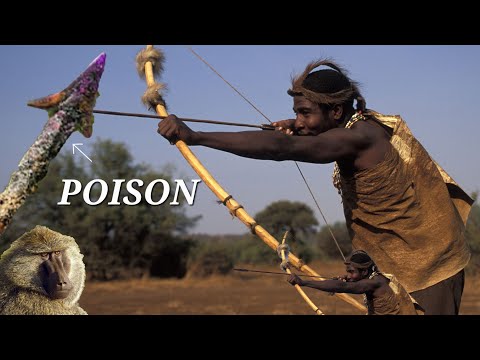
Түүхийн туршид зарим бүлэг хүмүүс энэ ургамлын шүүсийг ан агнуурт зориулсан хор болгон ашиглаж ирсэн бол шашны болон ёслолын зан үйлд ч мөн хэрэглэдэг байна. Өнөө үед цөлийн сарнайг гоёл чимэглэлийн зориулалтаар, ялангуяа бонсай урлагт өргөнөөр тариалж байна. Эрдэмтэд тус ургамлын найрлагаас нян, вирус, хорт хавдрын эсрэг нөлөөтэй олон арван нэгдлийг илрүүлээд байгаа юм.
Дэлгэрэнгүйг эх сурвалжаас харах
↓Эх сурвалжийг нээх ↓
The Socotra variety of the desert rose (Adenium obesum) looks like a tree that a child might draw. Its rounded, bulbous trunk, spindly branches, and brilliant pink blooms appear both otherworldly and too delicate for its home.
It is only found on the rocky landscape of Socotra, a Yemeni island in the Indian Ocean, where it’s sometimes called the bottle tree.
With a base that can grow to about 2.4 meters (8 feet) across, that name makes perfect sense – it looks like a giant soft-sided water bottle plopped down on Earth’s surface.
That swollen form is an adaptation to life in a harsh, dry environment: The plant stores water in its enlarged trunk and roots.
After spending months looking like an exceptionally strange piece of desert architecture, it puts on a show. From early March through late April, Socotra’s desert roses can erupt in striking pink-and-white flowers.
It’s a weird-looking plant – but its strangeness is more than skin-deep.
It’s also medicinal. Ceremonial. And poisonous.
All five varieties of A. obesum grow in dry places: some are native to the Sahel regions south of the Sahara Desert, some to southern Africa, and others found on the Arabian Peninsula (like Socotra in Yemen).
But back to the poison: A. obesum belongs to the Apocynaceae family, known for containing latex and, in many species, biologically active compounds including cardiac glycosides.
The Socotra desert rose is no exception.
When it’s injured, it produces a milky white latex, and that sap contains compounds that can affect the heart.
Those compounds are part of what makes this toxic tree so fascinating – and so dangerous. If consumed in small quantities, cardiac glycosides can increase the force of the heart’s contractions while simultaneously slowing its rate, and so they can be useful for treating various kinds of heart failure.
The same chemistry that makes the plant potentially helpful for healing also makes it a poison.
In a perfect example of the old adage “the dose makes the poison,” too much of the cardiac glycosides can cause vomiting, blurred vision, dangerously abnormal heart rhythms, and other potentially life-threatening effects.
That goes for both humans and animals.
In a well-documented case, a blue and gold macaw (Ara ararauna) – kept as a pet – ate the bloom from a desert rose houseplant and had an immediate, severe reaction that required 12 days of veterinary treatment, though it recovered.
In another contradiction, the polka-dot wasp moth (Syntomeida epilais) relies on the leaves of this poisonous-to-many plant for food when it’s a caterpillar. It later repays the favor as one of the plant’s primary pollinators, along with other nocturnal moths.
But again, poison can also be useful.
In northern Tanzania, for example, the Hadza have traditionally used A. obesum as an arrow poison for hunting animals including buffalo, zebras, giraffes and birds.
Other communities have used the plant to poison fish, pests and vermin.
A 2024 review of the plant’s ethnobotanical uses found an incredibly wide range of applications. In different regions, people have used parts of the plant for skin problems, wounds, earaches, tooth decay, lice, and various infections.
The review notes that the seeds and roots are particularly potent sources of the plant’s poisonous compounds.
Some communities have also used A. obesum in treatments for diseases including malaria and other parasitic infections.
Which of these treatments may be effective isn’t clear, but researchers have identified dozens of compounds in A. obesum, some with reported antibacterial, antiviral, antioxidant, or anticancer activity.
One review identified 53 compounds from previous research, but also emphasized that some are toxic.

This wide range of uses may explain why the desert rose is also used in mystical or religious practices.
“The sap is believed to be efficacious in collaring illness caused by the evil eye, and is used as a protection tool against evil spirits and ill-wishers,” write the authors of a 2020 review published in the Journal of Medicinal Plants Studies.
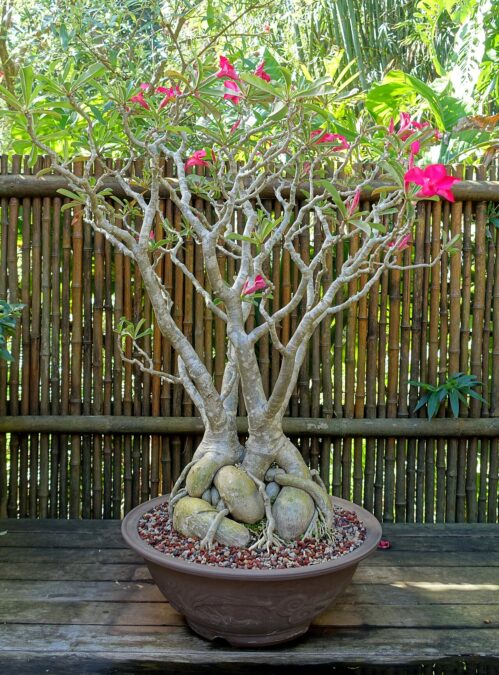
And of course, the desert rose is cultivated as an ornamental plant and prized not just for its flowers but for its bizarrely swollen roots, which can be shaped around rocks and into stunning bonsai.
Its flowers have also been used in eco-printing, transferring natural pigments onto fabric.
In some Buddhist ceremonies, the stems, leaves, and flowers are used as offerings, while in parts of Indonesia the flowers are associated with cemetery visits and remembrance of the dead.
Related: Earliest Direct Evidence of Poisoned Arrows Revealed in 60,000-Year-Old Relics
The subspecies of the desert rose plant are not just one thing; they are many – beautiful flowering plants, living water tanks, a source of traditional medicines, ceremonial plants – and, under the right circumstances, a poison.
This article was fact-checked by Rachel Garner and edited by Rebecca Dyer. While we pride ourselves on our process, we are only human. If you spot a mistake, please let us know.


Цөлийн сарнайны тухай сонирхолтой мэдээлэл байна, гэхдээ энэ ургамал үнэхээр аюултай нэгдлүүд агуулдаг гэдгийг мэджийн үү? Харин та өөрийнхөө мэдлэгээр энэ ургамлын хоруу чанарыг яаж ашиглах байсан бол?