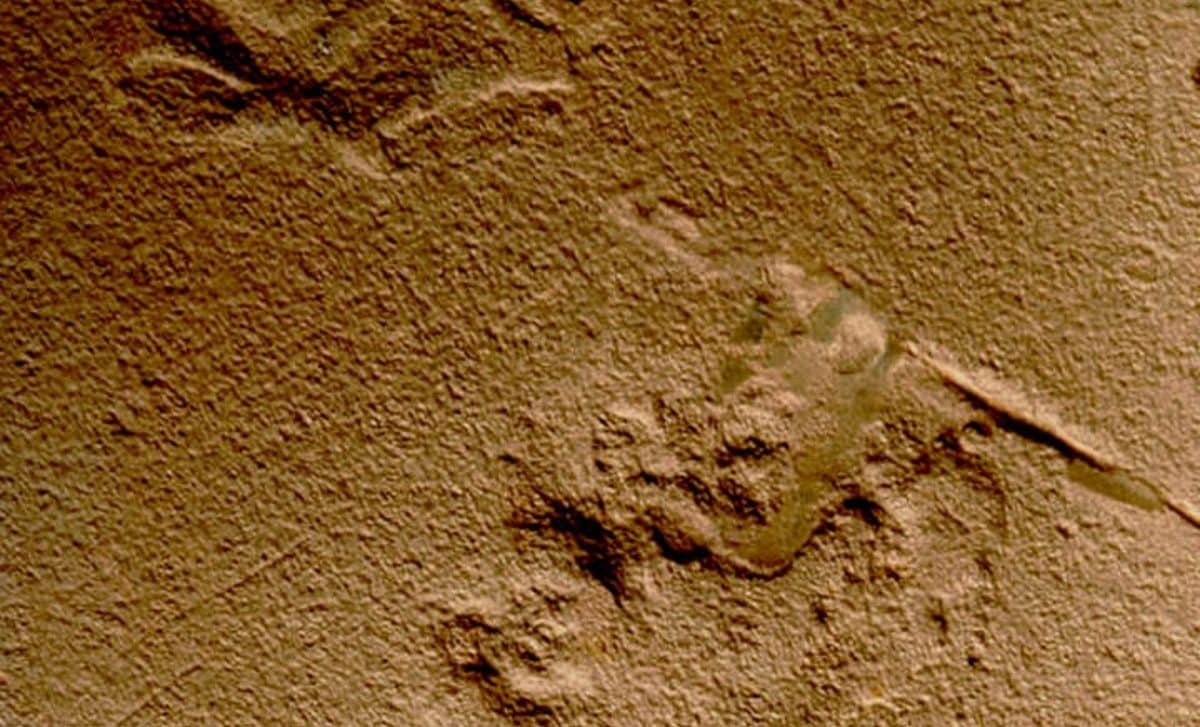
Судлаачид үлэг гүрвэлийн эрин үед амьдарч байсан, өмнө нь бүртгэгдсэн хөхтөн амьтдаас хоёр дахин том биетэй байж болох амьтны мөрийг илрүүлжээ.
Бразилын Ботукату тогтоцоос олдсон 130 сая жилийн настай уг мөрүүд нь хөхтөн амьтны ул мөр болохыг Journal of South American Earth Sciences сэтгүүлд нийтэлжээ. Хамгийн том мөр нь 11.4 см урт, 13.4 см өргөн хэмжээтэй бөгөөд алхалтын урт нь ойролцоогоор 40 см байна. Эдгээр үзүүлэлтүүд нь уг амьтны биеийн урт нь 1.55 метр орчим байсныг илтгэж байгаа нь Цэрдийн галавын үеийн мэдэгдэж буй хамгийн том хөхтөн амьтдаас хоёр дахин том үзүүлэлт юм.
Доктор Педро Бак болон түүний багийнхан энэхүү олдвор нь тухайн үеийн хөхтөн амьтад жижиг хэмжээтэй байсан гэх уламжлалт ойлголтыг өөрчлөхүйц нээлт гэж үзэж байна. Тус мөрийг Челихноподидае (Chelichnopodidae) овгийн амьтны ул мөр хэмээн ангилсан боловч ясны үлдэгдэл олдоогүй тул шинэ зүйл хэмээн нэрлэхээс түр түдгэлзжээ. Судлаачид уг амьтныг нохой эсвэл уулын арслангийн хэмжээтэй байсан байх магадлалтай гэж таамаглаж байна.
Ботукату бүс нутаг нь тухайн үед асар том цөлийн бүс байсан бөгөөд том биетэй үлэг гүрвэлүүд байхгүй байсан нь хөхтөн амьтдад экологийн хоосон орон зайг эзлэх боломж олгосон байж болзошгүй юм. Энэхүү амьтан нь бүх идэштэн байсан байх магадлалтай бөгөөд үлэг гүрвэлийн зулзага, жижиг хөхтөн амьтад болон шавьжаар хооллодог байсан байж болох талтай.
Ясны үлдэгдэл олдоогүй нь уг бүс нутагт яс хадгалагдан үлдэх нөхцөл тааруу байсантай холбоотой гэж доктор Эрминио Исмаэль де Араужо-Жуниор тайлбарлав. Иймд эрдэмтэд одоогийн олдсон мөрүүдээс гадна тухайн бүс нутгийн ойр орчмын өөр төрлийн хөрс бүхий давхаргуудаас ясны үлдэгдэл олох магадлалтай гэж үзэж байна. Түүнчлэн, өмнө нь олдсон зарим олдворуудыг буруу ангилсан байх магадлалтай тул судлаачид нээлттэй байх шаардлагатайг онцолжээ.
Дэлгэрэнгүйг эх сурвалжаас харах
↓Эх сурвалжийг нээх ↓
A set of 130-million-year-old footprints unearthed in Brazil appears to belong to the largest mammal known from the age of dinosaurs. The tracks, found in the Botucatu Formation, suggest a creature roughly 1.55 meters long, about twice the size of any previously identified Cretaceous mammal, and potentially large enough to have hunted young dinosaurs.
For decades, the standard picture of early mammals has been one of small, shrew-like creatures scurrying underfoot, doing their best to avoid becoming a dinosaur’s snack. Bones from Mesozoic mammals are rare, especially in the Southern Hemisphere, which means paleontologists often have to work with far less than a full skeleton.
This latest discovery, published in the Journal of South American Earth Sciences, adds to a small but growing body of evidence that at least some corners of the dinosaur world hosted mammals well outside the expected size range. Rather than bones, the case rests entirely on footprints, though the researchers behind the find say those prints tell a surprisingly detailed story.
Tracks Point to an Animal Far Bigger Than Expected
The footprints themselves are unusually large: the biggest measure 11.4 centimeters long and 13.4 centimeters wide, with a stride length of around 40 centimeters between steps. It’s the proportions, as much as the size, that convinced Dr. Pedro Buck and his co-authors they were looking at a mammal’s paw rather than a dinosaur’s foot. As the study authors put it, describing the site’s preservation conditions:
“In the Botucatu Formation, most vertebrate tracks are preserved under conditions of low substrate cohesion, which commonly results in simplified morphologies and partial loss of fine anatomical detail.”
The team has assigned the tracks to the Chelichnopodidae family of mammal footprints but has stopped short of naming a new species, since no bones have been found to accompany the prints. Based on comparisons with other species where both tracks and skeletons are known, the researchers estimate the animal was roughly twice the size of the previous largest Cretaceous mammal on record, something closer to a large dog or a mountain lion than a shrew.
“The trackmaker is considerably larger than any mammalian species currently known from either skeletal remains or fossil tracks,” said Dr. Buck. “We have a game changer here.”
A Desert Ecosystem That Let Mammals Grow
The Botucatu Formation was, at the time, part of a vast desert far from any coastline, later split between South America and a small isolated patch in Africa as Gondwana broke apart. This isn’t the first oversized mammal track to come out of the formation either: two earlier discoveries, described in 2017 as Aracoaraichnium leonardii and Brasilichnium anaiti, were roughly the size of small dogs or large house cats.
Speaking to Science, first author Dr. Pedro Buck suggested that larger dinosaurs may simply have been absent from this particular desert region, for reasons not yet understood, leaving ecological niches open for mammals to expand into.

Why the Bones Are Still Missing?
Confirming the tracks with real skeletal remains is the obvious next step, but researchers admit the chances are slim. Dr. Hermínio Ismael de Araújo-Júnior, who co-authored the study, said the missing bones tell their own story:
“No mammaliaform body fossils are currently known from Jurassic or Early Cretaceous rocks in Brazil, and the Early Cretaceous skeletal record of mammaliaforms in Gondwana as a whole is extremely scarce. This makes the Botucatu tracks particularly important: They reveal animals that are simply absent from the Brazilian skeletal fossil record.”

De Araújo-Júnior explained that future finds may depend less on the desert itself and more on nearby deposits formed under different conditions, ones better suited to preserving bone rather than footprints:
“The best prospects may be deposits representing more favorable local environments within, or temporally close to, this ecosystem, where carcasses had a greater chance of being buried and preserved.”
He added that paleontologists “should certainly keep an open mind” about the possibility that other large mammal specimens, whether footprints or bones, have already been found but simply misidentified. As he put it:
“The traditional expectation that Mesozoic mammaliaforms were predominantly very small could potentially influence how unusually large tracks or fragmentary fossils are interpreted.”
The footprints can’t tell us much about what the animal ate, though the authors suspect it was an omnivore capable of occasionally hunting juvenile or small-bodied dinosaurs, along with smaller mammals, invertebrates, and whatever else crossed its path.
Enjoyed this article? Subscribe to our free newsletter for engaging stories, exclusive content, and the latest news.

