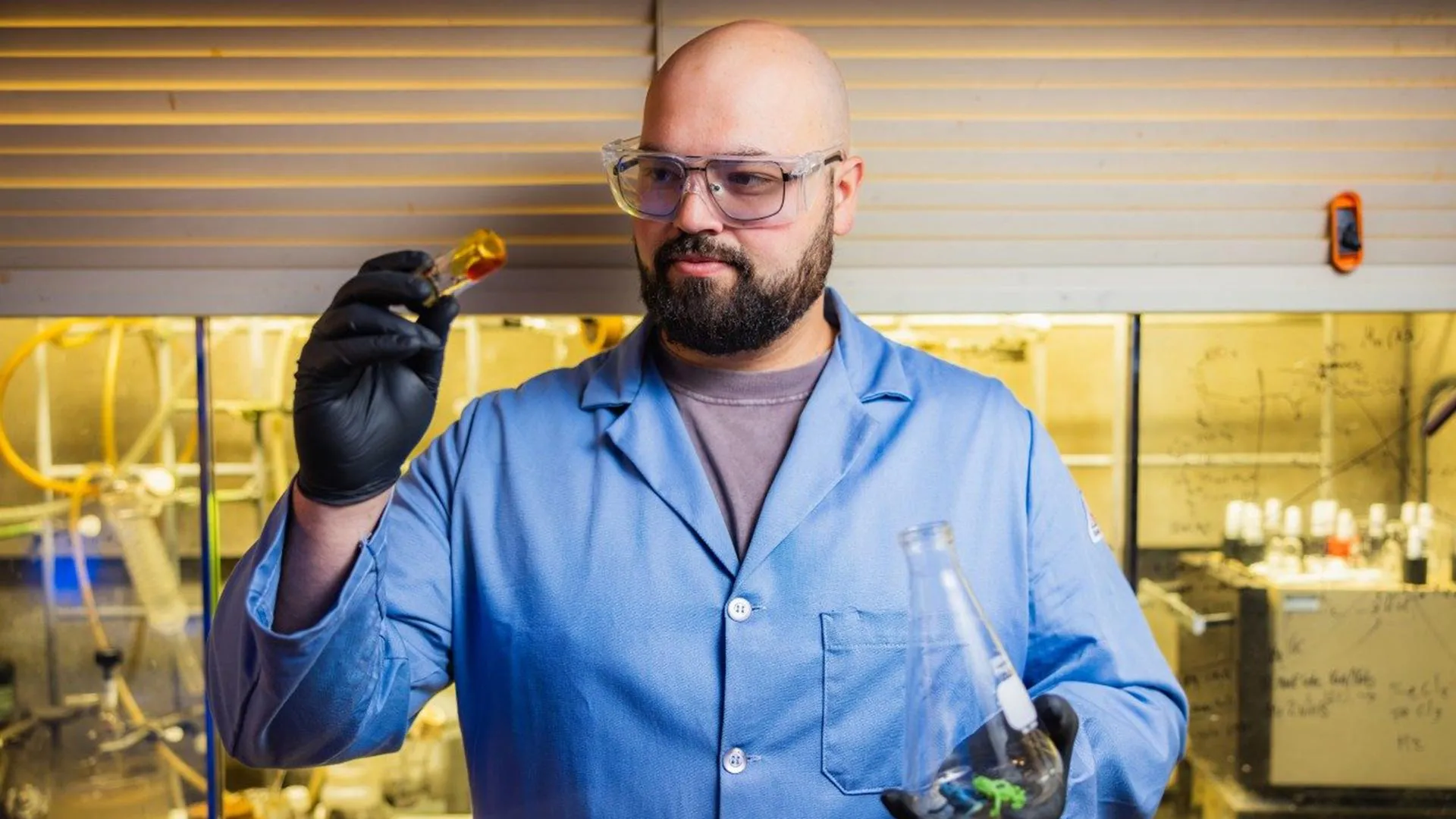
Виржиниа Тэхийн эрдэмтэд поливинил хлоридыг (PVC) хөдөлгүүрийн тосонд ашигладаг полиальфаолефин болгон хувиргах шинэ аргыг боловсруулжээ.
“Nature” сэтгүүлд наймдугаар сарын 5-нд нийтлэгдсэн судалгаагаар, дахин боловсруулахад маш хүндрэлтэй PVC хуванцрыг ашигтай бүтээгдэхүүн болгон хувиргах шинэ аргыг танилцууллаа. Хлорын нэгдэл болон нэмэлт бодисуудаас бүрддэг PVC нь байгаль орчинд их хэмжээгээр хаягддаг бөгөөд одоогийн аргаар дахин боловсруулахад төвөгтэй байдаг.
Судлаачид ахуйн хэрэглээний PVC-ийг уусгагчид хийж, хөнгөн цагаан трихлорид болон альфа олефинтэй хольсны дараа 158 хэмийн халуунд гурван цагийн турш боловсруулжээ. Энэхүү химийн урвалын үр дүнд тосолгооны материалын үүрэг гүйцэтгэх өтгөн тос ялгаран гарсан байна. Энэхүү процесс нь хуванцар хог хаягдлыг бууруулахын зэрэгцээ аж үйлдвэрт шаардлагатай тосолгооны материалыг тогтвортой аргаар үйлдвэрлэх боломжийг бүрдүүлж байна.
Судалгааны багийн ахлагч, профессор Гүолян “Грэг” Лиу болон түүний шавь нар анх полимер гинжийг задлах туршилт хийх явцдаа энэхүү нээлтийг олсон аж. Тэдний хэлснээр, эхэн үеийн туршилтын үр дүн нь хангалтгүй байсан ч полимер гинжийг жижиг хэсгүүдэд хуваах санаа нь өндөр үзүүлэлттэй тосолгооны материал гаргаж авах гол түлхүүр болжээ.
Одоогийн байдлаар эрдэмтэд уг тосыг илүү өргөн хүрээнд үйлдвэрлэх боломж, эдийн засгийн үр ашгийг тооцоолох загваруудыг боловсруулж байна. Энэхүү судалгаа нь хуванцар хог хаягдлыг дахин ашиглах ирээдүйн шинэ гарцыг нээж байгаа бөгөөд цаашид илүү тогтвортой үйлдвэрлэлийн системийг бий болгохыг зорьж байна.
Дэлгэрэнгүйг эх сурвалжаас харах
↓Эх сурвалжийг нээх ↓
Virginia Tech chemist and chemical engineer Guoliang “Greg” Liu and his research team have developed a method for transforming polyvinyl chloride (PVC) into polyalphaolefin, an important ingredient used in lubricants including engine oil.
Published Aug. 5 in Nature, the work could offer a way to address two separate environmental problems at once: the difficulty of recycling PVC and the need to produce valuable industrial lubricants more sustainably.
PVC is especially challenging to recycle because it contains chlorine and can include a wide range of additives depending on how it was manufactured. Those complications mean large quantities of PVC ultimately end up in landfills.
Meanwhile, demand continues to grow for lubricants such as engine oil, which can carry a significant environmental cost to produce. Converting discarded PVC into a useful lubricant component could therefore reduce plastic waste while creating a valuable new product.
Turning PVC Waste Into Lubricant
Lubricants rarely attract much attention, but they are essential to modern machinery. Engine oil is used in equipment ranging from lawn mowers and passenger cars to jet engines, so industries depend on a steady supply of the materials used to make lubricants.
Liu’s laboratory has now developed a process that could provide another destination for PVC waste and help address the growing problem of plastic pollution.
The method begins with PVC similar to the material found in household plumbing, window structures, and even credit cards. Researchers place the PVC in a solvent, then add aluminum trichloride and alpha olefins. The mixture is heated to 158 degrees Fahrenheit for three hours. Afterward, the researchers extract a relatively thick oil from the solvent that functions as a lubricant.
“Number one, we have proved that it is feasible to use plastic waste to make high-performance lubricants. Number two, these lubricants are green, and they can meet the emerging needs for sustainability by the market,” Liu said.
Building on Earlier Plastic Upcycling Research
The project grew out of previous work by the team that was published in Science and Nature Sustainability. In those studies, the researchers developed approaches for converting other types of plastic waste into surfactants used in products such as soaps and detergents.
After those efforts proved successful, Liu and his colleagues decided to investigate whether PVC could also be converted into something useful.
“We want to help improve the recycling and upcycling of PVC,” Liu said.
Liu assembled a team of graduate researchers to pursue the project. Eric Munyaneza Nuwayo, a doctoral student in the final year of his doctoral program, was selected to lead the effort.
Connor S. Thompson, a graduate student in the chemistry department, had originally been working on another research project. When Liu suggested shifting to this new challenge, Thompson agreed to take it on.
The team also included Abby Civiello, a first-year graduate student who quickly made important contributions to the research.
“I often called them the three musketeers,” Liu said.
A Gooey Result Leads to a New Idea
At first, the researchers experimented with ways to chemically transform PVC molecules into different materials.
“The idea was simple. PVC, as one of the most activated forms of polyethylene, ought to be easily converted into some other molecules by replacing the chlorine atoms with other groups,” Liu said.
The early results, however, were not especially useful. The materials remained soft, somewhat gooey, and failed to deliver the level of performance the researchers wanted.
“One day I realized — if this polymer is so gooey and so soft, why don’t I just keep breaking the polymer chains down to smaller segments?” said Liu.
That change in direction proved important. As the team continued breaking down PVC, producing new molecules, and evaluating the resulting material, Liu began to see that they had created something potentially more valuable than a conventional recycling product.
Testing What the Team Had Created
To determine exactly what the new oil could do, Liu reached out to researchers with additional expertise.
Samples were sent to Ali Erdemir at Texas A&M University, where researchers tested the final materials. Liu also collaborated with William Goddard at Caltech on chemical computations.
Virginia Tech colleague Xi Chen contributed an economic and production analysis, developing models for how the oil might eventually be manufactured on a much larger scale.
The researchers now want to make the lubricant production process more sustainable while also making the resulting product more widely available.
“Lubricants are the silent hero out there. We often don’t recognize they exist, but they are out there working quietly. We want to be able to produce the oil on a larger scale to reach more people in the world,” Liu said.

