
Нохойнууд өөрийн эздийн нүд цавчих хөдөлгөөнийг мэдэрч, түүнд хариу үйлдэл үзүүлдэг болох нь шинэ судалгаагаар илэрлээ.
Италийн Пармагийн их сургуулийн судлаачид 35 нохойг оролцуулан хийсэн туршилтаар тэдний нүд цавчих давтамж нь хүнээс хамаардаг болохыг тогтоожээ. Нохойнууд өөрийн эзэн нүдээ цавчих үед илүү олон удаа цавчдаг боловч танихгүй хүмүүсийг ажиглахдаа ийм хариу үйлдэл үзүүлдэггүй байна. Энэ нь нохойнууд зөвхөн хөдөлгөөнийг дуурайдаг бус, харин өөрт нь нийгмийн хувьд ач холбогдолтой хүнийг илүү анхааралтай ажигладгийг харуулж байна.
Судалгааны багийн гишүүн Элеанора Биффигийн тайлбарласнаар, нүд цавчих нь зөвхөн нүдийг чийгшүүлэх физиологийн үйлдэл төдийгүй анхаарал, оролцоо эсвэл харилцааны талаарх мэдээллийг агуулсан нарийн дохио байж болох юм. Туршилтын явцад нохойнууд эздийнхээ нүдний хөдөлгөөнийг нарийн дагаж мөрдөж байсан нь тэдний хүн-амьтны харилцаанд оролцох чадвар өндөр болохыг баталлаа.
Хэдийгээр нохойнууд эздийнхээ нүд цавчих хэмнэлтэй яг таг давхцах байдлаар нүдээ цавчдаггүй ч энэхүү үйлдэл нь хүн-нохойн харилцааны “нийгмийн цавуу” болж магадгүй гэж судлаачид үзэж байна. Цаашдын судалгаагаар энэхүү нүд цавчих харилцаа нь нохойн зан төлөв, харилцаанд орох хүсэлд хэрхэн нөлөөлдгийг нарийвчлан судлах шаардлагатай байгаа юм.
Дэлгэрэнгүйг эх сурвалжаас харах
↓Эх сурвалжийг нээх ↓
We love our dogs and we know they love us back. But you might wonder if they are really paying much attention to us – or merely waiting for us to drop a piece of cheese.
New research points to the fact that pooches are very much attuned to people, even down to our blinks.
The new study, published in the journal Royal Society Open Science, is based on the observation that dogs’ own blinking changes depending on whether the human they’re watching is blinking – and, importantly, whether that human is their particular person.
The finding doesn’t mean your dog has mastered the art of meaningful eye contact, or that you and your pup are secretly communicating in eyelid Morse code. But it does suggest that dogs are sensitive to something as fleeting as a blink, particularly when it comes from a human who is socially important to them.
Researchers at the University of Parma in Italy tested 38 dogs, although 35 ultimately met the criteria for inclusion in the analysis (three were too distracted by the unfamiliar surroundings to complete the task–sound familiar?).
They wanted to study blinking because it’s “an ancient, automatic physiological behavior that did not originally evolve as a social signal,” Eleanora Biffi, a co-author of the study, told ScienceAlert.
“Blinking could provide subtle information about attention, engagement, or affiliation.”
Given dogs’ sensitivity, the team “thought it was plausible that they might also respond to such a subtle movement as a blink, and that this response could be influenced by their relationship with the person.”
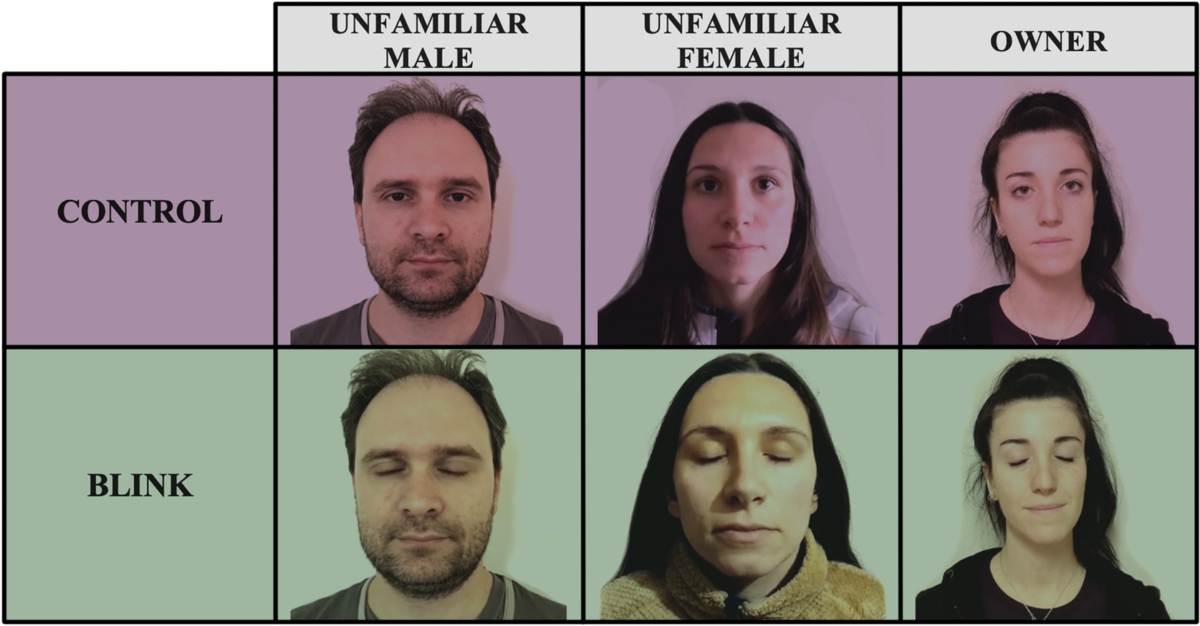
The dogs watched short videos featuring three people: their owner, an unfamiliar woman, and an unfamiliar man.
There were two versions of each video. In one, the person blinked every three seconds. In the other, the person simply stared at the camera with a neutral expression.
The very good dogs watched each version for 40 seconds while researchers recorded their behavior.
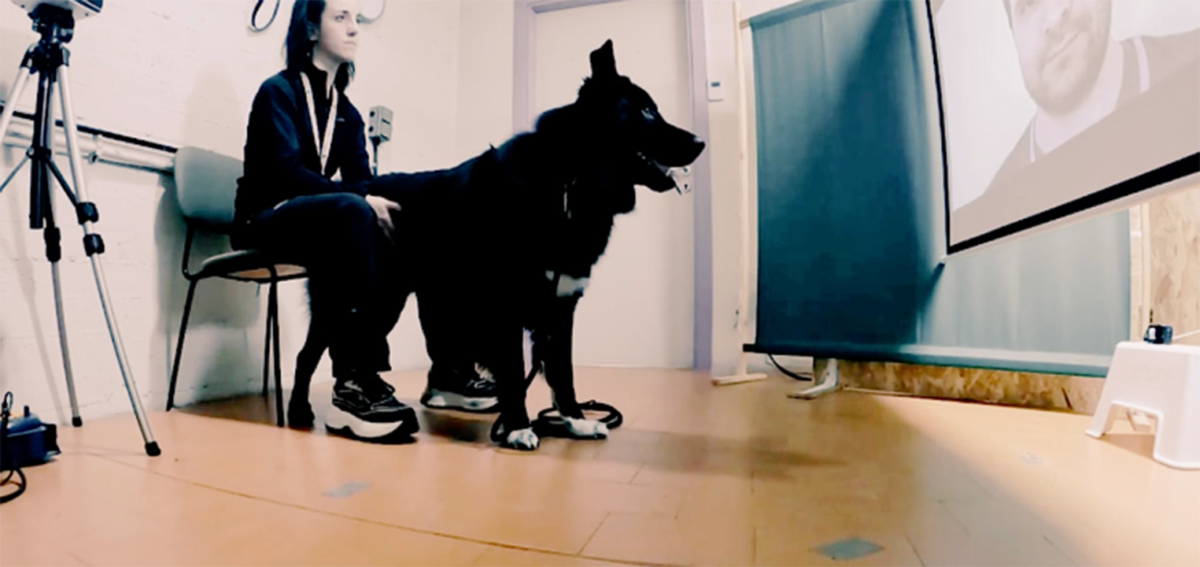
And sure enough, the canines tracked the humans’ blinks.
The researchers knew this because overall, dogs blinked significantly more when watching the blinking humans than when watching the humans with a completely still gaze.
But the interesting part was what happened when the face on the screen belonged to someone the dog actually knew.
The dogs’ blink rate increased when they watched their caretakers blink, while the same effect wasn’t seen when they watched the unfamiliar people. In other words, it wasn’t simply that a pair of moving human eyelids caused dogs to start blinking more – the identity of the human mattered.
There was also an intriguing sex difference: Dogs blinked more when watching their female owners than when watching either unfamiliar human, or when their owners were male.
The researchers emphasize that this result should be treated cautiously, because the study wasn’t designed to separate the owner’s sex from things like caregiving history or the nature of the dog-human relationship.
So are dogs blinking back at us as a tiny canine sign of affection?
Maybe. But the researchers aren’t ready to say that yet.
“[The study] suggests that dog–human communication may therefore involve not only obvious signals such as vocalizations, postures, or gaze direction, but also very small facial movements that we normally overlook,” says Biffi.
Blinking has an obvious physiological purpose – it keeps the surface of the eye moist and protected – but scientists are increasingly interested in whether it can also provide information about attention, arousal, or social relationships.
There are some interesting precedents. Previous research has found that dogs blink more when shown other blinking dogs, and other studies have suggested that dogs may synchronize their blinking with humans during live interactions.
Behavioral synchronization in dogs has been proposed as a kind of “social glue,” helping strengthen relationships between familiar individuals. (Cats and other primates have also been shown to attach psychological significance to blinking.)
This experiment, however, threw a (small) bucket of cold water on the idea that dogs were literally matching our blinks.

The researchers looked for a dog blink occurring within 1.5 seconds of a human blink. Of 96 dog-blink events, 57.3 percent fell into that window. So that result wasn’t significantly different from chance.
In other words, the dogs were blinking more when their humans blinked, but they weren’t reliably blinking with them.
The researchers say the increased blink rate shows that the dogs are obviously paying attention to their known human’s eye movements. Whether the dog’s own blinking is some kind of automatic mimicry or part of a broader social process isn’t yet known.
Because the dogs were watching prerecorded videos rather than interacting with a real human, the setup lacked the real-time feedback that may be necessary for genuine behavioral synchronization.
And the study leads to so many other questions: “We now know that looking at their owner blink can influence how frequently dogs blink, but we still do not know what this modulation means,” says Biffi.
“Does blinking provide feedback about attention or engagement? Is it associated with a relaxed or non-threatening interaction? And does reciprocal blinking affect a dog’s willingness to approach, maintain contact, or continue interacting?”
Related: Gifted Dogs Show They Can Learn Language Skills Thought Unique to Humans
Answering these questions will require combining detailed behavioral coding with measures of gaze, arousal, and physiological state.
These results add to the research that shows that dogs are remarkably attentive observers of us, and attune themselves to humans in a variety of ways.
Read the full study in The Royal Society Open Science.
This article was fact-checked by Michael Irving and edited by Michael Irving. While we pride ourselves on our process, we are only human. If you spot a mistake, please let us know.

