Шинжээчид 2026-27 оны NHL-ийн улиралд шилдэг залуу тоглогчдын өрсөлдөөнийг урьдчилан таамаглаж, шилдэг 20 нэр дэвшигчийг нэрлэв.
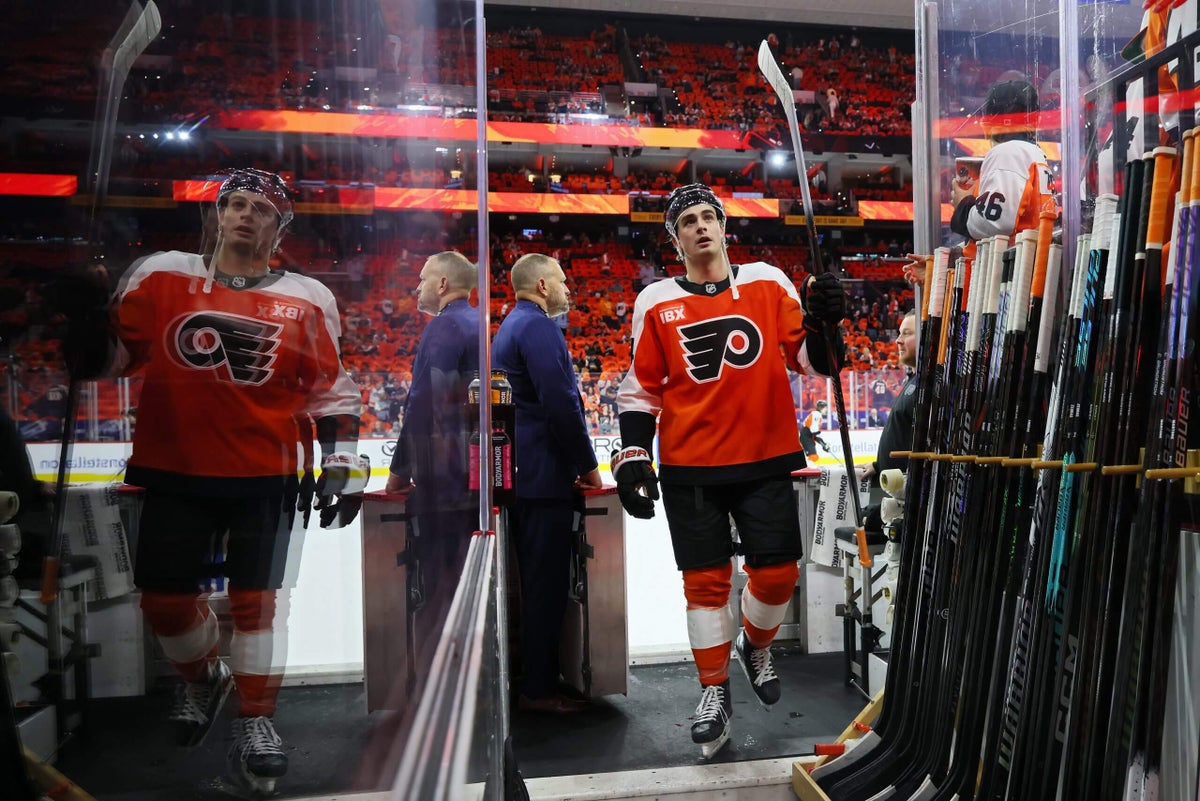
Philadelphia Flyers-ын довтлогч Портер Мартон өнгөрсөн улирлын төгсгөлд үзүүлсэн гайхалтай тоглолтынхоо ачаар энэ жилийн “Колдер Трофи”-г хүртэх хамгийн өндөр магадлалтай тоглогчоор нэрлэгдлээ. Түүний араас San Jose Sharks-ын довтлогч Ивар Стенберг болон Toronto Maple Leafs-ын шинэ залуу авьяастан Гэвин Маккенна нар жагсаалтыг тэргүүлж байна. Шинжээчид энэхүү дүгнэлтийг гаргахдаа тоглогчдын ур чадвараас гадна баг дахь үүрэг, тооны давуу байдлын үеийн оролцоо зэрэг гаднын хүчин зүйлсийг харгалзан үзжээ.
Washington Capitals-ын хамгаалагч Коул Хатсон болон Chicago Blackhawks-ын довтлогч Роман Кансеров нар хүснэгтийн эхний тавд багтсан нь тэднийг NHL-ийн түвшинд шууд нөлөө үзүүлэх боломжтойг харуулж байна. Хаалгачдын хувьд Jacob Fowler (Montréal Canadiens), Sebastian Cossa (Utah Mammoth), Sergei Murashov (Pittsburgh Penguins) нар шилдэг залуу тоглогчийн сунгаанд өрсөлдөхөөр байна. Гэсэн хэдий ч тэдний амжилт нь гарааны хаалгачаар хэр олон тоглолтод оролцохоос ихээхэн шалтгаалах юм.
Түүнчлэн Konsta Helenius (Buffalo Sabres), Anton Frondell (Chicago Blackhawks), Ilya Protas (Washington Capitals) зэрэг тоглогчид шинэ улиралд багийнхаа амжилтад бодитой хувь нэмэр оруулах төлөвтэй байна. NHL-ийн дүрэмд зааснаар, өмнөх улирлуудад 25-аас дээш тоглолтод оролцоогүй, мөн тухайн улирлын есдүгээр сарын 15-ны байдлаар 26 нас хүрээгүй байх нь “Колдер Трофи” авах үндсэн шалгуур болдог.
Дэлгэрэнгүйг эх сурвалжаас харах
↓Эх сурвалжийг нээх ↓
Welcome, for a ninth straight season, to The Athletic’s annual look at the NHL’s incoming rookie class.
This year, Scott Wheeler and Harman Dayal are joined by Corey Pronman for our quarterly Calder Trophy ranking, beginning with this preseason look at the top 20 rookies (plus honorable mentions) heading into the 2026-27 NHL season.
This list differs from Wheeler and Pronman’s own prospects rankings in that it’s only about predicting and projecting their rookie seasons, and not their careers. While the players’ profiles remain an obvious factor, external factors — potential linemates, power-play opportunities, roles, usage, etc. — are also uniquely relevant in handicapping the Calder Trophy race.
This ranking is also designed as a bit of a tutor for fantasy hockey managers, ideally helping to fill in the gaps that Dom Luszczyszyn and Shayna Goldman’s fantasy projections find difficult to model for new players.
Among the potential rookies we discussed but didn’t make our top 20 were defensemen Tristan Luneau, Theo Lindstein, Luca Cagnoni and Ryan Ufko, forward Victor Eklund, and camp wild-cards like Nikita Klepov, Caleb Desnoyers and Trevor Connelly.
Note: The NHL’s Calder Trophy criteria for rookie status says that “a player cannot have played more than 25 games in any single preceding season nor in six or more games in each of any two preceding seasons” and “must not have attained his 26th birthday by Sept. 15 of the season in which he is eligible.”
The Sharks have the NHL’s best prospect pipeline
Corey Pronman and Max Bultman
1. Porter Martone — RW, 19, Philadelphia Flyers
Martone’s tremendous showing in the NHL at the end of last season has to position him as the Calder favorite heading into this year. He didn’t just look like he belonged, he looked like an immediate impact player and potential needle-mover for the Flyers’ ceiling. If you presume Trevor Zegras and Travis Konecny are two of the forwards on the top power play, there are only two spots for Martone, Matvei Michkov, Tyson Foerster, Owen Tippett and Christian Dvorak, with the other three forming the nucleus of PP2. Smart money has to be on Martone being at the top of that pecking order for one of the available PP1 spots. And if he is, there shouldn’t be anything preventing him, with his combination of size, power, skill and playmaking, from having the kind of season needed to earn a Calder nomination (typically in the 50-point range) or potentially win it (typically the 60-plus point range) if he can stay healthy and get some puck luck. — Wheeler
2. Ivar Stenberg — LW, 18, San Jose Sharks
Stenberg is viewed as the more complete player for the NHL at this stage compared to Gavin McKenna, and has already proven himself against pro competition in the SHL and NHL competition in a top-line role for Sweden at men’s worlds. The X-factor in the point total he can reach will likely be determined by whether he gets to play with Macklin Celebrini and Will Smith, or whether that role goes instead to a veteran like Mason Marchment, or another youngster like Collin Graf or Igor Chernyshov (who’ve both already played with Celebrini a little). I’m less worried about him getting a PP1 job. Even if he starts on PP2, I don’t imagine it’s long until he’s playing on PP1 this season. — Wheeler
3. Gavin McKenna — LW, 18, Toronto Maple Leafs
McKenna is the rookie best positioned in this year’s class to collect cookies. He’s going to play on a top-six line in Toronto from Game 1 with some combination of Auston Matthews, William Nylander and John Tavares. He’s going to play the flank on PP1 with those guys plus Matthew Knies and Darren Raddysh, and make some pretty plays and also some five-foot passes that lead to assists. From a pure on-puck skill standpoint, he stands alone in this class as well. There are two questions with McKenna though: Will he and his body hold up to the rigors of a physical 84-game schedule, and will he be a drag defensively to offset some of the offense he’s bound to produce? If he withstands those challenges, he’ll be well-positioned to win the thing. But there’s also a scenario where he has a rookie season reminiscent of Jack Hughes, who played at a 28-point pace. — Wheeler
4. Cole Hutson — LHD, 20, Washington Capitals
It’s harder for young defenseman to play in the NHL and thus harder for rookie D to play their way into the Calder mix if you’re not an outlier (Matthew Schaefer, Lane Hutson) or uncharacteristically polished at an early age (Brock Faber, Moritz Seider). After posting 10 points in his 14 NHL games late last year, though, Hutson showed he was already capable of producing at the NHL level. There are going to be some ups and downs for him over an 84-game season, but that production could carry him even if it regresses a little. John Carlson’s departure also opens up opportunities to play in key offensive-zone settings, both on the power play and at five-on-five, which is crucial. Playing his way onto PP1 over Jakob Chychrun (or a Chychrun injury) will probably be needed for him to truly stay in the mix, though. — Wheeler
5. Roman Kantserov — LW/RW, 21, Chicago Blackhawks
Kantserov is the reigning KHL goal king and was one of the top players outside the NHL last season. While Anton Frondell is the bigger name and showed he could produce in the NHL last year, Kantserov will likely play with Bedard on the top line at five-on-five on top of sharing a spot with Frondell on PP1. With his speed, skill, shot and sneaky strength, he’s positioned to make an immediate impact offensively. — Wheeler
6. Konsta Helenius — C, 20, Buffalo Sabres
Helenius is a bit of a sleeper pick in this year’s rookie class. Jiří Kulich’s return lowers his likelihood of a top-six/prominent power-play role, but the Sabres are going to have three legitimate lines up front, two legitimate power plays, and between his play in the NHL late last year and at men’s worlds, he looks like he has really taken a step. The Sabres are hoping he’s ready to contribute with guys like Kulich, Noah Östlund and Zach Benson to replace the offense lost from the departures of Alex Tuch and Bowen Byram. As things tend to go with the Calder, his role and/or opportunity on the power play will determine his realistic hopes, so that’s worth monitoring in camp and early into the season for fantasy purposes. The Sabres have more than eight power-play-capable forwards. — Wheeler
7. Anton Frondell — C, 19, Chicago Blackhawks
Frondell surprised some, this writer included, with his 9-in-12 start and just how much he looked like he immediately belonged in the NHL in the spring. Doing that over 84 games is something else altogether, especially as a center — though I’ve always liked him better on the wing and have heard he quietly prefers the wing too. His size, stick and shot have always carried him and will continue to do so in the NHL, enabling him to crank one-timers on the power play and score around the net and occasionally from distance at five-on-five. His pace, playmaking and general inconsistency have troubled him at times over the years and will likely produce some up-and-down stretches through his rookie season. Still, it wouldn’t surprise anyone if he scored 20-30 goals as a rookie with that shot of his. — Wheeler
8. Jacob Fowler — G, 21,Montréal Canadiens
Fowler’s elite talent, tools, and dominant statistical track record make him arguably the best goaltending prospect in hockey. The 21-year-old won the Mike Richter Award as the NCAA’s best netminder in 2024-25, and his transition to pro hockey last season was seamless. Fowler posted a .916 save percentage in the AHL, but even more impressive is how impactful he looked during his brief NHL opportunity last season. He didn’t just hold his own; he significantly outperformed his defensive environment — he notched a rock-solid .908 save percentage and saved 9.3 goals saved above expected in 17 games. There’s every reason to believe Fowler is gifted enough to have a Dustin Wolf-esque rookie season, but the biggest roadblock for his Calder candidacy will be getting a sufficient number of NHL starts. Jakub Dobeš was lights-out through the second half of last season and the playoffs, which makes him the clear-cut No. 1. And if Sam Montembeault isn’t traded before the season starts, there’s a chance Fowler could start the season in Laval. Fowler’s clearly better than Montembeault at this stage, but he’s waivers-exempt and the organization may view consistent, high-volume AHL time as more beneficial for his long-term development. —Dayal
9. Ilya Protas — C/LW, 20, Washington Capitals
Protas’ rocket-ship development trajectory deserves more league-wide hype. The younger brother of Aliaksei Protas, he scored 66 points in 69 AHL games as a 19-year-old last season, which was one of the most productive U20 performances in AHL history. He looked sharp during an end-of-season NHL call-up too, scoring four points in four games. The behemoth 6-foot-6 center’s skating is a work in progress and may limit how dynamic his game looks early on, but his bulldozing net-front style and high-end puck skills should pay immediate offensive dividends. Protas should be a key middle-six contributor from day one, but the Capitals are so deep up front that it’ll be challenging for him to get as much ice time and prime power-play usage as the forwards higher on this list. Ryan Leonard, for instance, averaged only 14:25 per game during his rookie campaign last season despite looking incredible, which ultimately capped how many points he could produce. — Dayal
10. James Hagens — C/W, 19, Boston Bruins
With a creative, free-flowing offensive toolkit and a decorated NCAA scoring profile, Hagens has all the ingredients to eventually develop into a legitimate top-six difference-maker. However, when you’re only 19, you need to be a truly special talent to make an immediate, high-end NHL impact, and that’s where it could take Hagens some time to find his stride. Hagens showed some flashes once he signed his ELC at the end of last season, but he didn’t hit the ground running like Martone did, scoring one point in five games between the regular season and playoffs. He’s far more likely to play in the middle six and on PP2 than he is to ride shotgun with David Pastrňák. Perhaps his rookie season winds up looking similar to Logan Cooley’s — at 19, Cooley struggled in the first half of his rookie year, especially at five-on-five, but found his footing down the stretch and finished in the 40-point range. — Dayal
Does James Hagens have a future at center in the NHL?
Max Bultman and Corey Pronman
11. Carter Yakemchuk — RHD, 20, Ottawa Senators
Yakemchuk is a hard-shooting, big-bodied offensive defenseman coming off a respectable AHL campaign, scoring 40 points in 54 games from the back end. His long-term upside is very intriguing, but the Senators will likely shelter his NHL usage for a variety of reasons. Ottawa’s top-four defense is already very strong on paper, and he’ll likely begin this season as the third RHD on the depth chart behind Artem Zub and Jordan Spence. Jake Sanderson is also the undisputed PP1 quarterback, which will hurt Yakemchuk’s chances of putting up the gaudy point totals required to be in the Calder conversation. — Dayal
12. Viggo Björck — C, 18, Winnipeg Jets
The Jets will give Björck a legitimate opportunity to be the club’s full-time second-line center this season. Björck is one of the most NHL-ready prospects from this summer’s draft — he excelled playing against men in the SHL, shined at men’s worlds a few months ago and plays a tenacious, responsible two-way game that should earn an NHL coaching staff’s trust. However, he’s only 18 and won’t get PP1 opportunity, and while his offensive skill set is impressive, he isn’t a natural game-breaker. Björck could have a Ben Kindel-like rookie year where he scores 35-40 points in addition to driving precocious two-way underlying numbers. — Dayal
13. Sebastian Cossa — G, 23, Utah Mammoth
Acquired from Detroit in exchange for a first-round pick this summer, Cossa will join forces with Karel Vejmelka to form Utah’s goaltending tandem. Cossa is unproven at the NHL level, with only one career game under his belt, but he has a strong pedigree and his AHL numbers (between .911 and .915 in each of the last three years) are promising. He’s an intriguing bet for the Mammoth, but if Vejmelka stays healthy, it’s unlikely Cossa will play enough games to make serious noise in the Calder conversation. — Dayal
14. Sergei Murashov — G, 22, Pittsburgh Penguins
Murashov’s path to a potential No. 1 role is easier to envision than Fowler’s or Cossa’s because Pittsburgh’s current starter, Artūrs Šilovs, is also young and unproven. The challenge, though, is that the Penguins are often loose and shaky defensively (ranked bottom-10 in five-on-five expected goals against per 60 last season) which is a tough environment for goaltenders to excel in. Murashov has loads of talent and potential, but even if he plays well, it’ll be difficult for him to post the kind of raw save percentage that would garner meaningful Calder attention, unless Pittsburgh tightens up in its own zone. — Dayal
15. Tij Iginla — C/LW/RW, 20, Utah Mammoths
Iginla had a massive season in the WHL last year, dominating with Kelowna to the tune of 90 points in 48 games. He is a highly talented offensive player who generates a ton of chances with the puck on his stick. His stickhandling displays stand out constantly. While his pure playmaking doesn’t pop quite as much as his shot, he works hard and gets to the inside. After proving all he can at the junior level, the 2024 No. 6 pick is expected to make a strong push for a full-time NHL role out of camp this season. — Pronman
16. Bradly Nadeau — LW/RW, 21, Carolina Hurricanes
Nadeau has been excellent as a pro, proving to be one of the best young wingers in the AHL last season as a top player on a strong team. He boasts a lot of offensive talent, coupling very good individual puck skills with legit NHL speed. He’s highly dangerous in transition, backing off defenders with his pace before using his high-end shot. After dominating the AHL, the expectation is he steps into a full-time middle-six NHL role at least to start the season while Seth Jarvis is sidelined. — Pronman
17. Alex Bump — LW, 22, Philadelphia Flyers
Bump made the jump to the pros last season, putting up solid numbers in the AHL before making a positive impression during his stint with the Flyers. He relies on his intelligence and soft hands to generate offense, showing the ability to slow the game down and find seams. The major question mark remains his skating; he has a heavy stride that lacks ideal NHL pace. However, given his size, compete level and finishing touch, he is expected to push for a permanent bottom-six NHL role. — Pronman
18. Michael Brandsegg-Nygård — RW, 20, Detroit Red Wings
Brandsegg-Nygård had a big season in the AHL, showcasing his maturity and strength against men. He plays a highly projectable, pro-style game. He’s a tenacious competitor who wins a ton of puck battles and boasts a heavy, accurate shot. He’s not the flashiest offensive player but he has enough speed and skill to project to be able to tilt the ice at the next level. He’s expected to push for a full-time spot in Detroit this season. — Pronman
19. Sandis Vilmanis — LW, 22, Florida Panthers
Vilmanis had a very positive season last year, showing quite well in the AHL, playing for Latvia’s senior team and earning extended looks with Florida. He’s a fast, competitive winger who contributes effectively at both ends. He wins puck battles and consistently puts himself around the play. Though he lacks high-end creativity, he attacks in a direct, translatable manner. He should push for a bottom-six spot even in a loaded Panthers lineup. — Pronman
20. Rutger McGroarty — LW, 22, Pittsburgh Penguins
McGroarty was excellent in the AHL last year, establishing himself as a key piece for a strong Wilkes-Barre team. His game isn’t the flashiest, but he accomplishes a lot through high-end intelligence and great compete level. His skating remains his biggest hurdle but his size and hockey sense compensate. There is no clear spot for him on the Penguins to start the season, but he is still expected to compete at camp for a spot. — Pronman

