Шинэ судалгаагаар Paranthropus boisei зүйлийн төлөөлөгчид урьд өмнө төсөөлж байснаас илүү том биетэй бөгөөд нийгмийн нарийн бүтэцтэй байсныг илрүүллээ.
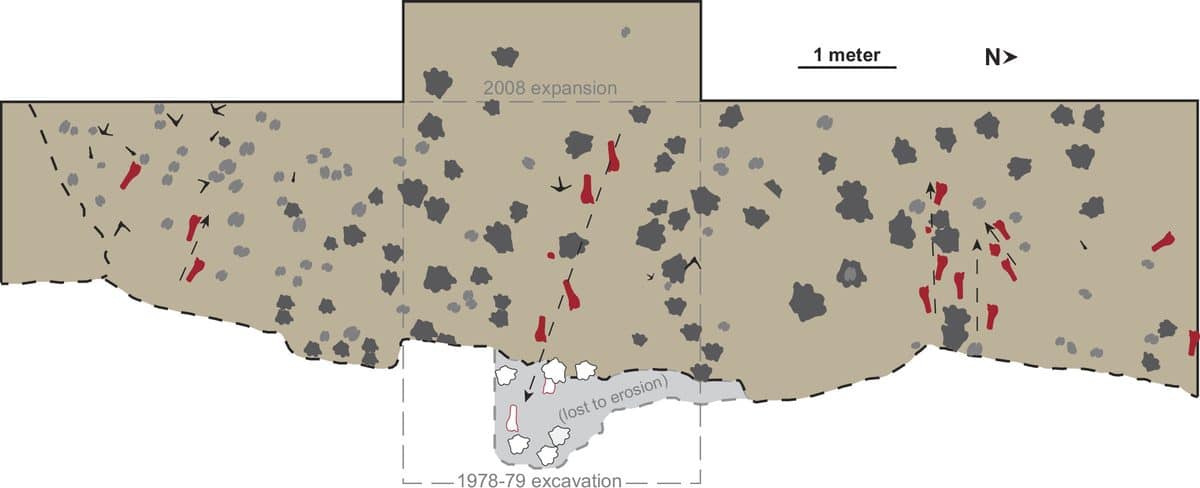
Кени улсын хойд хэсэгт орших эртний нуурын эрэг дээрээс 1.4 сая жилийн настай найман ширхэг хөлийн мөр олдсон нь эрдэмтдийн анхаарлыг татаж байна. Уг мөрүүдийг Paranthropus boisei хэмээх устаж үгүй болсон зүйлийн төлөөлөгчид үлдээсэн бөгөөд 2024 онд боловсруулсан аналитик аргын тусламжтайгаар тухайн хувь хүмүүсийн хөлийн бүтэц, алхааг тодорхойлжээ. Шинжилгээний үр дүнд тэдгээр бодгалиуд нь 1.8 метр хүртэл өндөр, 75 орчим килограмм жинтэй, хүн төрөлхтөнтэй төстэй биеийн хэмжээтэй байсан нь тогтоогдсон байна.
Энэхүү олдвор нь Paranthropus boisei-г өөрийн үеийн Homo erectus-аас хамаагүй жижиг биетэй байсан гэх өмнөх таамаглалыг эргэлзээтэй болгож байна. Түүнчлэн мөрүүдийн байрлал нь эдгээр найман бодгаль нэгэн зэрэг нэг газарт байсныг илтгэх бөгөөд тэдний дунд эмэгчин болон хүүхдүүд байхгүй байгаа нь зөвхөн насанд хүрсэн эрэгчин бүлэг явж байсныг харуулж байна. Эрдэмтдийн үзэж байгаагаар, энэ нь тухайн зүйл нь бүлгээр амьдарч, эрэгчинүүд нь үржлийн төлөө өрсөлдөхөөс гадна аюултай орчинд бие биеэ хүлээн зөвшөөрч хамтран амьдардаг нарийн нийгмийн бүтэцтэй байсныг илтгэж болох юм.
Туркана нуурын орчмоос олдсон олон зуун хөлийн мөр нь тус бүс нутаг эртний хүмүүсийн хувьслыг судлахад хэр зэрэг чухал ач холбогдолтой болохыг дахин нотоллоо. Судлаачид 40 километрийн зайтай хоёр өөр цэгт ижил төстэй геологийн нөхцөл бүхий газраас олдсон мөрүүд нь эртний хүмүүс тухайн нуурын эрэг орчмыг 100,000 гаруй жилийн турш тасралтгүй ашиглаж байсныг харуулж байна гэж үзэж байна. Цаашид уг малтлагын талбайд үргэлжлүүлэн судалгаа хийснээр эртний Плейстоцений үеийн хүмүүсийн амьдралын хэв маягийг илүү тодорхой ойлгох боломж бүрдэх юм.
Дэлгэрэнгүйг эх сурвалжаас харах
↓Эх сурвалжийг нээх ↓
Eight sets of 1.4-million-year-old footprints, pressed into the mud of an ancient Kenyan lakeshore, are rewriting what scientists thought they knew about one of humanity’s extinct cousins. The footprints belong to Paranthropus boisei, and several of the individuals who left them were far larger than researchers had ever imagined.
Most of what scientists have known about Paranthropus boisei has come from skulls, some with strikingly large jaws and teeth, but very little else, since the rest of the skeleton has always been frustratingly rare in the fossil record and has left huge gaps in our understanding of how this species actually looked and moved.
This new discovery, made near an ancient lake margin in northern Kenya, does exactly that. It offers researchers a fleeting glimpse of eight individuals occupying the same patch of ground at roughly the same time, and in doing so, hints at a social world far more complex than anyone had previously pieced together from bone fragments alone.
Footprints Point to a Surprisingly Large Body Size
Although known fossils are rare, the size of the footprints surprised the researchers. Using analytical techniques the research team first developed in 2024, they were able to identify the footprints based on foot anatomy and gait. What those tracks revealed, though, didn’t match expectations. According to lead author Kevin Hatala, of Chatham University and the Max Planck Institute for Evolutionary Anthropology:
“The sizes of the footprints indicate human-like body sizes – up to 1.8 meters tall and around 75 kilograms.”
That’s a notable departure from earlier estimates, which had painted Paranthropus boisei as considerably smaller than its contemporary, Homo erectus, a species widely considered a possible direct ancestor of modern humans. The footprint evidence now complicates that comparison, suggesting the size gap between the two may not have been as wide as once assumed.
The Hidden Rules Of Male Social Groups
Beyond body size, the footprints offer something bones simply cannot: direct evidence of group behavior. The eight individuals appear to have been traveling together, and most were likely adult males, with no clear signs of females or children among them. Neil Roach of Harvard University, a co-author on the research, said/
the pattern “hints at a complex social structure in this species.” As he put it, these hominins “may have lived in large groups, where males competed for mates, but also tolerated each other at times for safety in a dangerous environment.”

Rivalry and cooperation existing side by side, that’s a striking scenario, and one that bones alone would never have exposed.
Why the Lakeshore Kept Drawing Hominins Back
This find is part of a much larger pattern emerging around Lake Turkana, where researchers have now documented hundreds of hominin footprints across more than half a dozen sites. Two of these locations, roughly 40 kilometers apart, preserve strikingly similar lake-margin deposits from about the same age, a coincidence that has caught the attention of the team. As Smithsonian Institution co-author Kay Behrensmeyer noted:
“It is amazing that we have the same kind of lake margin deposits in two areas of East Turkana that are 40 kilometers apart, at about the same age.” She added that: “if we can understand what geological conditions allowed these tracks to be preserved, we should know more about why hominins continued to return to the lake shore environment over more than 100,000 years.”

Purity Kiura of the National Museums of Kenya framed the find in broader terms, noting that the footprints reinforce “the region’s global importance in understanding human evolution,” a point that, in her view, only strengthens Kenya’s standing as one of the world’s foremost paleoanthropological landscapes.
Since the research team is set to return to Kenya this year to keep excavating these footprint surfaces, each one, as Hatala describes it, will likely add another page to a growing “photo album” of hominin life during the Early Pleistocene.
Enjoyed this article? Subscribe to our free newsletter for engaging stories, exclusive content, and the latest news.

