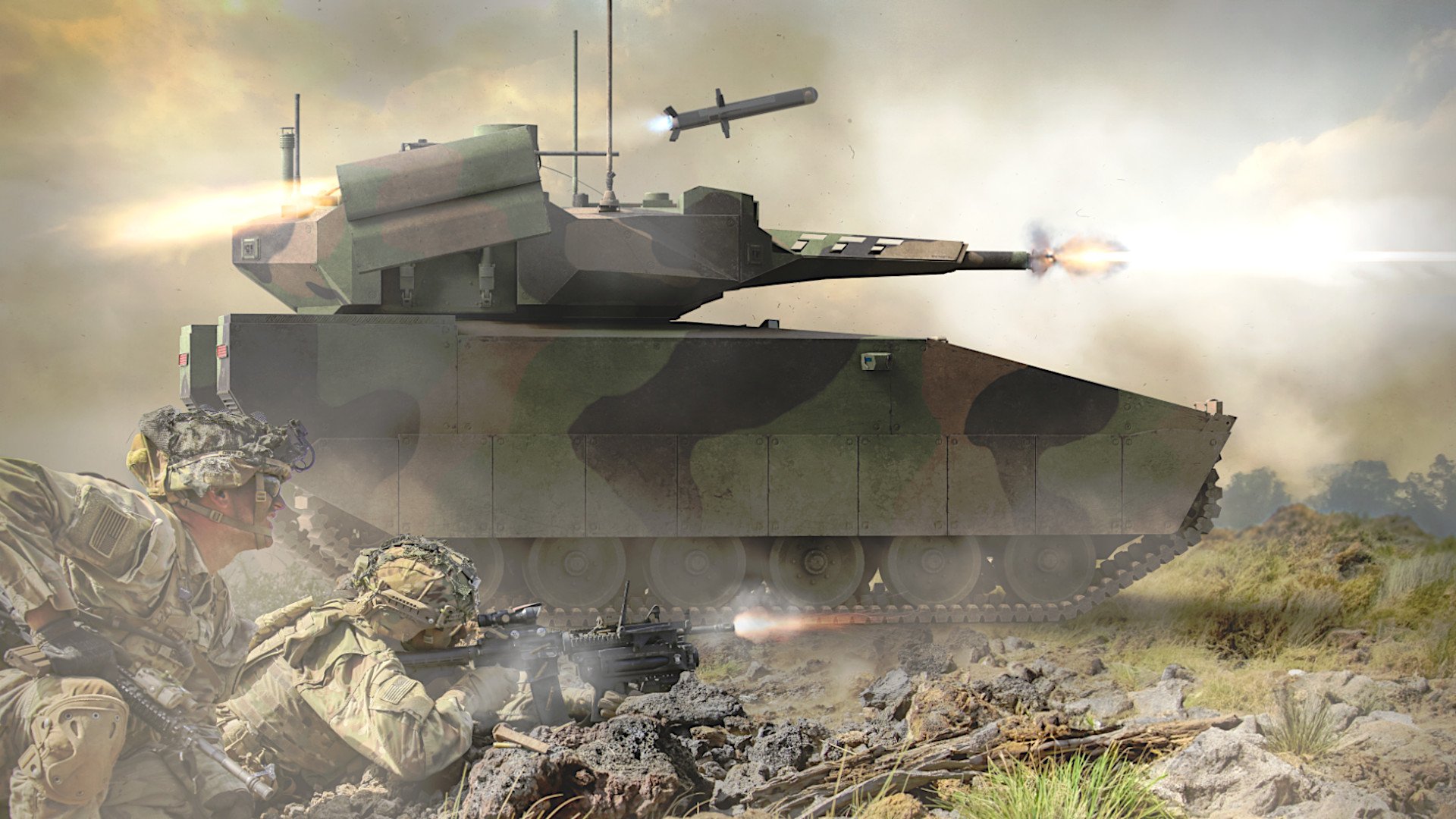
АНУ-ын Зэвсэгт хүчин XM30 явган цэргийн байлдааны машиныг орлуулах төслийн хүрээнд American Rheinmetall болон General Dynamics Land Systems компанийн бүтээсэн анхны загваруудыг туршилтад оруулахаар бэлтгэж байна.
American Rheinmetall болон General Dynamics Land Systems компаниуд өөрсдийн санал болгож буй XM30 механикжуулсан явган цэргийн байлдааны машины анхны прототипүүдийг АНУ-ын армид хүлээлгэн өглөө. Энэхүү хөтөлбөр нь одоо ашиглагдаж буй Bradley байлдааны машиныг орлох зорилготой бөгөөд ирэх хавар болох туршилтын үеэр M1E3 Abrams шинэ үеийн танкийн прототипүүдтэй хамт шалгагдах юм. Армийн төсвийн баримт бичгүүдээс үзэхэд 2031 оны санхүүгийн жил хүртэл дор хаяж 108 ширхэг XM30 машиныг худалдан авахаар төлөвлөжээ.
Хоёр компанийн санал болгож буй загварууд хоёулаа эрлийз-цахилгаан хөдөлгүүртэй бөгөөд түлшний зарцуулалт болон цахилгаан эрчим хүчний хүчин чадлыг сайжруулсан байна. Эдгээр машин нь XM913 50 мм-ийн автомат их буугаар зэвсэглэсэн бөгөөд жолоодлоготой нисгэгчгүй онгоц (loitering munitions) болон танк эсэргүүцэх пуужин харвах чадвартай. Мөн байлдааны талбарт удирдах болон тагнуулын үүрэг гүйцэтгэх, автоматжуулсан системийг хянах зэрэг технологийн дэвшилтэт шийдлүүдийг тусгажээ.
Туршилтыг ирэх хавар Калифорни муж улсын Форт Ирвин дэх Үндэсний сургалтын төвд хийхээр төлөвлөсөн бөгөөд үүнд 1-р морьт дивизийн 1-р бригадын байлдааны багийн цэргүүд оролцоно. Армийн зүгээс 2029 оны санхүүгийн жил гэхэд ялагч загварыг тодруулж, зэвсэглэлд нэвтрүүлэх зорилт тавьж байгаа хэдий ч эцсийн сонголт нь туршилтын үр дүнгээс шууд хамаарах юм. Өмнө нь Bradley-г орлох оролдлогууд зардал болон жингийн асуудлаас болж амжилтгүй болж байсан тул энэ удаагийн хөтөлбөрт онцгой ач холбогдол өгч байна.
Дэлгэрэнгүйг эх сурвалжаас харах
Эх сурвалжийг нээх ↓
American Rheinmetall and General Dynamics Land Systems have now delivered the first prototypes of their proposed XM30 Mechanized Infantry Combat Vehicle (MICV) designs to the U.S. Army. The XM30 program is the Army’s latest attempt to replace its fleet of Bradley Fighting Vehicles. The competing MICV designs are set to be put to the test alongside early prototypes of the next-generation M1E3 Abrams tank in the spring.
The U.S. subsidiary of Germany’s Rheinmetall has been developing a version of its Lynx family to meet the Army’s MICV requirements, and announced the delivery of the first example today. General Dynamics Land Systems (GDLS), which is offering the Wolf, a further evolution of the company’s Griffin III, itself derived from the ASCOD 2 infantry fighting vehicle, said last week that its first prototype had arrived at the Aberdeen Proving Ground in Maryland. Variants and derivatives of the Lynx and ASCOD 2 are already in service with several countries, which we will come back to later on.
The press release today from American Rheinmetall says the company will eventually deliver eight prototypes to the Army for further testing. It is very likely General Dynamics Land Systems will be supplying an equivalent number of vehicles, but the company does not appear to have confirmed that explicitly at the time of writing. Army budget documents released earlier this year show the service is planning to acquire at least 108 XM30s through Fiscal Year 2031. The Army has some 2,500 Bradleys in service today, a figure that includes multiple variants and subvariants.
“Delivering our first prototype to the Army is an important step as the XM30 Combat Vehicle program enters a more visible phase,” Matt Warnick, CEO of American Rheinmetall, said in a statement accompanying the release. “Team Lynx now has the opportunity to show the Army that we can deliver on the promise of a modern replacement for the Bradley.”
“I could not be happier to be part of the GDLS team that is delivering this incredible new capability on schedule to the Army – they need it now,” Geoffrey Norman, Director for U.S. Strategy & Growth at General Dynamics Land Systems, had written last week in a post on LinkedIn. “The work continues as this first vehicle gets into the Army’s hands.”
The Lynx and Griffin III-based XM30 designs both feature hybrid-electric propulsion. This will offer improved fuel economy, added electrical power generation, and other benefits compared to the Bradley with it traditional diesel engine. The vehicle both have remotely operated turrets, with their two-person crews, as well as up to six passengers, all riding in the hull.
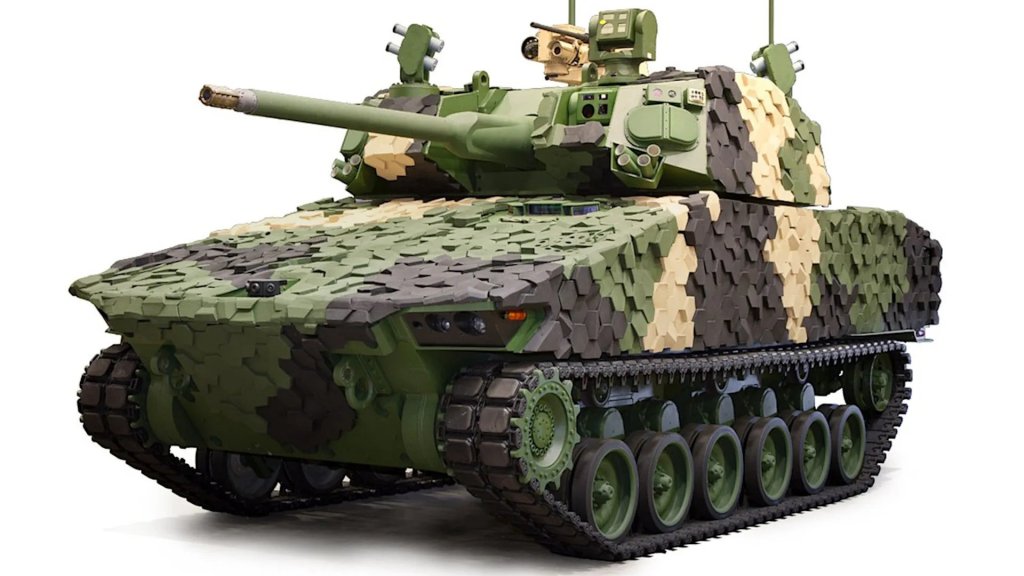
The Army expects the winning XM30 to provide significant boosts in lethality and other capabilities compared to any existing version of the Bradley. The main weapon on both competing designs is an XM913 50mm automatic cannon, offering a significant increase in firepower compared to the 25mm M242 on the Bradley.
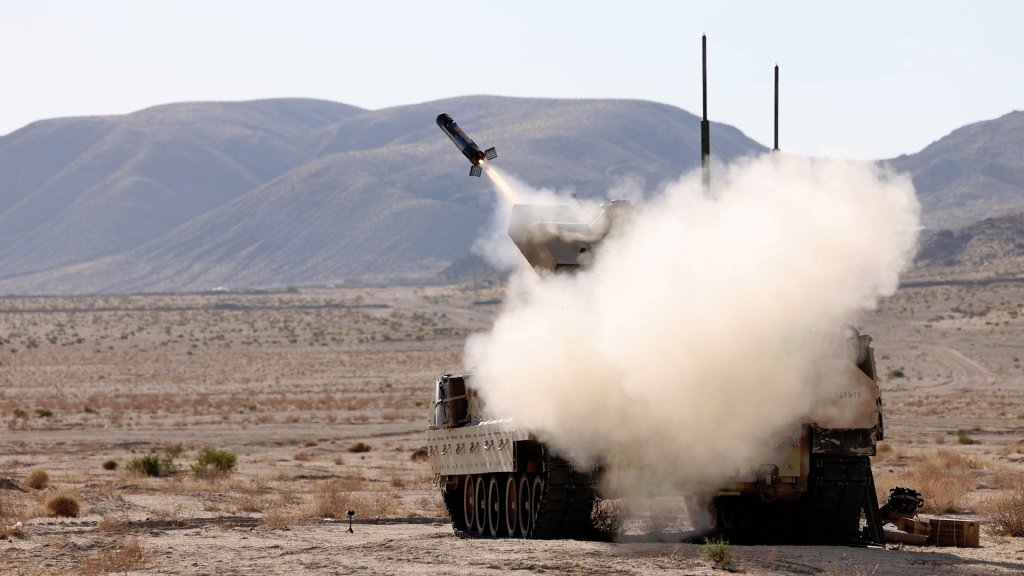
The XM30 will also be able to launch loitering munitions. AeroVironment’s Switchblade 300 has been integrated onto General Dynamics Land Systems’ design. American Rheinmetall’s entry is designed to be able to fire versions of Raytheon’s Coyote Block 3, but whether it can launch other munitions is unclear. The launchers on the Lynx-based XM30 are known to be also capable of firing anti-tank guided missiles, such as the TOW and Javelin. The Army has demonstrated the ability to fire a version of the Coyote from the TOW missile launcher on the Bradley, as well.
Next-generation fire control, sensor, and networking/communications capabilities are also key to the Army’s current Bradley replacement plans. With its improved network connectivity, the service envisions XM30s acting as controllers for uncrewed ground vehicles, as well. The Army has already been working to prove out future crewed-uncrewed teaming concepts using the Bradley.
Overall, the Army sees the XM30 as a future “cornerstone of the Armored Brigade Combat Team (ABCT), designed to enhance lethality, survivability, and maneuverability in high-intensity combat against near-peer adversaries,” according to the Army’s Fiscal Year 2027 budget documents. “The XM30 is versatile in its operational roles, capable of leading the charge, scouting ahead, or providing overwatch while Soldiers dismount and maneuver. Its ability to control robotic systems and semi-autonomous platforms adds another layer of capability, allowing the formation to extend its reach and maintain dominance across the battlefield.”
“The XM30 program is not just a replacement for the Bradley Fighting Vehicle – it represents a transformative leap in ground combat vehicle development. The XM30 is more than a vehicle; it is a software-defined platform designed for interoperability and adaptability, ensuring it evolves with changing technologies and operational demands,” the budget documents continue. “By leveraging digital engineering and modular open systems architecture (MOSA), the XM30 ensures infantry units always have the cutting-edge tools they need to outmaneuver and outgun the enemy. The XM30 also achieves a level of logistical efficiency that ensures sustained operational readiness while reducing costs and complexity.”
The Army now plans to put the XM30 prototypes to the test during a regular rotation at the sprawling National Training Center (NTC) at Fort Irwin in California next spring, according to a report last month from Breaking Defense. Soldiers assigned to the 1st Bridge Combat Team, 1st Cavalry Division out of Fort Hood in Texas, will operate the vehicles. 1/1st Cavalry is one of the Army’s so-called Transformation In Contact (TIC) units, which are supporting the service’s broader modernization objectives. The brigade is expected to bring prototypes of the next-generation M1E3 Abrams tank to the NTC, as well.
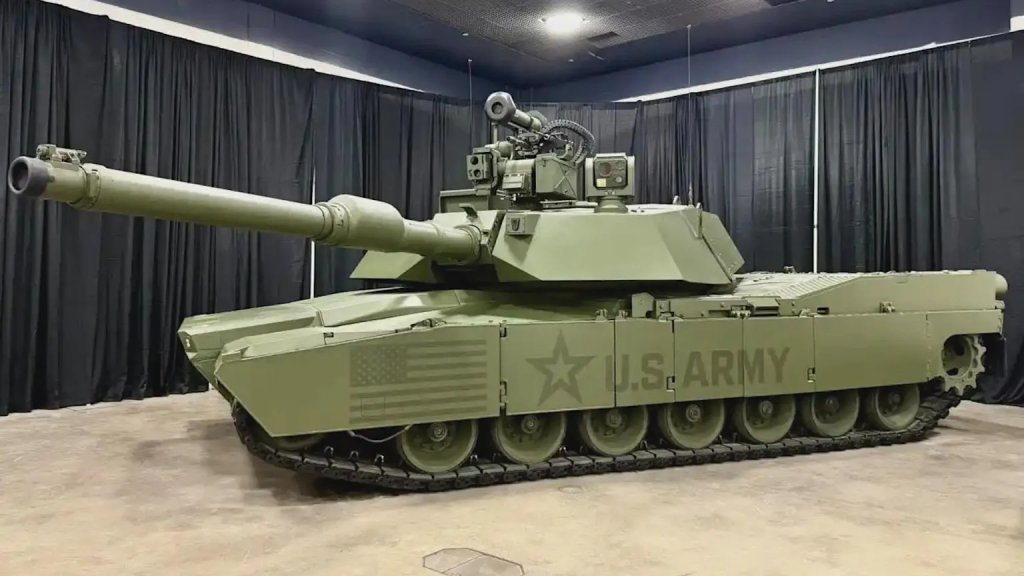
The Army has talked in the past about aiming to field a winning XM30 design by Fiscal Year 2029. However, it remains to be seen when the it might make a final selection and when the first of those vehicles actually enter operational service.
“We have a plan to carry two vendors as long as we possibly can. It becomes a question about resourcing the money, because you’re not paying necessarily double, but you’re kind of paying double,” Army Brig. Gen. Troy Denomy, Program Acquisition Executive of Maneuver, told Breaking Defense for its story in August. “We’re absolutely trying to keep our options open as long as we can, but money matters.
That being said, ‘if there’s not a clear winner at the end of the NTC rotation, ‘then it may be worth not selecting at that point,’ Denomy said,” per Breaking Defense.
This is hardly the first time the Army has attempted to replace the Bradley since it first entered service in the 1980s. Cost, weight, and other factors have derailed several previous attempts, including the Optionally Manned Fighting Vehicle (OMFV) effort that directly preceded the current MICV program. In February, another report from Breaking Defense had raised questions about the XM30’s future after at least a temporary program pause within the last year. That was followed by a new request for information for a different, but very similar-sounding vehicle.
As mentioned, the two competing XM30 designs are based on vehicles that are in operational service today. Hungary became the first operator of a Lynx variant last year, and Ukraine is also in the process of procuring versions of that design. Today, Spain is the primary operator of the ASCOD 2, with Latvia also working to field a fleet of those vehicles. The British Army’s much-troubled Ajax is also derived from the ASCOD 2. The U.S. Army’s now-cancelled M10 Booker ‘light tank’ is another member of this broader family.
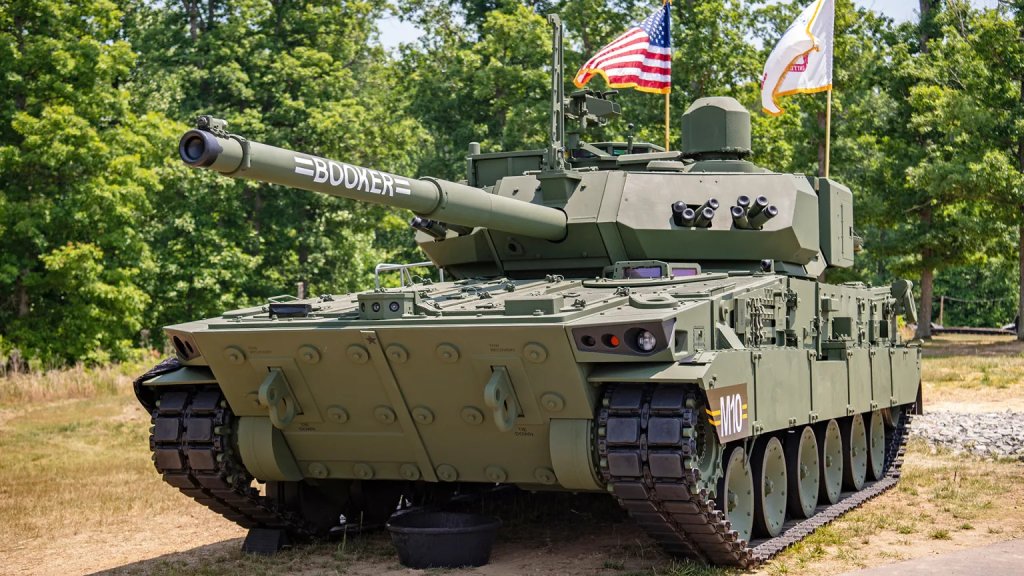
It is worth noting here that there has been much debate in recent years about the utility of heavy armored vehicles like the Bradley, as well as the Abrams tank, in future conflicts. Armored and unarmored vehicles face a growing multitude of threats, including more and more capable anti-tank guided missiles and especially kamikaze drones. Reporting earlier on in the conflict in Ukraine had underscored the continued value of heavy armor, including of the Bradley, even if its place as a decisive factor on the battlefield was diminishing. However, a report just last week from The New York Times indicated that tanks, in particular, have become increasingly sidelined, largely due to the threat of drone attacks.
The Army is also now in the midst of a new leadership shakeup with the resignation of Army Secretary Dan Driscoll. Reports say Driscoll’s departure follows growing friction with Secretary Pete Hegseth, including over modernization efforts.
In the meantime, examples of both of the designs competing to become the future XM30 are now in Army hands and are set to be tested alongside the M1E3 next year.
Contact the author: joe@twz.com
The post Competing Bradley Fighting Vehicle Replacement Prototypes Delivered To The U.S. Army appeared first on TWZ.

