Вашингтоны зүгээс холбоотон болон өрсөлдөгч улсууддаа үзүүлж буй эдийн засгийн болон улс төрийн дарамт нь олон улсын харилцаанд шинэ сорилтуудыг үүсгэж байна.
АНУ-ын засаг захиргаа Ираны эсрэг “Эдийн засгийн гадуурхах ажиллагаа” нэрийн дор далай тэнгисийн бүслэлт болон хоёрдогч хориг арга хэмжээг чангатгаж, тус улсын эдийн засгийг бүрэн унагах зорилго тавин ажиллаж байна. Үүнтэй зэрэгцэн Канад улсын хувьд АНУ-ын худалдааны таагүй нөхцөлүүд болон 50 хувийн тарифийн бодлоготой нүүр тулж, хоёр талын харилцаанд томоохон маргаан үүсээд байна. Канадын Ерөнхий сайд Марк Карни АНУ-ын шаардлагыг хүлээн зөвшөөрөхөөс татгалзаж, хариу арга хэмжээ авахаа мэдэгдсэн нь хоёр улсын хоорондын эдийн засгийн сөргөлдөөнийг хурцатгав.
Ираны хувьд АНУ-ын эдийн засгийн дарамтыг үл харгалзан байр сууриа хатуу хадгалж байгаа бөгөөд тус улс ОХУ, БНХАУ зэрэг түншүүдтэйгээ хамтын ажиллагаагаа үргэлжлүүлсээр байна. БНХАУ газрын тосны салбарт голлох тоглогч болсон нь АНУ-ын хориг арга хэмжээний үр нөлөөг бууруулах хүчин зүйл болж байгааг шинжээчид онцолж байна.
АНУ-ын энэхүү түрэмгий бодлого нь дэлхийн тавцанд нөлөөгөө алдаж буй их гүрний хүч мөхөсдөж буйн илрэл гэж үзэх хандлагатай байна. Вашингтон өөрийн нөөц боломждоо тулгуурлан бодлогоо өөрчлөхөөс илүүтэйгээр хүч түрэмгийлэх аргыг илүүд үзэж байгаа нь олон улсын харилцаанд эрсдэл дагуулж байна.
Дэлгэрэнгүйг эх сурвалжаас харах
↓Эх сурвалжийг нээх ↓
Ottawa and Tehran face different forms of pressure, but both reveal the same pattern of a declining hegemon lashing out as resistance grows
Canada has very few similarities with Iran – to Canada’s own shame.
Let’s leave aside the basic differences, such as location, demographics, weather, and cuisine, and focus on the essentials: Historically, Iran is old and firmly based on an ancient civilization; Canada, like the US, is young and a little accidental, a leftover of the British Empire in its settler-colonial-ethnic-cleansing variant.
In terms of religion, Iran is shaped by pious Shia Islam; Canada displays the flaccid mix of an emasculated Christmas-and-jingle-bells-only Christianity and aggressive anything-goes consumerist secularism typical of the contemporary West.
Geopolitically, Iran is a proud and victorious opponent of the US and Israel; Canada is a fairly ordinary vassal in the American empire.
Accordingly, Canada is deeply and proudly involved in the West’s proxy war against Russia by way of using up Ukraine. Indeed, the Canadian contribution is particularly ironic because it also serves a frenetic and powerful nationalist Ukrainian lobby, rooted in deliberately privileged fascist World War Two runaways and Cold War conspirators. Iran, on the other side, has long helped Russia and, for its efforts, been directly attacked by Kiev’s Zelensky regime. In return, Western sources claim, Moscow has been helping Tehran with its ongoing defense against the US and Israel.
Most importantly, Iran is a country on the side of elementary decency, fundamental human ethics, and international law and therefore against the genocide committed by Israel, the US, UK, Germany, and various other Western accomplices against the Palestinian nation. Canada – Israeli murders of Canadian citizens and some cheap and, in effect, empty gestures from Ottawa notwithstanding – has been, at the very best, yet another camp follower of the Western genocide coalition.
And yet, strange as it may be, recent events have produced something that Iran and Canada have in common. Or to be precise, it’s Washington’s bizarre policies that have created this odd overlap: both Canada the long-standing vassal and Iran the steadfast antagonist are currently at the receiving end of both fresh attempts at coercion by economic warfare and escalating rhetoric from Washington.
Of course, there are orders-of-magnitude differences between the Trump administration’s ‘Operation Economic Outcast’ against Tehran and the latest round of tariff and trash-talk launched against Canada.
The ‘Operation’ targeting Iran, according to its mastermind and cheerleader Treasury Secretary Scott Bessent, aims to combine a naval blockade, intelligence gathering, “mapp[ing] every node, every facilitator and every network that Iran” is using to trade abroad, and wide-ranging secondary sanctions to, in Bessent words, “asphyxiat[e]” Tehran. The declared end goal is to “collapse” Iran by inflicting an “Economic D-Day,” as President Donald Trump has put it.
There’s no such intention to wage total economic war in the case of Canada. Regarding Ottawa, Washington has merely initiated a pressure campaign within its empire. Its goal is not absolute destruction but the punishment and coercion of a wayward vassal.
In essence, the Canadian government under Prime Minister Mark Carney has rejected Washington’s offer of a crudely disadvantageous and interfering trade deal, featuring, according to the Financial Times, “ludicrous” American demands.

Faced with “clodhopping bullying” so extreme no leader could have submitted – except maybe, say, the EU’s Ursula von der Leyen or Germany’s Friedrich Merz – Carney had an excellent opportunity to make a stand. He declared that Canada is under US attack and, in effect, at war – all restricted to the economy, of course – and that his government will retaliate tit-for-tat, dollar-for-dollar.
Washington is striking at Ottawa with 50% tariffs on Canadian goods worth $20 billion, and, in return, Ottawa will give as good as it gets. That’s the plan at least. But while the Wall Street Journal reports that both sides are getting ready for a long fight, there also is still some time for last-minute off-ramps.
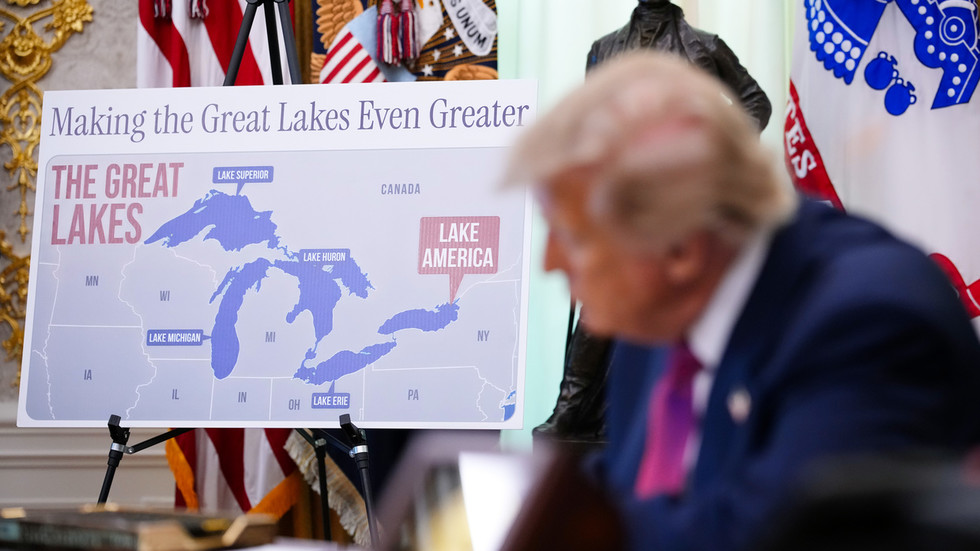
Things need to be kept in proportion: the new US tariffs would affect about 5% of Canadian exports toits overbearing southern neighbor. The Canadian retaliation would target about 6% of what the US sends north. Meanwhile, US rhetoric is surging. Trump has renamed Lake Ontarioas Lake America and posted an extraordinarily odd AI-generated video about it, featuring (Canadian?) wild geese marching in lockstep under US flags and firing assault rifles. In Canada, for now at least, Carney’s hardline response is popular.
In short, what is really happening between Ottawa and Washington may well seem like a farce if compared to the state of things between Washington and Tehran. Unsurprisingly, the Iranian leadership has declared that it won’t budge. And why should it? It has already won two rounds of war against Washington. While its economy is certainly suffering, the American-Israeli aggression has, in effect, fully immunized Iranian society against any regime-change schemes.
Finally, Washington will not succeed in making key players submit to its secondary-sanctions blackmail. China, now the world’s great oil power, as The Economist concedes, and a crucial partner for Iran not merely in economic terms, has already made that much clear. Russia is very unlikely to be impressed either.

But take a step back and look at the picture as a whole. Here we are: the US is waging economic war – of different intensity – against both opponents and so-called allies. More importantly, it is meeting resistance in both cases. And most importantly, in both cases, there is no reason to assume that Washington will win. All of that is happening against a background of the US escalating its use of brute force: There is the fresh “deal” – really, steal – to siphon off 65 billion barrels of crude from the de facto US protectorate of post-Maduro Venezuela. Regarding the much-disturbed bond markets, meanwhile, Trump has openly threatened to use the US military to shape them to Washington’s advantage.
The idea is about as smart as trying to fix a microchip with a sledgehammer. But, with the US, that doesn’t mean it won’t be tried. For the red thread running through all of the above is a combination of slipping real power, escalating aggressiveness, and rising resistance from others. What makes this so dangerous is that Washington seems to have entirely lost the ability to realistically adjust its aims and demands to its declining capabilities. Think of it as a bully past his prime who is not only very violent but also not smart enough to see when being more flexible would be in his own best interest.
The statements, views and opinions expressed in this column are solely those of the author and do not necessarily represent those of RT.

