
Германы эрх баригчид тус улсын чухал дэд бүтцэд чиглэсэн эрлийз дайны ажиллагааг зогсоох, таслан зогсоох арга хэмжээг чангатгаж байна.
Наймдугаар сарын 4-нөөс 5-нд шилжих шөнө Лейпциг/Халле нисэх онгоцны буудлын хамгаалалттай бүсэд тэсрэх бодис бүхий дрон илэрсэн нь Украины зэвсэг тээвэрлэдэг Antonov An-124 онгоц руу чиглэсэн халдлагын оролдлого байсан гэж Германы тал үзэж байна. Германы Дотоод хэргийн болон Гадаад хэргийн сайд нарын мэдээлснээр, Оросын тал энэхүү ажиллагаанд шаардлагатай техник хэрэгсэл, мэдээллээр хангаж, орон нутгийн гүйцэтгэгчдийг ашигласан гэж үзэх хангалттай нотолгоо байгаа аж. Төхөөрөмжийн гал асаагуур ажиллаагүй нь томоохон сүйрлээс сэргийлсэн байна.
Үүнтэй зэрэгцэн Бранденбург мужид цахилгаан эрчим хүчний сүлжээний чухал цэг рүү зориудаар халдсан хэрэг гарчээ. Халдагчид өндөр хүчдэлийн шугам руу дамжуулагч материал бүхий пуужин харваж, богино холболт үүсгэн, Jänschwalde цахилгаан станцын үйл ажиллагааг түр хугацаанд доголдуулсан байна. Одоогоор энэ хэргийг ОХУ-тай холбоотой эсэхийг тогтоогоогүй байгаа бөгөөд дотоодын бүлэглэлүүдийн оролцоог ч үгүйсгэхгүй гэж эрх баригчид мэдэгдэв.
Германы Засгийн газар эдгээр аюул заналхийллийн хариуд ОХУ-ын дипломат төлөөлөгчийн газруудын үйл ажиллагааг хязгаарлах, хориг арга хэмжээг чангатгах, хилээр нэвтрэх хяналтыг сайжруулах зэрэг арга хэмжээ авахаар төлөвлөж байна. НАТО болон Европын холбоо Германы байр суурийг дэмжиж байгаа бөгөөд цаашид Европын орнуудад чиглэсэн ижил төстэй эрлийз ажиллагаануудыг нэгдмэл байдлаар нягтлан шалгахаар ажиллаж байна. Энэ нь Европын орнуудын чухал дэд бүтэц, логистикийн сүлжээнд учирч буй аюулгүй байдлын шинэ сорилтуудыг тод харуулж байна.
Дэлгэрэнгүйг эх сурвалжаас харах
Эх сурвалжийг нээх ↓
Germany has now formally accused Russia of directing an attempted explosive-drone attack against Ukrainian cargo aircraft at Leipzig/Halle Airport, a story we previously reported on. At the same time, authorities are separately investigating a sophisticated sabotage attack against a critical power-grid node in Brandenburg, underscoring Germany’s growing concern over hybrid threats to its critical infrastructure.
The two incidents, occurring against the backdrop of growing German and European warnings about Russian hybrid warfare, underscore the expanding range of vulnerabilities facing critical infrastructure across the country.
German Interior Minister Alexander Dobrindt and Foreign Minister Johann Wadephul said Tuesday that the Russian state had apparently provided the equipment and technical know-how for the Leipzig operation, with locally recruited “low-level agents” allegedly tasked with carrying it out.
The drone, discovered inside the secured area of Leipzig/Halle Airport during the night of August 4-5, was carrying approximately 1.3 pounds of explosives and was found close to a Ukrainian-operated Antonov An-124 heavy cargo aircraft used to transport weapons to Ukraine.
The detonator on the device apparently failed, preventing what German officials said could have been a catastrophe.
The incident appears to have combined several characteristics of the emerging European hybrid threat: a relatively inexpensive drone, military-grade explosives, a strategically significant target, and the alleged use of local operatives to provide distance between the attack and its suspected state sponsor.
As we discussed at the time, the choice of target at Leipzig/Halle is particularly significant.
The airport is an important cargo hub, and Ukrainian Antonov aircraft operating there have been used to move weapons to Ukraine. At the very least, an explosive device detonated near one of those aircraft could have disrupted a logistics link supporting Kyiv while simultaneously creating a major aviation safety incident.
A successful attack on one of Antonov’s cargo aircraft could have caused casualties, damaged or even destroyed the aircraft, and disrupted airport operations. The presence of explosive material inside a secured airport area also demonstrates the potential for covert actors to penetrate or exploit security around critical aviation infrastructure. But above all else, the loss of an Antonov Airlines An-124 would have been highly symbolic as the huge aircraft are a global symbol of Ukraine and its resilience.
Investigators later found traces of hexogen, or RDX, a military explosive near the airport on August 14, together with another drone.
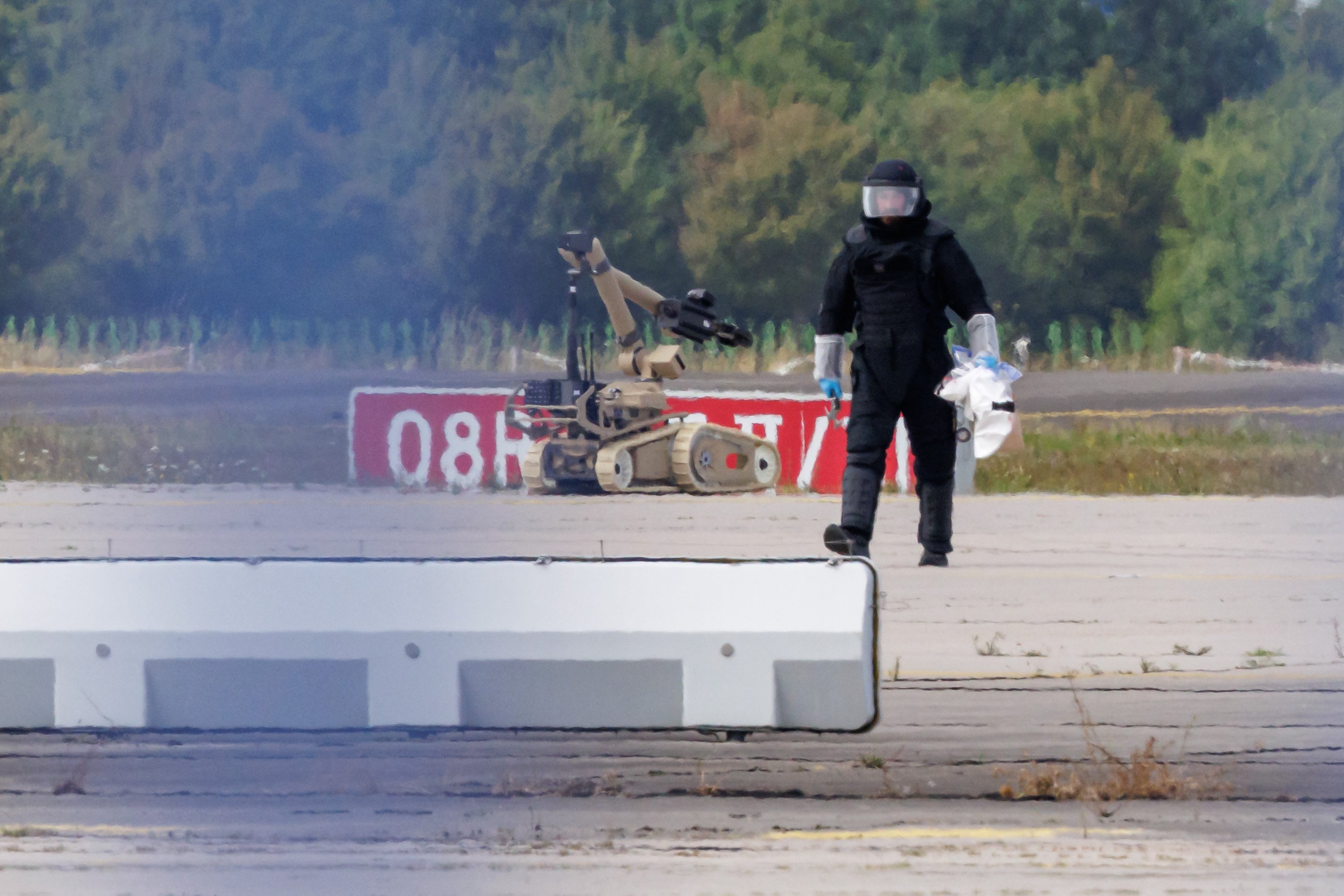
Authorities initially believed the second drone could have formed part of the planned attack, although investigators have since expressed doubts about that assessment.
Nevertheless, German officials now say there is sufficient evidence to attribute the attempted operation to Russia, an accusation that Moscow rejects.
The Leipzig incident was not the only major security concern confronting Germany on Tuesday.
In the eastern state of Brandenburg, authorities said the power grid was deliberately targeted with specially prepared incendiary devices and rockets carrying conductive material.
The attack targeted the Turnow-Preilack substation, a critical high-voltage node connecting the Jänschwalde power plant to the 50Hertz transmission network.
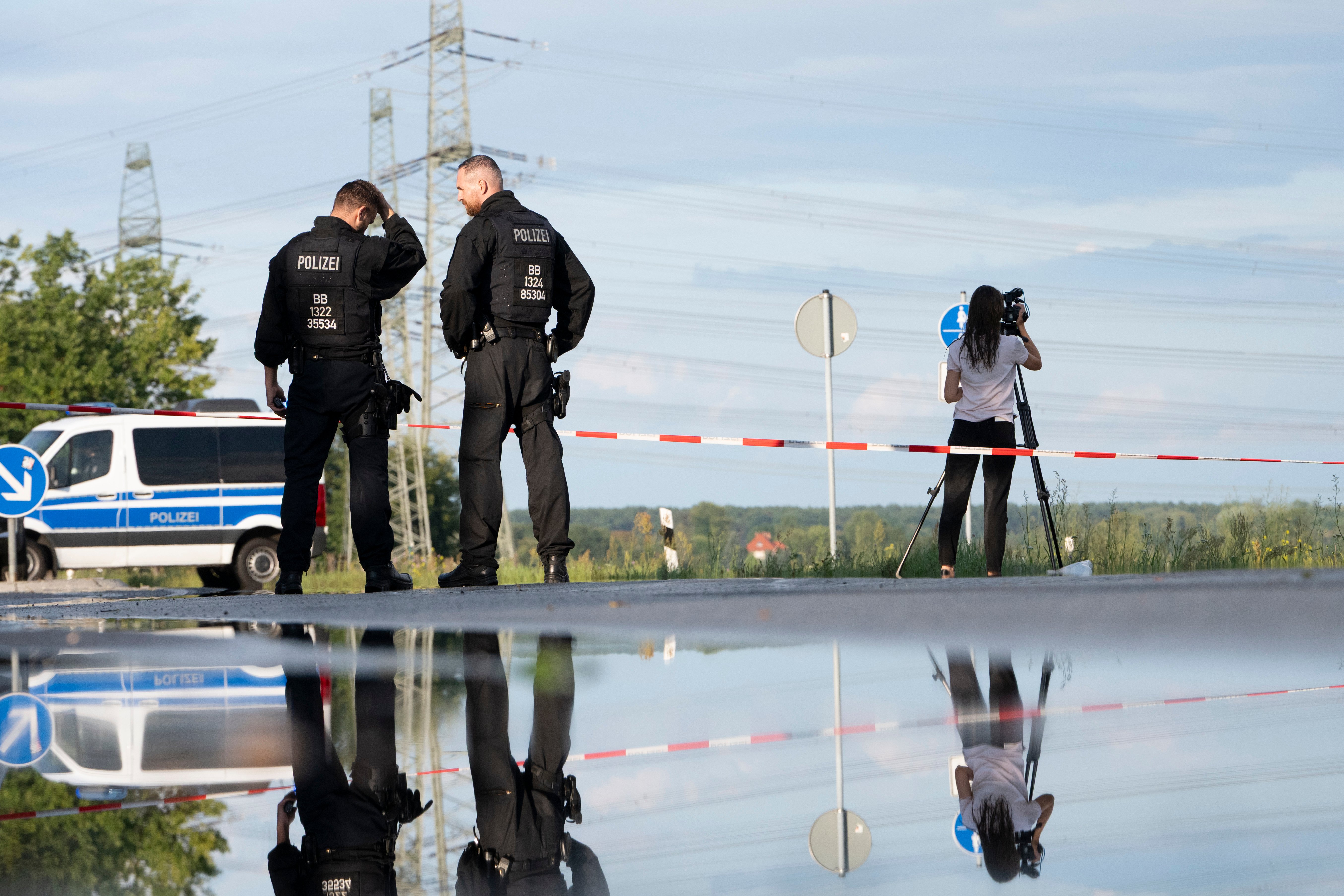
According to Brandenburg Interior Minister Jan Redmann, rockets carrying conductive material were fired into extra-high-voltage transmission lines, producing two short circuits.
Authorities recovered more than a dozen devices at the site, with the number still increasing as the search continued.
Redmann said the design and deployment of the devices required substantial preparation.
The attack caused a brief power interruption, but 50Hertz said all affected lines had returned to operation and that the general electricity supply was never disrupted.
At the Jänschwalde power plant, the incident triggered an automatic shutdown of one generating unit. The unit was expected to return to service Tuesday evening.
While the physical damage was limited, the nature of the attack is likely to attract significant attention from German security officials.
Unlike Leipzig, German authorities are not currently attributing the Brandenburg sabotage to Russia.
Redmann said authorities could not rule out the involvement of a foreign power, while also declining to exclude domestic extremist or activist groups. Left-wing activists have previously attacked German electricity infrastructure.
But the incident demonstrates the same underlying vulnerability Berlin is increasingly concerned about. In an age of hybrid warfare, relatively small-scale acts of sabotage exploiting weaknesses in infrastructure can have outsized consequences.
Redmann described Germany’s critical infrastructure as excessively vulnerable.
“When it comes to our critical infrastructure, we in Germany are far too vulnerable,” he said, adding that the vulnerability extended to airports.

Taken together, the incidents illustrate the breadth of the threat German officials are attempting to address.
Germany’s assessment of the Leipzig operation also points to an increasingly familiar model of suspected Russian covert activity.
German officials say Russian state actors supplied the expertise and equipment but relied on local agents to conduct the physical operation.
That type of operation could provide Moscow with additional deniability while allowing sabotage to be conducted by individuals already inside the target country.
It also complicates the security challenge for European governments.
German intelligence sources cited by German media have reportedly identified possible links between drone, explosive, and weapons incidents in Germany and other European countries, including Bulgaria, Italy, Poland, Romania, and the United Kingdom. Investigators are understood to be examining the incidents in parallel.
If those links are confirmed, the Leipzig operation could represent one element of a broader campaign involving recruited personnel, explosives, and uncrewed systems operating across multiple European countries.
Europe has spent much of the past several years strengthening conventional military deterrence while simultaneously confronting an expanding gray zone of cyberattacks, espionage, sabotage, and influence operations.
Critical infrastructure is an especially attractive target in that environment. Power grids, airports, railways, telecommunications networks, ports, undersea cables, and industrial facilities are typically dispersed, difficult to protect comprehensively, and often interconnected.

An attacker does not necessarily need to destroy infrastructure to achieve an effect. A temporary shutdown, disruption to logistics or forced security response can itself create economic and operational costs, and help generate a climate of fear and mistrust. This has already been seen in the mass drone incursions over sensitive locations across NATO countries, and especially in Germany.
There has been a growing acknowledgement of a new kind of threat, in which state-backed or state-directed actors could potentially use inexpensive systems, local recruits, and covert methods to create disruption without crossing the threshold of an overt military attack, for years now.
Germany is now preparing measures aimed at increasing the costs of executing this kinds of operations for Moscow.
The Russian consulate in Bonn is scheduled to close later this month. Berlin also intends to remove Russian House, a cultural and scientific organization in the German capital that German authorities have associated with alleged Russian intelligence activity.
Berlin is preparing additional measures against Russia’s so-called shadow fleet, vessels used to transport Russian oil and other commodities while circumventing Western restrictions.

Germany also plans additional sanctions listings and tighter border controls for Russian nationals entering the country.
At the European level, Berlin is supporting the European Commission’s proposed 22nd sanctions package against Russia, reportedly covering approximately 1,600 additional companies and organizations linked to Russia.
Russian Foreign Ministry spokeswoman Maria Zakharova said Russia would respond to what she called Berlin’s “anti-Russian action.”
NATO and EU officials have backed Germany following the Leipzig attribution.
NATO Secretary General Mark Rutte said Berlin had presented clear evidence supporting its assessment of Russian involvement. European Commission President Ursula von der Leyen likewise pledged European solidarity.
The incidents at Leipzig/Halle Airport and in Brandenburg underscore Germany’s growing concern over hybrid threats to its critical infrastructure. Both demonstrate how an adversary could potentially impose costs on a NATO country while operating below the threshold of open warfare.
At the same time, these actions come as concerns grow that Russia could openly and directly challenge NATO’s resolve militarily.
Regardless, for Germany and its European allies, the biggest question that needs to be answered may now be how many apparently isolated incidents could actually be pieces of a larger campaign?
Contact the author: thomas@thewarzone.com
The post Germany Formally Accuses Russia Of Attempted Drone Strike On Ukrainian An-124 Cargo Jet appeared first on TWZ.

