
Японы ахмад настнуудын дунд явуулсан судалгаагаар хүмүүс өөрийн наслалтын талаар нэлээд бодитой төсөөлөлтэй байдаг нь тогтоогджээ.
University of Tsukuba-ийн судлаач Шохеи Окамото тэргүүтэй баг Japanese Aging and Health Dynamics Study-ийн 28 жилийн хугацаатай өгөгдөлд дүн шинжилгээ хийжээ. Судалгаанд 1996 онд 60-аас дээш насны 2,447 иргэн оролцсон бөгөөд тэднээс хэд хүртэл наслах хүлээлттэй байгааг асуусан байна. Судалгааны явцад оролцогчдын таамаглал болон бодит амьдралын хугацааг албан ёсны бүртгэлээр харьцуулахад, хүмүүсийн өөрийн наслалтын талаарх хүлээлт нь бодит байдалтай уялдаатай байв.
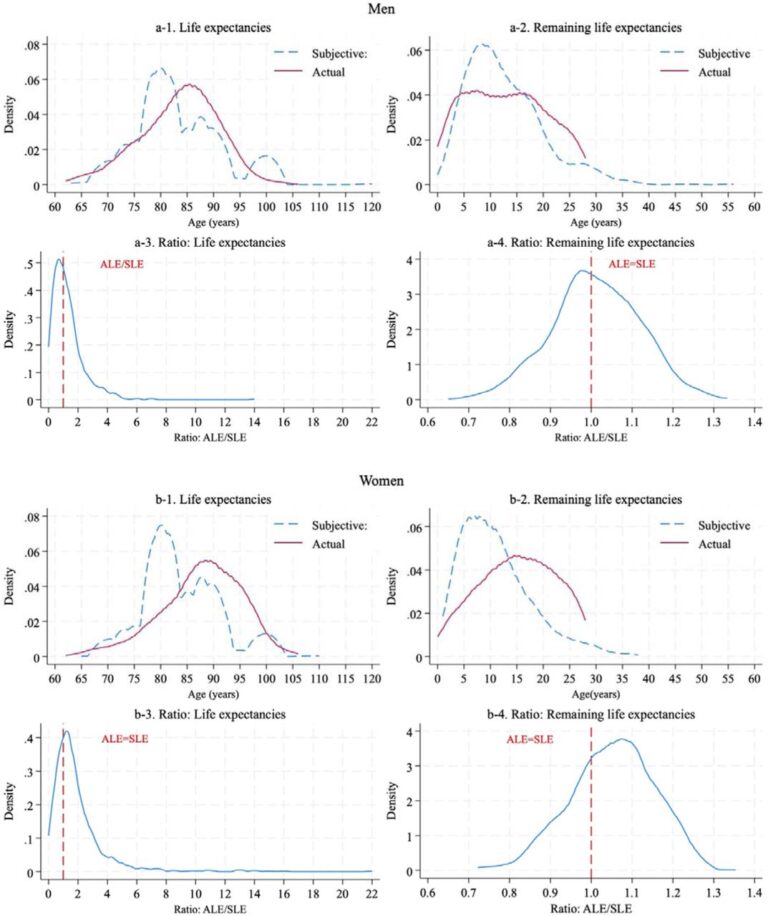
Гэсэн хэдий ч судалгаанд оролцогчдын 59 орчим хувь нь өөрийн тооцоолсноос илүү урт насласан байна. Ялангуяа эмэгтэйчүүд болон боловсролын түвшин өндөр хүмүүс өөрийн хүлээлтээс илүү урт наслах хандлагатай байжээ. Харин эрүүл мэндийн байдал тааруу хүмүүсийн хувьд энэ зөрүү бага байв. Судлаачид ихэнх хүн 80 насыг дундаж наслалт хэмээн “зангуу” болгон ашиглаж, таамаглалаа үүнд тулгуурласан байж болзошгүйг дурджээ.
Уг судалгаа нь ажиглалтын шинжтэй тул эерэг бодол эсвэл наслалтын талаарх хүлээлт нь хүнийг урт наслахад шууд нөлөөлдөг гэж дүгнэх боломжгүй юм. Хүмүүс өөрийн эрүүл мэндийн байдал, гэр бүлийн түүх, амьдралын хэв маягаасаа хамааран ийм таамаглал дэвшүүлдэг байж болох талтай. Судлаачдын үзэж буйгаар, наслалтаа дутуу тооцоолох нь тэтгэврийн хуримтлал хүрэлцэхгүй байх зэрэг санхүүгийн эрсдэл дагуулдаг тул тухайн хүний одоогийн нас, хүйсэд суурилсан нарийвчилсан мэдээлэл хэрэгтэй байна.
Тус судалгааны үр дүн нь одоогоор хянан магадлагаанд ороогүй бөгөөд medRxiv цахим хуудсанд байршуулжээ. Судалгаа нь зөвхөн Японы ахмад настнуудыг хамруулсан, мөн эцэг эхийн наслалт зэрэг зарим хүчин зүйлийг бүрэн тооцоогүй зэрэг хязгаарлалттай юм.
Дэлгэрэнгүйг эх сурвалжаас харах
↓Эх сурвалжийг нээх ↓
How old do you think you will live to be?
Your answer may be more revealing than you realize.
A study that tracked older adults in Japan for up to 28 years suggests people have a surprisingly accurate sense of their own longevity. Those who expected to live longer generally did.
But their predictions showed one striking bias: many underestimated how much time they had left. Among participants whose outcomes could be determined, the researchers report that approximately 59 percent outlived their expected lifespan.
Led by social scientist Shohei Okamoto of the University of Tsukuba, the team analyzed data from the Japanese Aging and Health Dynamics Study, a nationally representative survey of adults aged 60 and older across Japan.
In 1996, 2,447 participants were asked what age they expected to reach. Of those, 393 said they did not know. The remaining 2,054 gave an age ranging from 63 to 120.
Over the next 28 years, 1,514 of those who supplied an estimate died. Approximately 98 percent of the death dates came from official resident records or family reports, allowing the team to compare predicted and actual lifespans.
People who expected to have more years ahead generally survived longer. The association remained after the researchers accounted for age, sex, socioeconomic characteristics, and health-related factors.
So, can simply expecting a long life help you live longer?
Thestudy, available as a preprint that has not yet been peer-reviewed, cannot answer that question. Because it was observational, it does not show that expecting a longer life extends a person’s lifespan or that positive thinking keeps people alive.
Instead, people may know things about their health, habits, or family history that shape both their predictions and their longevity. Someone who feels healthy, for example, might expect to live longer and also be more likely to do so.
Although the researchers accounted for a range of health factors, unmeasured characteristics could still have affected both expected and actual lifespans.
The forecasts were also far from personalized countdowns. In the team’s statistical model, each additional year of expected life was associated with only about 0.12 additional years of estimated survival.
The errors varied among different groups. Women and people with more years of education were more likely to outlive their expectations, while those in poorer health were less likely to do so.
One possible explanation lies in a familiar number: 80.
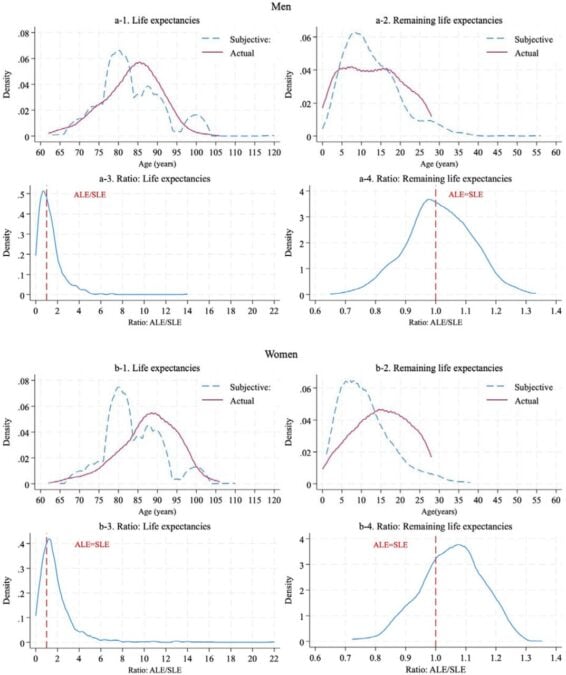
Many participants chose 80 as the age they expected to reach. That was close to Japan’s combined-sexlife expectancy at birth in 1996, suggesting people may have anchored their predictions to a widely recognized population average.
But life expectancy at birth is not the same as the remaining life expectancy of someone who has already reached older age. A person who has survived to 70 has passed the early-life risks that contributed to the average calculated at birth.
An estimate based on a person’s current age and sex may therefore be more relevant than a single figure for the whole population. A broad average could also obscure the tendency for women and people with more education to live longer. However, the study does not establish that anchoring on 80 caused the errors.
The education finding came with another twist. Participants with more years of education were less likely to choose ages divisible by 5, such as 75, 80, or 85. But giving less rounded answers did not make their predictions more accurate: they, too, often underestimated their lifespans.

Miscalculating longevity could have consequences beyond curiosity about the future.
“Underestimating life expectancy may lead to insufficient retirement funds, while overestimating it could result in unnecessary frugality or even poverty,” the researchers write.
The team suggests that clearer information about remaining life expectancy based on current age and sex could help people make better financial decisions.
The study has important limitations. Participants estimated their lifespans only once, in 1996, so the researchers could not track how a diagnosis, medical advances, or the death of someone close to them might change their expectations.
The data also lacked detailed information about parental longevity. And because the research included only older adults in Japan, the findings cannot automatically be applied to younger people or populations elsewhere.
Related: Ultimate Limit of The Human Lifespan May Be Identified, Study Suggests
The results do not show that people can extend their lives simply by expecting to live longer. But our predictions may contain clues drawn from what we know, consciously or otherwise, about our health and circumstances.
Even so, most participants missed one important possibility: their future would last longer than they imagined.
The study is available onmedRxiv.
This article was fact-checked by Michael Irving and edited by Michael Irving. While we pride ourselves on our process, we are only human. If you spot a mistake, please let us know.

