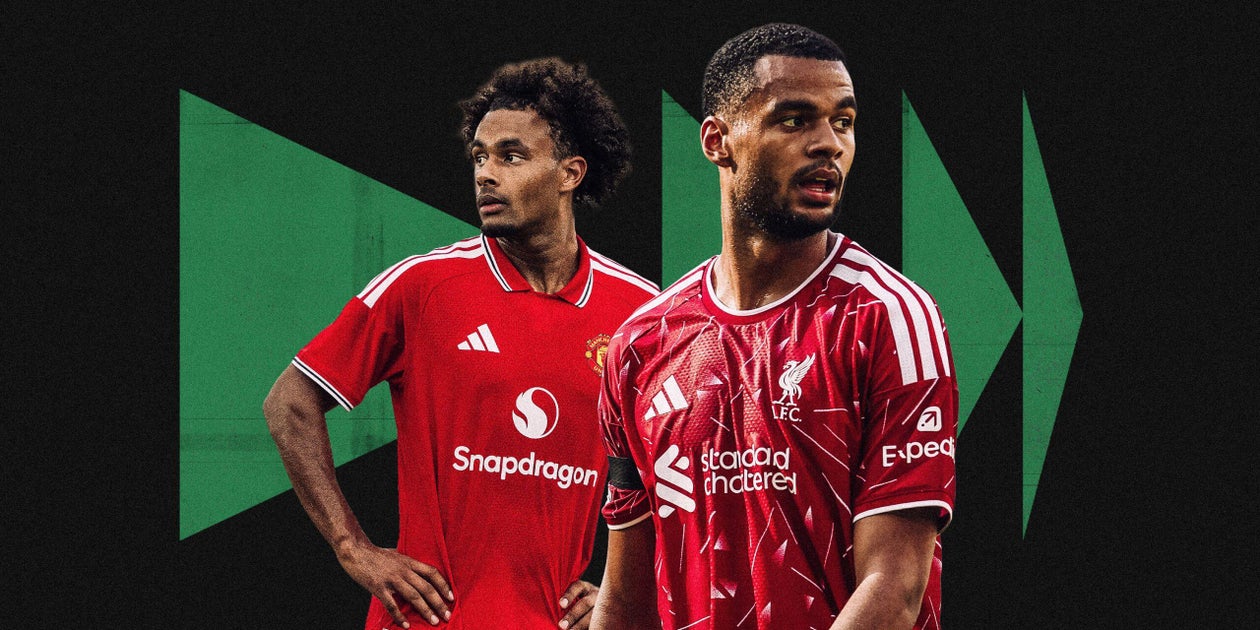
Европын тэргүүлэх клубууд зуны солилцооны цонхоор бүрэлдэхүүнээ шинэчилж, ирэх нэгдүгээр сарын цонх болон дараагийн улиралд бэлтгэлээ базааж эхэллээ.
Арсенал энэ зун Бруно Гимарайнш, Эзри Конса нарыг эгнээндээ нэгтгэж, хамгаалалт болон хагас хамгаалалтаа бэхжүүлсэн ч довтлогчийн байрлалд томоохон наймаа хийж чадаагүй нь шүтэн бишрэгчдийн дунд багагүй хүлээлт үлдээв. Тус клуб Габриэл Мартинелли, Габриэл Жезус, Фабио Виейра нарыг худалдсанаар түүхэн дэх хамгийн өндөр буюу 122.5 сая фунт стерлингийн орлого олсон нь санхүүгийн хувьд чухал алхам боллоо.
Челси энэ зун 300 сая фунтээс давсан хөрөнгө оруулалт хийж, Эмилиано Мартинез, Максенс Лакруа, Морган Рожерс нарыг багтаа элсүүлснээр бүрэлдэхүүнээ чанаржуулав. Тэд Энцо Фернандезийг Манчестер Сити рүү 125 сая фунтээр худалдсан нь Премьер лигийн түүхэн дэх өндөр дүнтэй наймаануудын нэг болсон бөгөөд тус клуб ирэх өвлийн цонхоор хагас хамгаалагчийн байрлалыг дахин бэхжүүлэхээр төлөвлөж байна.
Ливерпүүл Брэдли Баркола, Рональд Араухо нарыг эгнээндээ нэгтгэсэн ч Куртис Жонсыг Интер рүү явуулж, хагас хамгаалалтаа сулруулсан нь шүүмжлэл дагууллаа. Манчестер Юнайтед Юри Тилеманс, Андрей Сантос, Карлос Балеба нарыг авч хагас хамгаалалтаа бүрэн шинэчилсэн бол Манчестер Сити Энцо Фернандез тэргүүтэй шинэ тоглогчдыг авч, бүрэлдэхүүндээ томоохон өөрчлөлт хийлээ.
Барселона энэ зун Антони Гордон, Карим Адейеми, Родри болон Габриэл Жезус нарыг авч довтолгооны шугамаа мэдэгдэхүйц сайжруулсан нь Ханси Фликийн тактикт чухал нөлөө үзүүлж байна. Реал Мадрид Ян Диоманде, Марк Кукурелла нарыг авч багаа шинэчлэх бодлого баримталсан бол Ньюкасл Юнайтед залуу тоглогчдод түшиглэсэн бодлогоо үргэлжлүүлж, Нико Гонзалезийг эгнээндээ нэгтгэлээ.
Дэлгэрэнгүйг эх сурвалжаас харах
↓Эх сурвалжийг нээх ↓
Welcome to the final edition of the Transfer DealSheet for the 2026 summer window. Here, we are reviewing the window and looking forward to January and next summer.
The information in this article has been gathered in line withThe Athletic’s sourcing guidelines. Unless stated, our reporters have spoken to more than one person briefed on each mooted deal before offering the clubs involved the opportunity to comment. Those responses, when they were given, have been included. Sources were granted anonymity to protect their positions.
We aim to bring you analysis you can trust on what is happening at Europe’s leading clubs and the latest information we’re hearing from across the market.
This article is long but detailed, so enjoy it all — or search for the team or player you want to read about.
Arsenal
Was this window a success or a failure?
Arsenal’s window has ended with a fair amount of disappointment due to the inability to secure a marquee attacking signing, but they have strengthened in other areas. Let’s go for ‘success’ but with room for improvement.
The arrivals of Bruno Guimaraes and Ezri Konsa help with the desire to be dominant domestically. Mikel Arteta also hoped to add more individual quality up front, but will have to make do with Christos Tzolis as his only attacking signing.
Failing to land attacking targets — Morgan Rogers, Bradley Barcola, Vinicius Junior, Malick Fofana, Julian Alvarez — will frustrate fans.
Vinicius Junior signed a new deal at Madrid (David Balogh/Getty Images)
If Arsenal’s style of play remains, there may be questions over whether the correct positions were prioritised. The club may argue that suitable attacking players were not available for the right price.
How much did they spend and how much did they bring in?
Arsenal’s £198.5million ($267.7m) expenditure was around £60m less than last year, albeit on five signings compared to eight. There was an emphasis on filling out the squad last summer, whereas the focus this year has been on making tweaks to lift the ceiling of an elite squad.
They recognised there was a need to sell as the window progressed, with late sales of Gabriel Martinelli (set to join Al Hilal), Gabriel Jesus and Fabio Vieira resulting in them receiving more money (£122.5m) than any previous summer.

Martinelli is set to move to Saudi Arabia (Stuart MacFarlane/Arsenal FC via Getty Images)
The ties Arsenal have to Martinelli, Jesus and Leandro Trossard made for emotional departures, but each was necessary given their contract situations. Arsenal could not let valuable players leave on free transfers when their deals expired next summer, as has often happened in the past.
Jakub Kiwior‘s move to Porto was similar to Piero Hincapie’s to Arsenal, as the Portuguese club activated an option to buy. Christian Norgaard and Karl Hein were surplus to requirements. Reiss Nelson had his contract terminated by mutual consent after 18 years at the club.
The main motivation of Ethan Nwaneri’s loan to Borussia Dortmund is to give the 19-year-old game time at a high level rather than potential financial gains.

Who have they signed?
He’s not a new face, but Hincapie was the first official permanent move, with Arsenal activating an option from his loan for around £40m. Illan Meslier’s arrival on a free transfer was another low-key addition, although his pre-season performances did provide promise that he could be an upgrade on Kepa Arrizabalaga.
Tzolis was the first proper first-team signing, for £34m from Club Brugge. The 24-year-old hit the ground running in pre-season and has carried that momentum into the opening weeks of the season. Guimaraes’ protracted move from Newcastle United was finalised before the Community Shield and he has looked impressive in his two competitive appearances, while Konsa saw out an important 1-0 win on debut away to his former employers, Aston Villa.

Tzolis arrived from Brugge (Alex Caparros/Getty Images)
The outgoings were: Hein (£2.6m), Kiwior (£18.9m), Trossard (£17m), Norgaard (£7m), Vieira (£8.5m), Jesus (£8.5m) and Nelson (free). Martinelli is also expected to join Al Hilal for £60m.
What will their priority be in January?
They did not want to reach the asking price for either Rogers or Barcola, but if they move for an attacker in January, they may end up paying a premium anyway. Julian Alvarez’s heart was set on Barcelona, while Eli Junior Kroupi is out for another two to three months after foot surgery in July.
Tzolis’ arrival refreshes the left wing, but the front line is still the area in most need of reinforcement.
Their other summer signings addressed specific issues. Konsa was pursued after William Saliba’s back injury at the World Cup, and Guimaraes was seen as a midfielder who could take the squad to another level.
Will they have money to spend?
They received €90million (£77m; $104m) for three players on deadline day. Trossard, Martinelli, Jesus and Nelson were also on high wages.
Freeing up that space could be beneficial should they dip back into the market in January.
While having a better net spend and more wage space than this time last year, differences in UEFA squad cost rules (SCR) may require them to be smart about how they bring any new additions into the club in January.
January windows tend to be quiet at Arsenal — there have been no new arrivals in the last three winter windows. Trossard, Kiwior and Jorginho were all signed in January 2023.
Chelsea
Was this window a success or a failure?
A success, with Chelsea’s squad stronger. Emiliano Martinez is an upgrade on Robert Sanchez and can mentor long-term prospect Mike Penders too.
Maxence Lacroix is one of the ‘ready-made’ acquisitions and has settled quickly in central defence. Chelsea broke the record for a British player by buying Morgan Rogers from Aston Villa. It is early days, but with the manner in which he is combining with Cole Palmer and Joao Pedro, Chelsea have one of the best attacks in the division.
The club have often been accused of lacking leaders and experience. Along with Martinez, this has been addressed with the acquisitions of Jordan Henderson and Danny Welbeck. Emmanuel Emegha and Welbeck provide backup for Joao Pedro, but the Brazilian is crucial to the way they play.
There are questions over the strength of depth in midfield. But with Marco Palestra from Atalanta bought to operate primarily as a right wing-back, captain Reece James is seen as the player to fill the spot vacated by Enzo Fernandez. Valentin Barco and Henderson have been added to the mix, along with Moises Caicedo and Romeo Lavia.

Barco adds to the midfield options (Richard Pelham/Getty Images)
Chelsea have also retained their crown as the highest sellers in the Premier League. Fernandez made it clear he wanted to leave, but they got a joint-highest Premier League fee of £125m from Manchester City. Making a profit on an individual signed for £106m is good going.
Fernandez is one of more than 20 departures. Apart from a few of the young loanees, they have not lost anyone they wanted to keep. Marc Cucurella and Fernandez have been important, but Chelsea wanted to move on from players who had close ties to former head coach Enzo Maresca.
Not all of the unwanted individuals went permanently, with loans being settled for instead. It obviously raises the prospect of having to deal with them again next summer too.
Still, only three players earmarked for a possible departure remain. Defender Aaron Anselmino was a loan candidate, but is now part of the first-team squad.
Kendry Paez had his loan at River Plate terminated and another one elsewhere did not happen. The Ecuador international, who officially joined last summer after a deal was agreed with Independiente del Valle in 2023, has struggled to fulfil his potential. The focus is on integrating the 19-year-old midfielder and working on improving his standards.
Meanwhile, USMNT goalkeeper Gaga Slonina, 22, is going to compete for the third-choice role along with Teddy Sharman-Lowe, 23.
How much did they spend and how much did they bring in?
More than £300million was spent on incoming transfers and Chelsea comfortably cleared the £300million barrier for player sales for the second summer window in a row, before potential add-ons and loan fees are taken into account.
In the wake of Fernandez’s departure, Chelsea sources claimed the club invested approximately £328million in the squad and received approximately £519million in player sales and loan fees during the window. Those figures could not be independently verified by The Athletic.

Fernandez left for City in a record transfer (Andrew J Clark/ISI Photos via Getty Images)
Who have they signed?
The list of incomings is: Rogers £117m (Aston Villa), Lacroix £52m (Crystal Palace), Palestra £47m (Atalanta), Geovany Quenda £40m (Sporting CP), Barco Undisclosed (Strasbourg), Emegha Undisclosed (Strasbourg), Pep Chavarria £16.3m (Rayo Vallecano), Martinez £7.5m (Aston Villa), Welbeck Undisclosed (Brighton & Hove Albion), Dastan Satpaev Undisclosed (Kairat), Henderson free (Brentford).
What will their priority be in January?
A move for Monaco’s Lamine Camara broke down and Roma’s Manu Kone was another target, so surely a midfielder will be on the agenda.
Lavia and James have struggled with injuries in recent years, while Henderson is coming towards the end of his career at 36.
Much will also depend on Chelsea’s progress over the next four months and whether any other fitness issues in key areas have emerged.
Will they have money to spend?
Yes. The figures they have recorded on the books mean a sizeable profit has been made. It means funds are available for reinvestment in future windows.

Liverpool
Was this window a success or a failure?
Despite the huge outlay on Bradley Barcola, most supporters were disappointed.
The hope was that Liverpool would find a right-sided attacker to replace Mohamed Salah and offer cover for Alexander Isak up front, while also bolstering the midfield and right side of defence.
Instead, they signed Barcola and Victor Munoz — two wingers who can switch flanks, but have spent most of their careers on the left — and Ronald Araujo to cover at centre-back or right-back.
Curtis Jones was also sold to Inter without a replacement, in the hope that Trey Nyoni can fill the void. Trusting the 19-year-old may prove a smart move, but Liverpool have failed to strengthen their midfield.

Jones has joined Inter (Geoff Stellfox/Getty Images)
The shortage at right-back also continues while Conor Bradley recovers from a knee injury. If Barcola and Munoz can produce game-changing moments up front, the short-term worries elsewhere might be eased.
Long-term planning is less concerning. Liverpool signed several teenagers with the potential to kick on, the most expensive being 18-year-old goalkeeper Lucca Brughmans, who joined from Genk for around £28m and was loaned back for the remainder of the season.
How much did they spend and how much did they bring in?
The total outlay was £246millionwith add-ons, taking the overall spend since the start of last summer to around £670m.
There’s also a €55million option to buyAraujo when his season-long loan deal from Barcelona ends.
Liverpool sold Jones (€35m) and Stefan Bajcetic (€1.5m) while also allowing Salah, Ibrahim Konate, and Andy Robertson to leave for nothing over the summer, helping reduce the wage bill.
Who have they signed?
The four immediate summer arrivals were Jeremy Jacquet, Barcola, Munoz and Araujo.
They were added to the earlier signing of Ifeanyi Ndukwe, who completed his move in January before joining up with the team this summer.
Brughmans also signed but will link up next summer, as will the 17-year-old Colombian midfielder Samuel Martinez, who was signed from Atletico Nacional for around £750,000.
Djylian N’Guessan, the 18-year-old Saint-Etienne winger who moved to Brest on loan, will also join Liverpool in January or next summer after a deal was agreed.
What will their priority be in January?
Much will depend on the state of the squad at that point and, more importantly, whether Bradley and Hugo Ekitike are back available.
There’s a chance of renewed interest in Cody Gakpo following Manchester City and Tottenham Hotspur’s pursuit this summer. Perhaps a sale would make more sense in the winter if another attacker is hired, and by then it will be clear if Munoz or Barcola can operate successfully on the right.

Could Gakpo leave in January? (Naomi Baker/Getty Images)
Will they have money to spend?
Liverpool have spent heavily on assembling a new-look forward line in recent years, so the next step will be to sell before they buy in that department.
After announcing record revenues of more than £700m in the last set of accounts, they can invest further in the squad if required.
Gregg Evans
Manchester United
Was this window a success or a failure?
The main aim for this summer was rebuilding the midfield following Casemiro’s departure and that has been achieved with a trio of signings — and without the eye-watering sums rivals spent on individual midfielders.
Whether the window comes to be viewed as a success, though, rests on how United’s squad depth stands up to a return to the Champions League.
Despite considering Newcastle United’s Lewis Hall, Racing Santander’s Jorge Salinas, Aston Villa’s Ian Maatsen, Arsenal’s Myles Lewis-Skelly and, lastly, a loan deal for Barcelona’s Alejandro Balde, no left-back has arrived. Luke Shaw started all 38 of United’s league games last season, but his injury record has prompted concern. Carrick’s other options are 19-year-old Harry Amass or others coming across to cover, such as Lisandro Martinez (centre-back), Noussair Mazraoui, or Diogo Dalot (right-backs).

There have been concerns over cover for Luke Shaw (George Wood/Getty Images)
United’s striker options have remained static. Interest in Joshua Zirkzee has ultimately failed to result in a move, leaving him as part of the backup to Benjamin Sesko alongside Matheus Cunha and Bryan Mbeumo. Sesko is returning to full fitness after a shin problem, and has come off the bench in both United’s games.
If Sesko and Shaw remain fit and in form, United’s decision to trust the core of players available to Carrick, rather than rushing into a late and potentially expensive deal, will look shrewd. If they struggle for cover in either department, these will look like issues that could have been foreseen and mitigated.
How much did they spend and how much did they bring in?
United activated a release clause in the region of £35m to bring in Youri Tielemans from Villa, while Andrey Santos cost an initial £48m plus a possible further £2m in add-ons from Chelsea. Carlos Baleba was signed from Brighton & Hove Albion for an initial £65m, with £5m possible in add-ons. Tynan Thompson joined from Tottenham for £4m, which could rise to £8m with add-ons.
Rasmus Hojlund’s €44m permanent move to Napoli, where he spent last season on loan, was completed before the end of June so will fall into the previous season’s accounts. There were several youth players sold, the most lucrative of which were goalkeeper Radek Vitek’s move to Middlesbrough for an initial £7m, with another £7m in potential add-ons, and Toby Collyer’s transfer to West Bromwich Albion for an initial £3m.
Overall, The Athletic estimates a net spend of around £127m once agent fees and a Premier League levy on purchases are accounted for.
Who have they signed?
Santos, Baleba, and Tielemans have all been brought in as Premier League-ready players for United’s midfield rebuild. Santos and Baleba offer different profiles and qualities as the deeper player in Michael Carrick’s pairing at the base of midfield, where Kobbie Mainoo also performed brilliantly against Ipswich Town on Sunday. Tielemans adds experience, creativity, and technical ability in a more advanced role.

Tielemans has been brought in to rebuild the midfield (Molly Darlington/Getty Images)
Karl Darlow joined as backup goalkeeper on a free transfer after the expiry of his Leeds United contract, with Altay Bayindir loaned out to Celta Vigo. Winger Thompson, 18, has signed from Tottenham Hotspur, made his unofficial ‘debut’ in pre-season and will be part of the first-team squad.
What will their priority be in January?
Incomings will surely depend on how the squad copes with the beginning of the Champions League and a return to two games per week. If depth at left-back does prove problematic, it might be that a solution is needed in January rather than waiting until summer.
Zirkzee’s future could well be revisited. United were open to offers for the forward this summer, but varying levels of interest from Serie A clubs Juventus, Como, Napoli and Fiorentina have eventually come to nothing, with suitors signing alternatives. Depending on Zirkzee’s performances in the first half of the season, and whether United feel they would have sufficient cover without him, there could be exit talks again.
Will they have money to spend?
United’s restraint this summer should mean they have more flexibility in the winter window.
Over the past year, they upgraded their revolving credit facility from £300m to a maximum borrowing of £400m. And as of May 27, the club had used £150m of that capacity, meaning they could draw down another £250m if they wished to.
They also had £60.9m in cash at the latest count.
The Champions League revenue will also start to roll in. Participating clubs get their first payments from UEFA in September, with United estimated to be due £37m in cash then. A further £1.8m for each win can be earned across eight league-phase games, with those performance payments made in November and February.
Servicing the debt of the Glazer takeover and paying for transfers already made will, however, impact cash flow.
Separately, United should have regulatory room. Their latest annual revenue of £667m — in a season without Champions League income — puts them in a robust position when it comes to the Premier League’s 85 per cent limit on spend for players (and head coaches), covering wages, transfer fees and agent costs. UEFA’s revenue-to-spend ratio is 70 per cent.
Cerys Jones and Laurie Whitwell
Manchester City
Was this window a success or a failure?
Having to replace Rodri and Bernardo Silva meant it was always going to be a very challenging and important window for City but they have emerged from it with a very strong-looking midfield considering the signings of Enzo Fernandez, Elliot Anderson and Ayyoub Bouaddi.
Their outgoing business also has to be considered a huge success, having brought in an initial £265m for Savinho, Tijjani Reijnders, Rodri, Nico Gonzalez and James Trafford. Omar Marmoush will also fetch another £60m when he completes a permanent move to Tottenham Hotspur after spending this season there on loan.
Many of those players only joined the club in the past two years, which is hardly a ringing endorsement of recent business, but the way they have moved on many unconvincing performers is undeniably impressive.
The goalkeeping department has probably been downgraded, considering the highly promising Trafford left, and was replaced by 34-year-old Geronimo Rulli, a solid backup option. They may also be short of an Erling Haaland alternative, and will have to use Antoine Semenyo or Phil Foden through the middle when the Norwegian does not play.
City freshened up the attack with Iliman Ndiaye and Allan and they are exciting dribblers, but they were late, reactionary purchases — Cody Gakpo was initially preferred to Ndiaye — and given so many players were moved on within 18 months of arriving, it is hard to have full faith that those new signings will be big successes.
How much did they spend and how much did they bring in?
City both spent and received huge amounts.
They spent around £451m in initial fees, not including add-ons, for players also including Pierce Charles, who was loaned out to Queens Park Rangers, and Jeremy Monga, who has been loaned to Swansea City.
That, though, is just the reported transfer fees; the true cost of incoming transfers, at City and everywhere else, is much higher. Once the Premier League’s four per cent transfer levy is added, alongside an estimation of agent fees, City’s gross spend comes in at £514m — likely a single-window record in football.
That huge outlay was made possible in large part by recouping £279m, excluding add-ons, and they will also receive £60m for Marmoush next summer.
That leaves a net spend, inclusive of those estimated additional costs, of £235m.

Who have they signed?
The big-name arrivals came in midfield, through Fernandez, Anderson and Bouaddi.
The attack was strengthened with Ndiaye and Allan, while Rulli came in in goal and Monga and Charles were brought in with one eye on the future.
What will their priority be in January?
There is no glaring issue. An alternative to Haaland could be useful, but the winter window may not be the best time to find the right candidate.
It is possible that a right-back could be needed but in Matheus Nunes they have a first-choice option, while Abdukhodir Khusanov fits into Maresca’s plans as he can start at right-back and then take a right-sided centre-back position in City’s three-man defence when in possession.
City showed last year, when they signed Semenyo and Guehi, that they will get top players when they become available midway through the season, but right now there is no obvious weakness.
Will they have money to spend?
Given the money they made this summer and the promise of another £60m from Marmoush, it would be no surprise if they could make another £50m or £60m purchase like Semenyo or Guehi, but whether they find the right player for that, or need to do that, remains to be seen.
Sam Lee
Newcastle United
Was this window a success or a failure?
Newcastle’s hierarchy view it as an overriding success — having followed and “executed” a coherent plan.
As those connected with Newcastle have discovered, judging windows in their immediate aftermath can be folly. But in the here and now, excitement and anticipation grip the fanbase.
There is a risk element to what Newcastle have done, as those at the top of the club accept, with experience and proven class sold (albeit for very healthy sums) and young, hungry but mostly unproven players brought in.
All of Newcastle’s eight signings are 24 or under, including 18-year-old Sean Steur. Only Nico Gonzalez has played in the Premier League.

Nico from City is seen as a key signing (Sebastian Frej/MB Media/Getty Images)
But there is a real energy and impetus behind Newcastle following an encouraging couple of weeks, on and off the field, during which Nico and Mathias Fernandez-Pardo have been acquired, the team have gone unbeaten in their opening three games and the club have announced their intention to build a new £190million ($256.4m) training ground.
Change was desperately required, given the team felt stale during the final half-season of Howe’s tenure. Whether the scale of the squad turnover this summer is conducive to short-term success remains to be seen, but Newcastle feel like they have genuine momentum for the first time in 18 months.
How much did they spend and how much did they bring in?
The club spent roughly £268m (or £300m, if including all potential add-ons) and they brought in around £231m (£245m including potential add-ons). So the net spend comes in at £37m when add-ons are not included.
Who have they signed?
Eight players in, while three stars were sold. Anthony Gordon went to Barcelona, but in his place Newcastle brought in Bazoumana Toure from Hoffenheim for £43m and then, on deadline day, long-term target Fernandez-Pardo from Lille for €60m. Stylistically, Fernandez-Pardo appears a far more comfortable fit than Nick Woltemade, who was loaned to Juventus.
The exorbitant Sandro Tonali money, which is a guaranteed £92.5m, potentially rising to £100m, from Tottenham Hotspur, was then used to augment other areas. That kitty was further bolstered by the unwanted and unplanned sale of Bruno Guimaraes, their former captain, to Arsenal for a £75m fixed fee.

Fernandez-Pardo had been a long-term target (Sameer Al-Doumy/AFP via Getty Images)
Those two automatic starting midfielders were replaced by Steur, who joined from Ajax for an initial £20.1m, Aladji Bamba, who cost £30m from Monaco, and later Nico. The Spaniard was signed from Manchester City for £48m and was a window-defining addition. His acquisition, at least as far as instant window assessments go, appears to be one of the most reasonably priced deals of the summer.
Kieran Trippier was released in June, so Amar Dedic, the 24-year-old full-back who worked with Jaissle at Red Bull Salzburg, was brought in from Benfica for around £29.5m and has made a magnificent early impression.
The goalkeeper department was also revamped, with Lukas Hornicek joining from Braga for £25.7m to become the new No 1, and Ewen Jaouen signing from Reims as back-up for £18.5m. Nick Pope remains on the books, though Aaron Ramsdale returned to Southampton following his loan.
What will their priority be in January?
There is no obvious priority right now. Newcastle did not actually miss out on strengthening the key positions they really pushed to augment. Perhaps bringing in another full-back, should Newcastle find themselves stretched there, or acquiring a young centre-half who then has time to become embedded within the group.
Will they have money to spend?
Without outgoings, club sources, speaking anonymously so they could talk freely, have suggested finances will be tight.
Newcastle do notneed to sell mid-season to be UEFA compliant — which is the huge upside to their summer of sales, which has brought them back into the black — but the decision to spend big on Fernandez-Pardo means that further disposable income is extremely short.
The club did debate whether to “keep our powder dry” until January, but opted to bring in Fernandez-Pardo instead. A sale or two could unlock mid-season spending if required, though.
Chris Waugh
Tottenham Hotspur
Was this window a success or a failure?
Tottenham needed radical transformation after two consecutive 17th-place finishes in the Premier League and they got it. Spurs did more business than anyone expected, signing 10 players, all of them from English clubs. They transformed their old wage structure, attracting new signings with big salaries and offering lucrative contracts to Micky van de Ven and Pedro Porro. They spent bigger fees than ever before, and adopted a pragmatic approach to selling players, rather than letting their values diminish.
The true test of this window will be on the pitch over the course of this and future seasons. But there is no doubt that Roberto De Zerbi has been backed more than any other Tottenham manager in the past. And that Spurs start the season with the building blocks in place to be a good time, rather than the patchy squads they often start with.
How much did they spend and how much did they bring in?
Tottenham spent more than £310million, not including potential add-ons, and not including the obligation to buy Omar Marmoush next summer for a fixed £50m, with £10m add-ons, £5m of which are guaranteed.

Omar Marmoush on his Tottenham debut against Newcastle (Richard Heathcote/Getty Images)
Set against that, Tottenham brought in close to £150m in guaranteed fees for this summer. The biggest of those was the £46m sale of Luka Vuskovic to Brighton & Hove Albion, not including £4m in add-ons. Then there was just over £34m from Atletico Madrid for Cristian Romero and roughly £26m from Inter for Djed Spence, which could rise to £30m with add-ons.
There are also potential purchases comingnext summer: a £23.5m conditional obligation for Juventus to buyPape Matar Sarr, contingent on appearances, and a £22.5m obligation for Sunderland to buy Kevin Danso, should Sunderland stay up. Juventus also have an option to buy Guglielmo Vicario for £6.8m next summer.
Who have they signed?
Tottenham started in the window with free transfers of Andy Robertson from Liverpool and Marcos Senesi from Bournemouth, both of which were lined up at the end of last season. Their first purchase was Jan Paul van Hecke from Brighton for a fixed £52m, before goalkeeper Martin Dubravka arrived from Burnley.
Tottenham then turned their attention to the midfield, spending heavily on two new arrivals in early July: Mateus Fernandes from West Ham United for £85m and Sandro Tonali from Newcastle United for an initial £92.5m. The final piece of the jigsaw was the front line. Spurs signed Savio from Manchester City for £75m in late August, and then signed his City team-mate Marmoush on an initial loan with an obligation. At the end of the window, they picked up Mudryk on loan and his Chelsea team-mate Tosin Adarabioyo as cover at centre-back.
What will their priority be in January?
There is still a slight question mark over the left-wing role in this team. Tottenham clearly wanted a proven top player in there during this window, targeting Cody Gakpo and Iliman Ndiaye, and they ended up with a loan deal for Mudryk from Chelsea. It might be that Mudryk shines at Spurs and they do not need an upgrade, or Mathys Tel could well continue his development. But if Spurs are struggling for goals this season, then that could be an area to focus on.
Will they have money to spend?
This particular window is probably not wholly repeatable in the future, but the majority shareholding Lewis family have made clear their financial commitment to Tottenham over the last year, and at the start of this window they arranged a £100m equity injection. The Lewis family are committed to financially backing the football team, as they have proven this summer.
Jack Pitt-Brooke
Real Madrid
Was this window a success or a failure?
After two seasons without a major trophy, Real Madrid needed to shake things up and they have carried out a small revolution.
There is satisfaction within the club over the work that has been done, and the coaching staff are also pleased with how the window has gone.
That said, sources close to Mourinho have said on other occasions that Madrid could have signed another centre-back and another midfielder — and missing out on Rodri was a blow.
How much did they spend and how much did they bring in?
The club invested heavily, committing close to €250million including fixed fees and potential add-ons.
The bulk of that investment went towards strengthening the right wing by signing Yan Diomande from RB Leipzig. That deal could be worth up to €140million (€125m plus €15m in potential add-ons), which would be a club record purchase.
The other major investment came at left-back with the arrival of Spain international Marc Cucurella from Chelsea for €55million plus €5m in add-ons.

Diomande was signed from RB Leipzig (Ronny Hartmann/AFP via Getty Images)
Madrid brought in more than €200million from sales — at least, from an accounting perspective.
This figure includes the renegotiation with Como over the August 2024 deal that saw the Italian club sign Nico Paz, from which Madrid say they expect to receive €60million.
Several academy graduates were sold, including striker Gonzalo Garcia, who joined Fulham for €40million. Madrid also benefited from sell-on clauses in previous sales of former youth players. Madrid could receive up to €20million from Victor Munoz’s move from Osasuna to Liverpool, thanks to a 50 per cent sell-on clause they included when selling the then-21-year-old winger in July 2025.
Who have they signed?
Madrid signed six players in total and were much more responsive to the team’s needs than in previous windows.
In contrast with how things evolved under recent previous coaches, including Carlo Ancelotti and Xabi Alonso, Mourinho was an influential figure in this window for Madrid and was involved in selecting the profiles they wanted.
Former Liverpool centre-back Ibrahima Konate and ex-Manchester City midfielder Bernardo Silva arrived as free agents, while a deal worth up to €60million was agreed to bring Cucurella in from Chelsea, €20m landed Denzel Dumfries from Inter, striker Carlos Espi arrived from Levante for €25m and then came the big spend on Diomande.
What will their priority be in January?
Real Madrid have traditionally been more reluctant to make signings in January, believing that squad planning should be completed during the summer.
However, it will be worth monitoring whether an injury or a succession of absences forces them to alter their plans.
Will they have money to spend?
Real Madrid tend to have less liquidity available for transfers during the January window — but departures could generate additional cash.
Guillermo Rai
Barcelona
Was this window a success or a failure?
A success, because Barca have improved the team in a way Flick wanted. The arrivals of Anthony Gordon and Karim Adeyemi have refreshed the attack with players that embody the manager’s game style — bringing greater versatility and aggression. The new-look front line has started brilliantly, with Barca scoring 12 goals in their first three La Liga games.
It does not mean it has been a perfect window. Barca made Julian Alvarez their big summer target but failed to sign him. Another centre-back would have been helpful too. Barca, and especially Flick, have huge trust in Gerard Martin as their starting left centre-back, but another top-level option would have provided handy depth.
How much did they spend and how much did they bring in?
Barca spent around €212million on eight players (including add-ons). They recouped about €99m through the sale of nine players, leaving their net spend at around €113m.
Who have they signed?
Gordon’s signing from Newcastle in a deal worth €80million kicked things off back in June. Adeyemi was next to arrive, with Barcelona paying Borussia Dortmund an initial €22m.

Gordon joined from Newcastle (Josep Lago/AFP via Getty Images)
Spain’s 30-year-old World Cup-winning captain Rodri was brought in thanks to a deal worth up to €76.5million from Manchester City — with Barca seeing off rival interest from Real Madrid. On deadline day, 29-year-old Brazil striker Gabriel Jesus landed following an agreement worth up to €14.5m with Premier League champions Arsenal.
How Barcelona beat Real Madrid to Rodri’s transfer
Tifo Football and Pol Ballús
Meanwhile, Joao Cancelo returned in a permanent deal following a successful loan after leaving Saudi Arabian club Al Hilal and there was a surprise addition in the goalkeeping department as 31-year-old Croatia international Dominik Livakovic came in, despite Barca already having Wojciech Szczesny as Joan Garcia’s understudy.
Barca also added two talented youngsters to their ranks. Hamza Abdelkarim, a 19-year-old striker, joined for about €1.5million after playing on loan from Egyptian club Al Ahly with the under-19s last season and left winger Jesse Bisiwu, 18, signed from Club Brugge for €8.5m.
What will their priority be in January?
It will not surprise me if Barca sound out Atletico and Alvarez again. At this point, and given how committed the Argentina striker has beento Barca —including saying during the World Cup that he wanted to leave — there is a sense in the dressing room that Alvarez is the right character and fit for them. Let’s see what Atletico’s stance is by then, but this summer, there has been no suggestion they want to sell.
Any other priority will be based on how the season unfolds; if there are injuries or players who don’t develop as expected. Otherwise, Flick is happy with what he has.

Julian Alvarez ended up staying at Atletico (Angel Martinez/Getty Images)
Will they have money to spend?
That is always a difficult question to answer with Barca. The club were adamant they would be in a better financial position this summer to register players, and they have been.
However, the situation in January could be different. Barca are expected to extend their loan to finalise the Camp Nou works at some point this season, which will increase their long-term debt. We will have to wait and see how the upcoming months unfold.
Pol Ballus

