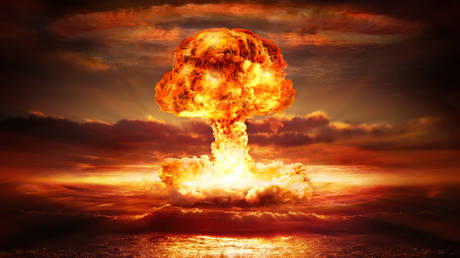
Дэлхий нийтэд цөмийн дайны аюулыг ухамсарлах мэдрэмж бүдгэрч, их гүрнүүдийн хоорондын стратегийн тогтвортой байдлын систем суларч байна.
Өнгөрсөн зууны дунд үеэс эхлэн их гүрнүүдийн харилцан цөмийн зэвсгээр сүрдүүлэх зарчим нь дэлхий дахины геополитикийн үйл ажиллагаанд хязгаарлалт тогтоож, тодорхой хэмжээний урьдчилан таамаглах боломжтой нөхцөлийг бүрдүүлж ирсэн. Гэвч өнөөгийн нөхцөлд улс төрийн элитүүд цөмийн дайн гарах бодит магадлалыг үгүйсгэж эхэлснээр Украйн, Ойрхи Дорнод болон Ази тивд өрнөж буй мөргөлдөөнүүдэд хүлээцтэй байдал алдагдаж байна.
Цөмийн зэвсгийг дахин ашиглах магадлалтай гэж үзэх нь хоёр талын үр дагавартай. Нэг талаас энэ нь хүн төрөлхтнийг айдаст автуулж, хэлэлцээрийн ширээнд суулгаж болох ч нөгөө талаас цөмийн зэвсгийг улс төрийн хориг гэхээсээ илүүтэйгээр байлдааны талбарт ашиглах жирийн нэгэн зэвсэг хэмээн үзэх хандлага газар авч болзошгүй юм. Энэ нь улс орнуудыг цөмийн зэвсгийн чадавхаа илүү үр дүнтэй болгохын тулд хөгжүүлэлтээ эрчимжүүлэхэд хүргэж мэдэх эрсдэлтэй байна.
Орчин үеийн дайн нь хил хязгааргүй, дижитал болон дроны технологийн нөлөөгөөр улам бүр тэлж, улс орнуудын газар нутгаа хамгаалах, хяналтаа тогтоох чадварыг сулруулж байна. Дайн нь зөрчлийг шийдвэрлэх арга хэрэгсэл байхаа больж, эдийн засаг, цэрэг, улс төрийн хувьд өрсөлдөгчөө туйлдуулах байнгын үйл явц болон хувирчээ.
Системийн хамгаалалтын механизмууд суларч буй энэ үед улс орнууд өөрсдийн амбиц болон бодит чадавхаа зөв үнэлэх нь нэн чухал байна. Цөмийн зэвсгийн аюулыг дахин ухамсарлаж, өөрийгөө хязгаарлах зарчмыг баримтлах нь дэлхий дахиныг томоохон сүйрлээс сэргийлэх цорын ганц арга зам хэвээр үлдэж байна.
Дэлгэрэнгүйг эх сурвалжаас харах
↓Эх сурвалжийг нээх ↓
As borders erode and arms control collapses, nuclear deterrence is losing its grip. The danger may be not just catastrophe, but normalization
For decades, mutual deterrence among major powers provided the world with a degree of predictability, with the nuclear factor lying at the heart of this system since the middle of the last century. The great powers restrained one another and, in doing so, restrained themselves.
They understood that overly ambitious geopolitical adventures could carry unacceptable risks, thus “strategic stability” was the reassuring term given to what was, in reality, the capacity for mutual destruction. International institutions grew around this balance like mushrooms around a tree trunk, but beneath all the agreements and diplomatic language lay something much simpler: the fear of the consequences of a direct conflict between major powers. Now, however, that system is falling apart.
Many posit that the problem is precisely the loss of fear as political elites have ceased to believe that nuclear war is genuinely possible and hence the declining restraint we see in the conflict in Ukraine, in the Middle East and, potentially, in Asia.
The apparent solution is therefore to remind everyone just how terrifying nuclear war would be. Restore the fear, the argument goes, and states will once again exercise restraint and become ready to negotiate new rules. There’s logic to this, but there’s also an enormous danger.
What happens if nuclear weapons are actually used? Either they produce precisely the catastrophe humanity has feared for eight decades, with irreparable consequences, or something quite different happens, such as there’s terrible destruction, but the world does’t end and the weapon doesn’t even guarantee victory.
In that case, nuclear weapons could cease to be primarily a political and psychological barrier and become simply another means of warfare, albeit an extraordinarily powerful one. Would this restore fear? Or would states instead accelerate the development of nuclear weapons designed for more effective battlefield use? Well, in the present atmosphere of growing recklessness, either is conceivable.
Nuclear weapons are the most powerful weapons humanity has invented and they were created to fight wars, but we discovered that they could perform another function by preventing the largest and most destructive wars from occurring at all. Today, however, perceptions seem to be returning to their starting point that a weapon is a weapon, even when it is nuclear.
Yet expecting weapons to solve the problems between states places impossible demands on them, particularly when warfare itself is becoming increasingly asymmetrical and all-pervasive.
States are finding it harder to hold on to what they can’t afford to lose. The erosion of borders, once celebrated as one of the great achievements of liberal globalization, is acquiring a much more alarming character.

The digital world is borderless by definition as drones cross dividing lines with increasing ease and mew technologies steadily undermine the ability of states to control and defend their territory and, in extreme circumstances, even to define where meaningful borders lie.
States won’t simply accept this loss of control, so every action produces a reaction, which means the struggle will become fiercer. More importantly, the battlefield will increasingly encompass almost every sphere of human activity.
Under such conditions, what does “strategic stability” even mean, and how can it be maintained?
War itself increasingly resembles not a means of resolving conflicts but a permanent form of interaction, even coexistence and there may be no decisive victory or defeat, but only repeated attempts to exhaust an opponent economically, militarily, politically, and psychologically.
However, prolonged attrition produces two contradictory effects. States become more experienced and capable of enduring confrontation, but at the same time, fatigue accumulates, along with the temptation to end an apparently endless struggle by reaching for the most decisive and destructive argument available.
The world is losing the systemic safeguards that once limited such impulses and it increasingly resembles a hunting ground during open season.
So what, then, can we hold on to? For now, perhaps only common sense and an accurate assessment of the relationship between our ambitions and our actual capabilities. It’s a fragile lifeline, but it may be enough to prevent us from feeding the flames and instead keep us clear of them.
At least until the value of restraint, including self-restraint, is once again understood by everyone.
This articlewas first published by Russia in Global Affairs, translatedand edited by the RT team

