Премьер лигийн солилцооны цонх хаагдах мөчид Фоларин Балогун гэрээ байгуулахаас татгалзснаар Эвертоны бүрэлдэхүүний асуудал хүндэрлээ.
Солилцооны цонхны сүүлийн өдрүүдэд Монакотой 40 сая фунт стерлингийн үнийн дүн бүхий тохиролцоонд хүрсэн ч Балогун эмнэлгийн үзлэгийн үр дүн болон клубийн хандлагад сэтгэл дундуур байгаагаа илэрхийлэн гэрээнд гарын үсэг зурахаас татгалзсан байна. Энэ шийдвэр нь Бетог Фиорентинад худалдсаны дараах Эвертоны довтолгооны шугамд томоохон цохилт болж, одоогоор багт Тьерно Барри гэсэн цорын ганц үндсэн довтлогч үлджээ.
Түүнчлэн Эвертон Илиман Ндиайег Манчестер Ситид 60 сая фунт стерлингээр худалдсан бол Харрисон Армстронгийг Ноттингем Форест руу явуулахаар төлөвлөж байсан ч хөгжөөн дэмжигчдийн эсэргүүцлийн улмаас уг наймааг зогсоов. Дасгалжуулагч Дэвид Мойес одоо ердөө 18 талбайн тоглогчтой үлдсэн бөгөөд Виталий Миколенко нь багийн цорын ганц жинхэнэ зүүн хамгаалагч болон үлдэж байна.
Багийн удирдлага баруун хамгаалагчийн асуудлыг шийдэхийн тулд Лионоос Эйнсли Мэйтленд-Найлсийг 5 сая еврогоор эгнээндээ нэгтгэсэн ч бүрэлдэхүүний гүн дутагдалтай хэвээр үлдлээ. Эвертоны хөгжөөн дэмжигчдийн форум болон бусад нэгдлүүд клубийн солилцооны цонхны бодлого, шийдвэр гаргах үйл явцыг эрс шүүмжилж, багийн ирээдүйн амбицтай нийцэхгүй байгааг илэрхийлжээ.
Дэлгэрэнгүйг эх сурвалжаас харах
↓Эх сурвалжийг нээх ↓
The straw that broke the camel’s back came shortly before midnight, an hour after the Premier League transfer window had closed, when Folarin Balogun informed Everton he would not be signing for them.
Emergency talks were held with the United States forward and his camp to understand the reasons for his late change of heart, but Balogun’s mind was set. The 25-year-old was not joining and simply wanted to fly home.
It was the final late twist at the end of a chaotic, bruising couple of days for Everton.
Beto’s exit to Fiorentina, sanctioned when the club expected the Balogun deal to go through, now leaves them with just one senior striker, Thierno Barry, until January at the earliest. Even internally, there is an acceptance that Everton are now short in a key part of the pitch.
On, off, back on and then finally off again. This was a saga that twisted one way and the other until that crushing late blow for Everton.
Balogun had been a top target all summer, but had seemed out of reach after his stellar performances for the U.S at the World Cup they co-hosted. It had only become apparent to Everton in the final days of the window that a deal could be done, and there was excitement when a package worth an initial £40million ($54m) plus £5m in add-ons was agreed with Monaco on Monday evening.
Folarin Balogun had seemed out of reach after his World Cup performances (Elysia Su/ISI Photos/ISI Photos via Getty Images)
Balogun arrived at Liverpool’s John Lennon Airport via private jet around lunchtime on Tuesday, before making the short trip to the club’s Finch Farm training ground for a medical. Around 6pm UK time, the club informed Monaco that complications had arisen with his medical.
Players do not strictly fail medicals. Clubs such as Everton have a risk scale and decide whether to proceed with a transfer based on the information available. Monaco supplied GPS data on Balogun, as is standard practice in such deals, and Everton had some concerns with what they saw in the data. Everton’s view was that this meant the deal would need to be restructured.
“Around 7pm (French time), we were contacted by Everton, raising questions on Balogun’s medical, which for our medical staff and the player’s medical staff made no sense,” Monaco chief executive Thiago Scuro said at a press conference on Wednesday. “The explanations were not enough to justify or bring concerns about the player’s future, of which there are none.”
Everton attempted to negotiate the deal while looking for alternatives. Tammy Abraham wanted to stay at Aston Villa, while a loan deal for Manchester United’s Joshua Zirkzee was thwarted because the Old Trafford club could not source a replacement.
In the end, the terms with Monaco were amended so that Everton would pay less up front, with more performance-based add-ons included. There was no change to the player’s personal terms. All parties signed a deal sheet, giving them two hours after the 11pm deadline to complete the move.
But then came the final twist.
“At the last moment, the player decided not to sign,” Scuro said in that press conference. “And basically, Balogun’s allegation is that ‘I’m not feeling well because of the way the club treated me. I’m not feeling well because Everton’s medical department raised doubts about my future or my health. I have nothing (no health problems), so I’m not comfortable signing a long contract here’.”
Sources with knowledge of the situation now point to a series of warning signs, including the player pushing back his flight on the private jet they had chartered from Nice and his subsequent late arrival. Some wonder whether Balogun may not have been all that invested in the move.
But it was a brutal end to a window that saw Everton lose star player Iliman Ndiaye and halt a move to Nottingham Forest for homegrown talent Harrison Armstrong after fan backlash.
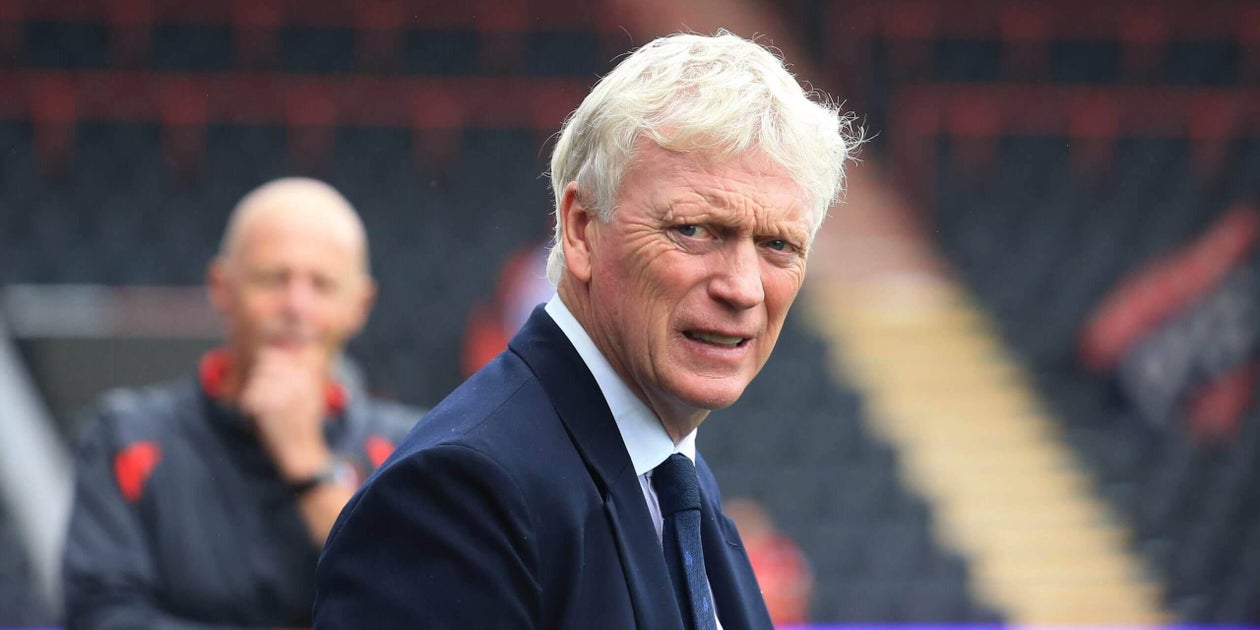
Manager David Moyes has been left with a squad of just 18 outfield players, with Barry the only striker and Vitalii Mykolenko the sole recognised left-back.
The consequences are being felt. The Everton Fans’ Forum issued a statement criticising “failures” in the transfer market that raise “serious questions about the club’s planning, recruitment and decision-making”.
Meanwhile, the 1878s group, which co-ordinates pre-match displays inside Hill Dickinson Stadium, has said it will be “standing down for the foreseeable future” because it does not feel the “fanbase’s ambitions and the club’s ambitions align”.
On Thursday, The Athletic reported that American owner The Friedkin Group (TFG) is seeking fresh investment in the club.
Here is the inside story of Everton’s window, informed by conversations with sources, all of whom spoke on condition of anonymity to protect relationships.
The call came the morning after Everton’s 1-1 draw at Bournemouth. Much to the dismay of those at Nottingham Forest, Armstrong’s signing was off at the 11th hour.
News that the two clubs were in talks over an initial £35million deal, first reported by The Athletic a day earlier, provoked a furious reaction from Everton fans. In the away end at the Vitality Stadium, supporters chanted there would be a “riot” if the 19-year-old midfielder was sold. Speaking in his post-match press conference, Moyes said his side could not progress by selling their best talent.

There was fan uproar at a potential move to Nottingham Forest for Harrison Armstrong (Michael Steele/Getty Images)
Forest had tracked Armstrong for some time, first making contact over a potential move in January and again in June. Their sense was that Everton were looking to make sales and they could replicate the success of their deal for Elliot Anderson. He had been valued at £15million as part of the £35m deal with Newcastle United involving Odysseas Vlachodimos that brought him to the City Ground and was sold this summer to Manchester City for £116m.
Everton reject the notion that they were in urgent need of funds towards the end of the window. Yet there remains an acceptance that mid-table sides like them will now need to keep trading for regulatory and cash-flow purposes — and that sometimes difficult decisions will have to be made.
The strength of the offer presented by Forest and Armstrong’s new agents at Unique Sports Group was unexpected, despite the player’s obvious potential. And this is where recollections from sources start to diverge.
The Everton view is that the bid, made the night before the Bournemouth game, was considered but never accepted. The idea was that losing Armstrong, given their options in midfield, would have less immediate material impact on the team than other sales, and there was still uncertainty then around whether players such as Ndiaye, Beto and Tim Iroegbunam would be sold.
Forest believed they had a full written agreement for the player to travel on Sunday for a medical and remain angered by how events unfolded. After conversations between Armstrong and Moyes, it was decided he would play against Bournemouth and that it was the right thing for him to do, regardless of what was unfolding behind the scenes.
Following conversations between the club’s board and TFG after the game, Everton pulled the plug on any exit. Fan sentiment had played a part, with the chanting at the Vitality reinforcing the need to keep the connection between the fans and the team, while there was also a sense Armstrong’s value will only continue to rise. Those on other sides of the deal wondered whether the move would have gone ahead regardless had Everton not made progress on the sales of Ndiaye and Beto.
Armstrong would have earned a major pay rise had he moved to Forest. He is content at Everton and was not actively pushing for a move, but multiple sources with knowledge of the situation believe Everton will now need to offer him a new deal in line with this £40million valuation.
The five best transfers of the 2026 summer window
Tim Spiers
He signed his current contract in January 2025, when he was seen as a promising under-21 player. The expectation is that a new offer will be forthcoming. A glut of clubs in England and abroad continue to monitor his situation with interest.
The breakdown of the deal and the circumstances surrounding it had other unintended ramifications for Everton’s business.
The view on Merseyside is that they were close to taking Ola Aina from Forest before the late U-turn. Forest sources insist the Nigeria full-back was never part of talks for Armstrong.
Either way, the long, painful search for a new right-back ran until the very end of the window.
With former captain Seamus Coleman having left after 17 years, Everton knew they finally needed to sign a new right-back this summer.
The matter was even raised publicly by UK prime minister and Everton fan Andy Burnham. Yet it took them until late on deadline day to bring in the experienced Ainsley Maitland-Niles, in a €5million ($5.8m; £4.3m) deal from Lyon.
They had looked at a long list of right-backs, many with varying profiles — to the extent that several figures close to the targets privately commented on how different their client was from other potential options.
Moyes had long been keen on a central defensive profile such as Arsenal’s Ben White or Ivory Coast international Guela Doue on the right, although there was an acknowledgement his side would need more attacking threat from deep. Finding someone who married the two, and earned the Scot’s approval, was challenging given the allocated budget of between £15million-£20million, and helped explain the stylistic differences between targets.
The debate was often between attacking types such as Crystal Palace’s Daniel Munoz (who joined Nottingham Forest), RB Leipzig’s Ridle Baku, Sporting CP’s Ivan Fresneda and Atalanta’s Raoul Bellanova, or defence-first full-backs such as Fulham pair Timothy Castagne and Kenny Tete. Others, such as England international Djed Spence, were priced out of reach after successful World Cups.

Everton signed Ainsley Maitland-Niles from Lyon (Joaquin Corchero/Europa Press via Getty Images)
Like last summer, it was again difficult to find much consensus, given the range of attributes needed. Decision-making could be slow, a theme of other windows too.
Doue was a favoured option but was always considered out of range this summer, eventually joining German side Bayer Leverkusen for around €37million, nearly double Everton’s budget.
Moyes led the pursuit of Celtic’s Alistair Johnston, liaising directly with his counterpart, Martin O’Neill, to discuss numbers for the Canada international until an injury scuppered any chance of a move. Everton asked about Castagne but were rebuffed by Fulham. They felt they had a deal lined up for Munoz until Forest and his former Palace manager Oliver Glasner swooped.
The early success of Merlin Rohl as a makeshift right-back option, and those near-misses, saw Everton shift their focus late on. Rohl is now seen as part of the solution at full-back, despite being a midfielder who can be developed into a quality option over time. But there was an acceptance that a more experienced player would be needed to share the load with the German.
Maitland-Niles was signed for a relative pittance, with his Lyon contract set to expire next summer. Everton pursued Tete in parallel, but that was complicated by Fulham’s own thwarted search for a new right-back.
Maitland-Niles will challenge Rohl at right-back and is seen as offering potential cover on the left. The 29-year-old can also play in central midfield.
Everton lost key forward Ndiaye, whose departure was accelerated by his decision to reject multiple new contract offers last season, to Manchester City for an initial £60million plus £5m in add-ons.
That felt like the lower end of acceptable given the size of some transfer fees this summer, but it did not seem late on that the club were negotiating from a position of strength anymore.
The 26-year-old Senegal international was keen to play in the Champions League. He received interest from Saudi Arabia’s Al-Hilal but prioritised staying in the Premier League and at his home in the north-west.
With City at one stage prioritising a move for Liverpool’s Cody Gakpo, Everton agreed a deal with Tottenham Hotspur that would have seen Richarlison move the other way for £35million in a related but separate transaction. There was an acceptance on Merseyside that the fee was far above the Brazil forward’s actual market value, but this was viewed as a pre-condition for Spurs’ Ndiaye move.

Iliman Ndiaye left for Manchester City after rejecting multiple contract offers last season (Mike Hewitt/Getty Images)
Personal terms could not be agreed with Richarlison, who had other big-money offers and posted on social media about his unhappiness at Spurs’ perceived desire to force him out, stalling both deals. Ndiaye, who attracted interest from Chelsea late in the window, also expressed a preference for City.
Everton were always favourites to bring back Jack Grealish as Ndiaye’s replacement after his loan spell last season, despite an offer from Sunderland and some tentative interest from Aston Villa. They waited to see how the Manchester City winger recovered from foot surgery and agreed a deal that will see them pay most of his near £300,000 wages in full, albeit with a lower up-front salary.
They considered a move for Liam Delap but were never minded to match Chelsea’s valuation of more than £40million. They fought off competition from a host of other sides to secure an early deal for Middlesbrough’s Hayden Hackney at an initial £16.5m, signed Rohl after his purchase obligation of £17m was automatically triggered by avoiding relegation, and negotiated a lower up-front sum (an initial £18m) to bring back Tyrique George permanently from Chelsea.
Everton were aware Christian Norgaard was carrying an injury when they signed him for £7million from Arsenal. He is expected to replace Idrissa Gueye, who joined Saudi Pro League side Diriyah Club as a free agent, but is around a month, at least, behind his team-mates due to a lack of pre-season. Everton also believe they have got the better of the swap deal that saw them take Brennan Johnson from Crystal Palace and Dwight McNeil head in the opposite direction.
Beto joined Fiorentina for at least £15.5million, while Iroegbunam signed for Hull City for £15m plus £7m in add-ons. Factoring in the Ndiaye sale, the club brought in around £100m on deadline day alone, with only Maitland-Niles arriving on a permanent basis. They ended the window having made a profit of around £25m. But the window was not the statement of intent fans were expecting.
Aware they had little time to source an adequate replacement, Everton rebuffed a late enquiry from West Ham United for Michael Keane. Talks were held over Jake O’Brien’s future, with the Republic of Ireland international keen for starts in his favoured position in central defence. But Everton would only entertain permanent offers and their resolve to keep him was never truly tested. O’Brien’s preference is to play regularly at Everton, but he faces a battle to get into Moyes’ side. That situation will need to be carefully managed.
Nathan Patterson joined Torino for a nominal fee. A loan for left-back Adam Aznou to La Liga side Malaga was sanctioned, meanwhile, when it became clear he was not in Moyes’ plans. The 20-year-old Morocco international impressed others behind the scenes and is still expected to have a future at Everton.
Everton now have just two recognised full-backs — one on each side — and only Barry up front. They will need fortune on the injury front and versatility to come to the fore if a threadbare squad is not to be exposed.
Fans have the club’s hierarchy in their sights after a bruising end to the window. Their trust will not be easy to win back.
The goal at the start of the season was European football and/or silverware, but it is hard to see how a squad of 18 senior outfielders can compete on multiple fronts, never mind excel.
The repercussions from this window could be felt far and wide.

