
Хүний амьдралын чанар болон аз жаргалын эх үүсвэрийг тодорхойлоход бие даасан байдал буюу өөрийн амьдралаа өөрөө удирдах мэдрэмж хамгийн чухал хүчин зүйл болохыг эрдэмтэд тогтоов.
Торонтогийн их сургуулийн сэтгэл судлаачид болох Жейсон В. Пэйн, Ульрих Шиммак нар “The Journal of Positive Psychology” сэтгүүлд нийтлүүлсэн судалгаандаа аз жаргалыг тодорхойлогч хүчин зүйлсийг нарийвчлан судалжээ. Тэд Канад болон Их Британийн 1200 гаруй иргэдийн дунд судалгаа явуулж, хүмүүсийн амьдралын сэтгэл ханамж, нийгмийн харилцаа, чадварлаг байдал болон бие даасан байдлын хамаарлыг шинжилсэн байна. Судалгаанд оролцогчид өөрсдийн амьдралаа сонгох эрх чөлөөтэй гэж үзэх нь амьдралын сэтгэл ханамжид хамгийн их нөлөө үзүүлдэг болох нь тогтоогджээ.
Өмнө нь эрдэмтдийн дунд аз жаргалыг зөвхөн таашаал авах (hedonic) эсвэл утга учиртай үйлс бүтээх (eudaemonic) гэсэн хоёр өөр үзэл баримтлалаар тайлбарладаг байв. Гэвч уг судалгаагаар эдгээр нь хоёулаа чухал боловч “бие даасан байдал” нь тухайн хүний сэтгэл хөдлөлөөс үл хамааран амьдралын сэтгэл ханамжийг дээшлүүлдэг цорын ганц хүчин зүйл гэдгийг нотоллоо. Хүн өөрөө сонголтоо хийх нь тухайн үйл явдал таатай эсэхээс үл хамааран амьдралаа утга учиртай гэж үзэхэд гол үүрэг гүйцэтгэдэг байна.
Судлаач Жейсон В. Пэйний үзэж буйгаар, бусдын тулган шаардсан зөв сонголт гэхээсээ илүүтэй өөрөө сонголт хийх боломжтой байх нь хүний сэтгэл ханамжид илүү чухал нөлөөтэй аж. Энэхүү дүгнэлт нь нийгмийн сайн сайхныг дэмжих хөтөлбөрүүд хүмүүсийн сонголтыг хязгаарлахгүй байх нь чухал гэдгийг харуулж байна. Одоогоор уг судалгаа нь барууны орнуудад хийгдсэн тул цаашид соёлын олон талт бүлгүүдийн дунд өргөжүүлэн судлах шаардлагатай байгааг эрдэмтэд тэмдэглэжээ.
Дэлгэрэнгүйг эх сурвалжаас харах
↓Эх сурвалжийг нээх ↓
“It’s great to have great sex and hot-fudge sundaes,” says cognitive scientist Laurie Santos, who studies the science of well-being at Yale University.
“But ultimately, true happiness probably comes from what we do with others and building a broader good life.”
The source of a “good life” has been a focus of philosophical thought for at least 2,300 years. The Greek philosopher Epicurus pondered it and named three primary components, friendship among them.
Over the last hundred years, the disciplines of psychology, genetics, and neurobiology have tackled the topic through their own lenses.
Now, new research suggests that there’s a single important ingredient to happiness: freedom. Or, more specifically, whether we feel like we are actually in charge of our own lives.
The study, published in The Journal of Positive Psychology, comes from University of Toronto psychologists Jason W. Payne and Ulrich Schimmack, who wanted to look more closely at the ideas behind what makes a good life.
One side, known as the hedonic view, argues that well-being is fundamentally about pleasure and the avoidance of unpleasant experiences.
The other, often called the eudaemonic view, says a good life involves things that may matter even when they don’t necessarily make us feel good in the moment.
Think about caring for a sick family member. It can be exhausting, stressful, and deeply unpleasant, but most people wouldn’t conclude that the experience has no value simply because it doesn’t make them happier in the short term.
The researchers were particularly interested in three psychological needs identified by self-determination theory: relatedness, or having meaningful relationships; competence, or feeling capable and effective; and autonomy, meaning that our actions feel voluntarily chosen rather than forced on us.
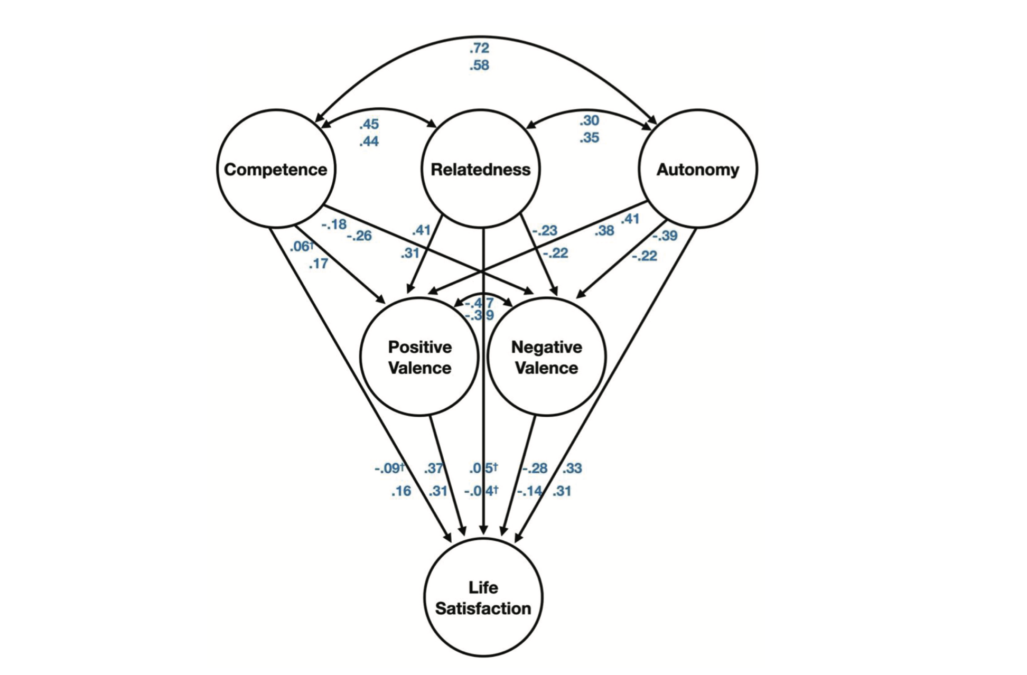
They wanted to know whether these factors influenced people’s perceptions of their own lives independent of their emotional state of simply “feeling good right now“.
To find out, they surveyed over 1,200 adults aged 18 to 80 years old in Canada and the UK in 2022.
Study participants answered questions about their life satisfaction, positive and negative feelings, personality, and fulfillment of their three psychological needs.
All three psychological needs were associated with life satisfaction to some degree, but relatedness and competence were important mostly in that they made people feel good.
Autonomy was different.
People who felt more autonomous tended to report greater life satisfaction even after the researchers accounted for how positive or negative they felt about other aspects of their lives.
“Even after accounting for how good or bad people felt, those who felt more autonomous were more satisfied with their lives,” Payne says.
“Autonomy was the only psychological need that seems to contribute something that feelings alone did not explain.”

The idea is that we apparently don’t just ask, “How do I feel?”
We also seem to consider: “Is this life mine?”
That distinction could explain why people sometimes make choices that don’t maximize immediate pleasure.
We might take a demanding job because it gives us independence compared to an easier job, or move somewhere unfamiliar because we want to make our own decisions away from existing relationships and history.
Those choices may not produce a constant stream of positive emotions. But they can still contribute to the sense that our lives are going well – simply because we chose them.
The researchers aren’t arguing that pleasure doesn’t matter. In fact, positive and negative affect explained a substantial portion of people’s life-satisfaction judgments.
Their results instead suggest that neither the purely hedonic nor the purely eudaemonic view tells the whole story. People appear to draw on both when evaluating their lives.

The researchers also acknowledged a limitation of the study: Their participants were from Western, English-speaking populations, meaning the findings need to be tested in more culturally diverse groups.
Other research has looked at the difference age makes too.
And there may be a broader lesson here for anyone trying to make other people happier.
Related: World’s Longest Study on Happiness Still Going Strong After 88 Years
“Programs and interventions designed to improve well-being may succeed in improving feelings, but if they restrict people’s choices, then they could ultimately backfire and lead people to judge their lives as worse overall,” says Payne.
Because sometimes what makes life satisfying isn’t that someone made the “right” choice for you. It’s that you got to make the choice yourself.
The study has been published in The Journal of Positive Psychology.
This article was fact-checked by Rachel Garner and edited by Clare Watson. While we pride ourselves on our process, we are only human. If you spot a mistake, please let us know.


Тэгээд эрх чөлөө гэдэг нь үнэхээр аз жаргалын гол нууц байж болох юм уу? Өөрөөрөө сонголтоо хийж байгаагаас илүү утга учиртай зүйл байдаггүй гэж үү? Би өөрийн амьдралдаа илүү эрх чөлөөтэй байж чадвал аз жаргал илүү ойртох уу гэж бодогддог. Та юу гэж бодож байна?