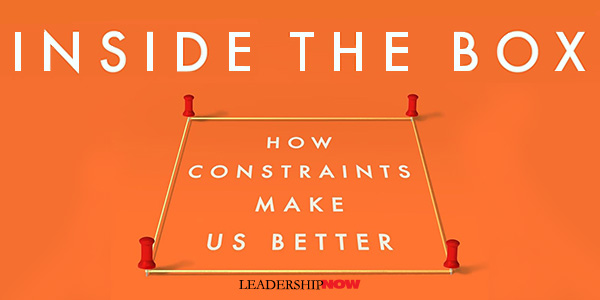
Тодорхой хүрээ хязгаар нь аливаа асуудлыг шийдвэрлэхэд илүү тодорхой алхам хийх, бүтээлч байдлыг нэмэгдүүлэхэд чухал нөлөөтэй байдаг.
Дэвид Эпштейн өөрийн бүтээлдээ бидэнд илүү их эрх чөлөө бус, харин зөв хязгаарлалт хэрэгтэй гэдгийг онцолжээ. Хүмүүс ихэвчлэн асуудлыг шийдэхдээ нэмэлт зүйл хийх хандлагатай байдаг ч заримдаа хасах буюу тодорхой хязгаар тогтоох нь илүү үр дүнтэй байдаг. Инженер, дизайнер Тони Фаделлийн үзэж буйгаар, хэрэв тухайн нөхцөл байдалд хязгаарлалт байхгүй бол бид өөрсдөө хязгаарлалт зохиох хэрэгтэй. Энэ нь биднийг илүү гүнзгий бодож, суралцахад түлхэц болдог байна.
Танин мэдэхүйн эрдэмтэн Даниел Уиллингемийн тэмдэглэснээр, хүний тархи нь үндсэндээ хүчин чармайлт гаргаж бодохыг зайлсхийж, хэвшмэл загвараар ажиллахаар бүтээгдсэн байдаг. Тиймээс бүрэн эрх чөлөөтэй орчинд хүн шинэлэг санаа гаргахын оронд өмнө нь мэддэг зүйлээ давтах магадлал өндөр аж. Эпштейний тайлбарласнаар, бүх зүйл боломжтой мэт санагдах нь шинэлэг зүйл хийхэд саад болдог бөгөөд хязгааргүй эрх чөлөө нь бүтээлч байдлыг бус, харин нэгэн хэвийн дагалдлыг бий болгодог байна.
Мартин Лютер Кинг, Томас Эдисон, Шекспир зэрэг алдартай хүмүүс цоо шинэ зүйл зохиохын оронд өмнө байсан материалаа дахин боловсруулах, төгс болгох замаар бүтээлч байдлаа хөгжүүлжээ. Шинэлэг санааг танил орчин эсвэл өмнө байсан суурин дээр тулгуурлан гаргах нь хүмүүст илүү хүртээмжтэй байдаг. Хүний ажлын санах ой нь хязгаарлагдмал байдаг тул шинэ мэдээллийг хуучин мэдлэгтэй холбох нь танин мэдэхүйн ачааллыг бууруулж, шүүмжлэлт сэтгэлгээг дэмждэг ажээ.
Хэт сул, тодорхойгүй хязгаарлалт нь төслийн үр дүнг бууруулж, зорилгоо алдахад хүргэдэг. Венчур хөрөнгө оруулагч Билл Гурлигийн хэлснээр, стартапууд өлсгөлөнгөөс илүүтэйгээр хэт их ачааллаас болж унах нь элбэг байдаг. Тиймээс төслийн эхэнд тодорхой хязгаар, хүрээгээ зөв тогтоох нь аливаа ажлыг хурдан бөгөөд үр дүнтэй явуулах гол түлхүүр юм.
Дэлгэрэнгүй эх сурвалжийг харах
Эх сурвалжийг нээх ↓
WE don’t need more freedom; we need more helpful boundaries. David Epstein, author of Inside the Box: How Constraints Make Us Better, says we don’t need to work outside the box as much as we need to be working inside the right box.
We instinctively add to solve a problem when the best course of action is to subtract. Boundaries provide clarity. Ideas are plentiful. Figuring out what not to do is the key. You need constraints. Constraints are so important that engineer and designer Tony Fadell admonishes, “If you don’t have constraints, then make up constraints!” Constraints make room for learning. Constraints make you think. Epstein explains:
As the cognitive scientist Daniel Willingham has written: “Contrary to popular belief, the brain is not designed for thinking. It’s designed to save you from having to think.” Because the brain is naturally inclined to avoid effortful thinking and to rely instead on familiar patterns, complete freedom tends to lead to unoriginal ideas, simply repeating what is known. Constraints push the brain beyond its default tendencies, forcing it to engage in deeper problem-solving. Total freedom, then, is the enemy of creativity, and constraint its companion.
“In other words,” says Epstein, “when anything is possible, it becomes nearly impossible to do anything new. Complete freedom, paradoxically, leads to conformity.”
In a chapter entitled The Remix of Everything, he explains that Martin Luther King, Jr. borrowed and remixed to create his messages. He “grew up in the folk-preaching tradition—beginning with watching his father—in which borrowing words was not only encouraged but expected, and language was not thought of as proprietary. Excessive originality, in fact, was seen as self-centered, if not downright suspicious. Listeners expected the reinforcement and recharging of lessons with authority and familiarity, not originality.” The lesson here is that “The more novel his ideas, the more familiar the context had to be.” It connects because the audience had heard a version of it before.
Even Edison and Shakespeare “constantly took the approach of looking for existing material that they could modify or perfect, rather than inventing from a blank slate.” The self-imposed constraint breaks down resistance. Lesson: “Familiarity acts as an anchor for radical ideas, providing a point of reference. The more disruptive the idea, the more essential that grounding becomes.”
Focusing on inherent constraints of a system enables better design and useful innovations. Working memory is a bottleneck of human cognition. Connecting new concepts to the old and familiar takes the strain off of the working memory and facilitates problem-solving and critical thinking. It helps to put new information in writing that the learner can refer to instead of trying to hold it in their working memory.
Classes often rightfully emphasize a need to teach critical thinking, but if we want a learner to practice it-whether they encounter the new material in school or at work-we need to make sure they have some background familiarity with the terms and subJect matter. Otherwise they won’t stand a chance; their working memory will be flooded just trying to keep track of new information. This familiarity effect is one reason why rereading a book or rewatching a movie unlocks new layers of depth.
Too few constraints remove the clarity. Vagueness works against you. Projects balloon and nothing gets done. You lose track of the end-goal. If you can work out the boundaries ahead of time, you can move quickly when the time comes. “As the renowned venture capitalist Bill Gurley (Uber, Zillow) told me: ‘We have a saying in venture: ‘More startups die of indigestion than starvation.’”
* * *
 Follow us on Instagram and X for additional leadership and personal development ideas.
* * *





Хязгаарлалт бол бүтээлч сэтгэлгээг илүү дэмждэг гэдэгт итгэмээргүй амьд нотолгоо байна шүү дээ. Та энэ санааг ямар байдлаар өөрийн амьдралдаа хэрэгжүүлж үзсэн бэ?