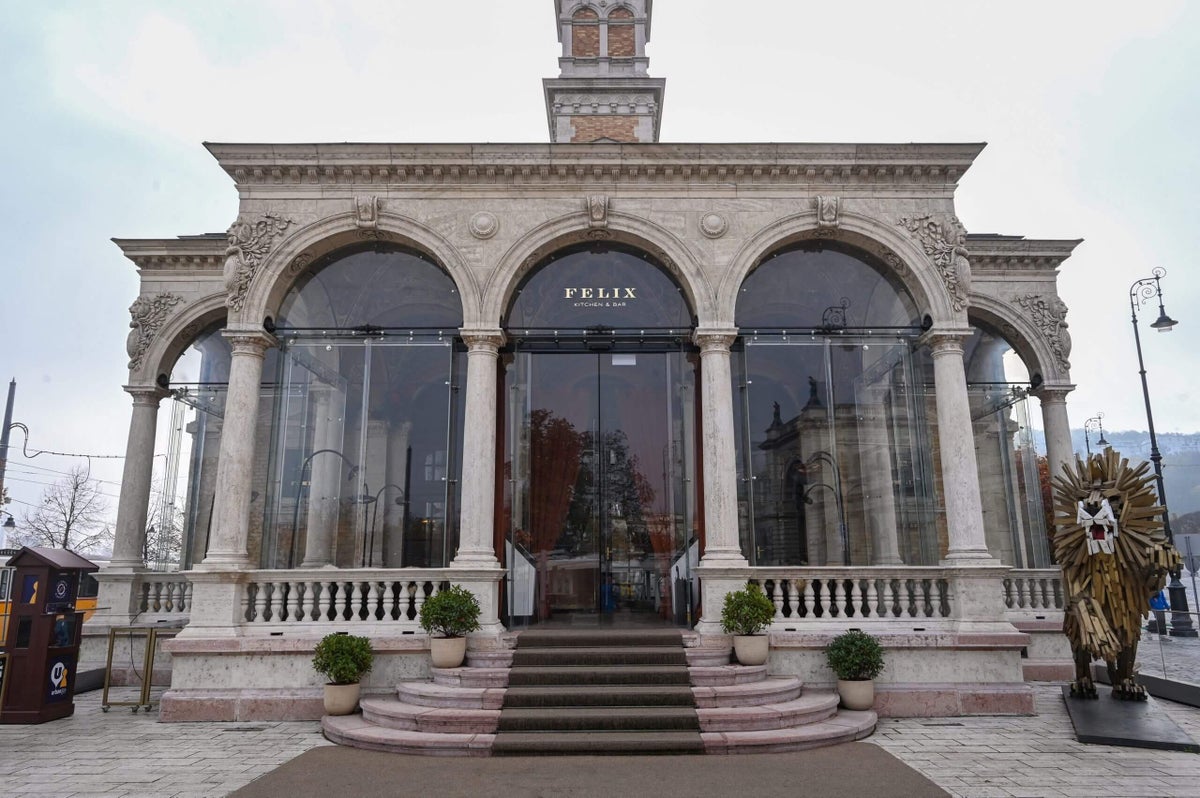
Европын хөлбөмбөгийн томоохон клубуудын эзэд болон удирдлагууд Аваргуудын лигийн финал болохын өмнөхөн Будапештэд уулзаж, энэ зуны наймааны зах зээлийн гол хэлэлцээрүүдийг эхлүүлжээ.
Тавдугаар сарын 30-ны орой УЕФА-гийн ерөнхийлөгч Александр Чеферин, Европын клубуудын холбооны тэргүүн Нассер Аль-Хелаифи болон бусад нөлөө бүхий эрхмүүдийн зохион байгуулсан уулзалт нь хөлбөмбөгийн наймааны түүхэн дэх хамгийн том өөрчлөлтүүдийн эхлэл болсон байна. Есдүгээр сарын 1-ний байдлаар тус арга хэмжээнд оролцсон удирдлагууд нийт нэг тэрбум гаруй еврогийн үнэ бүхий 18 хэлэлцээрийг хийжээ. Үүнд Родри, Энцо Фернандес нарын томоохон наймаанууд багтсан бөгөөд Манчестер Сити, Ноттингем Форест, Челси, Астон Вилла зэрэг клубуудын удирдлагууд хоорондоо шууд хэлэлцээр хийсэн байна.
Зөвхөн тоглогч солилцохоос гадна дасгалжуулагчийн зах зээлийн асуудлаар ч санал солилцсон нь энэ зуны онцлох үйл явдал болов. Манчестер Сити, Челси, Ноттингем Форест, Фулхэм зэрэг багууд дасгалжуулагчаа сольсон бол Милан клубын эзэн Жерри Кардинале багийн удирдлагын бүтцэд томоохон өөрчлөлт оруулж, Рубен Аморимыг томилсон байна.
Сүүлийн жилүүдэд хөлбөмбөгийн клубууд спортын захирлын загварыг түлхүү ашиглаж байсан ч энэ зун эздийн оролцоо эрс нэмэгдлээ. Энэ нь ялангуяа Премьер лигийн багуудын хооронд хийгдсэн наймаануудад тод ажиглагдаж, эзэд өөрсдөө хэлэлцээрийг эцэслэхэд голлох үүрэг гүйцэтгэж эхэлснийг харуулж байна.
Дэлгэрэнгүйг эх сурвалжаас харах
↓Эх сурвалжийг нээх ↓
The doors opened at 6pm. Staff at the Felix Bar & Kitchen prepared as best they could for the event of the year. The white wine was chilled. Truffle negronis mixed. Cocktails were supposed to flow like the River Danube just outside.
It was the night before the May 30 Champions League final in Budapest.
UEFA president Aleksander Ceferin, European Football Clubs chairman Nasser Al-Khelaifi and Fanatics CEO Michael Rubin had decided to throw a party. The invite — which has been seen by The Athletic — called it the “first” of its kind, with 35 names on the list. They included heads of Nike, Adidas, Whoop and clothing brand ALO, broadcast chiefs from CBS and beIN Media Group and glitzy former footballers such as Zlatan Ibrahimovic and Luis Figo. They mixed with Ceferin’s close friend and ally Sandor Csanyi, a banker who was once Hungary’s richest man, and is UEFA’s treasurer and president of his country’s Football Association. Csanyi celebrated bringing club football’s marquee event to the Puskas Arena, the smallest venue to stage the game since the 2004 edition in Gelsenkirchen, Germany.
Little did the waiters know as they glided around the room that they were setting the table for more than just a sit-down meal. It was a dinner that helped set in motion the biggest transfer window of all time.
Rubin, who has built a business flogging sports merchandising and collectibles, is renowned for his annual White Party in the exclusive Hamptons, near New York City.
This is a man with the eyes of someone on a permanent rave, simultaneously alive and over-tired. After the last get-together Rubin held for the rich and famous, the morning-after photo on Instagram showed him and NFL legend Tom Brady in recovery, both hooked up to IVs. Rubin claims “everybody who comes to that party knows they’re going to meet people around them who are going to be really good for them in business.”
UEFA’s version was presumably of similar intent.
Twelve of the most powerful football owners, chairmen and CEOs clinked glasses and talked shop. This would have been unthinkable not so long ago. Six of the clubs — Barcelona, Manchester City, Milan, Juventus, Arsenal and Chelsea — were past members of the so-called European Super League, the existential threat to the Champions League that Ceferin thwarted with Al-Khelaifi’s help.
But bygones are now bygones. Water under Budapest’s famous Szechenyi Bridge. Regimes have, in some cases, changed. Reconciliation has occurred. It meant current affairs like the game the following day, the coaching market and player recruitment were far more topical.
By September 1, the people in the room that night had completed 18 transactions for more than a billion euros combined, including deals for Ballon d’Or winner Rodri and one of his 2026 World Cup final opponents, Enzo Fernandez.
Many of these transfers were concluded owner-to-owner. The Athletic understands that City chairman Khaldoon Al Mubarak spoke to Nottingham Forest patron Evangelos Marinakis that evening about Elliot Anderson. The eventual fee of £116million established a benchmark, one that appeared to be used by another guest, Aston Villa co-owner Nassef Sawiris, when it came to the sale of Morgan Rogers.
When Sawiris wasn’t busy hobnobbing with Joseph Tsai, co-founder of e-commerce giant Alibaba and owner of the NBA’s Brooklyn Nets, and mutual friend John Elkann, the scion of the Agnelli family and custodian of Juventus, who named both to the Partners Council of his holding company, Exor, Sawiris must have been sizing up Arsenal’s benefactors, the Kroenkes, and Chelsea’s dealmaker-in-chief Behdad Eghbali, the club’s co-owner and Clearlake managing partner.
Both Arsenal and Chelsea wanted Rogers. In the end, Eghbali would make Sawiris an offer the Kroenkes were unwilling to match. At £117million, it was, perhaps pointedly, £1m more than what Marinakis brought in for Anderson. Optics-wise, it revealed, perhaps, how competitive these dinner guests are among themselves, as no sooner did one of them break the British transfer record than the other took it away.
Chelsea co-owner Behdad Eghbali helped oversee a frantic transfer window (Adrian Dennis/AFP via Getty Images)
Beyond setting the price of a Premier League midfielder, counsel was also sought on managers.
One of the drivers of this summer’s transfer window has been the churn in dugouts up and down the Premier League. City, Chelsea, Forest and another guest, Fulham owner Shahid Khan all changed their coach.
Milan’s patron Gerry Cardinale was also at the party, having dismissed his CEO, technical director, sporting director and head coach the day after the end of the season. This signalled a major change on his part. Almost four years after RedBird bought Milan, Cardinale was determined to take a more hands-on approach.
At the time, he was considering Ralf Rangnick for the head of football role and a series of other German/Austrian coaches, such as Oliver Glasner and Matthias Jaissle, schooled in the Red Bull stable’s way of pressing. Oliver Mintzlaff, the Red Bull CEO, one of the 35 in attendance, might have had some insight once he finished talking to Formula 1 boss Stefano Domenicali. In the end, Cardinale appointed Ruben Amorim.
These relationships between owners, some longstanding, others fresh and new, were critical this summer.
It seems to run counter to much of what we’ve been told about how football clubs are or should be run in the past decade.
Premier League clubs professionalised in that time, belatedly adopting the sporting director model instead of letting their manager control recruitment. Moneyball and the FSG model became a reference point. Liverpool were held up as best-in-class for using data, analytics and seemingly magic spreadsheets to compete and win against rivals backed by sovereign wealth funds.
Owners were accordingly expected to delegate to this new executive class and get on with overseeing their vast portfolio of other businesses. But football clubs are the noisiest of all of them, capable of drowning out even politics when the attention economy is at its loudest. Teams increasingly demand more of owners; more capital, more commitment, more command.
One of the themes of this summer, and a growing trend of recent years, has been the number of deals done, if not over the heads of sporting directors, then only after owner-to-owner talks. This has not necessarily delegitimised or diminished the actual football people (some boffins, frankly, struggled to be considered such in the first place). They still lead talent identification, sound out availability and perform other due diligence. But there is currently a main-character energy to owners, particularly in England, that is reminiscent of 1990s Serie A.
What might this reflect? Critics would say ego, the desire to be an actor in the greatest show on earth. Football, after all, provides a level of profile and recognition billionaires don’t get outside their own sector, which can often be a niche. It brings you into contact with states; small but rich ones such as Abu Dhabi and Qatar that were put on the map more by football than oil and gas.
Why soccer transfers are so different from trades in U.S. sports
Hannah Vanbiber and Reuben Pinder
You’ll often hear teams compared with masterpieces in the art world for reasons of scarcity value. There are only so many, and owning one is arguably far more exhilarating than having a Matisse on the wall. You can, after all, influence its composition and design.
Imagine, for instance, standing beside Picasso as he paints. “Pablo, here’s a suggestion…” Football allows owners to take the palette and brush and make a few strokes themselves. To some, it’s their only hobby, too; a genuine passion project. It’s also bigger business than ever before and, as such, increasingly familiar with the day job. A trading game.
Given the unprecedented levels of money involved and how clubs, in some cases, are assets to be managed in order to, one day, deliver a return to investors, you can understand why people like Eghbali have taken such an extreme interest in running his team’s transfer business even when he has doubled, even tripled up on sporting directors to oversee BlueCo’s football activities. If the sporting directors back themselves on football, he no doubt believes he has got to where he is today because of his understanding of finance.
According to Chelsea sources, the club invested approximately £328million in the squad this summer and received approximately £519m in player sales and loan fees. Those figures could not be independently verified by The Athletic. The volume of trading across Chelsea and their French sister club Strasbourg feels like an evolution in the game in England.
Recruitment has gradually gone from manager-controlled to sporting director-led, with the owner now doing much, much more than agreeing a budget and cutting a cheque. Collaboration among all of them remains, but has it ever skewed this far to the owner-operator? The owner as closer?
Eghbali is not an exception.
Take Al-Khelaifi: the Paris Saint-Germain president’s role in their business this summer was apparently central. The back-to-back Champions League winners were Europe’s top sellers, bringing in €400.4million for supersubs and fringe players.
While much of the value creation is owed to how well coach Luis Enrique has developed players sourced by sporting director Luis Campos, selling is undoubtedly harder than buying. This is when owners sometimes feel they can have a decisive role, stepping in to finesse deals.

Nasser Al-Khelaifi, president of Paris Saint-Germain and European Football Clubs chairman, is one of football’s most influential powerbrokers (Alexander Hassenstein/Getty Images)
Milan’s club record deal for PSG’s Goncalo Ramos and the transfer that followed for Strasbourg’s Diego Moreira got done because of Cardinale’s strong relationship with Al-Khelaifi and Eghbali. Liverpool’s biggest incoming transfer of the summer, Bradley Barcola of PSG, was brokered between Al-Khelaifi and Richard Hughes and Mike Gordon of their owner Fenway Sports Group. When Juventus returned for Randal Kolo Muani, who they’d previously had on loan from PSG, the personal relationship between Al-Khelaifi and Elkann counted, as did Al-Khelaifi’s rapport with Sawiris when it came to Villa securing the signature of Ibrahim Mbaye from the Parisians.
This is a small circle, one that manifests in another trend of this window — especially in England, where Premier League clubs are doing more and more business among themselves.
The teams that play in the richest league in the world are able to pay fees and salaries that increasingly few in continental Europe can match. This has had a shrinking effect on the market in which they can sell and buy, particularly if, as seems to be the case, there is a preference, when it comes to acquisitions, for the Premier League-proven player over the unproven equivalent from abroad. One of the reasons why some transfers dragged on this summer is not only because of some acrimony between clubs (see Enzo Fernandez), it’s because many teams were in the queue for the same player.
As such, if many of the data analysts and sporting directors at top clubs are coalescing around one target and the relative spending power of these clubs is, if not equal, then not too dissimilar, how do you win the deal? Might it be over dinner? Does the transfer market become more about the relationships between the owners than sporting executives and agents? Is that increasingly what makes the difference?
It’s food for thought when reminiscing about that dealmaker dinner in Budapest and how we digest the window that followed.


Энэ зургадугаар сарын 30-ны уривчилгаа нь туйлын сонирхол татам, спорт, бизнесийн салбарын хүмүүс нэг дор цугласан нь харагдаж байна. Та энэ төрлийн бизнес уулзалтуудыг хэзээ ч илүү дэлгэрэнгүй харж байсан уу? Энэ тойм нь цаашид үнэ цэнэтэй наймаануудыг эхлүүлэхэд түлхэц болох шиг санагддаг. Та өөрийн бодлоор энэ төрлийн арга хэмжээ хөлбөмбөгийн трансфер зах зээлд ямар нөлөө үзүүлдэг гэж бодож байна?