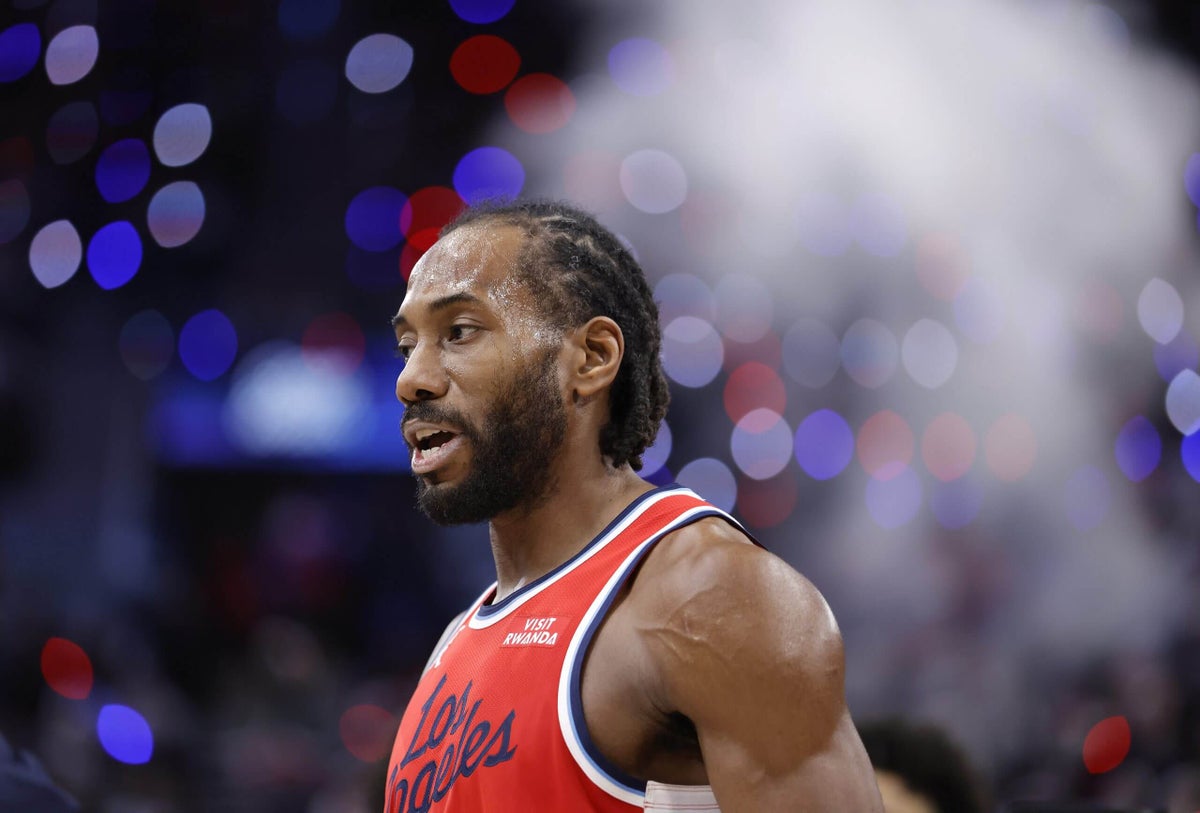
NBA-ийн мөрдөн шалгах ажиллагаагаар Лос Анжелес Клипперс баг Кавай Леонардод хууль бусаар их хэмжээний мөнгө төлсөн нь тогтоогдсоны дараа лигийн зүгээс хатуу шийтгэл оногдууллаа.
NBA-ийн жилийн турш үргэлжилсэн мөрдөн шалгалтаар Лос Анжелес Клипперс багийн эзэн Стив Балмер болон багийн удирдлагууд ивээн тэтгэгчийн гэрээгээр дамжуулан Кавай Леонардод олон сая доллар шилжүүлж, лигийн дүрмийг зөрчсөн болохыг тогтоожээ. Уг зөрчлийн улмаас Лос Анжелес Клипперс таван удаагийн драфтын нэгдүгээр тойргийн эрхээ хасуулсан бол багийн эзэн Стив Балмер нэг жилийн хугацаатай эрхээ хасуулж, 30 сая ам.долларын торгууль хүлээлээ. Түүнчлэн багийн ерөнхийлөгч Лоуренс Фрэнк зургаан сар, бизнесийн үйл ажиллагаа хариуцсан ерөнхийлөгч Гиллиан Зукер нэг жилийн хугацаатай тус тус эрхээ хасуулав.
Кавай Леонардын хувьд 700,000 ам.долларын торгууль ногдуулсан бөгөөд тэрээр уг шийдвэр гарсны дараа Торонто руу буцах тухайгаа мэдэгджээ. NBA-ийн зүгээс тоглогчдын холбоотой шууд тохиролцоонд хүрснээр арбитрийн шүүхээр орох шаардлагагүй болсон нь уг хэргийг харьцангуй хурдан шийдвэрлэх боломжийг олгосон байна. Багийн зүгээс уг шийдвэрийг эсэргүүцэн хуулийн хүрээнд тэмцэхээ мэдэгдсэн ч NBA-ийн зүгээс энэ нь түүхэн дэх хамгийн том шийтгэл гэдгийг онцолжээ.
Торонто Рэпторс багтай хийхээр төлөвлөж байсан Кавай Леонардын солилцооны наймаа нь шийтгэлтэй холбоотой тодорхойгүй байдлаас шалтгаалан түр саатсан байсан ч одоо үргэлжлэх төлөвтэй байна. Лос Анжелес Клипперс багийн удирдлагын бүрэлдэхүүн шийтгэл хүлээсэн ч багийн ерөнхий менежер Трент Редден, ахлах дэд ерөнхийлөгч Марк Хьюз нар ажлаа үргэлжлүүлэн удирдах юм. Энэхүү солилцооны наймаагаар Лос Анжелес Клипперс нь Торонто Рэпторсоос хоёр удаагийн драфтын нэгдүгээр тойргийн эрх, нэг хоёрдугаар тойргийн эрх болон нэг нэгдүгээр тойргийн эрх солилцох боломжийг хүлээн авах юм.
Дэлгэрэнгүй эх сурвалжийг харах
Эх сурвалжийг нээх ↓
The NBA announced crushing punishments for the LA Clippers, owner Steve Ballmer and two executives after a year-long investigation concluded they broke league rules by funneling millions to Kawhi Leonard through lucrative sponsorship deals. The Clippers lost five first-round draft picks, while Ballmer was suspended for a year and fined $30 million. Clippers president Lawrence Frank was suspended for six months, and president of business operations Gillian Zucker was suspended for one year.
The Clippers sent a defiant letter to NBA Commissioner Adam Silver, promising to explore “every legal remedy to address this gross injustice.”
Leonard, meanwhile, was only fined $700,000, and referenced his “return to Toronto” in a statement released after the punishments were announced.
So, why wasn’t Leonard suspended? Is his trade to the Raptors still on? And how did the NBA bypass the Clippers to negotiate a settlement directly with the players union?
Our experts teamed up to provide answers:
The Kawhi Saga: What the NBA’s investigation into the Clippers revealed
Mike Vorkunov and Jeshua Kidd
Why wasn’t Kawhi Leonard punished more severely?
David Aldridge: I know and understand that many people don’t get why the guy at the center of all of this, whose camp demanded all of this and who reaped the financial benefits of all of this, walked away with what amounts to a slap on the wrist. (Of course $700K is a lot of money … to you and me. It’s less onerous for a guy with $375 million in career earnings. There’s levels.)
Please understand the following is not, in any way, equating this situation with criminals and criminal behavior.
But the NBA acted in a manner similar to what law enforcement often does when trying to adjudicate cases involving a large group of people alleged to be breaking laws in concert with one another: It went after the people at the top. In this case, that was the Clippers’ ownership and senior management, who, according to Wachtell, Lipton, Rosen & Katz’s findings, all worked to bring about the circumvention from which Leonard benefited. If they hadn’t agreed to do it, he wouldn’t have gotten the money.
I don’t know that we’ll ever know if Leonard simply accepted the deal brokered by the union and league or if he was an active participant in the Wachtell investigation — i.e., if he was interviewed by the firm’s lawyers and provided new information and/or corroborated existing information. (The notion that Leonard didn’t know anything about the financial asks made on his behalf … well, you can decide for yourself if you buy that.) But he accepted the fine, and agreed not to fight it through arbitration. Only the union, on behalf of players, can contest NBA player discipline decisions through arbitration.
The league also remembers what happened in 1998, when an arbitrator walked back penalties imposed on Latrell Sprewell by the Golden State Warriors and then-commissioner David Stern after Sprewell choked then-Warriors coach P.J. Carlesimo during a practice. The Warriors voided the remainder of Sprewell’s contract, and Stern suspended Sprewell for a year. But the arbitrator restored the final two years of Sprewell’s deal, and reduced his suspension to seven months.
I have also maintained throughout all of this that it would have been very difficult for the NBA to void Leonard’s contract, as some have said they should’ve done. Whatever one thinks of the alleged cap circumvention, the contracts Leonard signed with the Clippers — the initial three-year, $103 million deal in 2019; the four-year, $176 million max extension in 2021; and the three-year, $149 million extension in 2024 — were all permissible under the CBA. You can argue Leonard only signed the deals because he knew he’d receive additional, illegal money through all of the side deals. But the actual contracts themselves didn’t violate any league rules.
This is different from the circumstances surrounding the punishments the NBA levied against the Timberwolves and Joe Smith in 2000. In that case, the contract the team promised Smith was deemed illegal by the league because the team had previously agreed, in writing, to under-the-table one-year deals with Smith to be followed by the multi-year deal. (An arbitrator ultimately ruled in the NBA’s favor in a grievance filed against the league by the Players’ Association, saying Stern did not overstep his bounds in voiding the two years remaining on Smith’s contract.)
How was the league able to avoid arbitration?
Mike Vorkunov: The language of the NBA’s collective bargaining agreement is plain and obvious. For the NBA to impose a punishment for cap circumvention, if they see fit, they need to go in front of a system arbitrator, who then must find that there has been a violation (see Article XIII, Section 3 if you’re a wonk). But the NBA did not go in front of an arbitrator before it levied its punishment against the Clippers, its owner, employees and Leonard.
So what gives?
While the CBA does specify how to handle these kinds of cases, it is also a document codifying a deal between the league and the players union. A team, like the Clippers, is not a direct party to it. The Clippers are a part of the league, and the league works on their behalf in these endeavors.
So when it came to finding a way to finalize this process, the league and union came to an agreement on the punishment. Because they settled, they no longer needed to go in front of an arbitrator. The Clippers were not a direct party to that agreement, even though the terms of it mostly dealt with the team and the people who operate it.
The NBA says there is also no recourse for the Clippers to contest this punishment because of that process. The Clippers, through their public response, sure seem to disagree.
Sam Amick: DA and Vork laid it out very well, but I think the point about the NBPA — and by proxy, Leonard — accepting these findings is worth digging into a bit more. To wit, consider the fact that this was the very first line in the league’s statement announcing the ruling:
The NBA announced today that the LA Clippers and Kawhi Leonard have been penalized for violating the salary cap circumvention rules contained in the league’s Collective Bargaining Agreement (CBA) with the National Basketball Players Association (NBPA).
It’s no accident that the players union’s part in this was mentioned right at the top. In essence, because new executive director David Kelly — and by proxy, Leonard — chose not to fight back, the Clippers were put in a precarious legal position. The arbitration option that would have been so messy was no longer an option, which is why the NBA was willing to paythe price of Leonard getting off a whole lot easier than many anticipated.
The league could have voided his contract, vetoed the Leonard trade between the Clippers and Toronto that is expected to go through or recouped much more of the $18 million that, per the report, he earned through illicit means. But it seems clear Silver had a choice to make: Firm up the case against the Clippers by convincing the NBPA to accept the findings, or take on a multi-pronged approach that would have come with more risk of losing in the end.
“This is the largest punishment in the history of the NBA.”
What does this mean for the Raptors/Clippers trade?
John Hollinger: The Raptors initially pumped the brakes on this trade because of concerns over penalties Leonard might face as a result of this case — in particular, a lengthy suspension and/or the voiding of his contract. With those concerns out of the way, the trade can presumably go forward … as soon as the Clippers get around to figuring out who will okay it. With their owner suspended for a year and their president of basketball operations for six months, it will fall on other parties within the organization to get this deal to the finish line.
Could the Clippers decide to unwind this deal? Highly unlikely. The Clippers are getting two first-round picks, a second-round pick and a first-round swap from Toronto, assets LA desperately needs now that it just forfeited a half-decade worth of first-round picks. The Clips also aren’t winning anything notable in the near future, and the original Leonard trade agreement was an admission of that. Finally, Leonard is in the final year of his deal in LA, and his trade value would die on the vine if the Clippers kept him. Meanwhile, he has a juicy extension waiting for him in Toronto once the deal consummates.
Could Toronto try to turn the screws and ask LA to take less? Again, unlikely. NBA deals are made on trust, and word quickly spreads about those who try to squirm out of completed agreements. Additionally, the Raptors aren’t exactly operating from a position of strength either; the rest of the offseason is over, and they have no Plan B to pivot to for 2026-27 if they can’t complete the Leonard trade.
What’s next for the Clippers?
Amick: Look at the bright side, Clippers fans: Your front office is one of the deepest in the Association, with the second-in-command, general manager Trent Redden, more than capable of handling the top job while Frank is away. Redden, who was a longtime Cleveland Cavaliers executive before coming to the Clippers in 2018, has been a regular candidate for other teams’ top jobs, and was promoted to the Clippers’ general manager role in the summer of 2023. Ditto for Mark Hughes, the longtime Clippers executive who was promoted to senior vice president/assistant general manager at the same time.
The irony is that Ballmer’s well-chronicled willingness to spend big for the sake of gaining a competitive edge has everything to do with the depth of his front office. In stark contrast to the subject matter in the controversy, the league places no restrictions on how much owners can spend on basketball operations staff. Ballmer, by all accounts, has taken advantage of this often-overlooked fact since buying the Clippers back in 2014.
As for the trade with the Raptors, this entire Clippers group — from Ballmer on down — should be thankful Silver didn’t choose to spike it. If you’re going to say goodbye to five first-rounders, the sting should be soothed a bit by saying hello to two new firsts and a swap.
The fact that those picks were collected by dealing the very player in question in this massive scandal, it should be noted, is a point of contention for some rival executives who believe the punishment should have been even more severe.


Өө, ийм том асуудал байж дээ! Кавай Лейнардын торгуулийг яагаад нэмэгдүүлэхгүй байгааг ойлгоход хэцүү, тэгээд Торонто руу шилжих тухай яваа юу бол? NBA-ийн шийдвэрийг харахад багийн удирдлага илүү их хариуцлага хүлээж байгаа шиг санагддаг. Магадгүй Лейнардын хувьд энэ нь зөвхөн эхлэл болов уу, та ямар бодолтой байна?