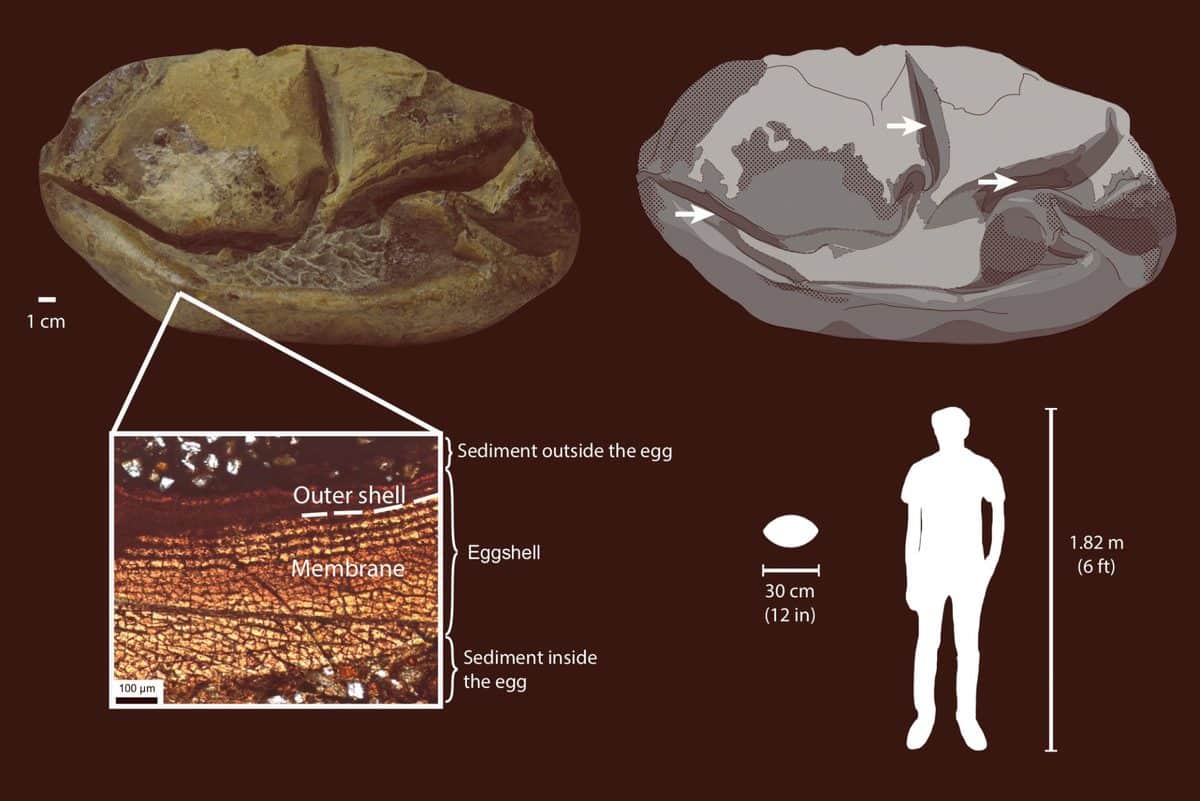
Палеонтологийн судалгаагаар одоогоос 68 сая жилийн тэмдэглэгдсэн, түүхэн дэх хамгийн том зөөлөн бүрхүүлтэй өндөгний олдвор нь эртний далайн амьтдын нөхөн үржихүйн онцлогийг шинээр нээлээ.
Антарктидын далайн ёроолоос олдсон 11.4-7.9 инчийн хэмжээтэй энэхүү өндөг нь мөхсөн сүрэг шувууны өндөгний дараа орох дэлхийн хоёр дахь том олдвор юм. Өндөгний дотроос ямар нэгэн яс олдсонгүй, зөвхөн бүрхүүл нь хадгалагдан үлдсэн нь эрдэмтдийн дунд маргаан дагуулж байна. Остин дахь Техасын их сургуулийн палеонтологч Лукас Лежандраар удирдуулсан багийнхан энэхүү олдворыг “Antarcticoolithus bradyi” хэмээн нэрлэж, шинэ ангилал тогтоожээ.
Судалгааны багийн дүгнэлтээр уг өндөг нь үлэг гүрвэлийн өндөгний бүтэцтэй огт төсгүй бөгөөд могой эсвэл гүрвэлийн өндөгтэй илүү төстэй байна. Олдсон газрын ойролцоогоос мозазавр буюу аварга том далайн хэвлээр явагчдын яс олдсон нь уг өндгийг тэдгээр амьтантай холбоотой байж болзошгүй гэх таамаглалыг дэвшүүлэхэд хүргэжээ. Энэхүү зөөлөн, арьсархуу бүрхүүл нь мозазаврууд амьд зулзага төрүүлдэг байсан байж болзошгүй гэх онолыг дэмжих нотолгоо болж байна.
Өндөгний бүрхүүл маш нимгэн, эрдэсжилт багатай байсан нь түүнийг эх биеийн дотор бараг бүрэн хөгжсөнийг илтгэж буй юм. Ийм төрлийн зөөлөн бүрхүүлтэй өндөг чулуужсан олдвор болон үлдэх нь ховор бөгөөд энэ удаагийн тохиолдолд хүчилтөрөгч багатай далайн ёроолын орчин чухал үүрэг гүйцэтгэжээ. Олдворын эргэн тойрноос илэрсэн апатит болон пирит эрдсүүд нь уг өндгийг хүчилтөрөгчгүй орчинд хадгалагдаж үлдэхэд нөлөөлсөн гэж судлаачид үзэж байна.
Дэлгэрэнгүйг эх сурвалжаас харах
↓Эх сурвалжийг нээх ↓
A soft-shelled egg buried for roughly 68 million years beneath the seafloor near Antarctica has turned out to be one of the strangest finds in paleontology in years. It measures 11.4 by 7.9 inches. That makes it the largest soft-shelled egg ever discovered and the second-largest egg of any kind on record, trailing only the extinct elephant bird. No bones were found inside it, only the shell survived, leaving scientists to guess at what actually hatched from it.
Dating back to the Late Cretaceous, the egg comes from a period when Antarctica looked nothing like the icy continent it is today. Back then, its coastline would have supported shallow waters teeming with marine reptiles, and it’s along one of those ancient shores that this egg was laid, hatched, and eventually abandoned to the sand.
What makes the find so significant isn’t just its size, but its shape and structure. Rather than resembling the eggs of dinosaurs, this fossil looks far more like something a snake or lizard might produce, a detail that has sent researchers down a very different evolutionary trail than they expected.
A Shell That Doesn’t Match the Bones
Because there was no skeleton preserved alongside it, paleontologists couldn’t simply assign the egg to a known species. Instead, the team behind the study, led by paleontologist Lucas Legendre of the University of Texas at Austin, created an entirely new taxon just for the eggshell: Antarcticoolithus bradyi.
“The identity of theanimalthat laid the egg is unknown, but these preserved morphologies are consistent with the skeletal remains of mosasaurs (large marine lepidosaurs) found nearby,” as reported by Legendre in a study recently published inNature. “They are not consistent with described morphologies of dinosaur eggs of a similar size class.”
Mosasaurs, for context, were enormous marine reptiles considered ancestors of today’s lepidosaurs, the group that includes lizards and snakes.
Reviving the Case for “Vestigial” Eggs
The soft, leathery texture of the shell lends weight to a theory that has circulated for a while among researchers studying mosasaurs, namely that these animals may have been viviparous, giving birth to live young whose eggs developed almost entirely inside the mother, since a shell this thin and poorly mineralized would have needed to do little more than let water and gas pass through in the final stretch before hatching.
Because modern viviparous lepidosaurs run cooler, slower metabolisms that conserve energy during reproduction, they tend to produce this same kind of thin-shelled egg, whereas a mosasaur, being considerably larger, likely had energy to spare, which may explain how an animal built for a live-birth strategy still managed to produce an egg of such outsized proportions.

Buried Without Oxygen, and That’s What Saved It
Soft-shelled eggs rarely survive long enough to fossilize, because their texture makes them prone to degrading before mineralization can even begin. This one only endured because of the particular chemistry of where it landed. Researchers pointed to deposits of apatite and pyrite found around the fossil as the key evidence. These two minerals degrade when exposed to oxygen, meaning their presence signals the egg was buried under the ocean floor in a low-oxygen, or anoxic, environment. As the researchers explained:
“The limited oxidation indicated by the presence of apatite, followed by the net-reducingconditionsindicated by the pyrite framboids in Antarcticoolithus. [It] may be key to this preservational mode.”

Egg size doesn’t always scale simply with body size. Sea snakes, for instance, tend to lay small clutches because of their streamlined bodies, and mosasaurs, similarly built for speed through water, may have followed the same pattern, trading clutch size for a handful of unusually large eggs.
Enjoyed this article? Subscribe to our free newsletter for engaging stories, exclusive content, and the latest news.


Антарктидаас олдсон энэ том зөөлөн бүрхүүлтэй өндөг ямар амьтнаас гарсан бол гэж их сонирхолтой байгаа шүү. Энэ олдвор бидний эртний далайн амьтдын хөгжилд шинэ нээлт хийлээ гэж бодогдож байна, та яагаад энэ олдвор тийм ч сонирхолтой санагдаж байна вэ?