Туркийн супер лигийн багууд энэ зун нэр хүндтэй тоглогчдыг өөрийн бүрэлдэхүүндээ нэгтгэж, санхүүгийн хувьд томоохон хөрөнгө оруулалт хийлээ.
Европын лигүүдийн дунд Туркийн супер лиг 276.5 сая еврогийн цэвэр зарцуулалтаар эхний эгнээнд бичигдэж байна. Энэ зуны солилцоо наймааны хүрээнд Галатасарай Рафаэль Леаог 38 сая еврогоор, Фенербахче Мэйсон Гринвүүдийг 39 сая еврогоор, Бешикташ Оркун Кокчүг 30 сая еврогоор тус тус эгнээндээ нэгтгэв. Мөн Бешикташ Леандро Троссард болон Душан Влахович нарыг, Фенербахче Натан Аке, Ромелу Лукаку нарыг эгнээндээ нэгтгэсэн нь тус лигийн чансааг өсгөх зорилготой алхам боллоо.
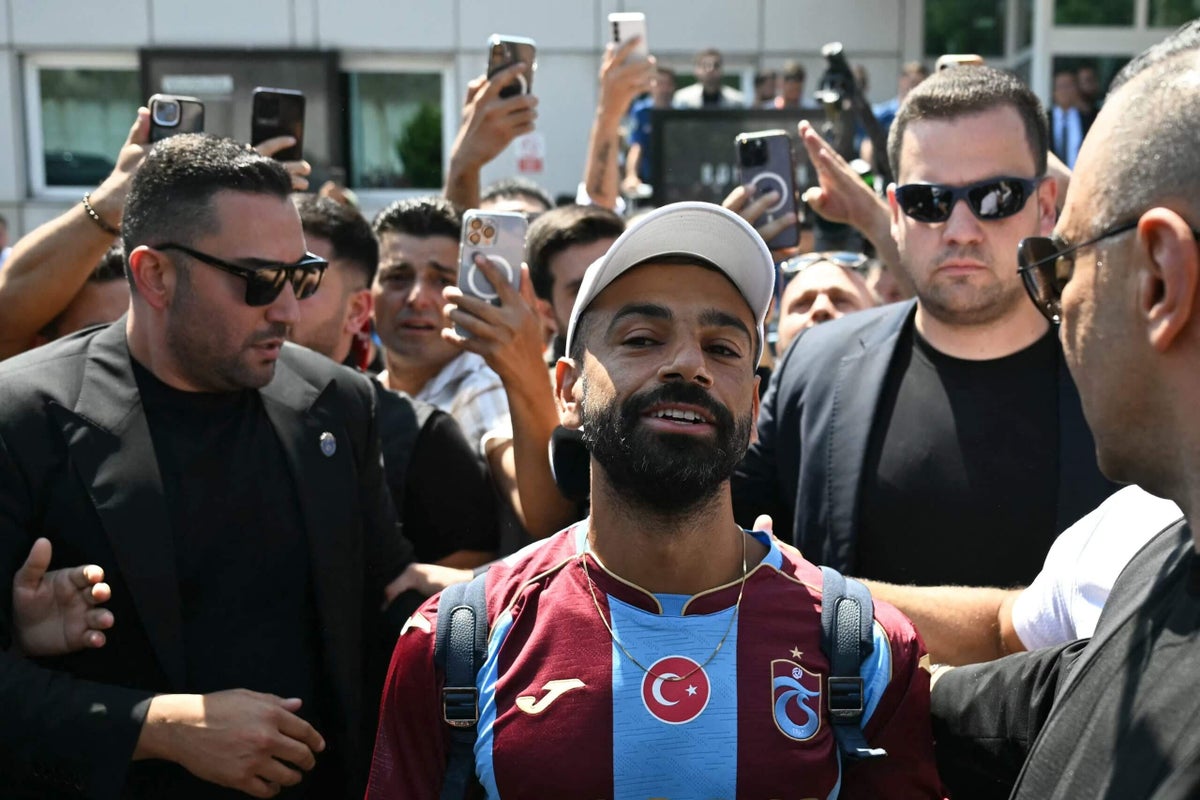
Трабзонспор клуб Мохамед Салахыг хоёр жилийн гэрээгээр элсүүлсэн нь энэ зуны хамгийн дуулиантай наймаануудын нэг байв. Салахын араас Ливерпүүлийн хуучин тоглогч Фабиньог эгнээндээ нэгтгэсэн нь тус багийн бүрэлдэхүүнийг улам хүчирхэгжүүлсэн юм. Эдгээр наймаанууд нь Туркийн багуудын хоорондох өрсөлдөөнийг улам хурцалж, Галатасарайгийн давамгайлалыг зогсоох, Аваргуудын лигт өрсөлдөх зорилготой холбоотой байна.
Туркийн багууд энэхүү санхүүгийн ачааллыг үл хөдлөх хөрөнгийн наймаа, ивээн тэтгэгчдийн дэмжлэг болон тоглогчдын наймааны ашигтай худалдаагаар нөхөж байна. Хэдийгээр эдийн засгийн хувьд тогтворгүй ч, нэр хүндтэй тоглогчдыг урьж авчрах нь клубуудын хувьд нэн тэргүүний зорилт хэвээр байна. Ийнхүү Туркийн хөлбөмбөгийн лиг дэлхийн хэмжээний олон тоглогчдыг татах төв болж, солилцоо наймааны цонхыг тун эрчимтэй өнгөрүүллээ.
Дэлгэрэнгүйг эх сурвалжаас харах
↓Эх сурвалжийг нээх ↓
You don’t exactly have to be a financial boffin to know the Premier League was the biggest player in the transfer market this summer.
The 20 clubs from England’s top tier spent a colossal/morally reprehensible (depending on your point of view) €4.1billion (£3.5bn; $4.8bn) between the official start of player trading on June 15 and Tuesday’s deadline. According to figures from Transfermarkt, that translated to a collective net spend of just over €1.5bn. There’s a big drop-off to the league in second, which, not entirely surprisingly, is Italy’s Serie A, on €421m.
However, it might be more of a surprise that the next European country on the list, with a collective net spend of €276.5million, is Turkey.
The Turkish Super Lig is ranked ninth in UEFA’s coefficient list, behind the top flights in Belgium, Portugal and the Netherlands, and only just ahead of Poland’s Ekstraklasa. Its highest-ranked individual club are Fenerbahce in 27th place, with Galatasaray 46th and Besiktas way down in 151st.
This is not, with the greatest respect, an absolutely elite league, yet it spends like one. And this summer, Turkish clubs have spent with gusto.
Few football countries, as a collective, love a big-name signing as much as Turkey. There’s an old saying in Turkish football that ‘fans think titles are won at the airport’: i.e., the bigger the name they can flock to greet in frenzied fashion from their incoming flights, the more likely their club are to succeed.
But it feels like this has been a particularly extraordinary transfer window, even by Turkish football’s standards.
Three of the top-five fees ever paid by its clubs have come this summer: Galatasaray signed Rafael Leao for €38million, Fenerbahce spent €39m on Mason Greenwood and Besiktas made Orkun Kokcu’s loan from Benfica permanent for €30m.
But those bare facts barely scratch the surface.
It began in July when Besiktas pulled off something of a coup by signing Arsenal’s Leandro Trossard, fresh from winning the Premier League and starting in the Champions League final. Trossard might not be the biggest name in world football, but he was a key man in the club’s first title in 22 years. Going to the Super Lig felt like a big, and probably premature, step down. A few weeks later, Besiktas signed Dusan Vlahovic as a free agent after his departure from Juventus.
Fenerbahce got in on the act by recruiting Nathan Ake from Manchester City and Greenwood from Marseille, bluntly unconcerned by the latter’s past. Greenwood being charged with rape and sexual assault in 2022, charges which he denied and which were dropped in 2023, make a career in his homeland of England look problematic but the former Manchester United striker’s arrival was greeted rapturously.
Not only were there no significant protests from Fenerbahce fans about Greenwood’s signing and limited mention of the case in the media, but he was used as an active tool in the summer’s presidential elections — candidate Hakan Safi bragging that he had already agreed a deal with the forward. The eventual winner, Aziz Yildirim, did sign Greenwood, and he has performed well on the pitch so far, so it seems now that people care even less about his past.
Later in the window, Fenerbahce snagged a really big fish, signing Romelu Lukaku from Napoli for a fairly modest €6million, a fee that reflects his age (33) and recent fitness record: he made just five Serie A appearances last season and was only fit enough to start one of Belgium’s six games at the World Cup. The striker may be past his prime, but Fenerbahce hope he can have the same impact for them as Victor Osimhen did for Istanbul rivals Galatasaray, something they also hoped for Jhon Duran when signing him last summer. That one didn’t go to plan.
Victor Osimhen has been a huge success in Turkey with Galatasaray (Ahmad Mora/Getty Images)
Lukaku, Ake and Greenwood joined a squad that already featured Ederson, Matteo Guendouzi, Marco Asensio, N’Golo Kante, Nelson Semedo and Milan Skriniar. Peak Super Lig.
In the last week of August, Galatasaray made their own big splash with the purchase of Leao from Milan, fighting off interest from Aston Villa for the Portuguese winger, the marquee signing they wanted after a frustrating summer.
Galatasaray believed that last summer’s signing of Osimhen from Napoli for a colossal €75million, which trebled the Turkish transfer record, actually hampered them this time. The perception was that they had entered into a new financial realm, and therefore whenever they contacted other clubs about signing players, the price would go through the roof. “Everyone thinks we have Saudi money,” said one source at the club, speaking anonymously so they could talk freely.
But arguably the biggest signing of the summer came far away from Istanbul’s big three.
Trabzonspor head coach Fatih Tekke was watching the World Cup on TV in June when he got a text from Ertugrul Dogan, the club president. “Coach, do you want Mohamed Salah?”
His answer was swift. After lengthy negotiations with Besiktas fell through, Salah signed a two-year contract with Trabzonspor on a salary of around €17million — that’s €17m net, tax already taken care of — while he’ll also get around 20 per cent of any income from shirts sold with his name and number on them. Given the number of people walking around the city of Trabzon with ‘Salah 10’ on their backs these days, he should do quite nicely out of that.
The reception to the signing was extraordinary. Dogan deliberately arranged for Salah’s medical to take place in the metropolis of Istanbul, over 500 miles (nearly 900km) from Trabzon, so the Egyptian could see how frenzied the welcome would be. It worked, with around 10,000 people showing up in the middle of the day to greet his plane.
“You will meet a group of fans you’ve never encountered before, and you will feel the genuine love within those people,” was Dogan’s pitch, as quoted by the BBC, when Salah asked why he should sign for the fourth-biggest club in Europe’s ninth-best league.
Later that day, 30,000 showed up at Trabzonspor’s 40,000-capacity Papara Park stadium for his presentation. “I’ve never seen anything like this before,” said Salah. It’s unclear whether he saw the camel that one perhaps slightly overenthusiastic fan brought to his first home game just over a week after.
Trabzonspor weren’t done there. More considered observers noted that signing Salah was all well and good, but what they actually needed was a proper No 6. A few weeks after Salah arrived, Dogan did just that — by signing his former Liverpool team-mate Fabinho, who had recently left Saudi Pro League side Al Ittihad.
Most of these players fit the archetype of a Turkish Super Lig signing: big names, slightly past their best, players who don’t quite have the chops for the top divisions in Spain, Italy or England anymore, but are still good enough for European football.
In the past, the likes of Didier Drogba, Robin van Persie, Roberto Carlos and Nicolas Anelka have all come to Turkey for one last go around, to varying degrees of success. But for a few years, the wattage of the stars putting pen to paper dimmed a little, the realities of a Turkish economy that had taken a battering hitting home.
However, recently things have ramped up again. Fenerbahce signed Mesut Ozil — which was a bit of an exception because of his emotional and familial connection to the club — but also recruited Edin Dzeko and (briefly) Leonardo Bonucci. Galatasaray’s rough equivalent of Ozil was Ilkay Gundogan, while they also brought in Leroy Sane and, of course, the biggest swing of the bat of them all, Osimhen.
The five best transfers of the 2026 summer window
Tim Spiers
And then came this summer, with the big names not just confined to one or two clubs.
The reasons for this collective splurge are wide and varied, but a big one is the desperation from the chasing pack to knock Galatasaray off their perch: they have won the past four Super Lig titles, and they’re now gunning to be the first side to win five in a row. For Fenerbahce in particular, who have not lifted the champions’ trophy since 2014, that will not stand.
There is also a sort of competitive domino effect in play. Perhaps more than any other country, Turkey’s big clubs define themselves against their rivals, so everyone constantly has one eye on what the guys up the road are doing. As such, if one team make a big signing, the others feel pressure to match, and ideally supersede, them.
An element of ‘speculating to accumulate’ exists too: Galatasaray have been Champions League regulars, but the rest are desperate for a slice of that particularly juicy pie, and the perceived best way to do that is to spend big money on big names. Fenerbahce will feel justified, considering they have qualified for the Champions League proper this season for the first time, remarkably, since 2008-09.
Turkey is also a reasonably desirable destination for players of a certain type. It’s a passionate football country and, depending on where you are, can be a brilliant place to live, as long as you ignore the volatile and increasingly authoritarian political situation.
The big clubs exist vaguely in the same pool as Saudi Pro League sides, sometimes competing for similar players. Fenerbahce, for example, attempted to sign Villa’s England striker Ollie Watkins before he joined Saudi’s Al Hilal this summer. While they are unable to offer the same level of salary, they do have a perceived higher standard of football and, crucially in the case of the big Istanbul three and, this season, Trabzonspor, a place in one of the European competitions.

England’s Ollie Watkins was a target for Fenerbahce but moved to Saudi Arabia instead (Shaun Botterill/Getty Images)
The big question is: How are they all affording this?
There are various answers to that, many of them complicated, but among the simpler is that Galatasaray benefitted hugely from a real-estate deal a few years ago, when they sold land in Florya just outside Istanbul city centre, a desirable locale that their old training ground happened to be on. Estimates vary, but The Athletic understands they made in the region of €500million from that deal.
There have also been some nifty sales. For example, Fenerbahce ‘flipped’ striker Sidiki Cherif this summer, converting his loan from Angers in this year’s winter window into a permanent deal before selling him to Coventry City of the Premier League for a quick profit. Trabzonspor made good money on midfielder Christ Inao Oulai (sold to Fiorentina for €26m a year after signing him for less than €10m, quoting Transfermarkt figures) and striker Felipe Augusto (to Zenit St Petersburg for €15m, a year after buying him for just under €7m).
The big teams can also get quite creative, sometimes funding signings via sponsorship deals. Trabzonspor’s official line is that Salah’s contract was paid for with the extra season tickets they sold, but backing from Turkish Airlines and Togg, a Turkish manufacturer of electric cars, helped too.
Is all of this sustainable? Logically, absolutely not, but people have been saying that for years. These clubs find a way, and there is little evidence that they will change their approach.
Turkish football is a chaotic, infuriating, sometimes horrible but always entertaining place. Its transfer market reflects that, and this summer it’s been on turbo mode.

