Шинэчилсэн гэрээний дагуу NHL-ийн багууд бэлтгэлийн хугацааг богиносгож, тоглогчдын хувцаслалтын дүрэм болон хаалгачийн нөөц бүрэлдэхүүний журамд томоохон өөрчлөлтүүдийг нэвтрүүлж байна.
Есдүгээр сарын 16-наас эхлэн NHL-ийн багуудын бэлтгэл сургуулилт эхлэх бөгөөд туршлагатай тоглогчдын хамрагдах хугацааг 20 хоногоос 13 хоног болгон буурууллаа. Мөн 100-аас дээш тоглолтод оролцсон тоглогчид урьдчилсан шатны ердөө хоёр тоглолтод оролцох хязгаарлалт тавигдаж, баг бүр нийт дөрвөн тоглолт хийхээр болов. Үүний зэрэгцээ, NHL-ийн улирлын тоглолтын тоо 84 болж нэмэгдэж, есдүгээр сарын 29-нөөс эхлэхээр товлогдлоо.
Бэлтгэл сургуулилтын явцад тоглогчдын бие бялдрын сорил авах уламжлалт дасгалуудыг бүрмөсөн халж байгаа нь хамтын гэрээний шинэ зохицуулалтын нэг юм. Үүний оронд баг бүр тоглолтын үеэр гэмтэл бэртэл гарах тохиолдолд ашиглах нөөц хаалгачийг (EBUG) заавал бүртгэлтэй байлгах үүрэг хүлээлээ. Энэхүү нөөц хаалгачид нь мэргэжлийн түвшинд тоглосон туршлага нь хязгаарлагдмал байх шаардлагатай бөгөөд багийн үйл ажиллагаанд оролцох боломжтой юм.
Тоглогчдын хувцаслалтын тухайд, тоглолтын өмнө костюм өмсөх шаардлагыг албан ёсоор цуцалж, тоглогчид өөрсдийн сонголтоор хувцаслах эрхтэй боллоо. Түүнчлэн, Канадын хоккейн лигээс драфтын эхний тойрогт сонгогдсон 19 настай тоглогчдыг AHL-д илгээх боломжтой болсон нь залуу тоглогчдын хөгжилд илүү уян хатан байдал олгож байна. Энэхүү өөрчлөлтүүд нь NHL болон тоглогчдын холбооны хооронд байгуулсан гэрээний дагуу хэрэгжиж эхэлж байна.
Дэлгэрэнгүйг эх сурвалжаас харах
↓Эх сурвалжийг нээх ↓
It won’t be long before fans spot some of the changes that come with the NHL’s new collective bargaining agreement taking effect later this month.
Training camps open Sept. 16 to coincide with the start of that new labor deal, and they’ll look much different than they did in the past. Experienced players will be put through only a 13-day camp, down from 20 days, and those with at least 100 NHL games on their resumes are now limited to two exhibition games. Each team will play only four exhibition games.
After that, the puck will drop on a longer 84-game regular season, which starts earlier than usual on Sept. 29 to accommodate the two extra games per team.
Those are some of the main items pertaining to working conditions that were codified in a memorandum of understanding between the NHL and NHL Players’ Association in June 2025. They appear alongside other system changes in the new CBA, such as reduced length limits on contracts (re-signing players will be capped to seven-year deals starting Sept. 16), the creation of a playoff salary cap and the elimination of deferred compensation, among other tweaks.
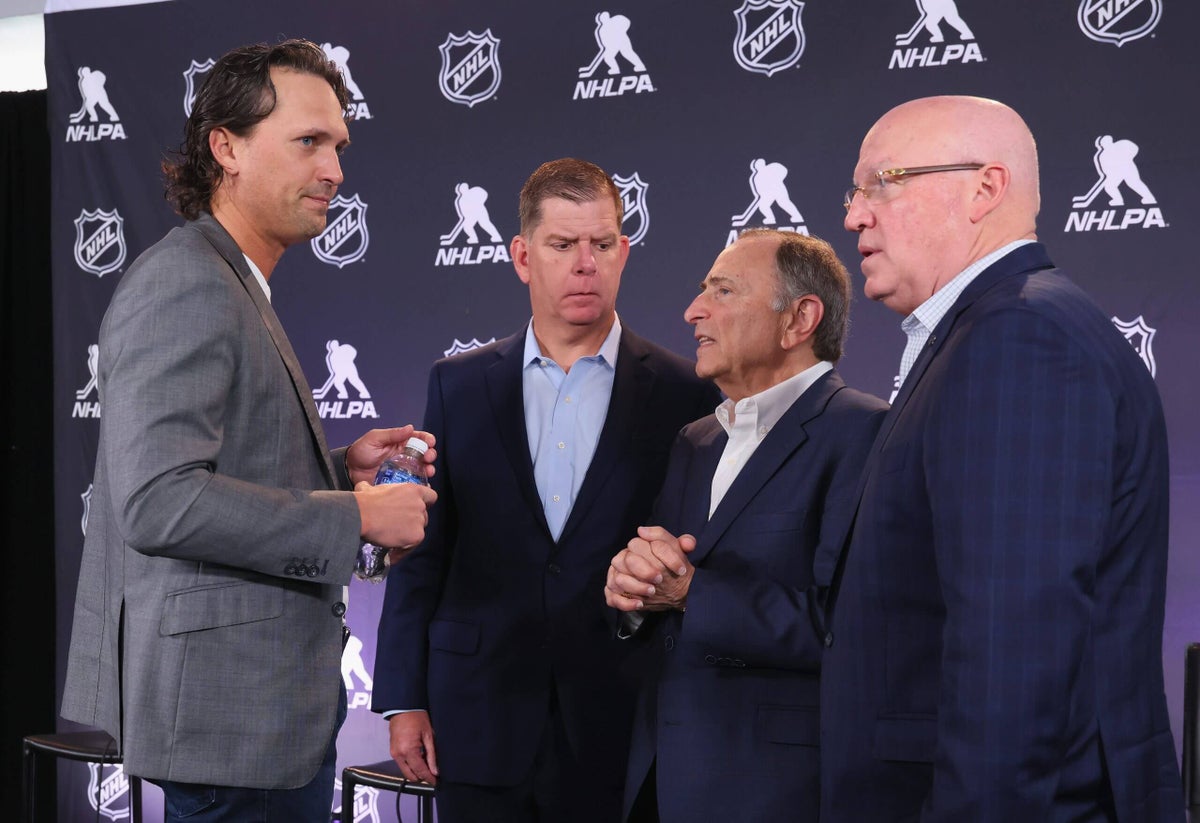
With the new CBA set to take effect, The Athletic spoke with deputy commissioner Bill Daly and NHLPA executive director Marty Walsh about the items they’ll be monitoring closely during the transition.
Why sports leagues finally embraced Las Vegas
Tifo Sports
Fitness testing eliminated
NHL players were accustomed to returning from summer to a grueling set of tests from their teams. Whether it was a lung-burning set of sprints on an air bike, an on-ice beep test designed to measure endurance by having players skate goal line to goal line or a standard timed 2-mile run, measuring fitness has long been a required part of training camp.
No more.
Fitness tests have been abolished in this CBA — a trade-off, according to Walsh, for the players agreeing to a longer regular season.
“It’s a negotiation,” he said. “Fitness testing was given up because we have 84 games. So we got no dress code, a 13-day training camp, four-game preseason (per team) and no fitness testing for additional games. We want to make sure that’s all implemented properly and that there’s nobody trying to get around that.”
While most players are no doubt thrilled to have that extra burden taken off their plates, some have said they’ll miss being able to measure their fitness against previous benchmarks.
From the NHLPA’s perspective, the practice was a leftover from a bygone era when athletes didn’t consistently keep themselves in top shape. The union had also seen proof of concept that it wasn’t necessary during the COVID-19-interrupted 2019-20 season, when play was stopped in mid-March before resuming with an August playoffs that didn’t feature fitness testing beforehand.
“A lot of the players these days, they’re working out all the time,” Walsh said. “They’re eating right all the time. They’re skating still. They come to camp in great shape. Right before COVID, I don’t believe there was fitness testing or a training camp, and you can’t really tell a difference in the product on the ice.
“Obviously, you want the training camp for new coaches and to give opportunities. But most of these guys are ready to go.”
EBUGs
Every NHL team suddenly has a dream job to offer someone whose talents haven’t previously taken them to the world’s top hockey league: Traveling Rent-A-Goalie.
That’s because the new CBA includes a provision requiring each club to carry an emergency backup goaltender (EBUG) “prepared to enter all of its home and away games.”
The eligible goalies must meet a narrow band of requirements. They can’t have previously played an NHL game on a standard player contract, can’t have more than 80 games of professional experience, can’t have been a professional in the past three seasons, can’t have another contractual obligation that would preclude their ability to be an emergency goalie and can’t be on the reserve list of an NHL club.
Basically, the field is limited to goaltenders who didn’t advance too far beyond college or junior hockey.
Still, it’s a pretty good gig, akin to being a bullpen catcher in baseball. Emergency backups will be on the ice during skills work, will participate in practices when needed and may be called on to play if injuries or cap issues necessitate it.
“You hope you never have to use one, but we’ve been having more and more goalie injuries, particularly in pregame warmup,” Daly said. “We don’t really know what’s behind that, but it causes a lot of indigestion for our clubs and for our central registry department, who had to figure out who they have and how to deploy a backup in certain situations.
“This should help alleviate some of those concerns.”
The emergency backup is permitted to perform other duties within the team. For example, the Minnesota Wild recently announced that Peter Thome would also serve as a hockey operations analyst.
Multiple NHL teams have already officially signed their emergency backups, but the CBA gives teams until 48 hours before the start of the regular season to submit the name and detailed playing experience of their designated EBUG.
AHL loans for 19-year-old players
The new CBA gives teams more flexibility to develop their top prospects because it now allows players drafted in the first round out of the Canadian Hockey League to be assigned to the AHL for their 19-year-old season.
Previously, teenagers had to be sent back to their CHL teams and weren’t eligible for that kind of assignment.
Daly said the NHL will be closely monitoring how the transition goes.
“It will be interesting to see how that’s utilized,” he said.
How the rule will work in practice shifted between when the memorandum of understanding was signed and what’s in the new CBA. Initially, the concept was going to limit teams to one 19-year-old assignment per year. But it’s been broadened to allow the rare cases where NHL teams have multiple first-round picks out of the CHL they may want to keep in the minors at age 19.
“Teams aren’t limited to one per club,” Daly said. “If they meet the criteria for assignment, they meet the criteria. You might have two of those players. You might have three of those players. So that’s how it’s going to play out.”
Player dress code
The requirement that NHL players wear a suit and tie to games is officially a thing of the past.
In fact, the dress code was actually eliminated during the 2025-26 season as part of early transition dates agreed upon for the new CBA. However, the new standard wasn’t always observed properly last season.
“There was a little hiccup with the dress code,” Walsh said. “Some coaches and GMs and other players wanted players to wear suits and that’s not the rule anymore. Players can wear whatever they want.”
Walsh said he’ll be hammering that point home to his membership during the fall tour, in which NHLPA senior staff visit with each team early in the season. It’s important to him that NHL players enjoy the same freedom of expression as NBA or NFL athletes have, especially now that they’ve negotiated it.
And as much as Walsh understands why traditionalists may not like the change, his message is simple: “Hockey’s changing.”
The new CBA expressly states that teams aren’t permitted to establish rules around what players wear. All it says is that players “are required to dress in a manner that is consistent with contemporary fashion norms.”
That leaves open a pretty broad spectrum of fashion choices.
“You’ve watched (David) Pastrňák in Boston coming in with his thing,” Walsh said. “William Nylander wears what he wears. These guys are wearing fashionable clothes in some cases. Some guys have a suit on. That’s fine. Whatever players want to wear.
“Whatever they’re comfortable going to the game in.”

