Дэлхийн эрүүл мэндийн байгууллага (World Health Organization) дементиа буюу зөнөх өвчнөөс урьдчилан сэргийлэх эсвэл хойшлуулахад чиглэсэн шинэчилсэн зөвлөмжөө танилцууллаа.
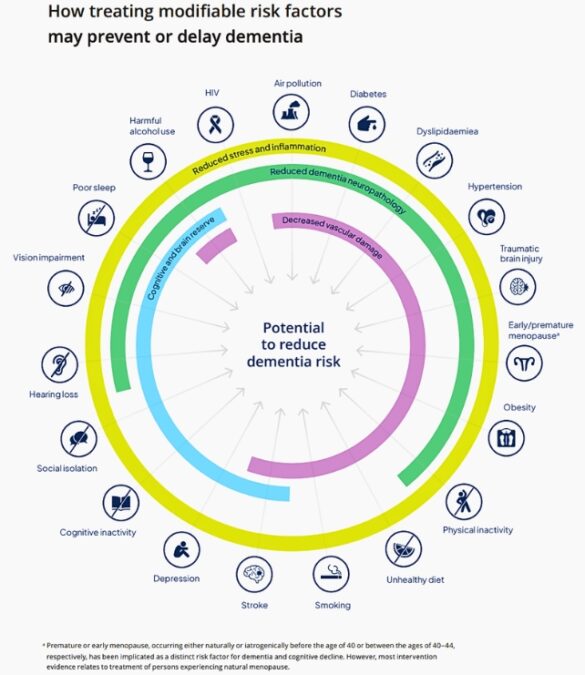
“The Lancet” сэтгүүлд 2024 онд нийтлэгдсэн томоохон судалгаагаар дементиа өвчний нийт тохиолдлын 45 хүртэлх хувийг урьдчилан сэргийлэх боломжтой 14 эрсдэлт хүчин зүйл байгааг тогтоожээ. World Health Organization-ын Ерөнхий захирал Др. Тедрос Адханом Гебрейесус эдгээр нотолгоонд суурилсан зөвлөмж нь улс орнуудад хүн амын танин мэдэхүйн эрүүл мэндийг хамгаалахад тусална гэж мэдэгдсэн байна. Энэхүү эрсдэлт хүчин зүйлсийг цогцоор нь шийдвэрлэх нь тухайн хүний өвчлөх магадлалыг бууруулахад чухал ач холбогдолтой юм.
Эрсдэлт хүчин зүйлсийн дотор биеийн болон нийгмийн идэвхтэй байдал, тамхи татахгүй байх, архины хэрэглээг хязгаарлах, эрүүл хооллолт, цусны даралт, холестерин, цусан дахь сахарын хэмжээ болон жингээ хянах зэрэг зүрх судасны эрүүл мэндтэй холбоотой хүчин зүйлс голлож байна. Мөн сонсгол буурах нь дементиатай холбоотой болохыг судалгаагаар тогтоосон бөгөөд сонсголын аппарат ашиглах нь өндөр настай хүмүүсийн танин мэдэхүйн бууралтыг бараг 50 хувиар сааруулах боломжтойг эмнэлзүйн туршилт харуулжээ. Гэсэн хэдий ч агаар бохирдол болон боловсролын түвшин зэрэг хувь хүний хяналтаас гадуурх хүчин зүйлс ч эрсдэлд нөлөөлдөг байна.
Зарим төрлийн нэмэлт бүтээгдэхүүний тухайд World Health Organization-аас анхааруулга гаргасан бөгөөд В болон Е аминдэм, омега-3, олон төрлийн аминдэмийн цогцолборыг дементиагаас сэргийлэх зорилгоор хэрэглэхийг зөвлөдөггүй. Эдгээр бэлдмэл нь танин мэдэхүйн бууралтыг хамгаалдаг гэх нотолгоо хангалтгүй бөгөөд тун хэтрүүлсэн тохиолдолд сөрөг нөлөө үзүүлж болзошгүй юм. Мөн харааны бэрхшээл болон нойрны эмгэгийг эмчлэх нь ерөнхий эрүүл мэндэд чухал ч, эдгээрийг дементиагаас сэргийлэх стратегид шууд хамааруулах хангалттай нотолгоо одоогоор байхгүй байна.
Дэлгэрэнгүйг эх сурвалжаас харах
↓Эх сурвалжийг нээх ↓
We don’t yet fully understand how or why dementia begins.
The term covers a range of degenerative conditions that typically occur in later life and are usually characterized by a decline in cognitive function.
But while the many pathways it takes are yet to be fully unraveled, scientists are gaining an ever clearer picture of the factors that can accelerate and exacerbate the risk of dementia.
And even amid all the uncertainty, a substantial proportion of dementia cases may be preventable, or, at the very least, delayable.
A major 2024 review published in The Lancet estimated that up to 45 percent of all dementia cases fall under this category – and now, the World Health Organization (WHO) has released updated recommendations to help prevent or delay the onset of dementia.
The 2024 review identified 14 potentially modifiable risk factors that, taken together, are associated with an estimated 45 percent of dementia cases at a population level.
“We know more today than ever before about what drives dementia risk, and these guidelines translate that knowledge into action,” said WHO Director-General Dr Tedros Adhanom Ghebreyesus.
“Countries now have clear, evidence-based recommendations they can put into practice immediately to protect people’s cognitive health.”
For an individual, this means that addressing these risk factors may lower their chances of developing dementia, although there’s no way to put a universal percentage on that reduction. The 45 percent figure applies across a population, rather than to any one person’s risk.
Some of those factors are within our control, while others are much harder to change.
Many will feel extremely familiar to anyone who has ever been given recommendations for heart health. Stay physically and socially active, don’t smoke, avoid excessive alcohol, eat a healthy diet, and keep blood pressure, cholesterol, blood sugar, and weight under control.
That’s not a happy accident. The health of the brain is intimately linked to the health of the cardiovascular system, and what works to keep one hale and hearty often overlaps with the other.
Some of the recommendations may be a little less obvious, but no less important.
In recent years, evidence of a link between hearing loss and dementia has burgeoned, with one major clinical trial finding that hearing aids could slow cognitive decline by nearly 50 percent in some older adults at higher risk of cognitive decline.
Exactly why hearing loss is linked to dementia isn’t entirely clear, but researchers think the additional cognitive effort required to process sound, as well as the social isolation hearing loss can cause, may play a role.
Other risk factors aren’t nearly as easy to address at the individual level.
One of the 14 factors identified by the Lancet review, for instance, is lower educational attainment in early life – something that can’t exactly be remedied decades later when dementia risk becomes a more immediate concern.
Another is air pollution.
The WHO recommends reducing exposure to air pollution wherever possible, but that’s not something that’s always within an individual’s – or even a health provider’s – control. You can control your indoor environment better than the air in the city you live in, but there are still limits.
On a related note, identifying a modifiable dementia risk isn’t the same as knowing how to modify it in a way that actually prevents dementia.
Vision loss, for instance, has been associated with dementia risk, and treating vision problems is important for health in its own right. But the WHO found there isn’t yet enough evidence to recommend treating vision impairment specifically as part of a dementia risk mitigation strategy.
A similar refrain sounds around sleep. Getting good-quality sleep is important for overall health, and poor sleep has even been associated with dementia risk, but there’s currently insufficient evidence that interventions to improve sleep, or treat sleep-wake disorders, can specifically reduce dementia risk.
Finally, some widely touted interventions are not worth bothering with at all – in fact, the WHO specifically recommends against them.
The organization strongly recommends against taking vitamins B or E, omega-3 supplements, or multivitamin/mineral complexes specifically to ward off dementia, unless you have a diagnosed nutrient deficiency.
Trials have found no convincing evidence that these supplements protect against cognitive decline, and supplements aren’t necessarily harmless just because the nutrients they contain are essential to health. At high doses, some can have unwanted or even harmful effects.

If you’re looking for a silver bullet, “one weird trick”, or other cheat code for staving off dementia, you’re unlikely to find it.
Keeping a brain healthy seems, to a large extent, to mean keeping the person attached to it healthy – including their heart, senses, social connections, and environment.
Related: US Cardiologists Issue New Guidelines For How to Manage Cholesterol
As the WHO notes, “Dementia risk factors should be addressed holistically, because multiple risks often coexist and accumulate over the life course.”
For health care providers, this means interventions and strategies tailored to each individual.
For the individual, it means trying to maintain a disgustingly healthy lifestyle.
None of this means that dementia is entirely preventable, or that someone who does everything “right” won’t develop it. But with tens of millions of people already living with dementia worldwide, even delaying a proportion of future cases could make an enormous difference.
You can download the full report from the WHO’s website.
This article was fact-checked by Rebecca Dyer and edited by Rebecca Dyer. While we pride ourselves on our process, we are only human. If you spot a mistake, please let us know.

