Испанийн Сеута хотод үүсээд буй нөхцөл байдал Ла Лиг болон Реал Мадридын тоглолтуудын үеэр улс төрийн томоохон өрнөл болж байна.
Испанийн хойд Африкт орших Сеута хотод долдугаар сарын сүүлээр цагаачдын улмаас үүссэн хямрал хөлбөмбөгийн талбайд ч мэдрэгдэж байна. Реал Бетис болон Реал Мадрид багуудын тоглолтын үеэр Сеута болон Испанийн төрийн далбааг мандуулж, хөгжөөн дэмжигчид эх оронч уриа лоозон хашхирсан юм. Мөн Реал Мадрид Аваргуудын лигийн хүрээнд Интер багийг хүлээн авах тоглолтын өмнө хөгжөөн дэмжигчид Сеутаг дэмжсэн далбаануудыг цэнгэлдэх хүрээлэнд авчирчээ.
Сеута багийн ерөнхийлөгч Лухай Хамидо тус хотын нөхцөл байдал хүнд байгаа ч хөлбөмбөгчид мэргэжлийн түвшинд бэлтгэл сургуулилтаа үргэлжлүүлж байгааг онцолсон байна. Гэсэн хэдий ч тус багийн дасгалжуулагч Хосе Хуан Ромеро ийм хүнд хэцүү цаг үед тоглолт хийх нь зохимжгүй гэдгийг илэрхийлж байв. Сеута баг энэ улирлын эхний дөрвөн тоглолтод дараалан хожигдож, хоёрдугаар дивизионы хүснэгтийн сүүлд бичигдэж байна.
Испанийн хөлбөмбөгийн холбоо болон Реал Мадрид клуб далбаа хориглосон гэх цуу яриаг эрс үгүйсгэж, нөхцөл байдлыг тогтворжуулахыг зорьж байна. Испанийн шигшээ багийн дасгалжуулагч Луис де ла Фуэнте Дэлхийн аварга шалгаруулах тэмцээний цомыг Сеута хотод авчирч, улс орон даяар нэгдмэл байгааг харуулахыг зорьсон юм. Одоогоор Сеута хотын нөхцөл байдалтай холбоотой улс төрийн маргаан Испанийн засгийн газар болон сөрөг хүчний хооронд үргэлжилсээр байна.
Дэлгэрэнгүйг эх сурвалжаас харах
↓Эх сурвалжийг нээх ↓
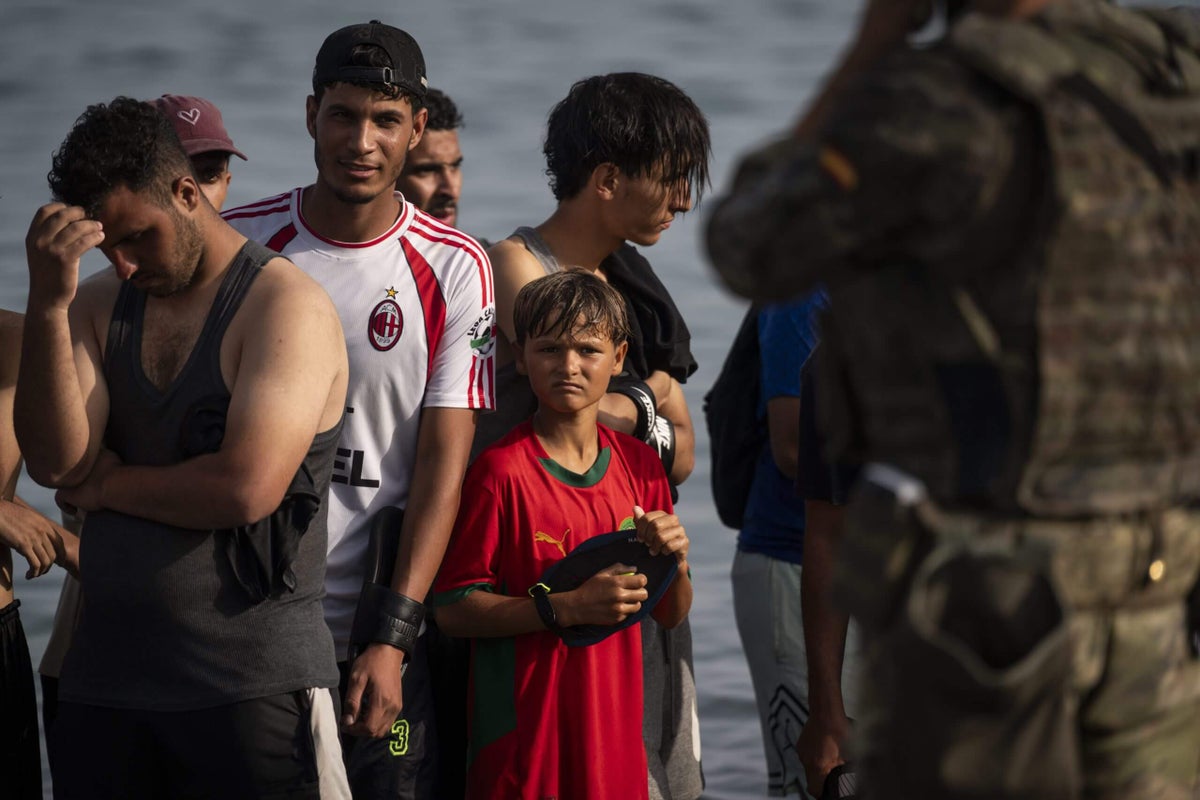
Ceuta is still recovering from the events of two deadly days in late July, when an estimated 70,000 migrants entered from neighbouring Morocco by land and sea, overwhelming border authorities and sparking a humanitarian crisis which is still some distance from resolution.
According to Spain’s prime minister Pedro Sanchez, 141 people died attempting to reach Ceuta, a Spanish territory on the north African coast, on July 30 and July 31. Although about 90 per cent of those who crossed the border returned to Morocco within 72 hours, around 5,000 have remained in the city, which has a population of just over 83,000.
These migrants, including an estimated 1,200 minors, have required food, shelter and health services from the local authorities. The atmosphere in the city has been difficult over recent weeks, while a political storm has erupted in Spain over responsibility for what happened.
The Spanish and Moroccan governments have blamed a viral social-media misinformation campaign by smuggling gangs. Spanish opposition politicians — from the centre-right People’s Party and far-right party Vox — have claimed the immigration policies of Sanchez’s Socialist Party led to so many people attempting to cross.
<![CDATA[!function(){"use strict";window.addEventListener("message",(function(a){if(void 0!==a.data["datawrapper-height"]){var e=document.querySelectorAll("[id='datawrapper-chart-UkJTe']");for(var t in a.data["datawrapper-height"])for(var r=0;r
Meanwhile, fears in Ceuta of further problems developing grew after Morocco’s minister of justice Abdellatif Ouahbi called for talks over its future and that of nearby Melilla, another Spanish city on the African side of the Mediterranean Sea.
On Sunday, supporters of Morocco’s current champions Maghreb Fez displayed a banner that read ‘Ceuta and Melilla. Two cities, one homeland: Morocco’ during an African Champions League match at home to Rahimo of Burkina Faso.
Over the past week, tensions have also played out across Spanish football.
When Real Betis of Seville hosted Real Madrid in La Liga on Friday, two huge flags — one in Ceuta’s black and white, the other Spain’s red and yellow — were unfurled on the pitch. Many fans waved Spanish flags and chanted ‘Viva Espana (Long live Spain)’ as the stadium public-address announcer voiced support for the people of Ceuta.
The national anthem was also played, which does not usually happen at La Liga matches, with many of the 66,046 crowd following along in patriotic support. There were also insulting chants against Sanchez, another sign of the noisy debate over the government’s handling of the crisis.
Ceuta Day, a holiday on September 2, attracted protests in that city and across mainland Spain (Antonio Sempere / AFP via Getty Images)
Earlier in the day, Spain head coach Luis de la Fuente had brought the men’s World Cup trophy his team won in July to Ceuta, saying he travelled there with “the support and backing of the whole country, all of Spain”.“These things help us. They give us strength and fuel to keep fighting,” Luhay Hamido, president of local club AD Ceuta, who play in the Spanish second division, tells The Athletic. “It is another way to make clear that Ceuta belongs to Spain.”
Earlier this week, a group of Real Madrid fans called on fellow supporters to bring Spain and Ceuta flags to the club’s Bernabeu stadium for their 2026-27 Champions League opener against Italian visitors Inter last night (Tuesday).
On Monday evening, Real Madrid issued a statement saying it was “categorically untrue” that they had banned Spanish or Ceuta flags, as a response to “reports appearing on certain social-media platforms and in some media outlets”.
It was not specified which reports they were responding to, but rumours had been circulating on X and other platforms claiming Madrid would outlaw such flags, and that Morocco-born Anas Laghrari, a close advisor to club president Florentino Perez, was behind it.
Before kick-off in Madrid’s 2-1 win over Inter, Ceuta flags and banners of support were handed out to fans outside the ground. The organised block of Madrid supporters in the Bernabeu’s south stand held up the flags in unison, while others could be seen around the 83,186-capacity stadium.
Among the local residents dealing with the difficult situation through recent weeks have been the players, coaches and staff at Ceuta, who finished 11th in Spain’s second division last season.
“For me, Ceuta should not be playing games in this situation,” head coach Jose Juan Romero told a press conference on August 13, when his team’s new season was about to start.
“Nobody (outside Ceuta) realises how big this all is. If this happened in any other Spanish city, there would have been a much bigger and faster mobilisation. Me, the team, all of us, are in a bad way. My family usually comes here at this time of the year, but they are afraid to now. I know many friends who won’t let their children leave their houses. But nobody does anything about it.”
Earlier this month, prime minister Sanchez called for an investigation into what happened, while defence minister Margarita Robles apologised to “those who felt abandoned” in late August, when Spain’s government took centralised control of the crisis, relieving local authorities of sole responsibility.
In his parliamentary speech last Thursday, Sanchez also said: “I can assure you that no institution, not the diplomatic service, nor the European Commission, nor any international body, has provided the Spanish government with any solid evidence that Morocco planned or carried out the incident.”

The scene on July 31 as thousands of migrants crossed back to Morocco from Ceuta (Jorge Guerrero/AFP via Getty Images)
At their first home game of the new campaign, on August 22, Ceuta’s team wore T-shirts with the message: “Ceuta is not for sale, Ceuta will defend itself.” Then, after kick-off, the players gathered with their arms around each other and stood still for the first 30 seconds.
Football success has previously been a good news story for Ceuta, where the population is almost evenly split between those from Christian and Muslim backgrounds, along with smaller Jewish and Hindu communities. Saturday’s 2-0 home defeat by Celta Fortuna (top-flight Celta Vigo’s reserve side) means they have lost each of their first four games and sit bottom of the second-tier table.
“Of course it has affected everyone; the players, staff, coaches,” Hamido says. “They are people, with families, children; but they are professionals. We’ve tried to protect everyone and just focus on our jobs, which is difficult, but we’ll manage it. Of course, it was more difficult to make new signings (this summer).
“Any other city in the world would have exploded. But the people of Ceuta are strong, united, and an example on a global level of four cultures living together in such a small space.
“We’re trying to go about our lives as normal, although it is difficult. We’ll come through it, as we are strong people.”

