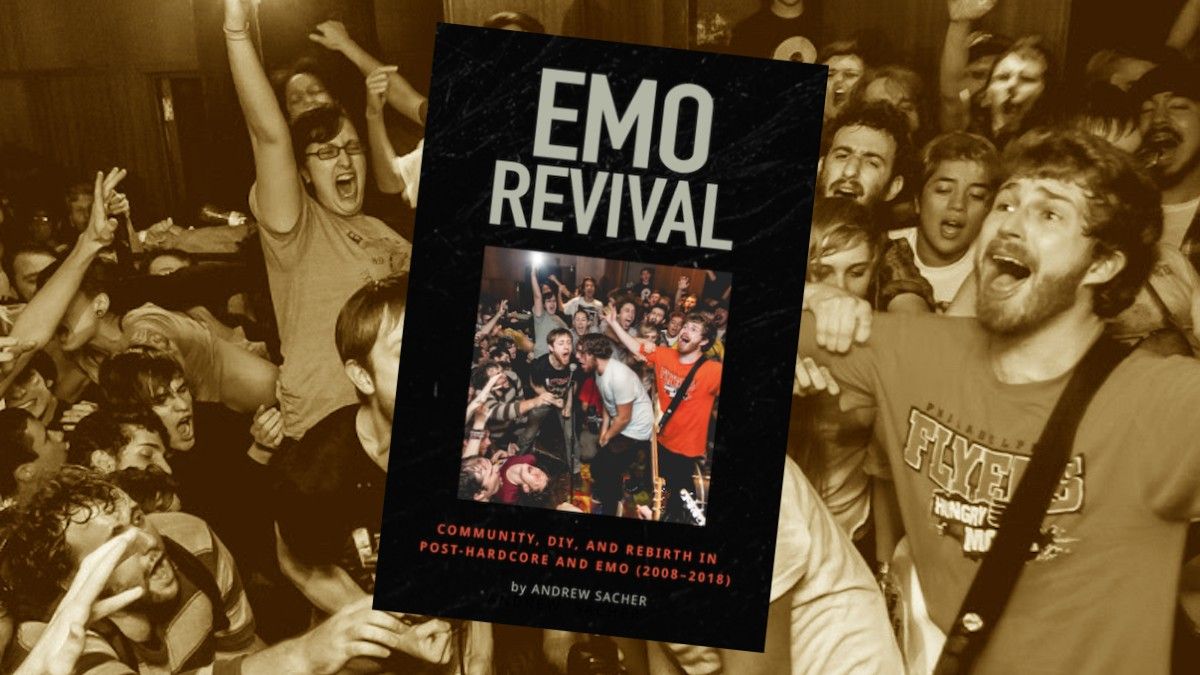
Хөгжмийн сэтгүүлч Эндрю Сачерын “Emo Revival: Community, DIY, and Rebirth in Post-Hardcore and Emo (2008-2018)” шинэ ном худалдаанд гарч, тухайн үеийн эмо хөгжмийн дахин сэргэлт болон уран бүтээлчдийн шинэ дуугаралт руу чиглэсэн туршилтуудыг онцолжээ.
Энэхүү номд Title Fight, Modern Baseball, Joyce Manor, Touché Amoré болон The Hotelier зэрэг хамтлагуудын гишүүдтэй хийсэн ярилцлагууд багтсан байна. Зохиогч эмо урсгал нь зөвхөн нэг үеийн чиг хандлагаар хязгаарлагдалгүй, хөгжлийнхөө явцад хэрхэн өөрчлөгдөн, уран бүтээлчид нь уламжлалт хэв маягаасаа татгалзан шинэ дуугаралт эрэлхийлж ирснийг тайлбарлажээ.
Ялангуяа Title Fight хамтлагийн 2015 онд гаргасан “Hyperview” цомог нь shoegaze урсгал руу чиглэсэн зоригтой алхам байсан бөгөөд энэ нь тухайн үед шүтэн бишрэгчдийн дунд хоёр талтай хүлээж авалтыг бий болгосон ч цаг хугацааны эрхээр хөгжмийн салбарт томоохон нөлөө үзүүлсэн болохыг номд дурдсан байна. Эндрю Сачер эмо урсгалын хамтлагууд өөрсдийн хязгаарыг давж, шинэ дуугаралт турших нь урсгалын түүхэн дэх салшгүй нэг хэсэг болохыг онцлон тэмдэглэжээ.
Дэлгэрэнгүй эх сурвалжийг харах
Эх сурвалжийг нээх ↓
A new book titled Emo Revival: Community, DIY, and Rebirth in Post-Hardcore and Emo (2008-2018) has just been released, taking a look at the reinvention of emo music during the late aughts through the 2010s. It’s written by Andrew Sacher, who is sharing an exclusive excerpt from the book with CONSEQUENCE.
Sacher, a longtime editor for BrooklynVegan, hones in on the 10 years from 2008 through 2018 where emo music was defined by such bands as Title Fight, Modern Baseball, Joyce Manor, Touché Amoré, and The Hotelier. The book features interviews with members of those bands, among dozens of other acts.
An official description from publisher Clash Books reads, “Emo didn’t start with the rise of bands like Fall Out Boy and My Chemical Romance and it didn’t end with their turn-of-the-2010s drop-offs either. When emo faded from the mainstream, major players in the music industry were ready to move on. The genre looked like a fad that was passing. But it didn’t die; it went back to the basements and VFW halls that it began in decades earlier, fueled by a new crop of bands who kept emo alive when no one else would.”
Related Video
In the excerpt below, from Section Nine: 2015-2016, Chapter 1, Emo Is Holding Us Back, Sacher touches on the trend of emo bands straying away from their emo roots and exploring new sonic directions.
On their fall 2014 tour with Circa Survive, Title Fight began road-testing “Chlorine,” the first single from what would become the band’s first album for ANTI-, 2015’s Hyperview. Title Fight had already experimented with shoegaze on parts of Floral Green, but “Chlorine” and all of Hyperview went further in that direction than the band ever had before. On “Chlorine,” Jamie’s vocals were even hazier and more subdued than on “Head in the Ceiling Fan,” the influence of My Bloody Valentine’s “glide guitar” was unmistakable, and the song erupted into a discordant, Sonic Youth-style intermission. And, despite the drastically different exterior, the song’s strong backbone and its balance between power and melody were still unmistakably Title Fight.
“Getting to hear their transition from Shed/Floral Green era to the Hyperview era was so cool,” recalls Circa Survive’s Anthony Green. “They didn’t use a ton of pedals, they didn’t use a ton of shit. Everything was very intentional and very direct and simple. I felt like I was watching Nirvana’s first shows.”
Breaking away from emo is just as much a part of emo as being an emo band in the first place. Whether it’s born out of a desire to distance yourself from the word “emo,” or out of a desire to grow and experiment musically outside of genre confines, or a mix of both, emo has had a contingent of bands with genre-transcending ambitions since almost the very beginning.
Sunny Day Real Estate, whose 1994 debut LP Diary was the blueprint for so much of the emo that followed, set their sights on something closer to art rock with 1998’s How It Feels To Be Something On, and that set almost as much of a tone as Diary itself. Jimmy Eat World did something similar with 1999’s Clarity, and they did it multiple times again after breaking through with 2001’s streamlined Bleed American. The Get Up Kids did it with On A Wire, The Promise Ring did it with Wood/Water, The Appleseed Cast did it incrementally on pretty much every record after their first, and so many of the bands who helped popularize emo in the early 2000s did it by the middle of that decade: Saves the Day on In Reverie, Thursday on A City By the Light Divided, Thrice on The Alchemy Index, Brand New on The Devil and God Are Raging Inside Me, The Early November on The Mother, the Mechanic, and the Path, Alexisonfire on Crisis, John Nolan and Shaun Cooper after leaving Taking Back Sunday and forming Straylight Run. The list goes on.
Those artsier, genre-defying records were usually risky moves in a commercial sense, and they usually alienated some fans. But those stylistic left-turns were favored by so many bands in emo’s more indie-oriented fourth wave, and history repeated itself as many fourth wave bands made their own stylistic departures in the mid-2010s. And for this generation, having the level of respect of a record like Clarity usually seemed like more of a goal than having a hit as big as “The Middle” anyway.
One reason why this trend is so common is that a lot of people find emo and pop punk when they’re young and it becomes their gateway towards a lifelong exploration of underground music. Within the “revival” generation, it’s hard to think of a band that embodied that journey more than Title Fight. And when they made their most drastic musical departure yet with Hyperview, it—like every Title Fight record before it—signaled a sea change within the community and left so many other bands scrambling to catch up.
Hyperview is more or less a full-blown shoegaze record, and when it came out in February 2015 via ANTI-, people could hear right away why Title Fight had wanted to sign to Epitaph’s non-punk-oriented sister label. Its spirit and its beating heart are informed by punk ethos, but the vast majority of its songs are not what the average listener would call punk rock songs. Even with moments on Floral Green that hinted at the direction of Hyperview, it was the sharpest left turn the band had ever made, and many who loved and trusted the band applauded them for taking the artistic risk.
The record got good press, including from Pitchfork, whose Zoe Camp argued that it “packs just as much intensity as in past records, albeit with a cooler, softer flame,” and the band also broke into major media outlets that no one from this world had before, like Vogue. But Hyperview did confuse a lot of people. It got lukewarm reception from some of the band’s earliest supporters like AbsolutePunk and Punk News, the latter of whom criticized it for having “a loss of vibrance and energy” compared to the band’s previous records. When the band hit the road behind it, they often found themselves playing to longtime fans who weren’t sure how to react to the new material.
And even with some good indie rock press, a deal with ANTI- Records, and a 2014 Coachella performance under their belts, the indie world hadn’t fully put its weight behind Title Fight either. “A lot of people who had been coming to our shows forever were complaining that Hyperview sounded the way it did, and the people who read Pitchfork, who like My Bloody Valentine and Ride and that kind of scene,” Ned says, “it didn’t bring us to them either.”
“It was a weird era for the band,” he adds. “People were unsure of what we were.” For a band who seemingly left an immediate impact with everything they released, the aftermath of Hyperview’s release might’ve seemed like the first real lull of their career. But it wasn’t a flop or a misstep; it was a slow burn. It was an example of Title Fight progressing at a faster rate than most of their fanbase was ready for, and time has treated the album very well. It’s been called a grower, it’s been called ahead of its time, and it continued to influence new music and shape culture for years.
“I think you see its influence pretty acutely when you look at the landscape now in emo or punk or whatever,” says Jordan Dreyer of La Dispute, who saw firsthand what the initial reactions to Hyperview were on La Dispute’s 2015 tour with Title Fight and The Hotelier.
“Seeing how it resonated and continues to resonate I think is a testament to how good Title Fight was at making honest, genuine music for themselves without reservation, and doing so extremely well,” he continues. “Title Fight have just been unabashedly who they are at every step of the way, and it’s part of the reason that they have the legacy that they do and continue to find new people. They just did everything they did full bore and honestly, and the end product is long-lasting.”
Emo Revival: Community, DIY, and Rebirth in Post-Hardcore and Emo (2008-2018) is out now on paperback and Kindle, and available to order via Amazon.

