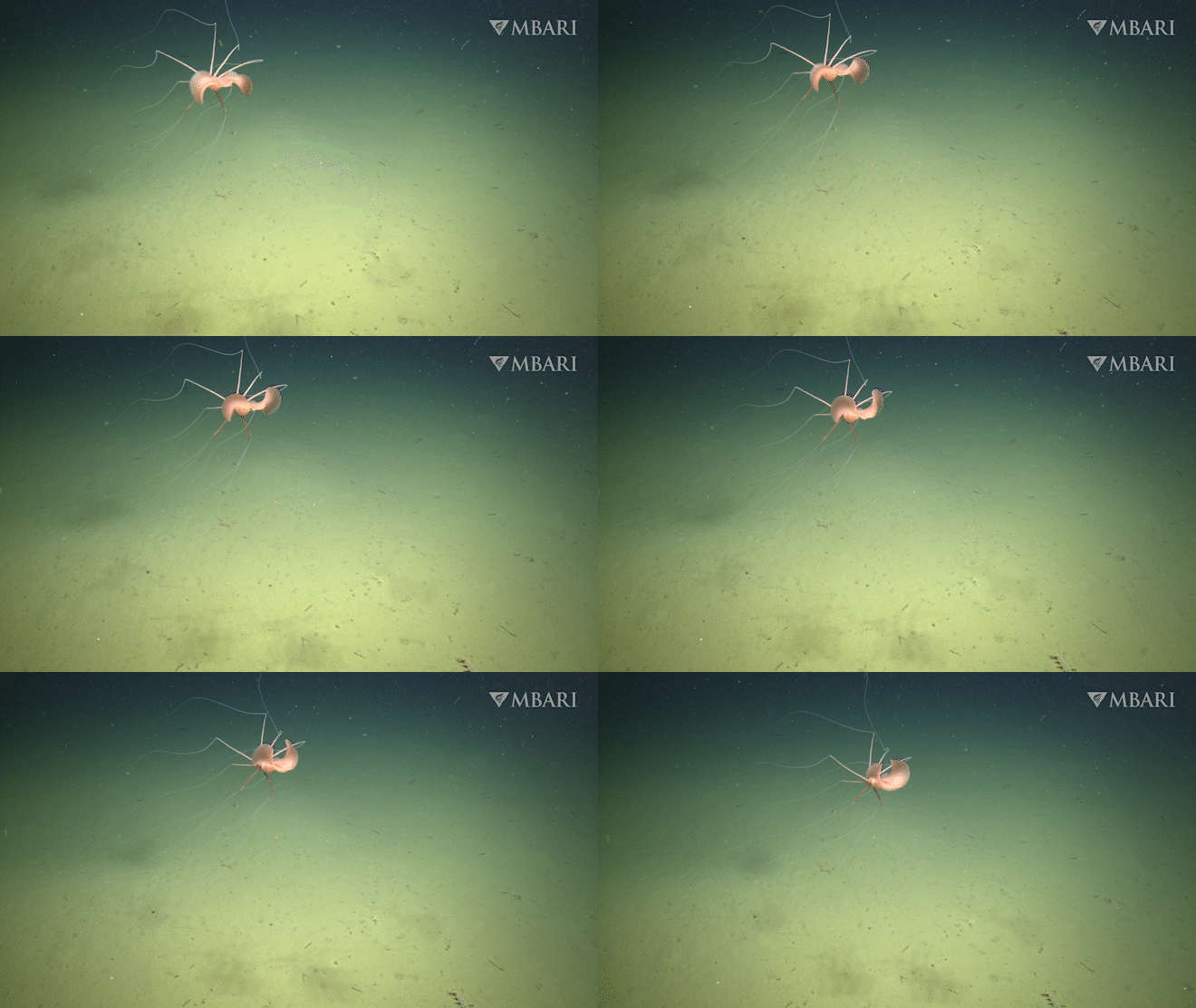
Судлаачид Калифорнийн эргээс холгүй орших далайн гүнээс анх удаа том сэрвээт наймаалжийг дүрсэнд буулгаж, амьд ахуйд нь баримтжууллаа.
Monterey Bay Aquarium Research Institute (MBARI) болон National Oceanic and Atmospheric Administration (NOAA)-ийн эрдэмтэд алсын удирдлагатай шумбагч төхөөрөмж ашиглан далайн гүний уулархаг бүсүүдийг судлах явцдаа энэхүү амьтныг илрүүлжээ. Далайн гадаргаас 3000 гаруй метрийн гүнд хийсэн энэхүү судалгаа нь Номхон далайн зүүн хойд хэсэгт Magnapinna төрлийн наймаалжийг анх удаа баримтжуулсан тохиолдол болж байна.
Судлаач Оливиа Соарес Перейрагийн тайлбарласнаар, уг наймаалж нь далайн ёроолын дээгүүр хөвөхдөө тэмтрүүлүүдээ 90 хэмийн өнцгөөр нугалсан “тохойлсон” байрлалтай байжээ. Энэхүү өвөрмөц зан төлөв нь тэмтрүүлүүдээ хооронд нь орооцолдуулахгүйгээр идэш тэжээлээ барьж авах нэгэн төрлийн стратеги байж болзошгүй гэж эрдэмтэд үзэж байна.
Magnapinna нь дэлхийн хамгийн гүнд амьдардаг наймаалжийн төрөлд тооцогддог бөгөөд биеийн уртаасаа 20 дахин урт тэмтрүүлтэй байдаг онцлогтой. Видео бичлэгт өртсөн бодгаль нь нийт 1.25 метр урттай байсан бөгөөд эрдэмтдийн хувьд ийм ховор амьтныг санаандгүй байдлаар олж илрүүлсэн нь тухайн бүс нутгийн биологийн олон янз байдал хэр баялаг болохыг харуулж байна.
Дэлгэрэнгүйг эх сурвалжаас харах
↓Эх сурвалжийг нээх ↓
A bizarre squid has been filmed haunting the northeastern Pacific Ocean for the first time.
Researchers spotted the bigfin squid (Magnapinna) via remote video while using an uncrewed submersible to explore underwater mountains, known as seamounts, at a depth of more than 10,000 feet (3,000 meters) off the coast of California.
The footage, captured Aug. 7, represents the first confirmed live observation of a bigfin squid in the northeastern Pacific, according to the Monterey Bay Aquarium Research Institute (MBARI), whose scientists made the discovery with collaborators from the National Oceanic and Atmospheric Administration (NOAA).
Olívia Soares Pereira, a deep-sea ecologist and postdoctoral fellow at MBARI, said the squid was hovering over the seafloor with its arms and tentacles bent at a 90-degree angle — what the researchers called the “elbow pose.”
“Based on the behavior of other deep-sea squids, we believe this pose could be a part of their feeding tactics,” Pereira told Live Science in an email. “The arms and tentacles are extended so they do not get tangled up and passively capture prey that sticks to them.”
Bigfin squid are the deepest-dwelling known squid and have been found more than 20,000 feet (6,000 m) below the surface. Most of the animals’ total length comes from their tentacles and arms, which can be 20 times longer than their bodies. The individual in the video was about 4.1 feet (1.25 m) long, including body, tentacles and arms, according to MBARI.
The last time MBARI researchers encountered a bigfin squid was off Hawaii in 2001, though around 70 have been observed or collected in total, according to MBARI. Pereira said she saw two other bigfin squid during an expedition to the Mid-Atlantic Ridge — located along the Atlantic Ocean floor — with the Schmidt Ocean Institute earlier this year.
“When we saw this one, I couldn’t believe my luck!” she added.
- Haunting blood-red squid with large hooks drifts through Antarctic ocean’s midnight zone in world-first video
- Elusive colossal squid finally caught on camera 100 years after discovery in world 1st footage — and it’s tiny
- Elusive ‘octopus squid’ with world’s largest biological lights attacks camera in striking new video
The team was piloting MBARI’s Doc Ricketts submersible when they encountered the squid near the Davidson Seamount at a depth of around 10,751 feet (3,277 m), about 80 miles (130 kilometers) southwest of Monterey, during a 10-day Seamount Hotspots expedition between Aug. 3 and Aug. 12.
The researchers were investigating life around the Davidson Seamount and Sur Ridge, which are biodiversity hotspots within the Monterey Bay National Marine Sanctuary, a massive federally protected area off central California. Although these areas are known to be teeming with life, a bigfin squid was not on the list of animals the researchers expected to see.
“We were looking for thriving communities of deep-sea corals and sponges, brooding deep-sea octopus, and feeding beaked whales,” Pereira said. “Finding a rare animal that we weren’t specifically looking for highlights the incredible diversity and habitat complexity of this region.”

