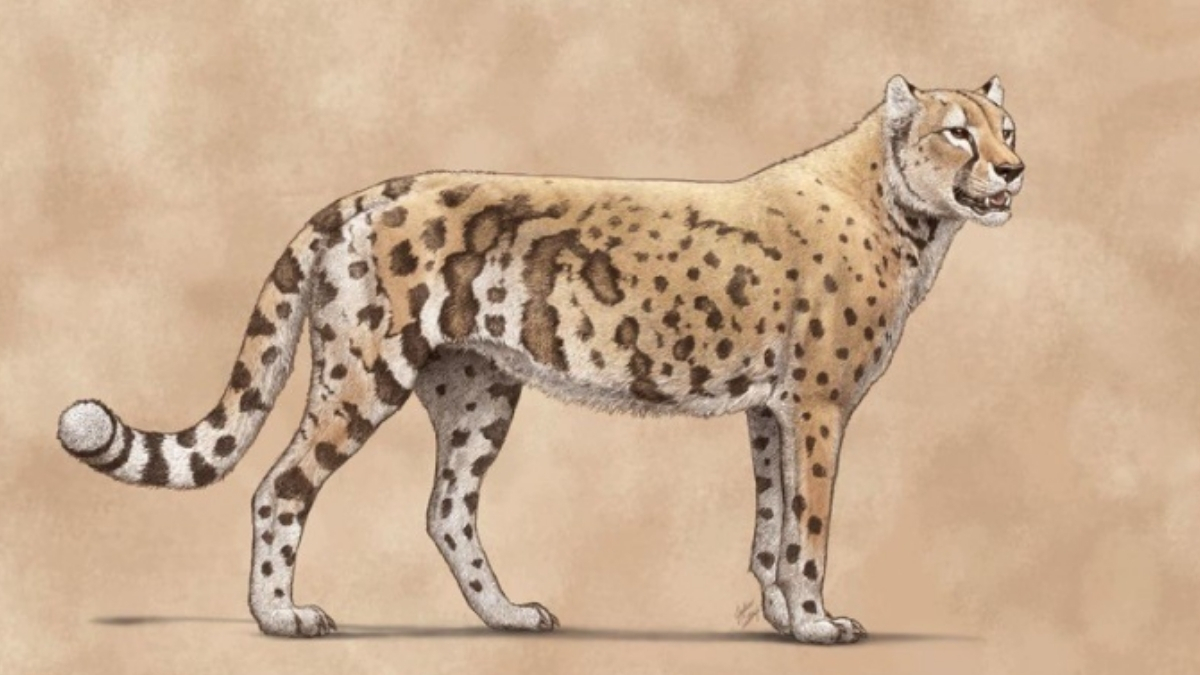
Шинэ судалгаагаар Плейстоцений үед амьдарч байсан Miracinonyx trumani нь ирвэсийн төрөл бус, харин пума буюу уулын арслангийн төрлийн амьтан болохыг генетикийн шинжилгээгээр баталлаа.
Калифорнийн их сургуулийн (UCSC) судлаачид Miracinonyx trumani-ийн чулуужсан ясанд палеогеномикийн шинжилгээ хийж, энэ амьтан нь ирвэстэй биеийн бүтэц, хурдны хувьд төстэй байсан ч генетикийн хувьд пуматай илүү ойр болохыг тогтоожээ. Судлаач Молли Кассатт-Жонстоуны тайлбарласнаар, тухайн амьтныг бидэнд танил ирвэстэй зүйрлэн андуурч байсан нь эртний амьтдын хувьслын түүх болон зан төлөвийг дутуу ойлгоход хүргэж байв.
Изотопын шинжилгээнээс үзэхэд Miracinonyx trumani нь амьдарч буй орчноосоо хамааран өөр өөр хооллолттой байжээ. Тухайлбал, хойд зүгт амьдарч байсан популяци нь загасаар хооллодог байсан бол өөр бүс нутгийнх нь өөр төрлийн олзны амьтдыг барьдаг байв. Мөн тэдний генийн судалгаагаар хойд өргөргийн эрс тэс уур амьсгал, гэрлийн өөрчлөлтөд дасан зохицож, биологийн цаг хугацааны хувьд өөрчлөлтөд орсон байж болзошгүй гэж үзэж байна.
Судалгааны багийн ахлагч Бет Шапирогийн хэлснээр, энэ төрөл зүйл нь мөстлөгийн үеийн уур амьсгалын өөрчлөлтийн улмаас аажмаар мөхөлд хүрсэн байна. Тэдний тоо толгой огцом бус, удаан хугацааны туршид цөөрсөн нь уур амьсгалын өөрчлөлтөд дасан зохицох боломжийг нь хаасан байх магадлалтай аж. Энэхүү нээлт нь эртний махчин амьтдын экологийн дасан зохицох чадвар болон хувьслын түүхийн талаарх шинэ ойлголтыг өгч байна.
Дэлгэрэнгүйг эх сурвалжаас харах
↓Эх сурвалжийг нээх ↓
The Ice Age movies get one major thing right: Climate shifts and glaciation caused profound animal migrations and evolutionary adaptations – though it’s uncertain if any of them resulted from an acorn-burying saber-toothed squirrel splitting a continent.
During the Pleistocene epoch, circa 2.58 million to 11,700 years ago, or what’s colloquially called the most recent ‘ice age’, North America hosted an awe-inspiring assortment of impressive animals.
Giant bears that stood up to 12 feet tall pooped in caves, woolly mammoths trumpeted across the frigid tundra steppes, and ‘American cheetahs’ chased ‘American antelope’ across expanding grasslands.
But a new, uniquely comprehensive DNA and isotopic analysis revealed that this fleet-footed felid wasn’t actually a cheetah.
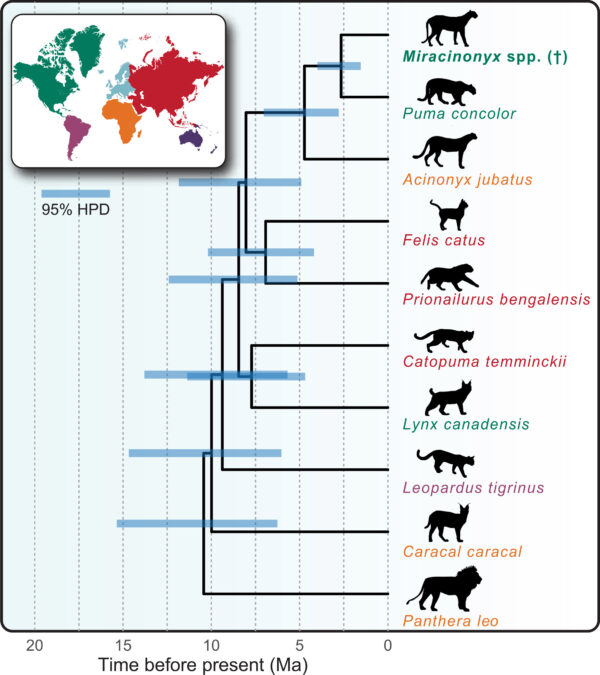
Turns out it was a sister species to the modern puma (Puma concolor) – with a surprising diet, to boot.
“These cats were remarkably flexible, much like pumas are across their range today,” explains Molly Cassatt-Johnstone, a paleogenomicist at the University of California, Santa Cruz (UCSC), and the lead author of the study.
As described in the new paper, published in the journal Current Biology, Miracinonyx trumani was thought to be an endemic American version of the African cheetah (Acinonyx jubatus).
This was due to their similar cursorial (running) adaptations, including gracefully slender builds, athletically long limbs, and “increased nasal turbinate capacities,” giving them noses like turbochargers (the words are related) to boost oxygen intake – with the trade-off of smaller teeth compared to their kitty kin.
“It’s very hard to imagine a prehistoric species we’ve never seen without comparing it to something we know,” says Cassatt-Johnstone.
“But this approach can limit our understanding of ancient animals’ complexity, unique evolutionary histories, and behaviors.”
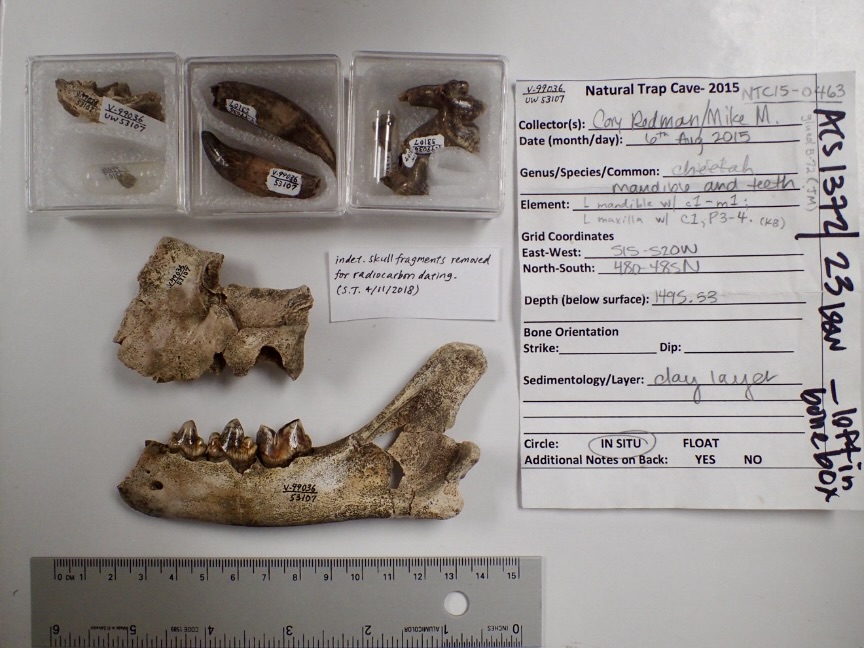
The researchers performed a paleogenomic analysis on four fossil specimens of M. trumani, including one from Wyoming that lived circa 23,000 years ago and three from the Yukon (Canadian Arctic) that lived more than 30,000 years ago.
“It was just so cool to see that these cats behaved like totally different predators depending on where they were,” says Cassatt-Johnstone.
These Yukon specimens were previously thought to be another species.
But by confirming them as M. trumani, separated from their more-southern-living cat cousins by a glacial barrier, the researchers extended this animal’s known range by 20 degrees of latitude with a single scientific brushstroke.
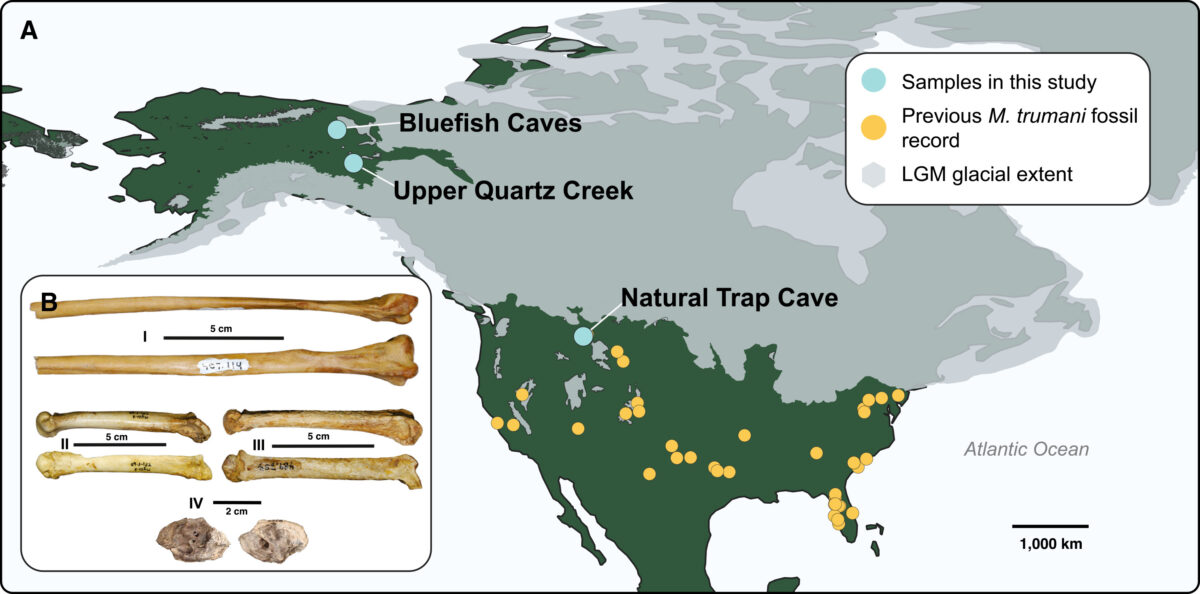
“This species of carnivore has this massive range, all the way from the Arctic to the Lower 48,” explains paleoecologist Matthew Wooler, director of the Alaska Stable Isotope Facility at the University of Alaska Fairbanks (UAF), where the isotopic analysis was carried out.
“They’re demonstrating über-specialization at two ends of their range, while also feeding on two completely different food sources.”
Intriguingly, the northern population adapted to its habitat by becoming pescatarian, according to an analysis of its nitrogen isotopes (heavier or lighter versions of nitrogen that differ in their number of neutrons).

The analysis revealed a diet of fish such as salmon, leaving a chemical signature similar to that seen in orcas and sea wolves.
It also appears to have adapted its daily biological clock.
“We found loss-of-function mutations in certain genes that regulate circadian rhythms,” notes Cassatt-Johnstone, “suggesting they may have adapted to the extreme light cycles of summers and winters in northern latitudes.”
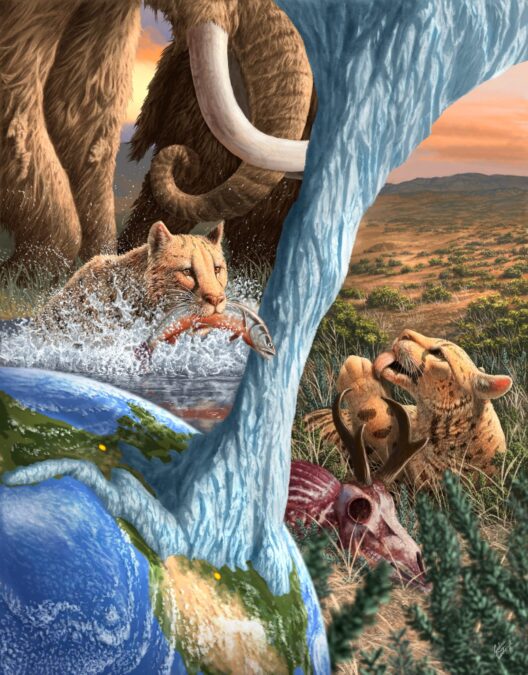
Yet mysteries remain, including how M. trumani managed to carve its fishy niche among a crowded carnivore guild that included cave lions, scimitar-toothed cats, gray wolves, and brown bears, among others.
“Miracinonyx persisted for a very long time without the signs of inbreeding we’d expect before a collapse,” explains Beth Shapiro, an ecologist and evolutionary biologist at UCSC and the study’s senior author.
Finally, M. trumani began to decline as the Pleistocene progressed, a pivotal climate-changing period that signaled the end of the ice age and closed the curtain on iconic creatures like the woolly mammoth.
Related: Saber-Toothed Cats Were A Diseased, Inbred Mess Before They Went Extinct, New Research Suggests
“The decline was slow, not sudden, and that may be what left it unable to adapt when the climate shifted,” Shapiro concludes.
This research was published in the journal Current Biology.
This article was fact-checked by Rachel Garner and edited by Rebecca Dyer. While we pride ourselves on our process, we are only human. If you spot a mistake, please let us know.

