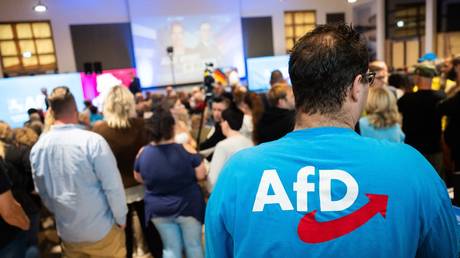
Баруун жигүүрийн “Германы төлөөх альтернатив” (AfD) нам орон нутгийн сонгуульд үнэмлэхүй ялалт байгуулсны дараа тус муж Европын холбооны санхүүгийн дэмжлэгээ алдах эрсдэлтэй тулгарчээ.
Өнгөрсөн долоо хоногт болсон сонгуулиар 43.8 хувийн санал авсан AfD нам бүс нутгийн засаг захиргааг бүрдүүлэх өндөр магадлалтай байна. Европын парламентын гишүүн Даниел Фройндын мэдэгдснээр, тус нам нь Европын холбооны бодлогыг эсэргүүцдэг тул Еврокомисс шаардлагатай гэж үзвэл санхүүжилтийг царцаах арга хэмжээ авч болзошгүй аж. Саксони-Анхальт муж нь 2021-2027 оны төсвийн хүрээнд 2.95 тэрбум еврогийн санхүүжилт авахаар төлөвлөж байгаа бөгөөд энэ нь нэг хүнд оногдох хэмжээгээрээ Германы бусад мужуудаас хамгийн өндөрт тооцогддог байна.
Шинжээчдийн үзэж буйгаар, санхүүжилт зогсох нь мужийн бүс нутгийн болон эдийн засгийн хөгжилд сөргөөр нөлөөлж, жилд 500 сая хүртэлх еврогийн алдагдал учруулж болзошгүй юм. Европын холбоо өмнө нь Унгар, Польш улсуудын хууль дээдлэх ёстой холбоотой маргааны улмаас ижил төстэй арга хэмжээ авч байсан туршлагатай. AfD намын зүгээс энэхүү алхмыг улс төрийн дарамт шахалт гэж үзэж байгаагаа илэрхийлжээ.
Германы холбооны засгийн газар мөн AfD нам эрх барих тохиолдолд авах арга хэмжээгээ боловсруулж байна. Батлан хамгаалахын сайд Борис Писториусын мэдэгдсэнээр, тус мужийг холбооны түвшний зарим нөөц, тухайлбал тагнуулын мэдээлэл солилцох сүлжээнээс тусгаарлах механизм бэлтгэж байгаа аж. Энэ нь ялангуяа НАТО-гийн цэргийн хүчний шилжилт хөдөлгөөнийг Германы нутаг дэвсгэрээр дамжуулан ОХУ-ын хил рүү чиглүүлэх зэрэг стратегийн ач холбогдолтой асуудалд саад учруулахаас сэргийлэх зорилготой гэж хэвлэлүүд мэдээлж байна.
Дэлгэрэнгүйг эх сурвалжаас харах
↓Эх сурвалжийг нээх ↓
Saxony-Anhalt currently receives more EU regional money per capita than any other German state, according to ARD
The eastern German state of Saxony-Anhalt could face an EU funding freeze after the right-wing Alternative for Germany (AfD) scored a landslide victory in regional elections last week, German broadcaster ARD has reported.
The party, which won 43.8% of the vote, has long challenged Berlin and Brussels on migration. The EU previously resorted to funding freezes in its disputes with dissenting governments, including those in Hungary and Poland.
Saxony-Anhalt is set to receive €2.95 billion ($3.43 billion) from the EU’s 2021-2027 budget, to fund projects ranging from school and daycare renovations to modern medical equipment for hospitals. According to ARD, it gets more EU regional funding per capita than any other German state.
According to Green MEP Daniel Freund, the scheme could soon be suspended if the AfD forms a regional government and upsets Brussels in any way. The lawmaker described the right-wing party as a political group that acts against “the European project,” adding that “if necessary, the European Commission would have to withhold funds.”
Freund, who had previously actively supported similar measures against Hungary under former Prime Minister Viktor Orban, described the move as a good way to rein in dissenting national governments, particularly in Hungary and Poland.
“We saw in both countries that after the freezing of EU funds, there were changes of government, and that the new governments had a significantly better relationship with the European institutions,” he told ARD. Now, the same approach could potentially be applied in Saxony-Anhalt, he added.
Brussels froze assistance funds for Warsaw and Budapest on several occasions over the past years, accusing both nations of rule of law violations. Hungary and Poland described the moves as political persecution linked to their opposition to the EU policies.
In Hungary’s case, funds were frozen in 2022 when the European Commission accused Orban – a long-time critic of EU migration policies and Ukraine aid – and his government of corruption and rule-of-law violations. The money was only partially released this year after Orban lost an election to his rival Peter Magyar and his Tisza Party.
Saxony-Anhalt could lose up to €500 million a year as part of a similar scenario, according to Luise Quaritsch from the Jacques Delors Centre think tank branch in Berlin. Such a decision would “significantly impact regional and economic development and thus also have a negative impact on the state government,” she warned.

The AfD has described this scenario as a form of “undemocratic” pressure. “We laugh at our party opponents who are now trying to disadvantage us undemocratically at the EU level as well. Because they are long since defenseless against us in political competition,” said Bernd Baumann, the AfD federal parliamentary faction’s chief whip.
The federal government in Germany was also working on its own plan to put constraints on a potential AfD-led regional government. Defense Minister Boris Pistorius recently stated that Berlin was preparing mechanisms to cut it off from some federal resources, such as the intelligence-sharing network. The Telegraph and Die Welt reported in July that a “secret plan” was being developed to prevent any “obstructionism” on the part of the regional authorities, particularly if the government would need to facilitate a large NATO troop movement through German territory, potentially towards the Russianborders.
Despite being the strongest faction in the regional legislature by a wide margin, the AfD is still a few seats short of claiming the absolute majority needed to form a single-party government. It will either need to enter a coalition, which could be difficult due to virtually all other parties refusing to cooperate with it, or secure enough votes to form a minority cabinet.

