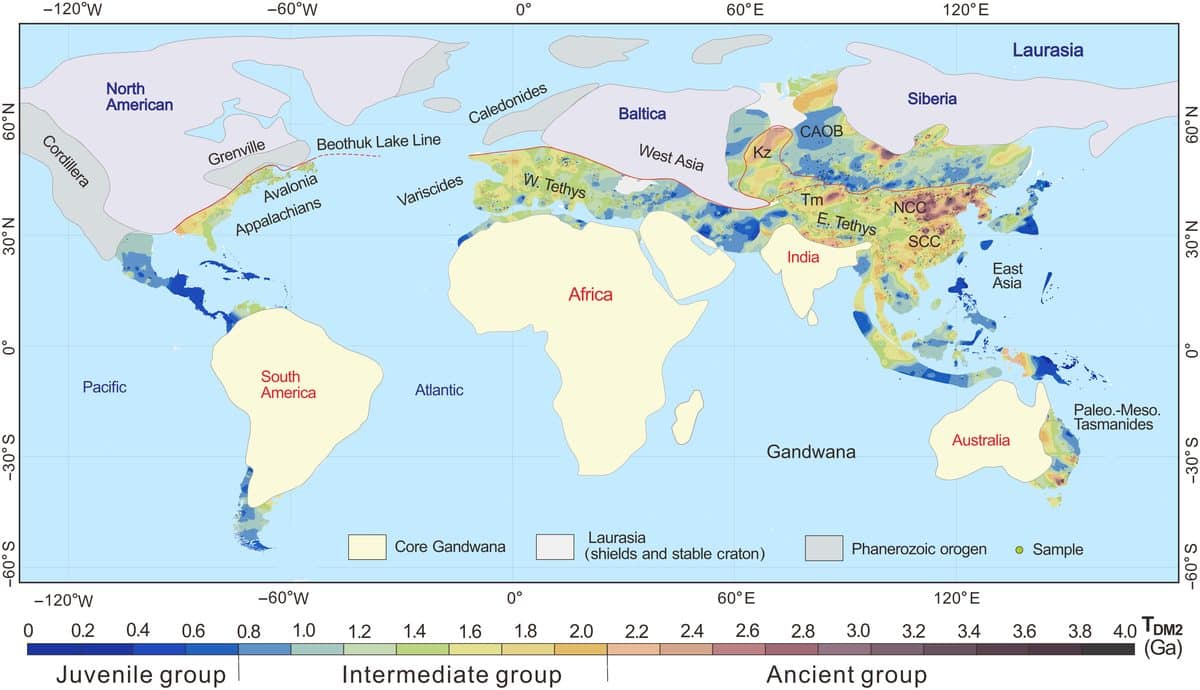
Эрдэмтэд 25,000 гаруй галт уулын чулуулагт хийсэн геохимийн шинжилгээгээр эртний Гондвана тив өмнө нь тооцоолж байснаас хавьгүй том байсныг тогтоов.
Судлаачид 500 сая жилийн тэртээх дэлхийн хуурай газрын 80 орчим хувийг эзэлж байсан Гондвана супертив тивийн үлдэгдлийг орчин үеийн Ази, Европ, Хойд Америк тивийн гүнээс олж илрүүлжээ. “Science Advances” сэтгүүлд нийтлэгдсэн энэхүү судалгаагаар, 180 гаруй сая жилийн өмнө алга болсон гэгддэг уг тивийн царцдасын хэлтэрхий нь өнөөгийн тивүүдийн гүнд хадгалагдан үлдсэн болохыг тогтоосон байна. Өмнөх судалгаануудад Гондванаг дэлхийн нийт хуурай газрын 64 хувийг эзэлж байсан гэж үздэг байсан бол шинэ тооцоолол энэ хэмжээг эрс нэмэгдүүлжээ.
Судалгааны баг гадаргын геологийн тогтоцод бус, харин гүн газрын чулуулгийн химийн найрлагад дүн шинжилгээ хийх геохимийн аргыг ашигласан байна. Энэхүү “химийн хурууны хээ” авах арга нь тектоник хавтангуудын нүүдлийн улмаас өөр тивүүдийн гүнд шингэсэн эртний царцдасын хэлтэрхийг таньж, нүдэнд үл үзэгдэх тивийн хил хязгаарыг тогтоох боломжийг бүрдүүлжээ.
Ийм өргөн уудам газар нутаг нь эртний дэлхийн уур амьсгал, агаар мандлын найрлага болон галт уулын идэвхжилд шууд нөлөөлж байсан нь гарцаагүй юм. Судлаачид энэхүү супертив тивийн хөгжил нь 540-530 сая жилийн тэртээх амьтны аймгийн үүсэл буюу “Кембрийн тэсрэлт”-ийн үеийн нөхцөлийг бүрдүүлэхэд чухал үүрэг гүйцэтгэсэн байж болзошгүй гэж таамаглаж байна.
Гэсэн хэдий ч энэхүү судалгаа нь эцсийн дүгнэлт биш байж болохыг зохиогчид анхааруулж байна. Эртний тивийн зарим хэсэг нь бүрмөсөн живсэн эсвэл дэлхийн царцдаст бүрэн дахин боловсруулагдсан байж болох тул Гондвана тивийн жинхэнэ цар хүрээг бүрэн гүйцэд тодорхойлоход одоогоор хүндрэлтэй хэвээр байна.
Дэлгэрэнгүйг эх сурвалжаас харах
↓Эх сурвалжийг нээх ↓
After several studies, researchers found that Gondwana was far bigger than they thought. A new analysis of more than 25,000 volcanic rocks shows the ancient supercontinent covered roughly 80 percent of Earth’s total land area some 500 million years ago. Buried fragments of its crust have now been traced deep beneath Asia, Europe and North America, filling in a landmass that vanished more than 180 million years ago.
For decades, geologists have pieced together Gondwana’s true extent bit by bit, reconstructing a supercontinent that once dominated the globe before splintering into the continents recognizable today. The puzzle was never straightforward. Much of the evidence for its former reach lies hidden far below the surface, folded into crust that eventually became part of entirely different landmasses.
Closing that gap is exactly what this new study set out to do, and the implications stretch well beyond cartography. A landmass of this scale would not have been a passive backdrop to early Earth history: it would have actively shaped the planet’s chemistry, its climate, and the conditions under which the first animals evolved.
A Supercontinent Larger Than Previously Estimated
According to the new study, published in the journal Science Advances, Gondwana likely accounted for around 80 percent of global land area approximately 500 million years ago. That figure marks a striking upward revision from older estimates, which had put the supercontinent’s size at closer to 64 percent of Earth’s land surface.
Behind the jump lies a simple discovery. Pieces of Earth’s crust concealed deep beneath present-day Asia, Europe and North America, which the analysis indicates once formed part of Gondwana itself. None of this is visible on any conventional map. Rather, these are fragments identified through the chemical makeup of rock buried underground, long since carried away from their original continental home by the slow churn of plate tectonics.
Tracing Ancient Crust Through Chemistry
Rather than relying on surface geology, the research team turned to geochemistry to uncover these hidden landscapes. Researchers analyzed the chemical composition of deeply buried rocks drawn from different geochemistry databases, then used the distribution of elements within those rocks to map where Gondwana’s crust extended.
The method functions much like chemical fingerprinting, picking out traces of material that once belonged to one ancient continent even after it was swallowed into entirely different ones. That approach let the team map boundaries no eye could see, piecing together a fuller picture of the supercontinent’s original footprint than surface geology alone would allow.

Possible Links to the Cambrian Explosion
The scale of the revised Gondwana carries weight for one of the most debated chapters in the history of life on Earth. Writing about their results, the study’s authors suggest that Gondwana’s formation and development over time could have been instrumental in the Cambrian explosion, the period from about 540 to 530 million years ago when the ancestors of nearly all modern animal groups first appeared.
Because a landmass of this size would have shifted sea level, altered the balance of atmospheric gases and driven patterns of volcanic activity, the newly revealed geographical areas, combined with what was already known about the supercontinent, point to Gondwana having had outsized effects on the conditions that shaped early life on Earth.

Even so, the authors are careful to note that this expanded estimate may not be the final word. Some portions of the ancient continent, they write, could still lie submerged or may have been recycled back into Earth’s crust entirely. The true scale of Gondwana, in other words, might remain only partially known for now.
Enjoyed this article? Subscribe to our free newsletter for engaging stories, exclusive content, and the latest news.

