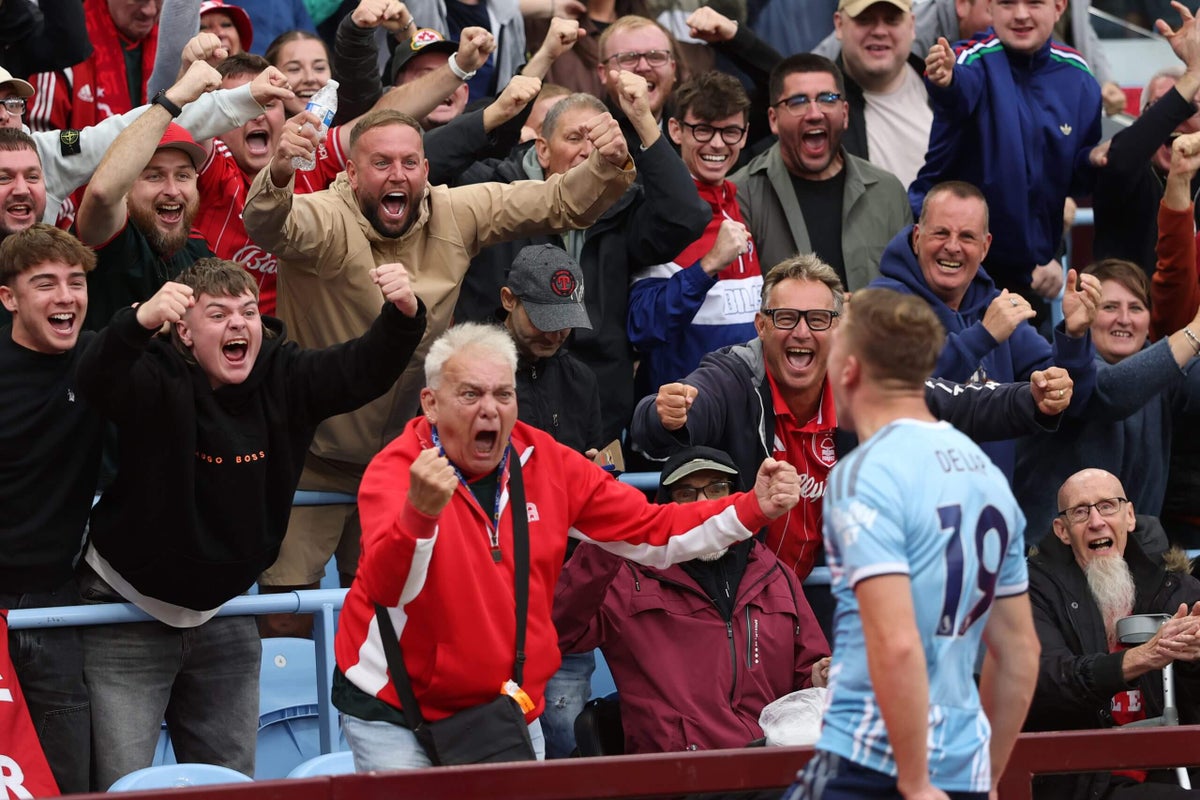
Хөлбөмбөгийн тоглолтыг илүү гүнзгий ойлгож, стратегийн үүднээс шинжихийн тулд зөвхөн бөмбөг дагахаас илүүтэй тоглогчдын хөдөлгөөн болон талбайн орон зайг ажиглах нь чухал юм.
Премьер лигийн өнгөрсөн тойргийн тоглолтуудын үр дүнд Манчестер Сити, Арсенал зэрэг багууд амжилттай тоглосон бол Тоттенхэм болон Ливерпүүл багууд гоолгүй тэнцээгээр өндөрлүүлжээ. Эрлинг Холанд гоол оруулсан ч шүүгчийн шийдвэр маргаан дагуулсан нь тойргийн онцлох үйл явдлуудын нэг байв. Түүнчлэн Арсеналын дасгалжуулагч Микель Артетагийн бэлтгэлийн сонин арга барил болон Рафиньягийн гайхалтай тоглолт хөлбөмбөгийн хүрээнийхний анхаарлыг татлаа.
Тоглолтын тактикийн хувьд тоглогчид гурвалжин үүсгэн дамжуулалт хийх, эсрэг багийн хамгаалалтыг нээх орон зайг олох, мөн бөмбөг эзэмшилтээр өрсөлдөгчөө талбайн гүнээс гарч ирэхийг албадах зэрэг нь орчин үеийн хөлбөмбөгийн гол зарчим юм. Тоглолтыг илүү сонирхолтой болгохын тулд багуудын гарааны бүрэлдэхүүн, байрлалын хувирал болон тоглогчдын бие даасан шийдвэрүүдийг ажиглахыг мэргэжилтнүүд зөвлөж байна.
Премьер лигийн 4-р тойргийн үр дүнд Ноттингем Форест Астон Виллаг 2-1, Ипсвич Таун Кристал Пэласыг 3-2, Арсенал Сандерлендийг 2-0, Брайтон Ковентри Ситиг 5-0, Манчестер Сити Манчестер Юнайтедыг 1-0-ийн харьцаатай тус тус хожлоо. Харин Борнмут-Брентфорд, Челси-Халл Сити багуудын тоглолт 2-2, Ливерпүүл-Фулхэм болон Тоттенхэм-Эвертон багуудын тоглолт 0-0-ийн харьцаатай тэнцсэн байна.
Дэлгэрэнгүйг эх сурвалжаас харах
↓Эх сурвалжийг нээх ↓
The Athletic has the latest news and reaction as fallout continues from a dramatic weekend of Premier League football.
Did you enjoy this summer’s World Cup? Are you curious about the soccer world beyond that tournament? Welcome to The Athletic’s Soccer Weekender. We’ll be tackling the big topics from every weekend of action, and the funniest moments, weird histories, meaningful stories you may have missed and more. All fans are welcome.
I heard it so many times during the World Cup.
“I always thought soccer was boring, but now I’m obsessed!”
Writing our daily World Cup newsletter, I read dozens, maybe hundreds, of emails saying something to this effect: Now that they understood WHAT was happening on the field, they loved the game.
Soccer fans and non-soccer fans sometimes seem locked in an eternal cosmic battle: “This sport is boring!” “You don’t understand it!” “You’re a snob!” “You’re dumb!” Rinse. Repeat.
Can I get a little “It 👏🏼 ends 👏🏼 with 👏🏼 us” chant going?? As we saw with the World Cup, and as new fans of any sport can attest: Learning how to watch makes it immensely more fun to watch. We’re not achieving world peace tomorrow, but this feels attainable??
So, I sat down and had a chat with Alex Barker, a senior producer at The Athletic and European football analyst, to talk through six basic principles for getting smarter at watching the game.
This is mostly for newcomers to soccer/football who are on this journey of discovery with me🤝. But all are welcome, and we’d love to hear your tactical favorites and best tips in the comments!
(Want a deeper dive? How about 62(!) rules for understanding the sport?)
1. Don’t watch the ball, watch the player
I had this lightbulb moment during the World Cup when we wrote about how much Lionel Messi walks during matches. The guy is just strolling around, looking chiller than a camel (no, really, read this article about why Messi walks like a camel), and then suddenly, he moves. Erling Haaland got attention during the tournament for this behavior, too.
After I learned that, I started focusing on specific players instead of watching the ball, and I immediately noticed a boost to my enjoyment and focus. It’s really easy to glaze over if you just watch the ball go round and round and round.
To get smarter at watching football, pick a player to follow. Watch what they’re watching. Try to guess where they’ll go next. See how they surprise you. You’ll naturally begin to understand the strategy and rhythm of the game.
2. Look for space
Honestly, Messi is another great example here. Former Barcelona manager Pep Guardiola once said that when Messi is walking, he’s scanning the opposing defense for weak points, like a soccer-playing Neo from “The Matrix”: “After five, 10 minutes, he has a map in his eyes, in his brain, to know exactly where is the space and what is the panorama.”
In the Premier League specifically, space is very hard to come by, especially if it’s inside the opposition’s defense. When you see the space, ask yourself: What is the attacking team doing to try and get there? What is the defending team doing to try and close it up?
Space can be hard to find in the Premier League (Mike Hewitt/Getty Images)
3. Look for triangles
The triangle is arguably the most important shape in soccer. Three players are often exactly what you need to move the ball past a defense.
To grossly oversimplify, a triangle of players means a defender can’t just block one straight lane, which forces them into more difficult choices. Once the ball is passed, the passer can move forward as an option for the next pass.


Sports fans in the U.S. might be familiar with triangles thanks to the NBA’s “triangle offense” — invented in the 1940s by Sam Barry at the University of Southern California but immortalized by Phil Jackson and Michael Jordan on the NBA’s 1990s Chicago Bulls. In fact, Kobe Bryant said that playing soccer (football) while living in Europe as a kid helped with his basketball IQ because of this rule of triangles:
“They taught me at an early age how to play in triangles and how to utilize space, which wound up helping me tremendously in basketball. I loved the idea of how quickly the ball moves and how quickly you have to process what’s moving right in front of you to make decisions.”
4. Pay attention to the details
This is where soccer makes you go, “WTF did I just watch???” An attack can take so many patient moves and passes, and then suddenly you blink and the ball is in the net. If you get a chance to slow down a goal and see exactly how it happened, you might be shocked by how much was going on.
For example, in this goal a week ago by Arsenal’s Kai Havertz against Chelsea, it looks kind of like the goalkeeper just missed a pretty easy save. But actually, so much cool stuff happens in the three seconds it takes Havertz to receive the ball and then score.
First, his teammate Martin Odegaard is in the way (yellow arrow pointing to him below), spots it early and dodges out of Havertz’s path:

Then, Havertz has a defender right between him and the goal, so it makes sense to shoot around that defender to the left side of the goal. But consider: Everyone else can see that, too:

Instead, he sees the narrower, riskier, less obvious way — through the defender into the unexpected side of the goal:

The goalkeeper can’t get there in time because he’s prepared for the more obvious route:

The Arsenal players — Odegaard and Havertz — calculated each permutation in split seconds. Not to invoke Neo again, but: Very Matrix-like to this non-soccer player!
To be fair to Chelsea, slowing it down also helps you understand the goalkeeper’s decision, too. At first, it looks like he just missed an obvious shot. But if you watch it in slow-motion, you see he deduced the most logical spot for the ball to go… the attacker just had a surprise move up his sleeve (sock?).
5. Going backward is sometimes the best way forward
(Wait, did sports just give me profound insight into real life??)
One of the more frustrating defensive strategies is a “low block,” where a side sit deep toward their own goal and don’t budge — as a kid, I remember calling this babysitting the goal. You could be the best team in the world, and a low block comprised of seemingly far inferior players can be enough to stop you from scoring; after all, it’s kind of tough to score with 11 people in front of you. We saw this when Cape Verde used the strategy to draw (tie) with Spain in the World Cup.
Enter: Going backward to get forward. Roberto De Zerbi, now the head coach at Tottenham Hotspur, popularized a strategy called “baiting the press” while in the same job a few years ago at Brighton & Hove Albion. Baiting the press essentially means drawing the opposition away from their goal. If you sit back with the ball, your opponents ultimately need to come try to get it from you if they want to score. Once they come forward, it opens up space behind them, and you pass it into that now less-defended area of the field.
6. Always assume there’s a plan
It’s really easy for fans to think, “That was stupid,” or, “That manager doesn’t know what he’s doing.” And football fans will let (!) you (!) know (!) when they think you’re being an idiot. But no matter how well or poorly the plan goes, there’s always a plan. You’re always watching a game of calculated risk.
“It’s very rare that someone is being stupid,” Alex tells me. “There’s always something behind it.”
Three more tips if you want to go deeper
If you’re looking to level up, here are a few more tips from Alex.
Tip 1: It’s OK to feel like some matches are boring!
Don’t let that thought discourage you or make you feel like you just don’t get it. Some matches ARE boring! (And that goes for every sport, folks. I’m looking at you, Rams-49ers in Melbourne.) One fallacy, though, is the idea that because soccer is a low-scoring sport, that’s why it’s boring. High-scoring games can actually be much more frustrating.
Tip 2: Have a football app like The Athletic that includes a lineup.
A) You get to know the players. B) You’ll learn the shapes and formations. Compare the lineup on your app to the players on the field, and you’ll start to understand how different positions on the pitch might move depending on what’s happening.
Tip 3: Invest in any sort of soccer video game.
If you like video games (couldn’t be me), try one out! A lot of fans learn a lot about soccer through them. You learn about real players, follow storylines, discover strategy and get familiar with how different positions contribute and where players can operate.
“I reckon if you ask the average football fan in the UK, ‘Can you name any players from Italy?’, they’ll mention one (or all) of Victor Ibarbo, Gervinho and Seydou Doumbia, because they were players everybody used across two FIFA games,” Alex tells me.
Highlights from the week’s action
- Erling Haaland scored! Golden Boot, here he comes. Except … it was a bit controversial ….
- Tottenham still has no goals. (Sorry, but my husband is a Tottenham supporter, so it’s my duty to track this.) Even Domino’s is piling on!
we’ve delivered 489,297,478 pizzas since spurs last scored a premier league goal
— Domino’s Pizza UK (@Dominos_UK) September 12, 2026
- Micah Richards, one of the crew on UCL Today, finally got to ‘meet’ Kylian Mbappe (on Zoom! not even IRL!) and lost. his. damn. mind. He hugged the TV screen! He read a poem! Honestly, most relatable content I’ve seen all week!!
- The “and Raphinha took that personally” moment. He was snubbed in Ballon d’Or nominations and then went and did this:

- I had a ball reading about this psychopath (complimentary) behavior from Arsenal’s coach Mikel Arteta. It’s like if Denzel Washington’s character from “Remember the Titans” teamed up with a Bond villain to design a training program that’s maximum head-f**k (hiring pickpockets!? delaying flights?) and maximum results! Some of the things he does are quite nice, too.
Week 4 Premier League scores
Quick tip for newbies: in England, the home teams are listed first in results (and none of the sides playing at home this week won… though there’s one game remaining on Monday night: Leeds United vs Newcastle United).
- Aston Villa 1-2 Nottingham Forest
- Bournemouth 2-2 Brentford
- Chelsea 2-2 Hull City
- Crystal Palace 2-3 Ipswich Town
- Liverpool 0-0 Fulham
- Tottenham 0-0 Everton
- Sunderland 0-2 Arsenal
- Coventry City 0-5 Brighton & Hove Albion
- Manchester United 0-1 Manchester City
Week 5 Premier League fixtures (games) — and where to watch them in the United States
Friday, September 18
- Brentford vs Chelsea, 8 p.m. BST / 3 p.m. ET
Saturday, September 19
- Tottenham vs. Aston Villa, 12:30 p.m. BST / 7:30 a.m. ET
- Brighton vs. Arsenal, 3 p.m. BST / 10 a.m. ET
- Everton vs. Ipswich, 3 p.m. BST / 10 a.m. ET
- Newcastle vs. Hull, 3 p.m. BST / 10 a.m. ET
- Nottingham Forest vs. Coventry, 5:30 p.m. BST / 12:30 p.m. ET
Sunday, September 20
- Bournemouth vs. Liverpool, 2 p.m. BST / 9 a.m. ET
- Leeds vs. Crystal Palace, 2 p.m. BST / 9 a.m. ET
- Manchester City vs. Sunderland, 2 p.m. BST / 9 a.m. ET
- Fulham vs. Manchester United, 4:30 p.m. BST / 11:30 a.m. ET
All Premier League games are broadcast in the U.S. on Peacock/NBCSN/NBC or the USA Network, with specifics confirmed later this week.

