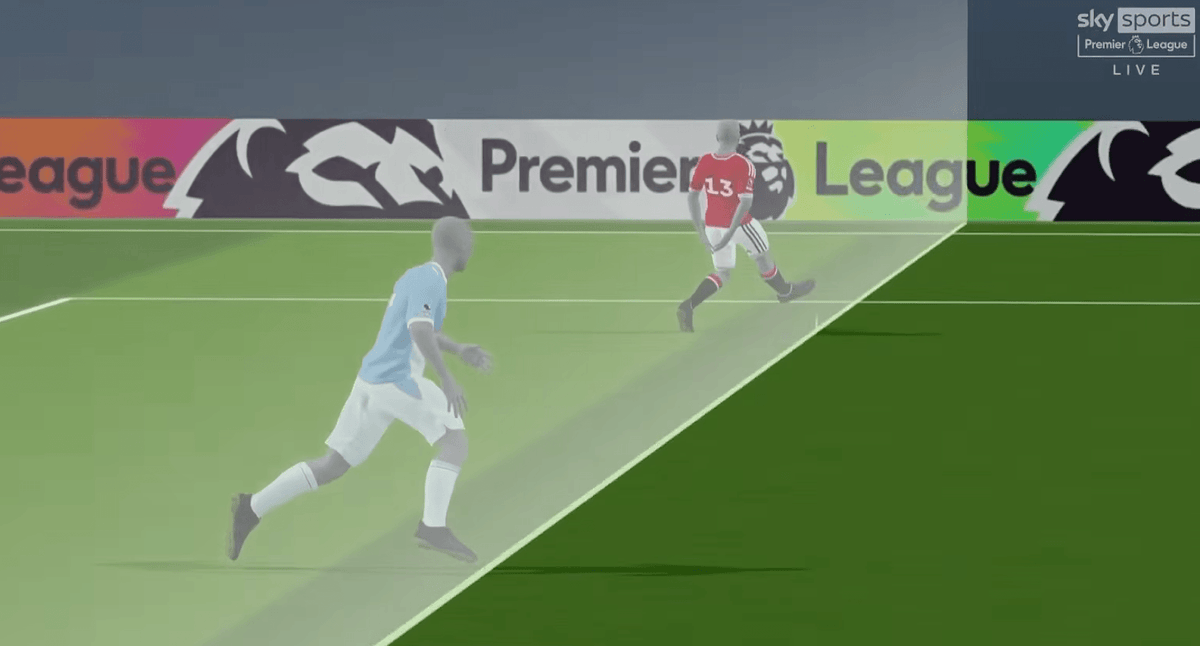
Манчестер Сити болон Манчестер Юнайтед багуудын тоглолтын үеэр Эрлинг Холандын оруулсан гоолтой холбоотой шийдвэр нь Премьер лигийн VAR системийн үр нөлөөг дахин хөндөхөд хүргэлээ.
Тоглолтын үеэр талбайн шүүгч Майкл Оливер оффсайд байрлал гэж үзэн Эрлинг Холандын гоолыг эхлээд тооцоогүй ч VAR-ын шүүгч Мэтт Донохю уг шийдвэрийг өөрчилсөн юм. Гэвч энэ үеэр талбайд байсан Энцо Фернандесийн байрлал болон түүний тоглолтод үзүүлсэн нөлөөллийг хангалттай тооцоолоогүй гэж үзэн Английн шүүгчдийн байгууллага болох ProRef алдаа гарсан гэдгээ хүлээн зөвшөөрөв. Манчестер Юнайтедын дасгалжуулагч Майкл Каррик уг шийдвэрийг сэтгэл түгшээм үйл явдал хэмээн тодорхойлж, ProRef байгууллага уг асуудлаар дахин хяналт шалгалт явуулахаа мэдэгдлээ.
Премьер лиг нь оффсайд байрлалыг хянах зорилгоор Genius Sports, харин гоол-лайн технологи болон дүрс бичлэгийн хяналтад Hawk-Eye компанийг тус тус ашигладаг нь бусад томоохон тэмцээнүүдээс ялгаатай тал юм. Шүүгч асан Грэм Скоттын үзэж буйгаар хоёр өөр системийг зэрэг ашиглах нь шүүгчдийн ажлыг хүндрүүлж, шийдвэр гаргах хугацааг удаашруулж, үйл явцыг ойлгомжгүй болгож байна. FIFA болон УЕФА-гийн тэмцээнүүд зөвхөн Hawk-Eye системийг ашигладаг бөгөөд бөмбөгөнд суурилуулсан чипний тусламжтайгаар илүү нарийвчлалтай шийдвэр гаргадаг аж.
Премьер лигийн зүгээс одоогийн байдлаар хоёр өөр нийлүүлэгчтэй хийсэн гэрээгээ цуцлах эсвэл нэг системд шилжих төлөвлөгөөгүй байгаа юм. Ирэх хугацаанд гэрээний хугацаа дуусах үед л нөхцөл байдлыг дахин үнэлж, өөрчлөлт оруулах боломжтой хэмээн таамаглаж байна.
Дэлгэрэнгүйг эх сурвалжаас харах
↓Эх сурвалжийг нээх ↓
The Premier League’s use of the VAR system is facing further scrutiny after Erling Haaland’s controversial winner for Manchester City against Manchester United on Sunday.
The incident led to ProRef, the body responsible for referees in the Premier League and other professional competitions in England, admitting there was an “error of judgement” and committing to a “review” of what took place.
But is one of the issues that the Premier League’s officials are relying on two technology partners?
Unlike other major competitions, including the World Cup and Champions League, the Premier League does not rely on a single supplier for its VAR system and semi-automated offside technology (SAOT).
England’s top flight has a separate deal with Genius Sports to oversee SAOT, while Hawk-Eye provides goal-line technology, as well as an operator sitting next to the VAR official to control the videos showing the various clips and angles.
The Genius Sports employee also works out of the VAR Hub at Stockley Park, although they sit in a different room and communicate with the VAR official through radio.
Following Sunday’s debacle, The Athletic answers the key questions regarding the technology being deployed in the Premier League…
What happened and why was it controversial?
A significant and potentially costly error was made.
Michael Oliver, the on-pitch referee at Old Trafford, initially disallowed Haaland’s goal for offside — at first glance, the striker looked to be ahead of United defender Patrick Dorgu as City midfielder Enzo Fernandez lunged towards the cross from an offside position.
Oliver’s decision was overturned by Matt Donohue, the VAR official. As can be seen below, Dorgu’s foot was playing Haaland onside.
However, this did not consider the position of Fernandez, who had dived in front of United defender Lisandro Martinez.
Michael Carrick, United’s head coach, described the decision to allow the goal to stand as “worrying”.
On Sunday evening, a spokesperson for ProRef said the VAR “did not recognise the likely impact of (Fernandez’s) position and should have recommended an on-field review”.
“The on-field decision was offside against Erling Haaland – that was checked by VAR and he was found to be in an onside position,” the statement read.
“In the same attack, it was established that Enzo Fernandez did not play the ball and therefore that makes any offside offence subjective — however, the VAR did not recognise the likely impact of his position and should have recommended an on-field review.”
The spokesperson added that ProRef had been in touch with United to “acknowledge what we deem is an error of judgement” and noted that “a review of the incident will take place”.
Why does the Premier League use two VAR systems?
Before appointing Genius Sports to operate its SOAT for the 2024-25 season, the Premier League conducted a tender process, which allowed various companies to bid for the contract.
Premier League sources, speaking on the condition of anonymity to protect relationships, say it is not a deliberate decision to have two different suppliers.
It is instead more about the Premier League choosing Genius Sports, following that tender process, to provide its SAOT over the Hawk-Eye system.
In a press release announcing the deal in August 2024, Tony Scholes, the Premier League’s former chief football officer, said it will be using the “newest and most accurate technology available”, adding that there will be a “consistent application of the offside lines”.
Does this make life more difficult for its referees?
“Whenever you check any incident, you are conscious of time because, among the many complaints about VAR, the fact that it takes too long is always prominent,” Graham Scott, a former Premier League referee and a columnist for The Athletic, said.
“But the problem with having two systems is that you start with one system and have to check the incident, first using the usual replay cameras at full speed, but then you might start looking at a few quick slow-motion replays.
“If there’s an offside judgement, you then have to go to someone else who you can’t see.”

This person, Scott explained, is a Genius Sports employee, sitting in a different room next door.
“You can only hear their disembodied voice, and then you have to start looking at a different screen on which there is an enormous amount of information that you are trying to decode in the moment,” Scott continued.
The former Premier League official went on to explain that if it is a “very simple offside”, then the system is “slick, quick, and done pretty smartly”.
But if the offside call is tight, the process “takes that bit longer”, with Scott describing the use of two systems as “unnecessarily clunky”.
Are there plans to streamline it to one system?
No. Although it is unclear when the deals with Hawk-Eye and Genius Sports expire, the Premier League will likely stick with two suppliers until at least one of those contracts runs out.
Speculatively, it could be an option to go to one supplier once one of the partnerships ends, as the onus would then be on the Premier League to reassess the situation and potentially consider alternative offers, as opposed to simply renewing an existing deal.
Is it similar in other competitions?
Holding two technology providers for its VAR process makes the Premier League an outlier among the game’s biggest leagues and tournaments.
FIFA and UEFA rely solely on Hawk-Eye for their competitions.
What’s more, the ball used for Premier League matches does not have a chip inside it. Adidas has a patent on Connected Ball technology, which feeds real-time ball-contact data into VAR rooms to help officials make quicker, more accurate decisions. Puma, which replaced Nike as the Premier League’s ball provider for the 2025-26 season, lacks similar technology.

Puma provides the Premier League’s balls, but does not have Adidas’ Connected Ball technology (Stu Forster/Getty Images)
Was using one system a success during the World Cup?
Except for a high-profile incident during Switzerland’s group-stage match against Qatar on June 13, which centred on whether Remo Freuler had been offside before he was brought down by Qatar goalkeeper Mahmoud Abunada, the implementation of SAOT was seamless.
Every player competing in the tournament was scanned to create lifelike avatars, helping ensure the accuracy of offside decisions.
“The World Cup was an absolute joy in relation to offside,” Scott added. “Bar Switzerland, all the offside decisions were reached within a few seconds.”
During the Qatar vs. Switzerland match in the San Francisco Bay Area, a brief technical outage prevented the onside animation graphic from being generated ahead of the penalty awarded to Switzerland in the 14th minute. The issue was quickly resolved.
The workflow of the VAR was… pic.twitter.com/ONpWxXDPE6
— FIFA Media (@fifamedia) June 13, 2026

