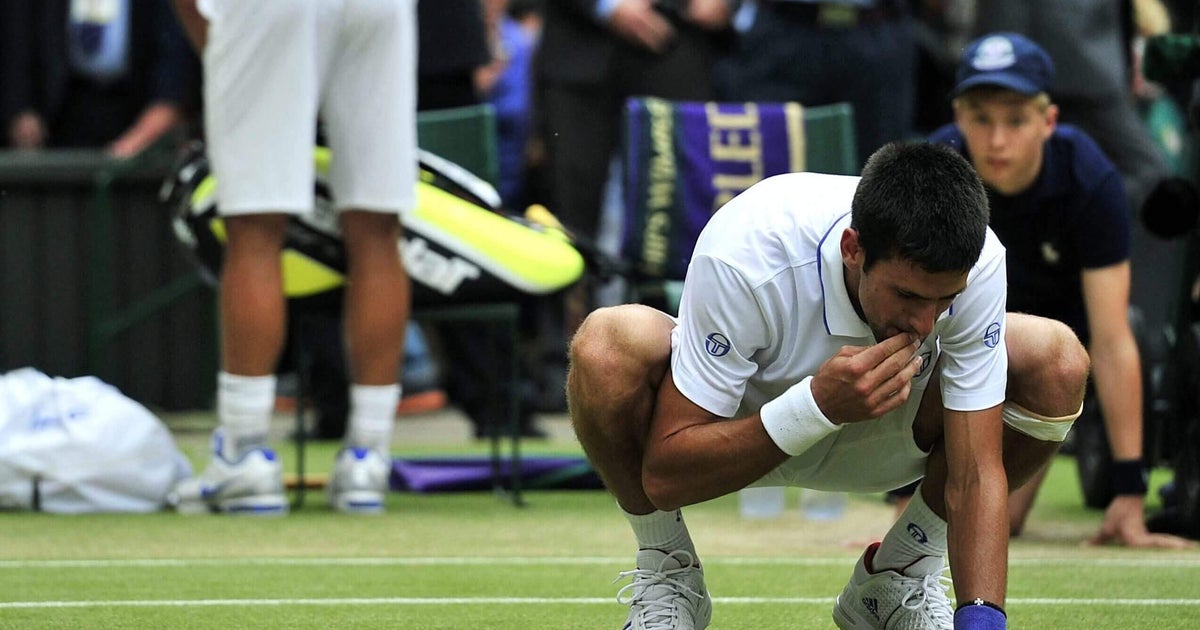
Английн шигшээ багийн дасгалжуулагч Томас Тухель Дэлхийн аварга шалгаруулах тэмцээний үеэр Мексикийн эсрэг 3-2-ын харьцаатай хожсон тоглолтын дараа талбайн зүлгийг идэж амжаагүйдээ харамсаж буйгаа илэрхийлжээ.
Томас Тухель энэхүү ялалтын мөчийг бие сэтгэлдээ үүрд хадгалахын тулд Estadio Azteca цэнгэлдэхийн зүлгийг идэх ёстой байсан гэж Английн хөлбөмбөгийн холбооны баримтат кинонд дурдсан байна. Түүний энэхүү хачин жигтэй хүсэл нь спортын ертөнцөд ялалтын дараах өвөрмөц зан үйлийг дахин нэг удаа сануулав.
Спортын түүхэнд ийм төрлийн сонирхолтой уламжлал олон байдаг бөгөөд үүнийг теннисчин Новак Жокович Уимблдоны тэмцээнд түрүүлэх бүртээ төв талбайн зүлгийг иддэг үйлдлээрээ алдаршуулсан юм. Мөн Америкийн авто уралдааны Indy 500 тэмцээний ялагчид сүү ууж, бие рүүгээ асгах заншил 1936 оноос хойш тогтжээ.
Олимпын наадмын алтан медальтнууд олимпын таван цагариг бүхий шивээс хийлгэж ялалтаа тэмдэглэдэг бол Америкийн хөлбөмбөгийн лигт Талархлын баярын өдөр амжилттай тоглосон тоглогчдод цацагт хяруулын гуяыг шагнал болгон өгдөг уламжлал бий. Гольфын спортод тэмцээний аварга нь 18 дахь нүхний ойролцоох усан санд үсэрч баяраа тэмдэглэдэг бол коллежийн сагсан бөмбөгийн тэмцээнд ялалт байгуулсан багийнхан торны хэсгийг хайчилж дурсгал болгон авдаг заншилтай.
Дэлгэрэнгүйг эх сурвалжаас харах
↓Эх сурвалжийг нээх ↓
Sometimes spontaneous celebrations are so good that they continue as traditions decades later.
England manager Thomas Tuchel’s admission that he wishes he had eaten some grass from the Estadio Azteca pitch after their 3-2 victory against Mexico at the World Cup led us to look at some of sport’s quirkiest celebrations. Many have become an expectation during tournament celebrations.
“I texted a friend after the match,” Tuchel said in a new documentary by the English Football Association. “And I just wrote: I regret that I didn’t eat some grass after the match, to keep something from this in my body forever. That was the feeling. It was the moment.”
From fat-free milk and turkey legs to tattoos, here’s what sportspeople do to savour winning moments.
Eating grass
Tuchel isn’t the only one fond of the idea of digesting grass. Novak Djokovic is well known for it. The tennis star eats the grass from Centre Court at Wimbledon whenever he wins the men’s singles there. His first victory was in 2011, and he has won the tournament six times since.
“It’s a little tradition obviously,” Djokovic told the BBC. “As a kid I was dreaming of winning Wimbledon, so, like every child, you dream of doing something crazy when you actually achieve it, if you achieve it, and that was one of the things.”
There are also players, such as Australian rules footballer Matt Rowell, who eat grass before games. Former American football college coach Les Miles ate grass during games.
Matt Rowell eats grass before an AFL match in 2023 (Paul Kane/Getty Images)
Chugging milk at the Indianapolis 500
The Indy 500, first held in 1911, is one of motorsports’ most prestigious events — part of the Triple Crown with the 24 Hours of Le Mans and the Monaco Grand Prix.
What would be your first request after 500 miles of racing? For Louis Meyer, after winning the race for the third time, it was a glass of buttermilk to quench his thirst.
Since that occasion in 1936, a tradition has been established that the winner of the race is handed a cold bottle of milk by local dairy farmers.
Beforehand, drivers are asked for their milk preferences: fat-free, two per cent or whole milk. Whole milk is the most popular choice, according to the American Dairy Association of Indiana. Winners then chug the milk and pour it over themselves as part of the celebrations.
It’s a healthier version of the Bundesliga’s (the top-tier German soccer league) beer showers.

Josef Newgarden celebrates by pouring milk on his head after winning the 107th Indy 500 in 2023 (James Gilbert/Getty Images)
Olympic symbol tattoos
Some of the most popular sporting tattoos are the Olympic rings, an exclusive ink for the world’s best athletes to celebrate achievements at the games.
“It’s become a rite of passage,” Chris Jacobs told USA Today. “It’s almost like a little card for a somewhat exclusive club.”
The U.S. swimmer Jacobs, 59, got his tattoo after winning two gold medals and a silver at the 1988 Summer Olympics in Seoul and is credited with starting the trend.
“I wanted to mark that period in my life,” Jacobs said.
Olympic champions Simone Biles, Suni Lee, Michael Phelps and Noah Lyles have all inked the symbol on their bodies.
Frenchman Pierre de Coubertin, known as the modern father of the Olympic Games, designed the symbol.
The five rings represent the continents “won over to Olympism”, says the Olympic website, and the five colours of the rings plus the white background incorporate the colours of every country.

Simone Biles’ Olympic tattoo (Loic Venance/AFP via Getty Images)
Turducken on NFL Thanksgiving
Roast turkey is synonymous with the U.S. holiday Thanksgiving. As is NFL football, with games on Thanksgiving dating back to 1934.
It was John Madden, who the NFL video game is named after, who introduced the turkey leg as a trophy. Madden won the Super Bowl as a coach in 1977 with the Oakland Raiders and went on to be a revered commentator.
He was on Thanksgiving broadcasts from 1981 to 2001 and, in 1989, awarded a turkey leg to defensive end Reggie White after the Philadelphia Eagles’ defence dominated the Dallas Cowboys in a 27-0 win.
“It’s an honour for guys to get up there because you had to do something,” George Teague, the former Cowboys safety, told The Athletic in 2023. “You’ve got to have some kind of name or something to get called up there to the table to get some. I was never asked. My turkey-day games weren’t good enough, I guess.”
The turkeys would be delivered to the field for the best players that game to eat on camera.
They later appear to have six legs, to accommodate more standout players, before Madden added turducken (a turkey stuffed with boneless duck that is stuffed with boneless chicken) to the tradition in 1997.
Madden died on December 28, 2021, at age 85 but star players are still brought over to tuck into the legs on the Thanksgiving broadcasts.

Deebo Samuel eats a turkey leg in 2023 (Steph Chambers/Getty Images)
The Champion’s Leap
Another spontaneous moment turned tradition started in 1988 when Amy Alcott won the Chevron Championship and celebrated by jumping in the pond by the golf course’s 18th hole.
“It was just a moment of pure excitement. That’s part of my personality. I said, ‘What the hell’,” Alcott told the Los Angeles Times in 2011.
She repeated the celebration in 1991 with tournament co-founder and entertainment legend Dinah Shore. After Shore died in 1994, every winner has made the ‘Championship Leap’ and poses with the trophy in a bathrobe after re-emerging.
Mission Hills Country Club in California hosted the event from its inception in 1972 to 2022, but the championship moved near Houston in 2023 to be closer to the headquarters of the new sponsor, Chevron.
The next venue, the Club at Carlton Woods in The Woodlands, Texas, installed a temporary pier for champions to jump off into a lake that stretched from their ninth to 18th hole. The lake was cleaned, and netting was used to keep out animals.
But the event moved again in 2026, and the Memorial Park Golf Course in Houston had no water near its 18th green, so they spent roughly $60,000 to build a 4ft-deep plunge pool.
“You’re on the 18th green, what are we going to do to the champion if we don’t have a bathrobe? It’s just a thing. People are used to seeing it. Well, if you’re going to give a bathrobe, you better have a pond,” the event’s executive director, Glenn Weckerlin, told Golfweek.
Nelly Korda won the championship in 2026 and jumped in, but they are building a larger, permanent water hazard by the 18th green ready for next year.

Nelly Korda leaps in after winning in 2024 (Andy Lyons/Getty Images)
NCAA net cutting
Across college men’s and women’s basketball, winning a conference tournament, advancing to the Final Four, or winning any trophy warrants cutting down the net.
When North Carolina State won the Southern Conference tournament in 1947, head coach Everett Case brought the tradition to the college game by climbing on his players’ shoulders to cut the net as a souvenir.
Players and coaches continue to prop up a ladder and take turns cutting off parts of the net from the hoop used in their victorious games.
The NCAA has official scissors (Fiskars) and ladder suppliers (Werner). Many of these traditions are encouraged by the cunning marketers.
Occasionally accidents do happen. Former North Carolina head coach Roy Williams missed the net and cut his hand during a regional championship celebration in 2016.
“I’ve got some vertigo issues, and I was up there on the ladder, and I felt like it was sort of moving a little bit as I was trying to cut the net,” Williams told the New York Times.
“And I missed the net and cut my finger, and then I tried to macho it real well and hide it from everybody. And it was bleeding like crazy down there, and they ended up putting four or five stitches in it in the locker room.”

