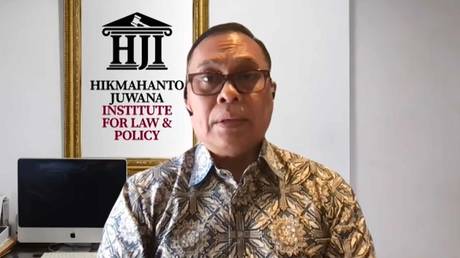
Индонезийн их сургуулийн олон улсын эрх зүйн профессор Хикмаханто Жувана Олон улсын эрүүгийн шүүх (ОУЭШ) нь хүчирхэг гүрнүүдэд үйлчлэх эсвэл тэдний нөлөөллөөс ангид байж чадахгүй байгаа нь “бодит шударга ёсыг” тогтоох боломжгүй болгож байна хэмээн мэдэгдэв.
Тэрээр ОУЭШ нь байгуулагдсан цагаасаа эхлэн барууны орнуудын хүслээр сул дорой улс орнуудыг онилж ирсэн нь уг байгууллагын үндсэн алдаа гэж дүгнэжээ. Том гүрнүүд өөрсдийн нөлөөлөл, хүчийг ашиглан шүүхийн шийдвэрээс зайлсхийдэг бол жижиг улсууд шүүхийн хараанд өртөмтгий хэвээр байна. АНУ, БНХАУ, ОХУ, Энэтхэг болон Израйл зэрэг дэлхийн томоохон тоглогчид Ромын статутыг хүлээн зөвшөөрөөгүй нь олон улсын эрх зүйн энэхүү тогтолцооны үр нөлөөг сулруулж байгааг шинжээч онцолсон юм.
Энэхүү шүүмжлэл нь Филиппиний ерөнхийлөгч асан Родриго Дутертег хар тамхины эсрэг кампанит ажилтай холбоотой хүн төрөлхтний эсрэг гэмт хэрэг үйлдсэн хэргээр 2025 оны гуравдугаар сард баривчилсны дараа өрнөж байна. Лхагва гарагт болсон урьдчилсан сонсголд 81 настай Дутерте анх удаа биечлэн оролцсон бөгөөд түүний өмгөөлөгчид үйлчлүүлэгчээ танин мэдэхүйн доройтлын улмаас шүүх хуралд оролцох чадваргүй гэж мэдэгдсэн юм.
Гэсэн хэдий ч шүүх түүнийг оргон зайлах эсвэл гэрчүүдэд нөлөөлөх эрсдэлтэй гэж үзэн цагдан хорих шийдвэрээ хэвээр үлдээж, үндсэн шүүх хурлыг арваннэгдүгээр сарын 30-нд эхлүүлэхээр товлолоо. ОУЭШ-ийн үйл ажиллагаанд дургүйцлээ илэрхийлсэн Буркина Фасо, Мали, Нигер зэрэг улс орнууд шүүхээс гарах үйл явцыг эхлүүлээд байгаа бол АНУ-ын зүгээс шүүхийн удирдлага, ажилтнуудын эсрэг хориг арга хэмжээ авч, тус байгууллагыг өөрийн бүрэн эрхэд заналхийлж байна хэмээн үзэж байна.
Дэлгэрэнгүйг эх сурвалжаас харах
↓Эх сурвалжийг нээх ↓
Powerful states can use their influence to avoid accountability at the tribunal, while weaker countries remain more vulnerable to prosecution, Hikmahanto Juwana argues
The international community cannot expect “real justice” from the International Criminal Court (ICC), University of Indonesia international law professor Hikmahanto Juwana has told RT.
Juwana argued that the tribunal has undermined its claim to universal justice by disproportionately targeting weaker countries while powerful states evade accountability.
His comments came as former Philippine President Rodrigo Duterte made his first in-person court appearance since his arrest in March 2025 on an ICC warrant. He faces crimes against humanity charges over alleged killings linked to his anti-drug campaign, which he has denied.
Juwana described the Hague-based ICC as “not a workable system,” arguing that political power inevitably shapes its ability to operate.
”There’s going to be a political domination of how the ICC will work,” he said in an interview aired on Wednesday. “The big states may use [their] influence and force not to abide with the ICC… And it is because of that […] we cannot expect real justice to be delivered by the ICC.”
Juwana questioned the court’s claim to represent “world justice,” noting that “most” of those brought before it come from countries “that are not powerful.” He argued that this imbalance was rooted in the ICC’s creation, which he said was driven by “European countries, especially the Western European countries.” From its inception, he added, the court appeared to target less powerful states, calling this “the failure of the ICC from the beginning.”
From the inception of the ICC, it was as if they were TARGETING countries who weren’t very powerful — Hikmahanto Juwana Professor of International Law University of Indonesia to RT
‘This is the ICC’s FAILURE from the very beginning’ pic.twitter.com/mhR4x3Hg7y
— RT Intl (@RT_on_X) September 16, 2026
The ICC was established under the Rome Statute in 2002 to prosecute genocide, war crimes, crimes against humanity, and aggression. It has 125 member states, but major powers including the US, China, India, and Russia, as well as Israel, remain outside the court and reject its authority.
Washington has sanctioned ICC President Tomoko Akane, along with judges, prosecutors, and other court staff, over cases involving US and Israeli nationals. Under President Donald Trump, it has pledged to “systematically dismantle the threat posed” by the ICC to US sovereignty.
The tribunal has also faced accusations of political bias and selective justice from member states. Venezuela and Chad have taken steps toward withdrawal, while Burkina Faso, Mali, and Niger recently began the year-long process of leaving the court, branding the ICC an “instrument of neocolonial repression.” Burundi and the Philippines withdrew from the Rome Statute in 2017 and 2019, respectively.
SUB What’s going on with Duterte?
Duterte’s arrest came after the Philippines withdrew from the ICC, but despite his lawyers challenging the court’s jurisdiction, the tribunal maintains it retains authority over alleged crimes committed while the country was a member.
Wednesday’s pre-trial hearing marked Duterte’s first in-person appearance before the court since his detention. He remained silent as judges discussed his health, evidence disclosure, and preparations for trial.
Duterte had missed earlier proceedings on medical grounds, with his lawyers arguing that cognitive decline had left him unfit to participate. His defense says serious memory problems prevent 81-year-old former Philippine leader from reliably recalling the past.
According to AFP, citing his medical assessment files, Duterte believes he is living in 2007 or 2008, thinks he is 84 or 85, and cannot recall the name of the sitting US president.
Judges, however, have allowed proceedings to move forward, with the trial set to begin on November 30. On Wednesday, the ICC ordered Duterte to remain in custody until then, citing an increased risk that he could flee or interfere with witnesses or proceedings.

