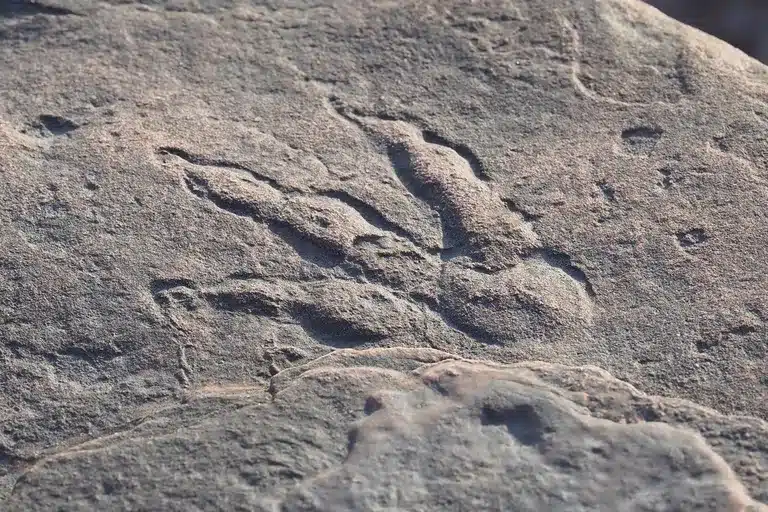
Дөрвөн настай охины санамсаргүйгээр олсон уг олдвор нь эртний үлэг гүрвэлийн хөдөлгөөн болон бүтэц тогтцыг судлахад чухал ач холбогдолтой юм.
Уэльсийн Бэндрикс Бэй эрэг дээр Лили Уилдэр хэмээх дөрвөн настай охин аавтайгаа зугаалж явахдаа үлэг гүрвэлийн маш тод мөрийг олжээ. Олдворыг олсны дараа мэргэжилтнүүд хуулийн дагуу зөвшөөрөл авч, тус газраас гарган авснаар National Museum Cardiff-д хадгалуулахаар шилжүүлсэн байна.
Триасын галавын үед буюу 220 орчим сая жилийн тэртээд хамаарах энэхүү мөр нь 10 см урттай бөгөөд 75 см орчим өндөртэй, хоёр хөл дээрээ явдаг, жижиг амьтан болон шавжаар хооллодог үлэг гүрвэлийнх байж болзошгүй гэж судлаачид таамаглаж байна. Тухайн үлэг гүрвэлийн төрөл зүйлийг нарийн тодорхойлох боломжгүй ч, олдворын хадгалагдалт маш сайн байгаа нь хөлийн ул болон хумсны мөрийг тод харуулж байгаагаараа онцлог юм.
National Museum Wales-ийн палеонтологичдын үзэж буйгаар, энэхүү олдвор нь тус эрэг дээр өмнө нь олдож байсан бусад олдворуудаас хамгийн сайн хадгалагдсан нь ажээ. Өмнө нь тус бүс нутгаас олдсон мөрүүд нь ихэвчлэн матар төст хэвлээр явагчидтай холбоотой байсан тул энэхүү шинэ олдвор нь үлэг гүрвэлийн хувьслын эхэн үеийн анатомийн бүтцийг судлахад шинэ сэжүүр болно хэмээн эрдэмтэд дүгнэж байна.
Дэлгэрэнгүйг эх сурвалжаас харах
↓Эх сурвалжийг нээх ↓
A four-year-old’s sharp eyes have led to the discovery of a remarkably well-preserved dinosaur footprint on a Welsh beach, one so clear that scientists say it could help unlock secrets about how early dinosaurs actually moved. Lily Wilder made the find at Bendricks Bay, near Barry in the Vale of Glamorgan, while out walking with her father in January. Experts have since removed the fossil and taken it to National Museum Cardiff for preservation.
The footprint is thought to be around 220 million years old, dating back to the Triassic period, not long after dinosaurs first emerged. Bendricks Bay has long been recognised as one of the most important sites in Britain for tracking this early chapter of dinosaur history.
Palaeontologists say the level of detail preserved could offer fresh insight into dinosaur anatomy at a pivotal evolutionary moment, when different dinosaur groups were just beginning to branch apart.
A Chance Find on a Family Walk
It was an entirely ordinary walk, until Lily spotted the footprint and pointed it out to her father, Richard. Her mother, Sally, recalled that Richard photographed it and brought the image home.
“Richard thought it was too good to be true. I was put in touch with experts who took it from there,” she said.
According to National Museum Wales, once experts were shown the photograph, they moved quickly to get involved. The footprint itself measures just 10 cm in length, and researchers believe it was left by a dinosaur standing around 75 cm tall, a relatively small, slender creature. While it’s impossible to identify the exact species responsible, the animal is understood to have walked on its two hind legs and actively hunted smaller animals and insects.
Why This Specimen Matters So Much?
Cindy Howells, palaeontology curator at National Museum Wales, didn’t hold back in her assessment, describing it as the best specimen ever found on that particular beach. That’s a significant claim given how many footprints have turned up at Bendricks Bay over the years.
What sets this one apart is its preservation quality. As reported by the statement, the print is clear enough to show individual pads and even claw impressions, detail that could help scientists better understand the actual structure of early dinosaur feet.

Similar tracks found in the United States have been attributed to Coelophysis, a small hunting dinosaur, and researchers suspect this Welsh footprint may share a similar origin, though nothing is confirmed. By contrast, other specimens previously found at Bendricks Bay are believed to belong to more crocodilian type reptiles rather than dinosaurs, making this find harder to come by.
Protecting a Site of National Importance
Removing a fossil from Bendricks Bay isn’t as simple as picking it up. Because the site holds special scientific status, permission had to be sought from Natural Resources Wales before the footprint could be legally extracted, a process completed just this week.
The South Wales group of the Geologists’ Association has called Bendricks Bay the best site in Britain for dinosaur tracks of the Triassic period, and its guidance highlights just how easy it is to miss these ancient traces.
“Its spectacular preservation may help scientists establish more about the actual structure of their feet as the preservation is clear enough to show individual pads and even claw impressions,”said the museum.
Enjoyed this article? Subscribe to our free newsletter for engaging stories, exclusive content, and the latest news.

