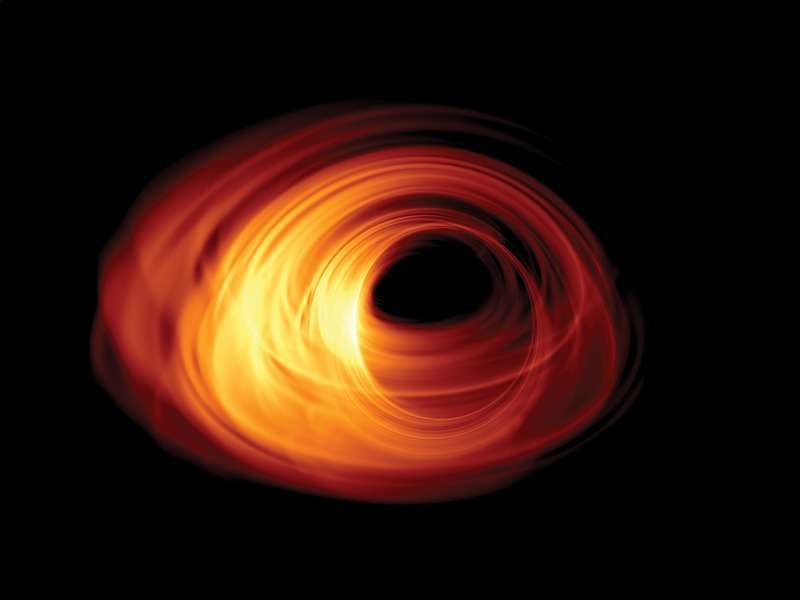
Жэймс Вэбб сансрын дурангийн ажиглалтаар илрүүлсэн эртний галактикуудын хар нүхний үр хөврөл хэрхэн үүссэнийг судлаачид онолын хувьд тайлбарлав.
Жэймс Вэбб сансрын дурангийн тусламжтайгаар Их тэсрэлтээс хойш нэг тэрбум хүрэхгүй жилийн дараа оршин байсан олон тооны галактикуудыг илрүүлсэн нь одон орон судлаачдыг гайхшруулсан юм. Эдгээр галактикт агуулагдах хэт их масстай хар нүхнүүдийн үр хөврөл нь оддын мөхлөөр үүсдэг гэх уламжлалт загвартай зөрчилдөж байв. Энэхүү зөрүүг тайлахын тулд олон улсын эрдэмтдийн баг эртний галактикуудын төвд хүйтэн хийн үүлс шууд нуран унах замаар хар нүх үүсдэг “шууд нуралт” (DCBH) гэх үзэгдлийг судалжээ.
Эдинбургийн их сургуулийн одон орон судлаач Алессандро Тринкоор удирдуулсан уг баг “Lambda Cold Dark Matter” (ΛCDM) сансар судлалын загварыг ашиглан хар бодисын нэгдлийн түүхийг загварчилсан байна. Судлаачид GIZMO код болон Cosmic Archaeology Tool (CAT) хэмээх хагас аналитик загварыг ашиглан хар бодисын гало болон бодисын бүрэлдэхүүнийг симуляц хийжээ. Ингэснээр эртний галактикуудын төвд хар нүх үүсэхэд таатай орчин бүрдүүлдэг хий, тоос, оддын нягтаршил болон хар бодисын нөлөөг тодорхойлсон байна.
Судалгааны үр дүнд хэт их масстай хар нүхний үр хөврөл Их тэсрэлтээс хойш 13.64 тэрбум жилийн өмнө буюу 500 сая хүрэхгүй жилийн дараа үүсэх боломжтойг тогтоов. Энэхүү үйл явц ойролцоогоор 13.5-13.4 тэрбум жилийн өмнө, хамгийн анхны “Population III” одод супернова дэлбэрэлтээр устаж, сансар хоорондын орчинд металл ялгарч эхлэх хүртэл үргэлжилсэн байна.
Эрдэмтдийн боловсруулсан энэхүү онолын хүрээ нь хэт их масстай хар нүхнүүд яагаад ийм эрт үүссэнийг тайлбарлах ач холбогдолтой юм. Цаашид Жэймс Вэбб сансрын дурангаар хийх ажиглалтууд нь өндөр нягтаршилтай орчинд үүссэн хар нүхний нэр дэвшигчдийг илрүүлж, судалгааны үр дүнг баталгаажуулах боломж олгоно гэж үзэж байна.
Дэлгэрэнгүйг эх сурвалжаас харах
Эх сурвалжийг нээх ↓
When the James Webb Space Telescope pointed its powerful instruments toward the early Universe, scientists were surprised by what it found. At high-redshift (z) values, corresponding to less than one billion years after the Big Bang, astronomers witnessed an abundance of galaxies that hosted what appeared to be the “seeds” of supermassive black holes (SMBHs). The existence of such massive black holes so early in the Universe challenged existing models of black hole formation, in which stars collapse at the end of their lives to form black holes that gradually come together to create SMBHs.
This led astronomers to consider a different pathway where massive clouds of cold gas coalesced at the center of early galaxies and collapsed to form black holes – known as the Direct-Collapse Black Hole (DCBH) scenario. However, there remain a lot of unanswered questions about the environments in which these DCBHs formed. To investigate this, an international team of astronomers considers how Dark Matter mergers and regions of space packed with massive amounts of gas, dust, and stars (cosmic overdensities) are favorable environments for forming SMBH “seeds.”
The research was led by Alessandro Trinca, a Postdoctoral Research Associate at the University of Edinburgh’s Institute for Astronomy and Royal Observatory. He was joined by researchers from the Como Lake Center for Astrophysics, the INAF Osservatorio Astronomico di Roma, the INAF Osservatorio di Astrofisica e Scienza dello Spazio di Bologna, the Institute of Science and Technology Austria (ISTA), the Institut d’Astrophysique, the Sapienza School for Advanced Studies, and multiple universities. The paper describing their work appears in the Monthly Notices of the Royal Astronomical Society (MNRAS).
Little Red Dots are extremely compact objects recently observed by NASA’s James Webb Space Telescope. Credit: NASA
Central to teams’ work is the concept of Dark Matter (DM) merger trees. Within the Lambda Cold Dark Matter (ΛCDM) cosmological model, DM halos are theorized to have formed through the merger of smaller clumps. This is similar to earlier theories of SMBH formation, which suggested they formed through mergers of smaller stellar-mass and intermediate-mass black holes. The team combined high-resolution N-body simulations of these trees with a semi-analytic model of BH formation and galaxy co-evolution.
The halo merger history was simulated using the cosmological zoom-in software based on the GIZMO particle-based code. This was followed by simulations of the baryonic (aka. “visible” matter) component in all the progenitor halos using the Cosmic Archaeology Tool (CAT), a semi-analytic model used to interpret the properties of observed high-redshift sources and test different black hole evolution scenarios against observations. As the team wrote:
This allowed us to trace the abundance, spatial distribution, and environmental conditions of haloes capable of forming DCBHs over cosmic time, exploring how these trends depend on the specific physical requirements for heavy seed formation… Building on this, we focused on predicting the observational features of the population of DCBH descendants expected to reside near high-redshift quasars at z ~7 [12.9 billion years ago].
The results revealed that massive black hole seeds could form via direct collapse as early as 13.64 billion years ago (less than 500 million years after the Big Bang). This would have continued until about 13.5 to 13.4 billion years ago, at which point metal enrichment of the intergalactic medium (IGM) – caused by the earliest Population III stars exploding in supernovae – would have inhibited further episodes of direct collapse. These results bolster the case for the DCBH scenario and present opportunities for future JWST surveys. As the team concluded:
Our results provide a theoretical framework to test the conditions that favor heavy seed formation and to assess the role of direct collapse as a pathway to the SMBH population observed at very high redshift. The possible identification of a large population of quasar-companion AGN candidates in future surveys would represent a strong indication that early massive [black hole] formation preferentially occurs in highly clustered, overdense environments, and the number of detectable systems predicted here will serve as a concrete benchmark for upcoming observational campaigns.
Further Reading: MNRAS

