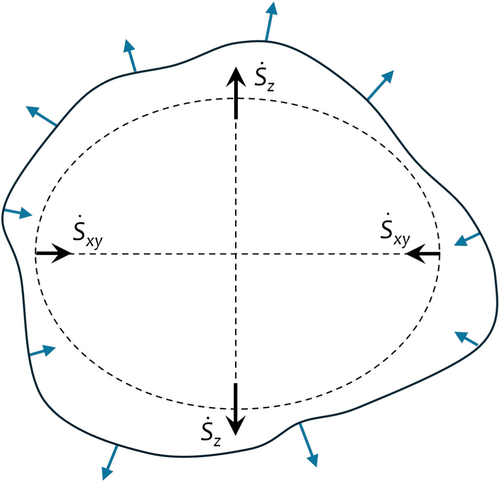
Грекийн Аристотелийн нэрэмжит Тессалоникийн их сургуулийн судлаачид дэлхийн туйл болон экваторын бүсийн хөрсний босоо чиглэлийн хөдөлгөөнийг судалж, гаригийн хэлбэр өөрчлөгдөж байгааг тогтоожээ.
Journal of Geophysical Research: Solid Earth сэтгүүлд нийтлэгдсэн уг судалгаагаар 1997-2015 оны хооронд дэлхийн туйлын бүс нутаг илүү хурдацтай өргөгдөж, харин экваторын бүс нутаг доош суулт өгч байгааг GNSS сүлжээний ажиглалтаар илрүүлжээ. Тухайлбал, туйлын бүс нутгийн өргөгдөх хурд 1997 онд жилд 0.5 мм байсан бол 2015 он гэхэд 1 мм болж нэмэгдсэн байна. Энэхүү үйл явц нь дэлхийн хатуу гадаргуугийн хэлбэр бага зэрэг өөрчлөгдөж, илүү дугуй хэлбэрт шилжиж байгааг илтгэж байгаа аж.
Судлаач Кристофер Коцакисын тайлбарласнаар, мөсөн бүрхүүл хайлах нь гаригийн гадаргуугийн ачааллыг өөрчилж, улмаар хөрсний хөдөлгөөнд нөлөөлдөг байна. Мөс багасах үед тухайн бүс нутгийн газар өргөгдөж, хайлсан ус далайд хуримтлагдах нь далайн ёроолд нэмэлт ачаалал үүсгэн, дэлхийн царцдасыг деформацид оруулдаг ажээ.
Энэхүү судалгааны үр дүнд дэлхийн физик гадаргуугийн хэлбэр болон таталцлын орон (geoid)-д суурилсан хэлбэр нь зэрэгцэн өөрчлөгдөж байгааг тогтоосон байна. Хэдийгээр хатуу гадаргуугийн хувьд дэлхий бага зэрэг “бөмбөрцөг” хэлбэрт шилжиж байгаа мэт боловч массын шилжилтийн улмаас таталцлын хэлбэр нь харин ч илүү хавтгайрах хандлагатай байгааг судлаачид онцолжээ. Энэ нь хоёр өөр хэмжигдэхүүн нь физикийн хувьд хоорондоо зөрчилдөхгүй, харин харилцан хамааралтай үйл явц болохыг харуулж байна.
Дэлгэрэнгүйг эх сурвалжаас харах
↓Эх сурвалжийг нээх ↓
Earth’s solid surface is undergoing a measurable global deformation, with its polar regions rising faster while areas closer to the equator sink. New research published in the Journal of Geophysical Research: Solid Earth shows that this process accelerated between 1997 and 2015, revealing how changes in ice, oceans, gravity, and the rocky planet beneath our feet can reshape Earth in different ways at the same time.
Earth’s Poles Are Rising Faster
Earth looks nearly spherical from space, but its rotation means the planet has never been a perfect sphere. Rotation produces a slight bulge around the equator and flattening near the poles, creating a shape scientists can track with increasingly precise geodetic measurements. Christopher Kotsakis, a geologist at the Aristotle University of Thessaloniki in Greece, investigated whether that solid shape has been changing over recent decades. His analysis, published in the Journal of Geophysical Research: Solid Earth, used observations from a global network of Global Navigation Satellite System (GNSS) stations to measure small vertical movements of Earth’s surface from 1997 to 2015. The resulting pattern was global rather than confined to a single region.
Between 1997 and 2000, the polar regions were rising at roughly 0.5 millimeters per year. By 2015, that rate had reached approximately 1 millimeter per year. At lower latitudes, the direction was reversed: the solid surface around the equatorial region was subsiding, and that downward movement also became faster during the period examined.
“Our results indicate an acceleration of polar uplift accompanied by a comparably increasing rate of equatorial subsidence,” Kotsakis writes. Taken together, these vertical movements describe a subtle but measurable alteration of the planet’s rocky figure. “This means that solid Earth’s overall shape is becoming slightly less flattened.”
Credit: Journal of Geophysical Research: Solid Earth
Melting Ice Can Move More Than The Ocean
The mechanism behind these measurements begins with a property of Earth that is easy to overlook on human timescales: the planet’s outer layers can deform under changing loads. When a large amount of mass accumulates on the surface, the material beneath it responds to that weight. Remove the load, and the solid Earth can gradually rise again. One of the clearest examples is glacial isostatic adjustment, the continuing response of Earth to the disappearance of the enormous ice sheets that covered large regions during the last glacial period. Although that period ended thousands of years ago, parts of the crust and mantle are still adjusting. Modern ice loss introduces another source of changing surface loads.
Greenland and Antarctica are losing ice, reducing the mass pressing down on the solid Earth beneath them. As that load diminishes, the underlying land can rise. The melted ice does not disappear from the Earth system, though. Water entering the oceans redistributes mass across the planet and places additional weight on the ocean floor. That creates a linked response: unloading in ice-covered regions, redistribution of water through the oceans, and deformation of the solid planet beneath both. The GNSS measurements examined by Kotsakis capture part of this evolving global geometry. Rather than viewing sea-level change only as water moving vertically against a fixed coastline, the findings underline that the land and seafloor themselves are moving, sometimes in opposite directions and for overlapping reasons.

Earth’s Gravity Tells A Different Story
The most striking part of the research emerges when the changing solid Earth is compared with the geoid, the irregular gravitational figure scientists use to describe Earth according to its mass distribution. The geoid is not the same thing as the physical outline of the rocky planet. Gravity responds to where mass is located, while GNSS stations can measure how the physical surface moves. Scientists have tracked changes associated with Earth’s mass distribution for decades. During the 1980s and much of the 1990s, changes in the geoid broadly followed patterns expected from long-term glacial isostatic adjustment. Near the end of the 1990s, the observed trend changed. Kotsakis’s analysis indicates that the solid Earth and the gravitational figure can subsequently evolve in apparently contradictory directions.
As the poles rise and equatorial regions subside, the solid Earth becomes less flattened. Yet the redistribution of mass associated with water can push the gravitational figure in the other direction, making the geoid increasingly flattened. “While this behavior may appear counterintuitive when considered alongside the concurrent decrease in the solid Earth’s flattening, the two effects are physically compatible,” Kotsakis writes. The apparent contradiction disappears once physical elevation and mass distribution are treated as related but distinct properties. Earth can therefore become geometrically rounder in one measurement while its gravity-defined figure becomes more flattened in another.
Why Earth Can Change In Two Directions At Once
The key is following where the mass goes. Imagine ice resting on a polar landmass as an immense weight. When some of that ice melts, the load on the solid Earth is reduced, allowing the ground beneath it to rebound upward. The resulting meltwater is redistributed through the ocean system, transferring some mass away from high latitudes. That transfer changes both the mechanical loading of the solid Earth and the planet’s gravitational field. The two measurements consequently do not have to move together. GNSS observations record physical displacement of the surface, while measurements related to the geoid describe the gravitational consequences of moving mass around the planet. If polar regions rise while lower latitudes subside, the solid planet becomes slightly less oblate.

At the same time, shifting mass from polar ice into ocean water at lower latitudes can alter the gravitational figure in a way that increases its flattening. This distinction explains why describing Earth simply as becoming “rounder” or “flatter” misses part of the physics. Both descriptions can apply, provided they refer to different quantities. The effect is extremely small compared with Earth’s dimensions and would never be visible simply by looking at the planet from orbit. Modern geodesy, though, is capable of detecting surface motion measured in fractions of millimeters to millimeters per year, turning tiny changes into a record of how the planet responds to shifting loads.
Enjoyed this article? Subscribe to our free newsletter for engaging stories, exclusive content, and the latest news.

