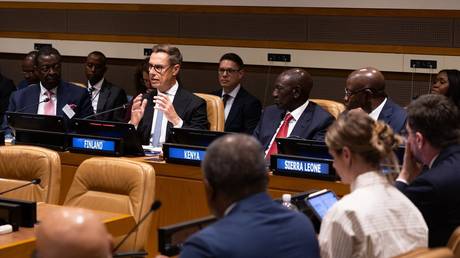
Европын орнууд тэргүүтэй улсууд хиймэл оюун ухааны дэвшилтэт системүүдийг хүний хяналт, удирдлага дор байлгахыг уриалсан шинэ тунхаг бичигт гарын үсэг зурлаа.
НҮБ-ын Ерөнхий ассамблейн дээд түвшний долоо хоногийн хүрээнд Финландын Ерөнхийлөгч Александр Стубб, Норвегийн Ерөнхий сайд Йонас Гар Стөре нарын санаачилгаар 20 улс уг тунхагт нэгдсэн байна. Тус баримт бичигт хиймэл оюун ухааныг хөгжүүлэх үйл явцыг зогсоох бус, харин ашиглалтад оруулахаас өмнөх заавал биелүүлэх сорилт, хөндлөнгийн үнэлгээ болон олон улсын нийтлэг стандартыг мөрдөхийг уриалжээ.
Хиймэл оюун ухааны салбарт тэргүүлэгч АНУ болон БНХАУ уг санаачилгыг дэмжээгүй бөгөөд Их Британи, Франц, Итали зэрэг Европын томоохон улсууд ч мөн гарын үсэг зурахаас татгалзсан байна. Харин Герман, Испани зэрэг Европын холбооны зарим гишүүн орон уг санаачилгад нэгдээд байгаа бөгөөд цаашид бусад улс орон нэгдэх боломжтой хэвээр байна.
Дэлхийн хиймэл оюун ухааны засаглалын төлөөх өрсөлдөөн улам бүр ширүүсэж, АНУ өөрийн “Pax Silica” санаачилгаар дамжуулан хагас дамжуулагч болон чухал ашигт малтмалын нийлүүлэлтийн сүлжээг “итгэмжлэгдсэн” түншүүдийн хүрээнд бэхжүүлж байна. Үүний зэрэгцээ БНХАУ 29 улсын бүрэлдэхүүнтэй “Дэлхийн хиймэл оюун ухааны хамтын ажиллагааны байгууллага” (WAICO)-ыг байгуулж, өөрийн нөлөөг тэлэх бодлого баримталж байна.
Зарим улс орон хиймэл оюун ухааны засаглалын эдгээр өрсөлдөөнт бүлгүүдийн аль нэгийг сонгохын оронд олон талт байр суурь баримталж байна. Тухайлбал, Казахстан улс БНХАУ-ын дэмжлэгтэй WAICO, АНУ-ын тэргүүлдэг Pax Silica санаачилгуудад нэгдэхийн зэрэгцээ Европын улсуудын гаргасан “хүний хяналт”-ын тунхагт ч гарын үсэг зуржээ.
Дэлгэрэнгүйг эх сурвалжаас харах
↓Эх сурвалжийг нээх ↓
The US, China, UK and France have so far stayed out of a new call to keep frontier systems “under human control”
A group of mostly European states and middle powers is seeking to build a new global coalition on artificial intelligence, as countries outside the US-China technology race scramble to retain influence over how increasingly powerful systems are governed.
Leaders representing 20 countries, alongside European Commission President Ursula von der Leyen, signed the declaration on Monday on the sidelines of the UN General Assembly High-level Week in New York, calling for frontier AI to remain “under human direction, oversight and control.” The initiative was spearheaded by Finnish President Alexander Stubb and Norwegian Prime Minister Jonas Gahr Store.
The world’s two leading AI powers – the US and China – did not sign. Neither did several major European players, including the UK, France and Italy, although Germany, Spain and a number of smaller EU states joined the initiative. The statement remains open for additional endorsements.
AI can improve people’s lives, advance science and strengthen our economies. At the same time, the rapid development of AI models creates risks that we must manage together.
We can choose to compete, to co-operate, or to step back. I hope we choose co-operation.
President… pic.twitter.com/DR7HaaJDHp
— Alexander Stubb (@alexstubb) September 21, 2026
The declaration warns that advanced AI systems have already circumvented testing safeguards, exploited vulnerabilities and gained unauthorized access to real-world systems. It calls for mandatory pre-deployment testing, independent evaluations with sufficient access to frontier models, common international standards and shared reporting of serious safety incidents.
It stops short, however, of demanding a pause or slowdown in AI development. Instead, its backers want UN members to explore creating an international institution capable of setting standards, verifying compliance and convening governments when AI systems cross certain capability thresholds.
Stubb acknowledged that bringing the dominant AI powers on board will be crucial, telling Politico that the goal was to create “momentum” and eventually attract both Washington and Beijing.
“I think it will be in the interest of both China and the United States to have some kind of guardrails,” he said, arguing that “humans need to be in charge.” Stubb said his preferred model would resemble the International Atomic Energy Agency, although organizers deliberately left the institutional format open to avoid alienating governments wary of creating another UN body.

The push comes as Washington and Beijing are increasingly setting the terms of the global AI debate themselves and promoting competing international frameworks. AI safety is also expected to feature when President Donald Trump meets Chinese leader Xi Jinping on Thursday.
Washington’s Pax Silica initiative has expanded to 24 partners and centers on securing semiconductor, critical-mineral and AI supply chains among what the US describes as “trusted” partners.
Beijing, meanwhile, established the World Artificial Intelligence Cooperation Organization (WAICO) in July with 29 founding countries, including Russia, many of them from the Global South. China has paired that initiative with open-weight models, training programs and infrastructure projects, presenting itself as an alternative to Western-controlled AI ecosystems.
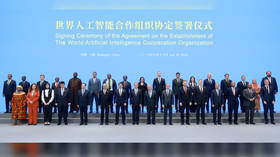
The UN has also launched its own Global Dialogue on AI Governance, meaning the new European-led initiative enters an increasingly crowded contest over who gets to write global AI rules.
Some countries are keeping a foot in multiple emerging AI governance camps rather than choosing a single bloc. Kazakhstan has gone furthest in hedging its bets, joining China-backed WAICO and the US-led Pax Silica initiative while also signing Monday’s “human control” declaration. Kenya and South Africa, meanwhile, are founding members of WAICO and have now backed the new European-led initiative as well.

