Барууны ертөнцөд тулгарч буй эдийн засгийн тогтворгүй байдал болон цэргийн хүчээ ашиглан олон улсын харилцааг өөрчлөх гэсэн оролдлого нь ардчиллын үнэт зүйлсэд сорилт болж байна.
Барууны орнуудын эдийн засгийн загвар нь амьжиргааны түвшинг дээшлүүлэхэд үр дүнгээ өгөхөө больж, нийгмийн үйлчилгээний чанар буурч байгааг шинжээчид тэмдэглэж байна. Үүний зэрэгцээ Газын зурвас дахь Палестинчуудын эсрэг Израйлын явуулж буй ажиллагаа нь барууны орнуудын ёс суртахууны байр сууринд сөргөөр нөлөөлж, олон улсын тавцан дахь нэр хүндийг нь унагалаа. Энэхүү нөхцөл байдал нь барууны нийгмүүдэд улс төрийн туйлшрал болон баруун жигүүрийн үзэл суртлын нөлөөг улам бүр нэмэгдүүлж байна.
Түүхэн баримтуудаас харахад, Вашингтоны гадаад бодлого, тухайлбал ОХУ болон Афганистанд баримталсан бодлого нь олон жилийн турш шүүмжлэлтэй тулгарч байсан ч бодлого боловсруулагчид эдгээр анхааруулгыг үл тоомсорлосон байна. Тухайлбал, 1990-ээд онд ОХУ-д хэрэгжүүлсэн эдийн засгийн “шок эмчилгээ” болон барууны орнуудын цэргийн хүчний оролцоо нь эцэстээ сөрөг үр дагаварт хүргэж, геополитикийн хурцадмал байдлыг улам даамжруулжээ.
Одоогийн байдлаар Герман зэрэг оронд болсон сонгуулиуд нь баруун жигүүрийн хүчнүүд нөлөөгөө бэхжүүлж байгааг харуулж байна. Франц улс төсвийн хэмнэлтийн арга хэмжээ авахаар бэлтгэж байгаа бол АНУ-ын улс төрийн түвшинд Иран улсын эсрэг чиглэсэн мэдэгдлүүд нь олон улсын аюулгүй байдалд сөргөөр нөлөөлж, эрчим хүчний үнийн өсөлтөд нөлөөлсөн хэвээр байна. Энэхүү нөхцөл байдал нь барууны орнуудын элитийн хүрээнийхний бодлого болон нийгмийн бодит байдал хоорондын зөрчлийг гүнзгийрүүлсээр байна.
Дэлгэрэнгүйг эх сурвалжаас харах
↓Эх сурвалжийг нээх ↓
The symptoms of decline are everywhere you look. On Sunday, Germany’s far right won another state election, taking nearly 40% of the vote in Mecklenburg-Western Pomerania. France is preparing a €54bn fiscal squeeze, which could turn the screw still further on a foundering so-called European social model. At the UN general assembly, Donald Trump once again threatened to “annihilate” Iran, even as the fourth failed western war on a Muslim nation this century has added more than $100bn to Americans’ fuel bills.
There is little dispute over the symptoms. The great fight of our age is over the diagnosis, and the right has been winning it for years. Its story is simple and, as the latest German state election underlines, effective: the west is dying because of migrants, Muslims, trans people, “woke” and the “deep state”. So when I told friends I was writing a book called The Fall of the West: How They Really Lost It, they worried I had shape-shifted into Liz Truss, who, after being outlasted in office by a lettuce, produced Ten Years to Save the West.
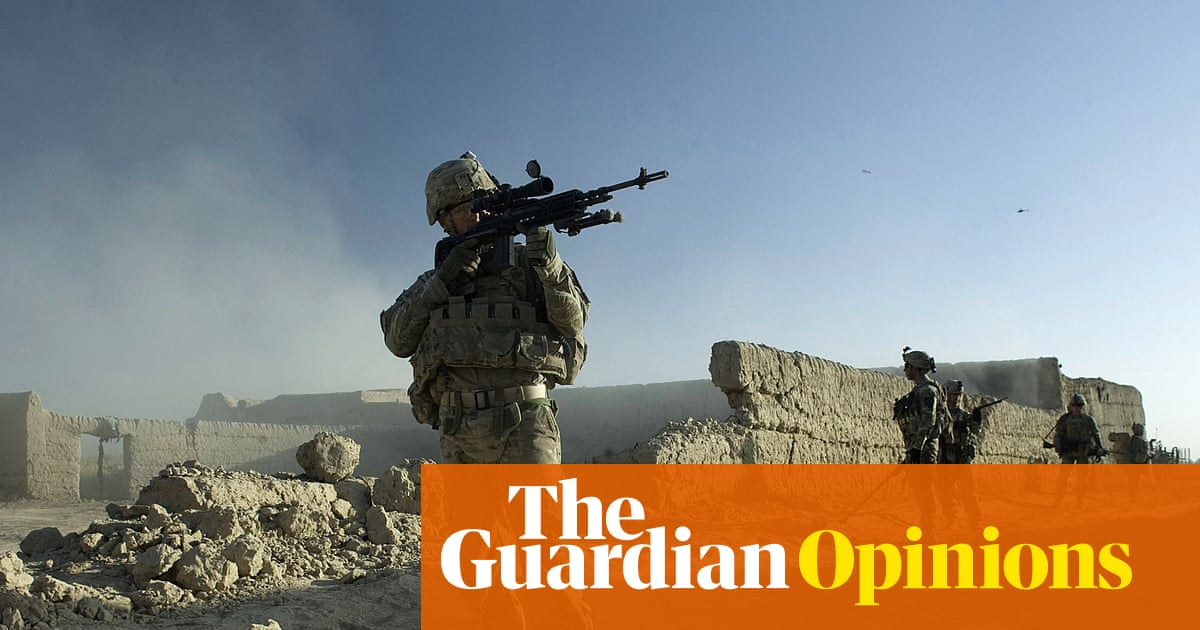
My diagnosis is rather different. The west is in decline because after the cold war, its elites declared a victory from which they have never recovered. They proclaimed an economic model that channelled wealth upwards as the inevitable future, while treating an apparently invincible military as free to reshape the Muslim world. Both convictions were terribly convenient for those who benefited from them. The result has been catastrophic: an economy that no longer delivers sustained improvements in living standards or public services, and western military interventions humiliated in Kabul, Baghdad, Tripoli and now the strait of Hormuz.
Abroad, the west’s claims of moral superiority have been incinerated, not least by Israel’s genocide of the Palestinian people in Gaza. At home, the disillusionment and despair spawned by these overlapping disasters have fuelled the rise of the far right, threatening democracy itself.
What struck me while researching the book was how often people had seen what was coming – and how little difference their warnings had made.
In the spring of 1994, one of the most senior political officers at the US embassy in Moscow sent Washington a long dissenting cable. Its argument was stark enough to make its author an outcast within the foreign-policy establishment.
Wayne Merry is nobody’s idea of a radical. He grew up in a wheat-country settlement in Oklahoma called – no joke – Kremlin, and admired the then Russian president, Boris Yeltsin. But he had spent two years witnessing “shock therapy” – the overnight conversion of a planned economy into a casino – being imposed on the wreckage of the Soviet economy by Washington, Harvard economists and the IMF. He had taken to stuffing his pockets with cash for old women begging in the streets, “because,” he told me simply, “they were starving”.
Russia was ruled by westernisers, but Merry’s cable warned that “democratic forces in Russia are in serious trouble” and that “there is no reason to believe the Russian economy is capable of rapid market reform”. If the US chose “the role of economic missionary rather than true partner”, he predicted, it would strengthen extremists and revive an “adversarial relationship between Russia and the west”.
As Merry told me: “We’re gutting working-class living standards, and then expecting people to vote for us.” Washington’s answer was to make him persona non grata. The cable remained classified for three decades, quietly released only at the end of 2024. By then, one study estimated there had been 12.2 million excess deaths in Russia during the transition. Meanwhile the strongman who rose from the wreckage was nearly three years into his murderous full-scale invasion of Ukraine.
The men who ignored Merry were not coy about their assumptions. Russia had to move towards “our way of doing things,” said Strobe Talbott, President Bill Clinton’s main Russia adviser. If that sounded like “an obnoxious confirmation of our doctrine of exceptionalism”, his answer was simple: “Well, tough. That’s us; that’s the US. We are exceptional.”
This was the basic structural problem of the post-cold war order. It has never gone away. However strong the evidence behind a warning, when it collided with the interests of western power, the warning gave way.
I spent two years travelling from Baghdad to Pittsburgh, and Nairobi to Ramallah, for the book, and Merry’s experience turned out to be less the exception than the rule. In a 2005 interview, the US envoy Edmund McWilliams said he had warned in 1988 that Washington’s Afghan policy was “going very, very badly”, as US weaponry flowed to Islamist fundamentalists. But the overriding objective was defeating the Soviet Union. McWilliams said he was frozen out, smeared as mentally ill, alcoholic and gay, and reassigned. CIA analysts themselves had warned in 1987 that a victorious Islamist regime might inherit a “mountain of weapons” and use them to arm or train Islamist guerrillas elsewhere. The weapons kept flowing.
after newsletter promotion
The same triumphalism took hold at home. Western economies were not starved of wealth: they were increasingly organised to extract it rather than invest it. As the economist Mariana Mazzucato told me, 80% of British finance now flows back into finance, insurance and real estate. Western economies became increasingly good at rewarding ownership, but increasingly bad at building the productive foundations on which prosperity depends.
In early 2007, an executive director of the World Bank told his friend, the economist Ha-Joon Chang, that a huge crisis was coming. His evidence was his cleaner, who he suspected was undocumented: she had a $300,000 mortgage. Stagnant wages had been papered over with cheap credit – “let them eat credit,” as one economist summed up the model – and the paper was about to tear. When it did, the crash should have finished off this failed economic model. Instead, ordinary people were forced to pay to save it, through shredded social provision.
Where this chaotic fall could lead is frightening. Israel’s genocide has normalised limitless depravity. Trumpism has repurposed the rhetoric and institutions of the “war on terror”, now used to target domestic dissent. Authoritarianism and barbarism are entirely plausible futures.
There is another possibility: the left makes a different case. That it was the endless, unchecked pursuit of wealth and power by western elites, at home and abroad, that brought us here, and that the task is to rebuild what Margaret Thatcher sought to destroy – society – by investing the wealth we collectively produce. Or, as the man who wrote that buried cable put it to me: stop gutting people’s living standards and then expecting them to vote for you.
-
Owen Jones is a Guardian columnist. His latest book, The Fall of the West: How They Really Lost It, is published on 1 October. Order your copy at the Guardian bookshop

