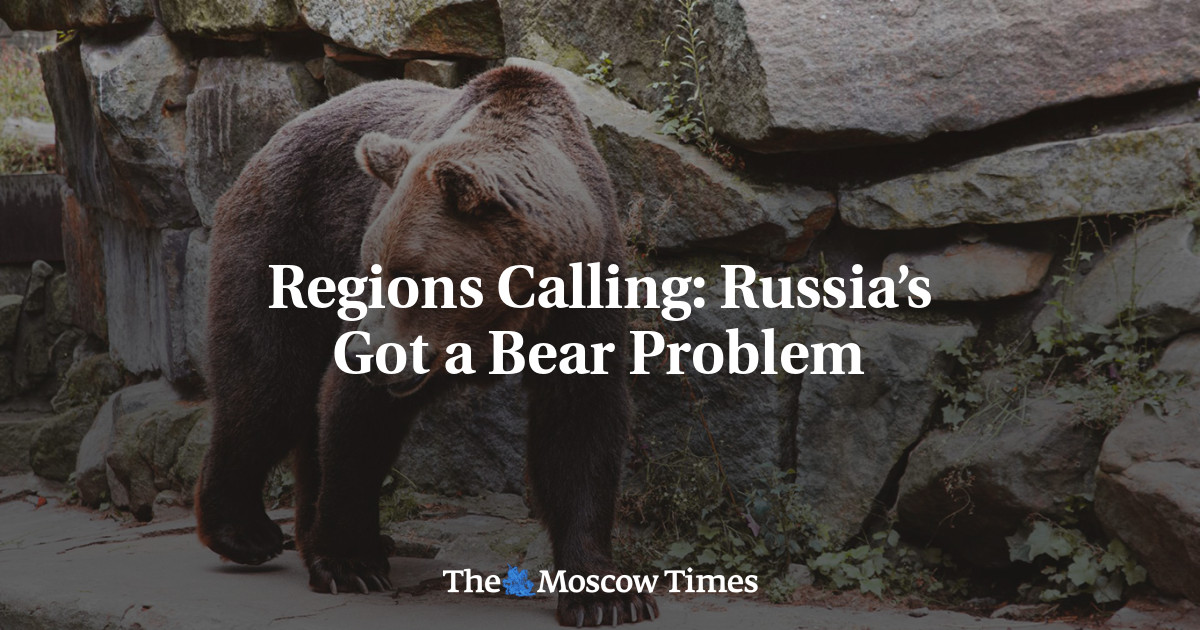
Оросын Холбооны Улсын алслагдсан бүс нутгуудад зэрлэг баавгай суурин газарт нэвтрэн орж, иргэдийн амь насыг хохироох тохиолдол эрс нэмэгдсэнтэй холбогдуулан орон нутгийн эрх баригчид өндөржүүлсэн бэлэн байдал зарлалаа.
ОХУ-ын Алс Хойд, Сибирь болон Алс Дорнодын бүс нутгуудад дөрөвдүгээр сараас хойш нийт 19 хүн баавгайн халдлагад өртөж амиа алдсаныг “The Moscow Times” мэдээлэв. Хамгийн сүүлд Тыва бүгд найрамдах улсад загасчилж явсан иргэн баавгайд бариулж амиа алдсан тохиолдол бүртгэгдсэн бөгөөд Красноярск зэрэг таван бүс нутагт нөхцөл байдал хүндэрч, онцгой байдал тогтоогоод байна. Байгалийн нөөц, экологийн яамнаас үүнийг улирлын чанартай хэвийн үзэгдэл хэмээн тайлбарлаж буй ч хараат бус шинжээчид нөхцөл байдлыг “гамшгийн түвшинд хүрсэн” гэж дүгнэж байна.
Шинжээчдийн үзэж буйгаар уур амьсгалын өөрчлөлтөөс үүдэлтэй дулаан өвөл, ойн түймэр болон самар зэрэг байгалийн гол идэш тэжээлийн хомсдол нь баавгайг суурин газар руу түлхэх гол хүчин зүйл болжээ. Түүнчлэн ан агнуурын сонирхол буурснаар баавгайн тоо толгой 1990 оноос хойш 2.3 дахин өсөж, 307 мянгад хүрсэн нь тэдний хүнээс айх айдас багасахад нөлөөлсөн байна. Зөвхөн наймдугаар сард гэхэд Тыва мужид халдлагыг зогсоох зорилгоор 200 гаруй баавгайг устгасан байна.
Бүс нутгийн удирдлагууд шөнийн цагаар хөл хорио тогтоох, үндэсний цэцэрлэгт хүрээлэнгийн үйл ажиллагааг хязгаарлах зэрэг арга хэмжээ авч байгаа боловч төсөв болон бэлтгэл дутагдалтай байгаагаас иргэд өөрсдийн хүчээр хамгаалалт хийхэд хүрч байна. Шинжээчид хөгжингүй орнуудын жишгээр хог хаягдлын менежментийг сайжруулах нь ирээдүйд үр дүнтэй байж болох ч одоогийн нөхцөлд баавгайг устгахаас өөр сонголтгүй байгааг онцолжээ.
Дэлгэрэнгүйг эх сурвалжаас харах
↓Эх сурвалжийг нээх ↓
Hello and welcome to Regions Calling, your guide to developments from beyond the Russian capital by The Moscow Times.
For centuries, the brown bear has been an integral part of Russia’s political and cultural identity.
While Russia’s adversaries first used the bear in cartoons to mock its large size and clumsiness, Moscow later reappropriated the mascot as a symbol of strength and raw power, even using it as an emblem for the ruling, Kremlin-backed United Russia party.
It is hard not to see a dash of irony in the fact that Russia’s famed bears are now becoming a real threat to thousands of its citizens, terrorizing hundreds of communities across the Far North, Siberia and the Far East.
This week, we look at the causes and possible remedies that could have prevented dozens of fatal bear attacks recorded across the regions in recent months.
But first, a look at the latest news from the regions:
The Spotlight
Motygino, a large village of more than 4,000 inhabitants in the Krasnoyarsk region, is a site of exceptional natural beauty.
To the south, the village faces the Angara River, the fast-flowing and ice-cold outlet of Lake Baikal. Everywhere else, it is surrounded by the taiga — the dense, dark, evergreen but uninviting forest stretching as far as the eye can see. With the closest city, Lesosibirsk, some 128 kilometers (80 miles) to the west, locals here are seemingly used to a solitary coexistence with nature.
Yet even they were hardly prepared for the growing number of bears that have wandered into their village this year.
“The situation is extremely tense. Bears are coming from various directions — several of them every day — and show absolutely no fear of people,” local resident Daria told news outlet 360.ru.
“The game warden and the police, of course, try to drive away the bears, but after some time, sometimes after 40 minutes, the bears come back,” she added.
Reports of often-fatal encounters between humans and bears have been appearing almost daily in Russian media ahead of the hibernation season, with authorities in at least five regions declaring high alert over the rise in attacks.
At least 19 people have been killed in brown bear attacks across regions of the Far North, Siberia and the Far East since April, according to a tally by The Moscow Times.
In the highest-profile incident, Alexander Kuzmenko, the father of NHL player Andrei Kuzmenko, was killed Tuesday while on a fishing trip in the southern Siberian republic of Tyva.
Elsewhere, people have been killed by bears while berry picking, herding livestock, camping or fishing. The majority of attacks have taken place in Siberia’s Krasnoyarsk region.
Russia’s Natural Resources and Environment Ministry has dismissed reports of a possible uptick in bear attacks, saying that it’s normal to see around 30 attacks a year.
“Encounters between brown bears and humans have always been recorded — for as long as people have lived near forests and the taiga,” said the ministry’s press service.
But an independent Russian expert on conservation and study of the brown bear described the situation with bear encounters in Russia as “catastrophic.”
The expert, who requested anonymity for safety reasons, told The Moscow Times that the numerous media reports likely represent just a fraction of the true number, meaning the problem “is extremely pressing.”
“Several factors are at play here, as is usually the case with such a complex problem. But overall, the number of bears is growing and their fear of humans is decreasing,” the expert said.
Russia’s brown bear population is growing as a result of climate change, with milder and shorter winters allowing for more cubs to survive.
By 2026, the population of brown bears in the country surpassed 307,000 — a more than 2.3-fold increase from 1990, according to Natural Resources and Environment Ministry statistics.
As territorial animals, young bears are forced to search for new feeding grounds around them, including in areas where humans live.
Some bears are driven towards human settlements by wildfires — a likely case in the Krasnoyarsk region, where forests in its Arctic north were ablaze this year while its southern districts remained largely unaffected.
“On top of that, this year saw a poor harvest of key forage resources, primarily pine nuts,” the expert explained.
The decreasing popularity of hunting is also aiding brown bear population growth and reducing bears’ fear of humans, according to the expert.
“When bear hunting was widespread…the most cautious bears survived, while the least cautious and most aggressive ones perished during the hunt,” he told The Moscow Times.
“This is true not only in the modern world, where hunters are equipped with firearms. These same mechanisms operated just as they do today 100, 200 or even 500 years ago, when Stone Age humans hunted bears with primitive weapons.”
A resident of a small town in eastern Siberia told The Moscow Times that bears have been frequenting his settlement not just this year, but more often over the past decade.
“In the last 10 years, I encountered five bears in my own yard alone, and two of them had to be killed,” he said on condition of anonymity.
In the first such incident in 2015, a bear entered the man’s yard by climbing over his fence and ate honey from a beehive before falling asleep next to it.
“He woke up and started eating the honey again. He kept coming back for two days until I called the police and hunters arrived,” the man recalled. “I feel sorry for the animals, of course, but it’s also dangerous — about three years ago, a mother bear and two cubs were wandering right through the city.”
At least 200 bears were killed across Siberia in August in an attempt to curb the number of attacks, according to the Forestry Ministry of Tyva, where a high alert was declared in 11 of its 17 districts over bear encounters.
Wildlife management in Russia has been delegated to regional authorities, many of whom have found themselves ill-prepared to address the growing bear threat.
In an attempt to manage the situation, regional governments have introduced nighttime curfews and limited access to national parks and other natural attractions where bears have been spotted, while also trying to cull as many potentially dangerous animals as resources allow.
Yet a lack of preemptive official action has prompted residents of some remote localities to hunt bears themselves — despite the practice being illegal without a permit — or turn to less traditional methods of protection like store-bought sound repellents.
“If a bear came to a settlement once, then no one is safe. He will have to be found by hunters,” the environmental expert told The Moscow Times.
Because bears enter human settlements in search of food and turn to attacking animals and humans after all other sustenance is exhausted, measures like installing specially designed trash cans have proven effective in reducing conflicts with bears in parts of the U.S. and Canada, the expert said.
Yet for Russia, this measure might be too little, too late.
“In this particular year, if you suddenly remove all food from every place where bears can get to it, it will not solve the problem in any way,” he said. “There is currently no alternative to shooting the bears.”
Beauty salon workers in Mezhdurechensk, Kemerovo region, turned their city’s urban decay into the setting for a promotional campaign called “Beauty Amid Chaos.”
Working with photographer and blogger Dmitry Kochergin, they posed beside broken sidewalks, utility excavations and neglected public spaces, with the campaign’s videos drawing hundreds of thousands of views.

