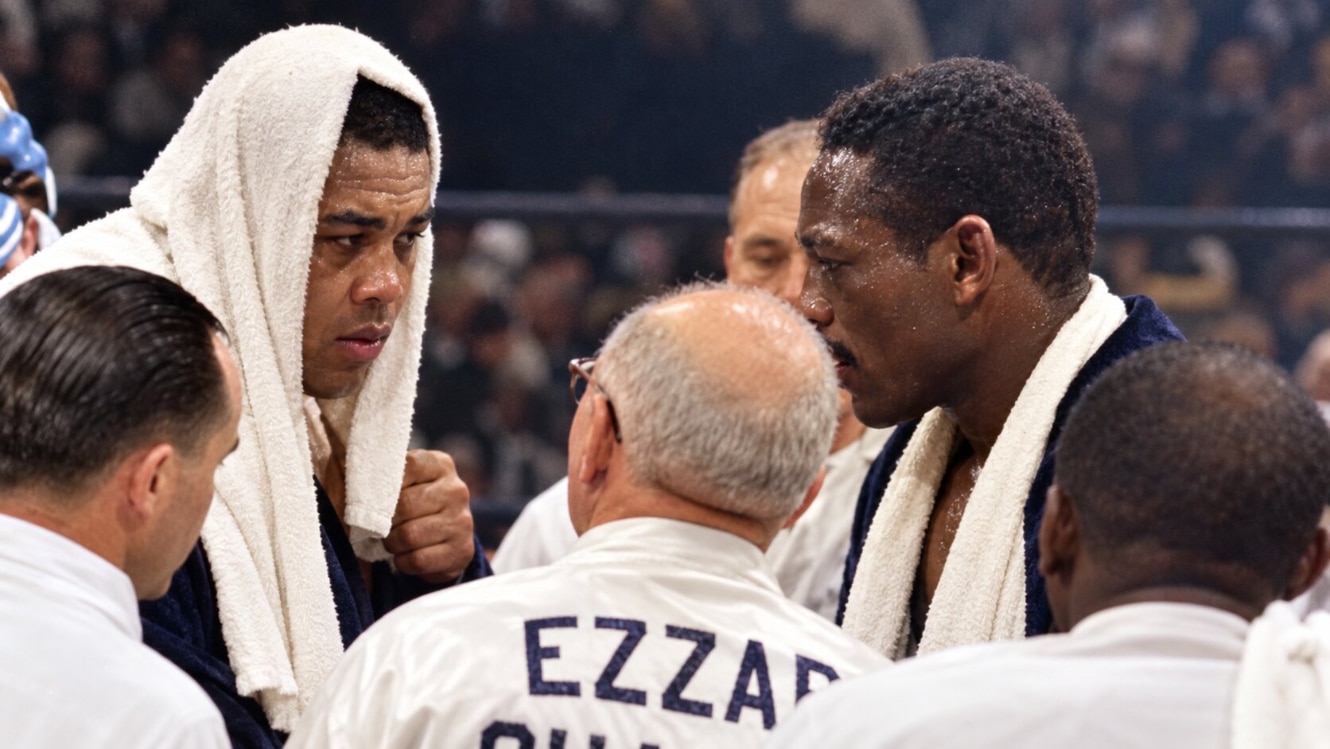
Нью-Йорк хотын “Yankee” цэнгэлдэх хүрээлэнд болсон 15 раундын тулаанд Эззард Чарльз домогт боксчин Жо Луисыг шүүгчдийн санал нэгтэй шийдвэрээр ялжээ.
1950 оны есдүгээр сарын 27-нд болсон уг тулаанд шүүгчид 10–5, 12–3, 13–2 гэсэн оноогоор Чарльзын талд шийдвэр гаргасан байна. 22,357 үзэгчийн өмнө болсон энэхүү тоглолтод нэг ч нокдаун бүртгэгдээгүй бөгөөд энэ нь Жо Луисын хувьд 1936 оноос хойших анхны ялагдал, мөн дэлхийн аваргын бүсний төлөөх цорын ганц ялагдал нь боллоо.
Чарльз өрсөлдөгчөөсөө 33 орчим фунтээр хөнгөн байсан ч хурд болон хөдөлгөөнөөрөө давуу тал үүсгэж, Луисын баруун гараар цохих боломжийг хязгаарлаж чадсан юм. Луис дөрөв болон 12 дугаар раундад амжилттай довтолгоонуудыг хийсэн ч тоглолтын санаачлагыг бүрэн гартаа авч чадаагүй байна.
Энэхүү ялалтаар Эззард Чарльз “The Ring” болон Нью-Йоркийн боксын байгууллагуудаас хүнд жингийн аваргын хүлээн зөвшөөрөлтийг авчээ. Гэвч олон нийтийн дунд Жо Луисыг дэмжих хандлага өндөр хэвээр байсан нь шинэ аваргад хүндрэлтэй байв. Татварын өрөө төлөхийн тулд рингэнд эргэн ирсэн Жо Луис энэ ялагдлын дараа ч үргэлжлүүлэн тулалдсан боловч дэлхийн аваргын бүсээ эргүүлэн авч чадаагүй юм.
Дэлгэрэнгүй эх сурвалжийг харах
Эх сурвалжийг нээх ↓
Ezzard Charles beat Joe Louis at Yankee Stadium on September 27, 1950, and gained the heavyweight recognition he had been denied. He could win the decision in the ring. Winning over people who still wanted Louis to be champion was another matter.
Louis had retired the previous year after a record 25 consecutive title defenses. A tax debt of more than $500,000 brought him back. Charles had already won the vacant National Boxing Association championship from Jersey Joe Walcott and defended it three times, but New York and The Ring had withheld their recognition. Louis remained a 2–1 favorite despite more than two years away from a professional fight.
The matchup asked Charles to solve a problem that had overwhelmed generations of heavyweights: how to keep Louis from setting his feet for the right hand. Charles answered with his jab, quicker punches and movement after each exchange. Louis followed, but the 29-year-old champion rarely stayed in front of him long enough to absorb a sustained attack. Louis had spells of success in the fourth and 12th rounds. He could not turn either into control of the fight.
Charles was the smaller man by roughly 33 pounds; Louis weighed a career-high 218. The difference made Louis’s slow pursuit more striking, but weight alone cannot explain what happened. Charles kept making him start again. As the rounds passed, the former champion’s power mattered less because he so rarely found the position to deliver it. For Charles, a fighter who had beaten leading light heavyweights without receiving a title shot at 175 pounds, it was a heavyweight performance built on skills he had developed against smaller, faster opponents.
All three officials scored the 15-round fight for Charles: 10–5, 12–3 and 13–2. There were no knockdowns. Before 22,357 spectators, Louis suffered his first defeat since 1936 and his only loss in a world title fight.
The scorecards settled the contest more easily than they settled its meaning. Many had come hoping to see Louis restore the old order; Charles’s precise dismantling of him offered no such ending. That helps explain the cool reception Charles faced despite doing exactly what a champion should: beating the favored challenger decisively. The image of a beloved Louis in decline threatened to obscure the quality of the man who beat him.
Charles gained recognition from New York and The Ring, though Britain continued to recognize Lee Savold until Louis defeated him in 1951. Louis’s $100,458 purse did not clear his tax debt, and he fought on without regaining the title. Charles had proved he belonged on the throne. He could not make the public stop looking for its previous occupant.

