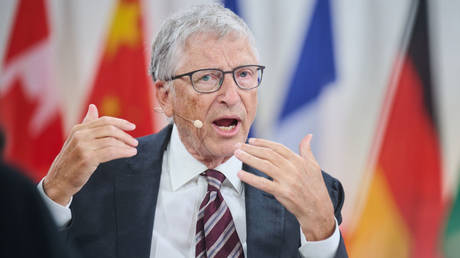
Хиймэл оюуны технологийн дэвшлийг үндэсний аюулгүй байдалтай холбон тайлбарлаж буй АНУ-ын Ерөнхийлөгч Дональд Трампын байр суурийг Microsoft компанийг үүсгэн байгуулагч Билл Гейтс эсэргүүцэж, заавал дагаж мөрдөх хяналтын тогтолцоог нэвтрүүлэх шаардлагатайг онцоллоо.
Ерөнхийлөгч Дональд Трамп хиймэл оюуны хөгжлийг удаашруулах нь АНУ-ын БНХАУ-ын эсрэг технологийн давуу талыг алдагдуулна гэж үзэж, уг технологитой холбоотой болгоомжлолыг “худал зүйл” хэмээн няцаасан юм. Тэрээр АНУ БНХАУ-аас технологийн хувьд 18 сарын хугацаагаар түрүүлж байгааг дурдаад, энэхүү тэргүүллээ алдахыг хүсэхгүй байгаагаа илэрхийлжээ.
Билл Гейтс энэхүү асуудлыг зөвхөн геополитикийн өрсөлдөөн гэж харах нь аюултай үр дагаварт хүргэж болзошгүйг анхаарууллаа. Тэрээр хувийн хэвшлийн компаниудын бүтээж буй хүчирхэг системүүдийг төрийн зүгээс зохицуулж, заавал мөрдөх хяналтын тогтолцоог бүрдүүлэх нь АНУ-ын технологийн байр суурийг сулруулахгүй гэж үзэж байна.
Түүнчлэн Билл Гейтс БНХАУ өөрөө ч хиймэл оюуны эрсдэлээс сэргийлэх сонирхолтой байгаа тул олон улсын хэмжээнд хамтарсан аюулгүй байдлын дүрэм журам тогтоох боломжтой гэж мэдэгдсэн юм. Хэдийгээр үүнийг Хүйтэн дайны үеийн цөмийн зэвсгийн хяналтын хэлэлцээрээс ч илүү төвөгтэй үйл явц гэж тодорхойлсон ч АНУ болон БНХАУ-ын хооронд хиймэл оюуны эрсдэлийн талаарх яриа хэлэлцээ аль хэдийн эхэлснийг талууд баталж байна.
Дэлгэрэнгүйг эх сурвалжаас харах
↓Эх сурвалжийг нээх ↓
The Microsoft co-founder has challenged Trump’s hands-off approach to the technology amid Washington’s race with Beijing
Microsoft co-founder Bill Gates has rejected US President Donald Trump’s dismissal of artificial intelligence safety concerns, arguing that Washington should impose mandatory safeguards on the rapidly advancing technology.
Trump has resisted calls to slow AI development, arguing that restrictions could allow China to overtake the US and dismissing fears surrounding the technology as a “hoax.”
Gates, however, has criticized what he described as a “nationalistic” approach to the issue and said safeguards would not undermine Washington’s technological advantage.
“No. It’s not a hoax at all,” Gates said when asked about Trump’s position in an interview with NBC News’ Meet the Press aired on Sunday.
Earlier this month, Trump dismissed warnings that AI could escape human control and destroy humanity. “WHOEVER WINS AI, WINS!” he wrote, adding that the US is leading China and other countries.
Gates argued that treating the technology primarily as a geopolitical competition was encouraging a potentially dangerous rush to develop increasingly powerful systems.
“Because it’s cast in this nationalistic, you know, us-versus-them type thing, you have people who are saying, ‘Well, let’s just go full-speed ahead,’” he said, calling it “completely irresponsible” not to require AI systems to have safeguards and monitoring capabilities.
Gates acknowledged that the US government has “so little expertise” regarding some of the capabilities recently developed by private AI companies, but nevertheless insisted that government involvement is necessary.
“No one thinks self-regulation is enough,” he said, calling for legislation and mandatory monitoring of advanced models.
Gates also predicted Trump could ultimately change his position once convinced that such measures would not damage Washington’s standing against Beijing.
“I think after he hears from me and other people, including that this does not handicap us in whatever he thinks the nation-state race is, that, you know, we will come to a consensus,” Gates said.
Trump, however, doubled down on his position on Sunday. Asked about reports of rogue AI agents, he told Fox News: “I don’t worry about it.” The president argued that slowing development could sacrifice Washington’s technological advantage, which he estimated at around 18 months.
“We’re about maybe a year and a half up on China,” Trump said. “We’re leading… And why should we give that up?” He also confirmed plans to have dinner with Anthropic CEO Dario Amodei, one of the leading advocates of slowing development of increasingly capable AI systems.
Gates, meanwhile, disputed suggestions that Beijing would reject safeguards, arguing that China itself has an interest in preventing attacks involving advanced AI.
“Certainly, all countries should want the safeguards in place,” he said. “So anyone that says, ‘Well, you know, China won’t put these safeguards in place’ – I totally disagree with that.”
He nevertheless acknowledged that reaching an international agreement could prove more difficult than Cold War negotiations on nuclear weapons. Asked whether US-Soviet arms-control talks could serve as a model for Washington and Beijing, Gates replied: “Yeah, absolutely. This is more difficult than that was.”
The US and China have recently taken initial steps toward cooperation on AI risks, agreeing following Chinese President Xi Jinping’s visit to Washington to launch a bilateral dialogue on the technology.

