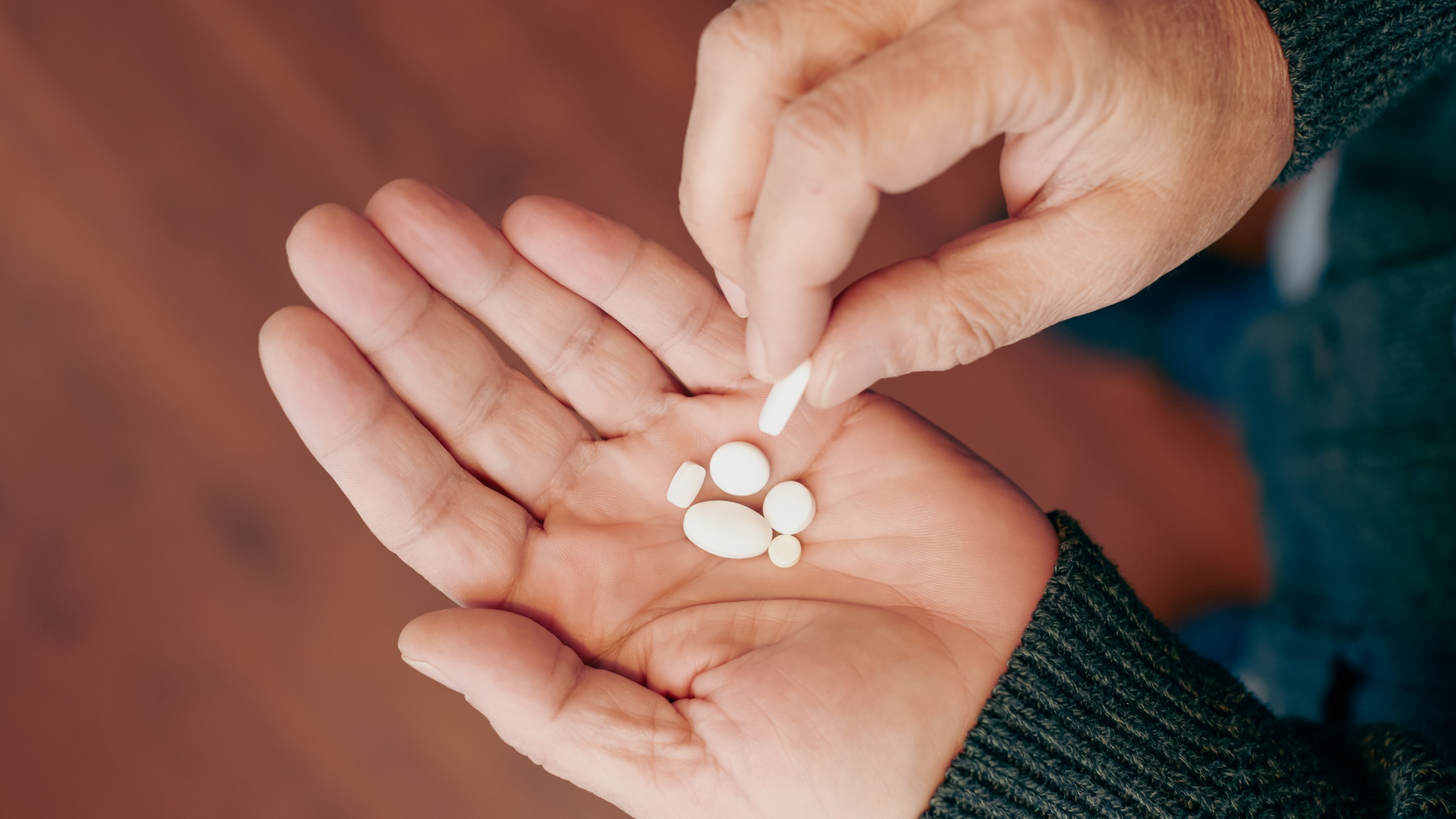
Nature Metabolism сэтгүүлд нийтлэгдсэн шинэ судалгаагаар үе мөчний өвдөлтийг намдаах зорилгоор өргөн хэрэглэдэг глюкозамин нь танин мэдэхүйн сулралтай өвчтөнүүдэд дементиа буюу зөнөх өвчин даамжрах эрсдэлийг 25 хувиар нэмэгдүүлж болзошгүйг анхаарууллаа.
University of Florida-ийн судлаачид 24,000 дементиатай болон 41,000 танин мэдэхүйн сулралтай хүний эмнэлгийн цахим бүртгэлд дүн шинжилгээ хийжээ. Судалгаанд хамрагдсан хүмүүсийн 8 орчим хувь нь глюкозамин хэрэглэдэг байсан бөгөөд Альцгеймерийн өвчтэй хүмүүсийн дунд уг бэлдмэлийг хэрэглэх нь таван жилийн дотор нас барах эрсдэлийг 25 хувиар өсгөж байгаа нь ажиглагдсан байна.
Биохимич Ramon Sun болон түүний багийнхан тархины эсүүд дэх сахарын нэгдлийн хуримтлал нь Альцгеймерийн өвчний шинж тэмдэг байж болзошгүйг тогтоожээ. Глюкозамин нь бие махбодод уурагтай холбогдох сахарын гинжин хэлхээ буюу гликан үүсгэхийг дэмждэг бөгөөд Альцгеймерийн өвчтэй хүний тархинд энэхүү сахаржилт хэт идэвхтэй явагддаг байна. Эрдэмтдийн хулгана дээр хийсэн туршилтаар глюкозамин нь Альцгеймерийн шинж тэмдэгтэй амьтдын санах ойн алдагдлыг хурдасгаж байжээ.
Судлаач Matt Gentry-ийн тайлбарласнаар, энэхүү үр дүн нь хамаарлыг харуулж байгаа боловч шууд шалтгаант холбоог бүрэн нотлоогүй тул цаашид нарийвчилсан судалгаа шаардлагатай байна. Хэдийгээр өмнөх судалгаануудаар глюкозамин нь эрүүл хүмүүст дементиагийн эрсдэлийг бууруулж болзошгүй гэж үзэж байсан ч энэ удаагийн олдвор нь метаболизм буюу бодисын солилцооны өөрчлөлттэй холбоотой байж болзошгүй гэж үзэж байна. Эрдэмтдийн зүгээс хэрэглэгчдийг нэмэлт бүтээгдэхүүн сонгохдоо болгоомжтой хандахыг зөвлөж байна.
Дэлгэрэнгүйг эх сурвалжаас харах
↓Эх сурвалжийг нээх ↓
Over the past two decades, the sale of dietary supplements has taken off.
Today, it seems as though there’s a pill for practically any ailment you can think of.
While the benefits might seem hopeful, there’s reason to tread cautiously.
Some supplements can be costly and offer little to no benefits.
Others may have unexpected downsides.
A new study underlines the potential for harm.
The preliminary analysis, published in Nature Metabolism, finds initial evidence that a popular supplement, taken by more than 40 million Americans, is associated with faster progression to dementia in people with early memory problems.
Glucosamine is a natural sugar-related molecule widely sold over the counter as a supplement in the US.
It is especially popular among older adults, who use it to support joint health and manage arthritis symptoms or joint discomfort.
But it may have an insidious downside for a certain subset of older adults.
Using electronic health record data, researchers at the University of Florida (UF) have now found that glucosamine use was associated with a 25 percent higher likelihood that mild cognitive impairment would progress to dementia.
“People take the supplement based on anecdotal reports that it improves joint health, especially in the knees,” writes biochemist Ramon Sun from UF for The Conversation.
Glucosamine is known to cross the blood-brain barrier, but what it might do to influence dementia progression is unknown.
“A lesser-known problem associated with Alzheimer’s disease is that brain cells and proteins build up extra sugar coatings,” explains Sun.
Glucosamine allows the body to make sugar chains, called glycans, that can be attached to proteins.
Analyzing the postmortem brain tissue of three people who died with Alzheimer’s disease, researchers at UF measured a global increase in glycan structures compared to three healthy controls.
In another set of brain samples grouped by disease stage, the more advanced the Alzheimer’s, the more of these sugary structures researchers observed in the gray matter of patients.
In fact, these ‘sugar decorations’ could be a possible hallmark of Alzheimer’s disease and related dementias.
“Proteins are the cell’s molecular machines, and many of them need sugar tags added in just the right way to fold correctly, travel to the right place, and do their jobs,” explains molecular biologist Matt Gentry from UF.
“What we found in Alzheimer’s is that this sugar-tagging system appears to be overactive. The Alzheimer’s brain is adding too many of these sugar structures, and this seems to contribute to the disease rather than protect against it.”
Earlier research has linked glucosamine supplements to a lower dementia risk in cognitively healthy adults.
But what if the brain’s metabolism is disrupted? Could glucosamine be feeding into the issue?
An emerging hypothesis suggests that Alzheimer’s disease is actually a metabolic disorder at its core. Some researchers have even gone so far as to call it “type 3 diabetes“.
“The adverse effects of glucosamine may be contingent on an underlying neurometabolic state,” researchers at UF hypothesize.
To find out if that is true, Sun and colleagues analyzed the health records of 24,000 patients with dementia and 41,000 with mild cognitive impairment.
Roughly 8 percent of this combined cohort was taking glucosamine.
Among those who already had Alzheimer’s disease or related dementias, glucosamine use was associated with a 25 percent higher mortality risk within five years.
This does not mean that glucosamine is necessarily causing the progression of Alzheimer’s. That would require a randomized controlled trial to confirm. But given the popularity of these supplements and their potential harm, further investigation is needed.
“The electronic health record data are very provocative,” says Gentry.
“While it’s an association and not proof of causality, it does raise an important clinical question that now deserves much more attention.”
The results are bolstered by a mouse experiment. Gentry and colleagues conducted a follow-up in animals that were genetically engineered to have Alzheimer’s-like symptoms.
When the team blocked the enzyme that makes sugars like glucosamine, dementia symptoms in the mice improved.
What’s more, when researchers fed the mice glucosamine, their memory loss worsened.
Interestingly, however, healthy mice given the same supplement showed no effect.
The findings suggest that glucosamine may be driving cognitive decline, but only in some cases.
To see if the results hold up in humans, Sun says he and his colleagues hope to follow dementia patients who once took glucosamine and then discontinued it.
Their goal is to investigate how their disease fares compared to those who remain on the supplement.
In an accompanying piece for Nature, biochemist Yasuhiko Kizuka, who was not involved in the study, writes that these ‘sugar decorations’ in the Alzheimer’s brain may be a novel drug target.
“This study reveals that hyperglycosylation of proteins is a new hallmark of Alzheimer’s,” Kizuka writes.
“The work not only enhances our understanding of the pathological mechanism of Alzheimer’s but also provides a new strategy for combating this devastating disease.”
If nothing else, the findings are a good reminder to stay skeptical when adding a supplement to your daily routine.
The benefits might look good in one meta-analysis, but not everyone will necessarily have the same response.
There might even be risks.
The research has been published in Nature Metabolism.
This article was fact-checked by Rebecca Dyer and edited by Rebecca Dyer. While we pride ourselves on our process, we are only human. If you spot a mistake, please let us know.

