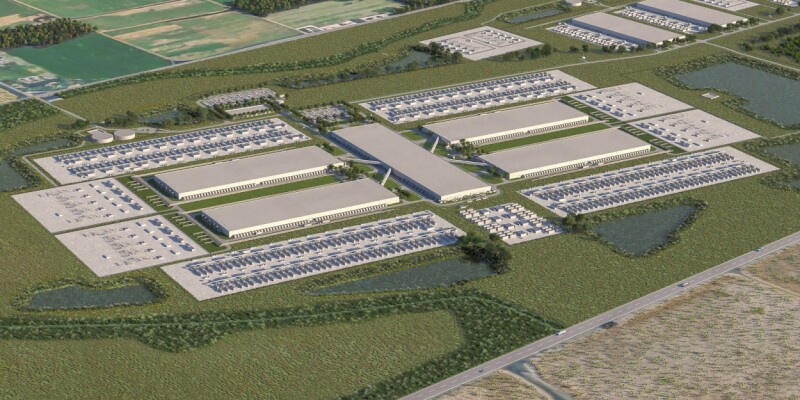
Хиймэл оюун ухааны дата төвүүдийн бүтээн байгуулалт эрчимжиж байгаа ч чип савлах технологийн хомсдол болон эрчим хүчний сүлжээний доголдол нь төлөвлөсөн хүчин чадлыг нэмэгдүүлэхэд томоохон сорилт үүсгэж байна
Jefferies банкны тайланд дурдсанаар, АНУ даяар дата төвийн бүтээн байгуулалт үргэлжилж байгаа ч зөвшөөрөл олгох процесс, эрчим хүчний хүртээмж, хиймэл оюун ухааны хурдасгуур чипүүдийн нийлүүлэлт төслүүдийг удаашруулж байна. SynMax компанийн хиймэл дагуулын мэдээлэлд үндэслэн тооцоолсноор, АНУ-ын дата төвийн хүчин чадал 2025 онд 11 ГВт байсан бол 2026 онд 16-18 ГВт болж өсөх төлөвтэй байна. Гэсэн хэдий ч 2028 онд 80 ГВт-ын хүчин чадалд хүрэх зорилт нь бодит бүтээн байгуулалтын хурдаас хэт өндөр байгааг шинжээчид анхааруулжээ.
Чип үйлдвэрлэлийн дараах шат болох дэвшилтэт савлагааны технологи нь дата төвийн өргөтгөлд гол саад болж байна. Хиймэл оюун ухааны хурдасгуур чипүүдийг ашиглалтад оруулахын тулд өндөр зурвасын санах ойтой нэгтгэн савлах шаардлагатай байдаг бөгөөд энэ үйл явц нь ихэвчлэн Тайвань зэрэг улсад хийгддэг. Одоогийн байдлаар дэвшилтэт савлагааны хүчин чадал нь 17.5 ГВт орчим дата төвийн эрчим хүчний хэрэгцээг хангах хэмжээнд байна.
АНУ-ын дата төвийн хөгжил Техас, Виржиниа зэрэг мужуудад төвлөрч байгаа нь эрчим хүчний сүлжээний ачааллыг нэмэгдүүлж байна. Техас мужийн цахилгаан эрчим хүчний сүлжээний операторын зүгээс гэнэтийн байдлаар эрчим хүчний хэрэглээг хязгаарлах нь дата төвүүдийн тогтвортой ажиллагаанд эрсдэл учруулдаг болохыг салбарын шинжээч Жесси Госсетт онцолжээ. Төлөвлөгөөт бус, богино хугацааны ийм хязгаарлалтууд нь дата төвийн үйл ажиллагааны зардалд сөргөөр нөлөөлөх магадлалтай байна.
Дэлгэрэнгүйг эх сурвалжаас харах
↓Эх сурвалжийг нээх ↓
Satellite imagery suggests US datacenter deployment is accelerating, but not fast enough to meet some of the more exuberant forecasts for 2028. Meanwhile, advanced chip packaging is emerging as another constraint on how quickly new AI capacity can come online. A report from investment bank Jefferies says server farm construction is proceeding apace across America, but permitting, access to power, and supplies of packaged AI accelerators continue to hold projects back. The report, shared with The Reg, cites analytics biz SynMax, which uses weekly satellite imagery to track land clearing, the appearance of the first structures, and construction progress at datacenter sites – data that distinguishes projects advancing on the ground from those that have merely been announced. SynMax estimates that US deployments will rise from roughly 11 GW of gross capacity in 2025 to 16-18 GW in 2026, above its previous forecast of 14-16 GW. It puts the practical upper limit for 2027 in the low 20s of gigawatts. Yet the amount of land being cleared for new projects has plateaued, leaving visible activity well short of the pace required to deliver the more than 80 GW implied by some announced project pipelines and chip demand models for 2028. That chimes with a previous Jefferies report, which found that only half the US capacity scheduled for 2026 was under construction and that work had yet to begin on as much as 80 percent of the 2028 pipeline. Jefferies identifies advanced packaging as another emerging constraint. Fabricating enough accelerator dies is only part of the job: they must also be packaged with components such as high-bandwidth memory before OEMs can install them in servers. Advanced packaging combines multiple dies and memory components using high-density connections, an approach used in many cutting-edge CPUs and AI accelerators. Even chips manufactured on US soil may need to be sent overseas, typically to Taiwan, for packaging, creating a choke point between semiconductor production and operational datacenter capacity. SynMax estimates that existing advanced packaging capacity could support accelerators drawing the equivalent of roughly 13 GW of gross power. After accounting for CPUs, memory, cooling, and other loads, it converts that figure into approximately 17.5 GW of total datacenter power. Two additional packaging projects expected to come online in 2027 could support another 6 GW, taking the practical ceiling into the low 20s unless capacity expands faster than forecast. This is not the first warning that chip supplies could limit datacenter expansion. Last year, a report from London Economics International concluded that if all the bit barn projects forecast for the US between 2025 and 2030 went ahead, it would require 90 percent of all the growth in the global AI chip supply to be funneled into the American market. The report also notes that development is concentrated in states including Texas and Virginia, making national deployment figures particularly vulnerable to delays in either market. In Texas, obtaining uninterrupted grid service can be slow, while accepting occasional curtailment may get a datacenter connected sooner. This could require an operator to reduce power draw when instructed by the grid operator. Jesse Gossett, a former developer and participant in the Electric Reliability Council of Texas (ERCOT) large-load working group, told Jefferies that 99 percent uptime could be financially viable if curtailment were predictable enough to model, insure, reflect in service-level agreements, or cover with backup resources. What can break the economics, Gossett argued, is unpredictable five-minute curtailment under the Texas grid operator’s Security-Constrained Economic Dispatch system for Provisional Controllable Load Resources. Datacenters can accommodate planned curtailment lasting an hour or two, but not an unexpected instruction issued on five minutes’ notice. ®

