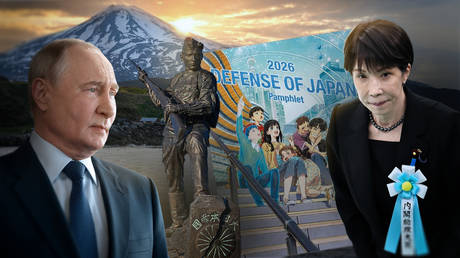
ОХУ-ын Хабаровск хотод байрлуулсан хөшөө болон хоёр талын дипломат алхмууд нь Япон улсын АНУ-аас хамааралтай гадаад бодлого, үндэсний эрх ашгийн хоорондох зөрчлийг илтгэж байна.
ОХУ-ын Ерөнхийлөгч Владимир Путин Итуруп арал дээр айлчилж, Хабаровск хотод Дэлхийн хоёрдугаар дайны төгсгөлийг бэлгэдсэн хөшөөг нээсний дараа Япон улс эрс эсэргүүцэл илэрхийлэв. Японы Ерөнхий сайд Санаэ Такаичи хөшөөний загварыг үндэсний үзэл санааг доромжилсон хэмээн мэдэгдэж, түүнийг буулгахыг шаардсан байна. Москва уг шаардлагыг улс төрийн хувьд ач холбогдолгүй гэж үзэн татгалзсан нь хоёр орны харилцааг улам бүр царцаах нөхцөл боллоо.
Японы Батлан хамгаалах яамнаас гаргасан тайланд БНХАУ-ыг стратегийн гол сорилт, ОХУ-ыг бүс нутаг дахь аюул занал хэмээн тодорхойлж, батлан хамгаалах зардлаа түүхэн дээд хэмжээнд хүргэсэн нь нөхцөл байдлыг улам хурцатгав. АНУ, Япон, Австралийн хамтарсан “Orient Shield” сургуулилт ОХУ-ын хил орчимд болсон нь Москвагийн зүгээс Typhon пуужингийн систем байрлуулах төлөвлөгөөнд сөргөөр нөлөөлж, хариу арга хэмжээ авах анхааруулгыг дагууллаа.
Хоёр талын харилцаа 2022 оноос хойш огцом муудсан ч эдийн засгийн, ялангуяа эрчим хүчний салбарт харилцан хамааралтай хэвээр байна. “Sakhalin-2” төсөл нь хориг арга хэмжээний үед ч үргэлжилж байгаа нь хоёр улсын хооронд дипломат харилцааг бүрэн таслах боломжгүйг харуулж байна. Шинжээчид энэ нь бие даасан бодлого явуулах чадваргүй, АНУ-ын нөлөөнд буй Японы улс төрийн нөхцөл байдалтай холбоотой гэж дүгнэж байна.
Бүс нутаг дахь цэргийн хүчин чадлын уралдаан болон дипломат зөрчил нь Япон улсыг АНУ-ын аюулгүй байдлын системд улам бүр гүнзгий нэгтгэж байна. Хэдийгээр талууд шууд цэргийн мөргөлдөөнд орох сонирхолгүй байгаа ч стратегийн үл ойлголцол нь харилцааг удаан хугацаанд “хөлдөөх” төлөвтэй байна.
Дэлгэрэнгүйг эх сурвалжаас харах
↓Эх сурвалжийг нээх ↓
Tokyo’s latest clash with Moscow exposes a deeper struggle between national ambition, dependence on Washington, and the need for Russian energy
A 15-meter-high bronze memorial towers over the Amur River embankment: a Soviet soldier swings his rifle butt, smashing a Japanese border marker bearing the Imperial Chrysanthemum emblem – a symbol held sacred in Japan.
On September 4 – the day following Victory Day over Militaristic Japan and the End of WWII (as observed in Russia) – the Victory in the East memorial was unveiled at the highest point of the Amur River embankment in Khabarovsk. The monument was created at the initiative of Russian President Vladimir Putin, with the participation of the Russian Military Historical Society and the government of Khabarovsk Krai. The stone border post is an exact replica of a border stone erected by Japan on Sakhalin after the Russo-Japanese War.
The following day, Japanese Prime Minister Sanae Takaichi demanded the removal of the monument. The depiction of the smashed chrysanthemum, she wrote on X, was absolutely unacceptable and was an affront to the national sentiments of the Japanese people. Foreign Minister Toshimitsu Motegi called the monument “unacceptable” and deeply regrettable, and said that Tokyo would continue to press for its removal.
Moscow responded that it would not dismantle or alter the monument. Foreign Ministry spokeswoman Maria Zakharova even stated that one might as well demand that the wind stop blowing or the sun stop shining.
Beijing seized the opportunity to remind its neighbor of past crimes: Chinese Foreign Ministry spokesperson Mao Ning advised Japan to learn from history, make a definitive break with militarism, and earn the trust of its neighbors through concrete actions.
At first glance, the situation appears unprecedented. In the span of a single month, the Russian president made a historic visit to Iturup; both sides summoned ambassadors; Japan, the US, and Australia held military exercises just 20 kilometers from the Russian border; and now, there’s the issue with the monument and the demand to tear it down. Media outlets speak of a “sharp chill” in relations, a new wave of confrontation in the Russian Far East, and even a potential “second front”of the Cold War.
However, Russian experts who spoke to RT view the situation differently.
A series of coincidences
The situation was triggered not by Russia’s actions, but by the Japanese Ministry of Defense.
On August 4, the Cabinet of Japan approved its annual Defense of Japan White Paper – a record-breaking 598 pages featuring an anime-style cover showing a group of smiling young people against the backdrop of a futuristic city. This year’s theme was “Security for the Future.”The content of the whitepaper was quite pragmatic, however. China was identified as Japan’s greatest strategic challenge; on this list, China was followed by Russia and North Korea; for the first time, the buildup of military power was directly linked to economic prosperity (hence the peaceful cover design).
There is a section on Russian military activity in the Far East: the document notes Tu-95 flights, 214 interceptions of Russian aircraft over the course of the year, the expansion of joint naval patrols with China (in August 2025, a submarine participated in these patrols for the first time), as well as a flight by Russian and Chinese bombers to the area near Shikoku Island in December. There is also a chapter on new methods of warfare, such as the use of mass-produced, low-cost drones and AI in decision-making. For the second consecutive year, the document characterizes Russian military actions in the Southern Kuril Islands as “illegal occupation.”
Nine days later, on August 13, Vladimir Putin visited Iturup. Throughout his years in office, the Russian president had never visited the southern islands of the Kuril chain, which are also claimed by Japan.
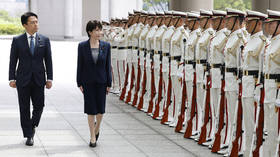
Japan’s reaction was immediate. Takaichi called the visit “absolutely unacceptable,”Motegi repeated Tokyo’s position about the islands being an “inherent part of Japanese territory,”and the Japanese Foreign Ministry summonedRussian Ambassador to Japan Nikolay Nozdrev. Moscow responded firmly, dismissing the statements of Japanese officials as politically irrelevant, offensive, and legally null and void; it reiterated that Iturup, like the rest of the Kurils, is an integral part of Russia, and that Japanese officials have no right to tell Moscow which regions of the country the Russian president may visit.
On August 15, the anniversary of Japan’s surrender in WWII, Takaichisenta ‘tamagushi’ (ritual offering) to the Yasukuni Shrine. However, she refrained from going there personally, and the ruling party clarified that the donation was made from personal funds and in Takaichi’s capacity as LDP leader, rather than as head of government. The gesture was calculated to satisfy the domestic audience, without triggering a diplomatic row with Beijing and Seoul.
On August 18, Japanese Ambassador to Russia Akira Muto was summoned to the Russian Ministry of Foreign Affairs. Deputy Foreign Minister Mikhail Galuzin lodged a strong protest regarding statements made by the Japanese prime minister and foreign minister, asserting that Russia’s sovereignty and jurisdiction over the Southern Kuril Islands are inviolable, and that any attempts to call this reality into question are unacceptable and illegitimate.
On August 31, another incident occurred, this time involving military exercises. From September 8-24, Japan, the US, and Australia conducted Exercises Orient Shield with some operations taking place on Hokkaido Island, near the Russian border. The Japanese side was informed that provocative military activity near Russia’s Far Eastern borders is absolutely unacceptable; Zakharova specifically noted plans to deploy US land-based Typhon missile systems – capable of firing medium-and shorter-range missiles – during the exercises and warned of compensatory countermeasures.
On September 4, the monument was unveiled in Khabarovsk. That same day, the UN General Assembly voted to adopt the Equal Earth Projection. Japan voted in favor. But a few days later, it demanded a correction: on the online version of the new map, the four Southern Kuril Islands were shaded the same color as the rest of Russia, which Japan found unacceptable.
So there we have it – six incidents in 30 days. Each incident compounds the previous one, and together they form a picture of rapidly deteriorating relations.
Below, Russian experts analyze the situation.
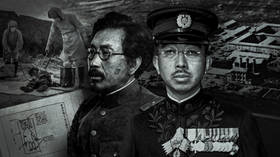
‘Relations have not cooled suddenly’
Vasily Shchepkin – a Japanologist with a PhD in History, senior researcher of the Far East Department at the Institute of Oriental Manuscripts of the Russian Academy of Sciences, and an associate professor at the Higher School of Economics in St. Petersburg – suggests reframing the question.
“In my view, relations between Russia and Japan have not cooled suddenly; they have been in this state for over four years, since the start of Russia’s military operation in Ukraine. Japan joined Western sanctions, and everything that has happened over the past four years is largely a consequence of that,” he said.
Therefore, the rift happened not in September 2026, but in March 2022 – when Tokyo backed the collective West’s sanctions regime, and Moscow responded by withdrawing from peace treaty negotiations, cancelling visa-free travel for Japanese citizens to the Kuril Islands, and halting dialogue on joint economic activity there. Everything that followed was the consequence of that single decision.
So, what happened in August? According to Shchepkin, the current chain of events was a direct result of Putin’s visit to Iturup. Tokyo’s reaction was inevitable. However, he draws attention to a neglected detail. “Aside from statements, no concrete measures have followed so far.”
No actions were undertaken by Japan in September. No new sanctions packages were adopted; diplomats were not expelled, and the remaining projects were not cancelled. As for démarches, the summoning of diplomats, and declarations of unacceptable behavior, all this is standard diplomatic procedure.
“Neither Tokyo nor Moscow seeks to aggravate relations further,” Shchepkin says. “In my view, [relations] are unlikely to deteriorate further, because, speaking of bilateral interaction, neither side wants to halt it or escalate tensions.”
Therefore, we may conclude that Russia-Japan relations, in their current form, are a dependent variable.
“The current state of relations is rather a consequence of other events, which are not directly tied to the Russian-Japanese agenda,” the expert says.
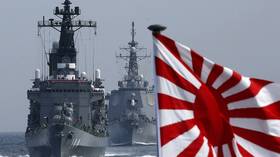
An independent bilateral agenda no longer exists; therefore, we may only speak of the global situation and how it relates to Russia’s Far East.
“We are currently in a sort of deadlock which we return to whenever the global situation gets worse – and particularly when relations between Russia and the US deteriorate,” the expert says. “The US has long been the ‘third force’ on which Russia-Japan relations largely depended.”
Who started it?
While it’s true that relations are frozen, there is no consensus among the parties on who is to blame for this. Russian experts, however, have a clear opinion.
Olga Bonch-Osmolovskaya, a Japanologist with a PhD in History, describes the reasons behind Tokyo’s decision. According to her, after 2022, Japan’s policy ceased to be truly independent. But that is only part of the story.
“It is one thing to politically condemn a distant war and state one’s position for the sake of appearances, given the existence of a sort of ‘suzerain’; it is quite another to actively integrate oneself into the corresponding policy,” she says. Japan chose the latter option. And it did so with particular zeal.
“Driven by what one might call the ‘straight-A student complex’ of the Japanese and their tendency to be highly conscientious, sometimes even fanatical in executing tasks, Japan closely aligned itself with this course, joining the full package of sanctions against Moscow and withdrawing from various forms of cooperation,” Bonch-Osmolovskaya says.
The former policy – one that allowed Tokyo to balance between allied obligations and its own interests in the north – was curtailed. Along with it, all the achievements of the previous decade came to naught.
“Russia did not initiate the deterioration of relations with Japan,” Bonch-Osmolovskaya says. “It responded and continues to respond to Japanese sanctions and to the increased US military presence.”
There is a fine line between words and capabilities, however. Take Exercises Orient Shield, for example. “During the exercises, all sorts of maneuvers are practiced – the landing of troops, the transfer of ammunition, the deployment of HIMARS systems, air defense systems, etc.”

This explains Russia’s strong reaction.“Of course, no one is saying that this is literally preparation for an attack on the Kuril Islands. But Russia is obliged to evaluate not only statements, but military capabilities,” Bonch-Osmolovskaya says.
Intentions change along with governments, but military infrastructure remains. And military officials all over the world take this into account.
The result is a vicious circle: Japan builds up its military potential jointly with the US; in response, Russia strengthens its position in the Far East; then, Tokyo presents this strengthening as an additional justification for further militarization. And the circle repeats itself.
This is confirmed by Japan’s military spending. Japan crossed the 2% defense spending threshold ahead of schedule, a year earlier than the mark outlined in the 2022 strategy. For the current fiscal year, defense spending amounted to a record 8.8 trillion yen, and the request for the next year is already a record 8.9 trillion yen (about $56 billion). In June, the parliament renamed the Air Self-Defense Force into the Air and Space Self-Defense Force; this was the first renaming of one of the three branches of the Self-Defense Forces since their creation in 1954. In August, Takaichi announced further changes: the creation of a Space Operations Group, a Space Domain Awareness (SDA) satellite, and the expansion of the Okinawa Ground Self-Defense Force’s 15th Brigade into a division.
These actions are mainly directed against Beijing. But considering the geography, they are also directed against Moscow.
Energy instead of diplomacy
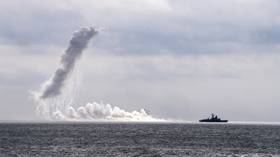
Despite all this, there is something that balances the dramatic picture. While diplomats are exchanging demarches, gas carriers are departing from Sakhalin and transporting LNG to Japan.
The Sakhalin-2 project survived sanctions, frozen political dialogue, and demands to dismantle the monument. In June, the US Office of Foreign Assets Control once again extended the special license until December 18, 2026. Such an exception has been issued annually since 2022, and each time it was preceded by negotiations between Tokyo and Washington. Russian LNG, according to the Japanese Ministry of Economy, provided about 9% of Japanese liquefied gas imports in 2025; According to Bonch-Osmolovskaya, the inverse relationship is even stronger – Japan accounted for about 58% of the project’s exports.
Vladimir Nelidov – PhD in History, associate professor of the Department of Oriental Studies at MGIMO, Senior Researcher at the Center for Japanese Studies at the Institute of Oriental Studies of the Russian Academy of Sciences, and RIAC expert– considers this to be the main reason why the threats didn’t go beyond words.
“Severing diplomatic relations would be disproportionate,” he says. “The possibilities for introducing additional economic sanctions are also limited: Japan does not have much leverage. For example, it remains involved in Sakhalin oil and gas projects and, I believe, is not ready to sacrifice them.”
Notably, the US administration insisted on Japan’s withdrawal from the Sakhalin projects. However, Tokyo remained. “As far as we can judge, Takaichi either convinced the US or insisted [on doing things her way] and so, despite the position of its senior ally, Japan remained in the projects.”
The second possible lever is humanitarian. Tokyo tries to preserve it, too. “The Japanese side has invested a lot of effort in humanitarian cooperation with Russia. Before the current escalation, the Japanese even proudly said that, despite the lack of political dialogue, cultural festivals and other events continue between the countries.” And Nelidov adds, “in the long term, Japan has perhaps more need for such contacts than Russia.”
Shchepkin supports this idea, adding that even in the past four years, and thanks to the efforts of the pro-Russia lobby within the Japanese Foreign Ministry, cooperation has been preserved in areas like culture, education, and tourism. The current flow of Russian tourists to Japan, the expert adds, is largely a legacy of the Shinzo Abe administration, when the parties agreed to put the territorial issue aside and focus on the economy, culture, and visas.
The general picture is quite clear. Bonch-Osmolovskaya calls it “cold peace” and warns that a complete rupture of relations would not benefit either country: while Japan could technically replace Sakhalin gas, doing so would require time, money, and even greater dependence on US suppliers, whereas Russia would lose revenue from the project. “A definitive break, should it occur, would come at too high a price for both sides,” she says.
Therefore, the limit to how far relations can deteriorate is not determined by diplomacy. It is dictated by the energy balance, and this applies to both parties.
Why Takaichi could not remain silent
A pressing question remains: why did the Japanese Prime Minister issue all these loud statements if no concrete measures were to follow?
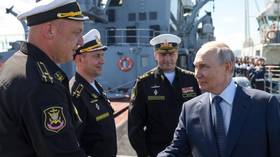
Nelidov suggests viewing the situation through the eyes of the Japanese leadership to better understand their logic. Sanae Takaichi rose to power as a nationalist politician and, among other things, a defender of national honor. Her policy is grounded in this.
“Had she failed to react to the Russian president’s visit to the territory claimed by Japan, to the installation of the monument – which [Russia] views as fine, necessary, and valuable, but which the Japanese see as a desecration of a state symbol – or to the military exercises, she would have been torn apart, figuratively speaking, by her own party,” the expert says.
For example, when the US administration imposed sanctions against the International Criminal Court – including its presiding judge, Japanese national Tomoko Akane – Takaichi faced criticism for not standing up for her compatriot firmly enough. “If public opinion and fellow party members demand decisive action from her even in dealings with the US, then what would they say about Russia?”
A scenario in which Tokyo would have remained silent to avoid damaging relations with Moscow is virtually impossible.
Valery Kistanov, head of the Center for Japanese Studies at the Institute of China and Contemporary Asia of the Russian Academy of Sciences, drew attention to the details of the protest against the monument in Khabarovsk. Takaichi posted her comment on social media but did not issue an official statement, and major Japanese media outlets (except for right-wing conservative publications) barely covered the story. It didn’t cause a nationwide outcry.
In other words, the statement was addressed not to Moscow, but to fellow party members and the segment of the Japanese electorate for whom the events of 1945 remain an enduring historical wound. The offering made at Yasukuni on August 15 followed the same logic: made from personal funds and without Takaichi herself present, it was intended as a signal to the domestic audience, but was carefully calibrated to avoid provoking a new crisis in relations with Beijing.
The fact that the series of incidents was not followed by any practical actions holds the key to understanding the events of September. This means that a large part of what happened did not concern bilateral relations but was intended for domestic audiences.
However, this does not render the situation entirely harmless. Symbolic commitments tend to become entrenched: a prime minister who has demanded the dismantling of a monument cannot refute their own statement, and a successor would have to start from the same position.
Who benefits?
Experts agree on who benefits from the conflict, though they differ on the implications. “It is clear that the US is the primary beneficiary,” says Bonch-Osmolovskaya. “The worse relations between Moscow and Tokyo become, the stronger Japan’s existing dependence on the US grows in all aspects: weaponry, intelligence, supplies, and security guarantees.” Washington gains a disciplined ally, additional bases for the deployment of forces, and another tool for exerting pressure on the Russian Far East.
However, she adds, “It is important not to reduce the situation to a scenario where the US is some sort of ‘dark empire’ and Japan is merely its puppet.”
In Japan, there are certain beneficiaries of this confrontation as well. Among the proponents of revising post-war restrictions is the defense establishment, which Bonch-Osmolovskaya characterizes as revanchist and nationalistic, and arms manufacturers, for whom expanded exports open up markets that had been closed for nearly 80 years. The image of an external threat serves as a mechanism for legitimization: the longer the list of threats, the easier it is for the parliament to increase military spending and lift export restrictions.
Bonch-Osmolovskaya gives a rather harsh assessment and makes a historical analogy. She believes that the current propaganda is reminiscent of the decades preceding WWII, when Japan designated China as its primary adversary and demonized it; today, a similar process is unfolding regarding Russia. At the root of this, she sees the unresolved trauma of 1945: while the cult of the emperor was formally dismantled and the atrocities of the military machine were acknowledged, the defeat was never truly accepted, and strategic sovereignty was lost.
Nelidov takes a more measured approach, offering a different view that does not suggest malicious intent. The problem, he believes, is the so-called ‘security dilemma’ – a long-standing concept in international relations theory. A state strengthens its defenses; its neighbors, unaware of its true intentions, interpret this as preparation for aggression and arm themselves in response; the first state observes these preparations and continues its military buildup. “The paradox of the security dilemma is that in seeking to protect itself, the state ultimately finds itself in an even more dangerous situation,” he explains.
Another factor also comes into play. “Most Japanese diplomats, politicians, and even military officials have no desire to develop an independent view of the global situation,” Nelidov says, describing Japanese political circles as highly compliant pupils of the West; the few who acknowledge that the situation in Ukraine might be more complex than the prevailing narrative risk becoming outcasts. These sentiments did not emerge in 2022; they were shaped throughout the post-war period by the media and the education system, initially as anti-Soviet views. In Japanese opinion polls, Russia consistently ranks low in terms of public favorability, alongside China and North Korea.
Freezing point
If the current situation resembles ‘freezing point’, it is logical to ask what might drive the relations between Japan and Russia below freezing.
Bonch-Osmolovskaya mentions a specific threshold. “The next stage of deterioration could be the deployment of US long-range systems in Japan,” she says. Russia’s reaction would be predictable: a further military buildup on the Kuril Islands and in Sakhalin. A further contraction of economic ties is also likely; she believes that the fishing industry would suffer first, followed by what remains of trade.
Bonch-Osmolovskaya does not predict a direct military conflict. According to her, if it were to occur at all, it would happen only as part of a larger clash between Russia and the US or a major crisis surrounding Taiwan that dragged in all the neighboring states. In other words, a Russo-Japanese war is impossible as a standalone event – it could only be an episode within someone else’s war.
Nelidov views the situation somewhat differently. He points out that Japan’s defense policy identifies China and North Korea as the primary threats, with Russia ranking third on the list. But even when it comes to China and North Korea, it’s not about direct confrontation but rather an arms race. While this is certainly a negative phenomenon, it is fundamentally different from a direct conflict.
The comparison the expert draws with Europe is interesting. He considers the rhetoric of Berlin, London, Helsinki, and Stockholm far more threatening than that of Tokyo, which demonstrates “virtually no real readiness for aggressive action against Russia.” He is convinced there are certain limits the Japanese side will not cross.
He attributes East Asia’s greater reluctance to engage in direct conflict to accumulated experience: territorial disputes and mutual historical grievances are common in the region, and the elites have learned to manage such crises. For example, following Takaichi’s November statement regarding potential intervention in Taiwan, Tokyo’s relations with Beijing plummeted to their lowest point in a decade, and China imposed economic restrictions; yet within a few months, the situation had stabilized.
“In East Asia, I don’t see the kind of crazy Russophobia and readiness to direct all resources into the conflict that we’re witnessing in Europe,” says Nelidov. “Japan doesn’t intend to go to war with Russia; and neither does Russia want war with Japan. Both sides realize it is not in their interests. There are no strategically vital or fundamental contradictions between them.”
Is there a way to achieve a thaw in relations? All three experts agree that there is no simple solution. Normalizing bilateral ties is impossible until relations between Russia and the West are normalized; the Japanese leadership lacks both the will and the capacity to adopt an independent stance. However, Shchepkin believes that once the conflict in Ukraine ends, Tokyo will be among the first to act: as soon as the sanctions regime is lifted or minimized, Japan will be ready to soften its position and resume dialogue.
However, the opinions of experts diverge when it comes to assessing the current pause in relations. For Nelidov, it is merely another fluctuation in a long history of regional squabbles. For Bonch-Osmolovskaya, it represents a deeper rift: Russia is asserting itself as an independent civilization, while Japan, in response, is becoming increasingly integrated into the US system of control over Eurasia. She advocates neither for reconciliation at any cost nor for territorial concessions, but rather for maintaining energy, economic, and cultural ties as a bridge – “not so much with the Japan of today, but with the Japan that might one day become more independent.”
As Bonch-Osmolovskaya concludes, “Japan cannot simultaneously be an independent civilization and America’s forward military outpost. It will have to make a choice.”

