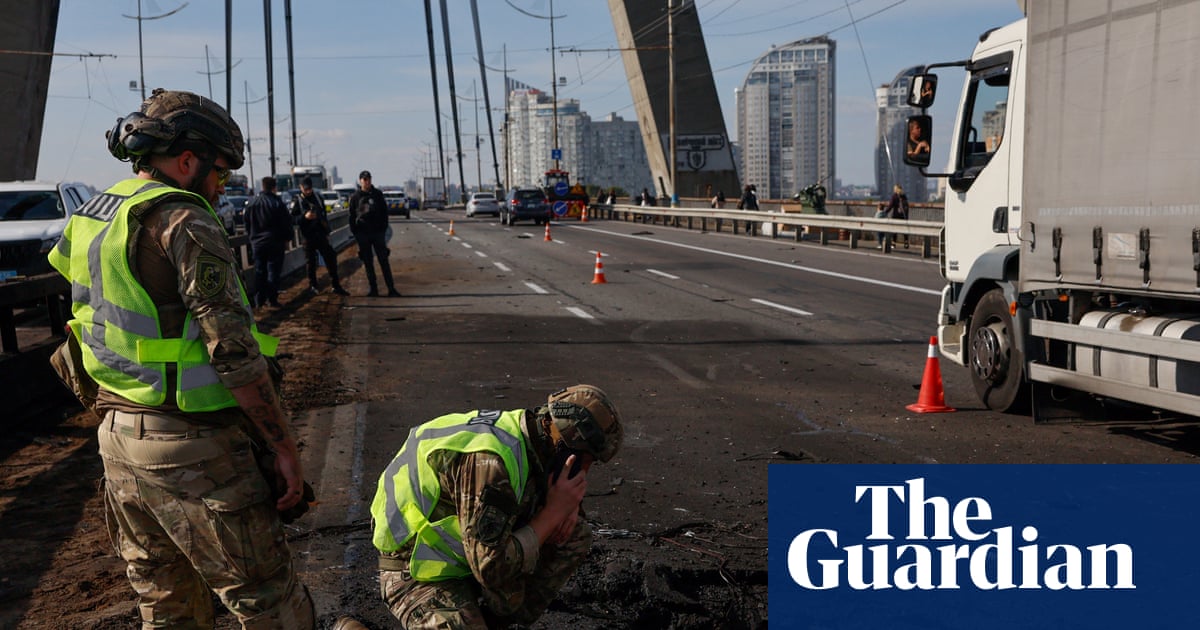
Германы Канцлер Фридрих Мерц Украйнд дэмжлэг үзүүлэхээр хүрэлцэн ирсэн даруйд ОХУ-ын зэвсэгт хүчин Киевийн Днепр мөрөн дээгүүрх гол гүүр рүү агаарын цохилт хийв.
ОХУ-ын тийрэлтэт хөдөлгүүрт дроны довтолгоо Киевийн хойд гүүрийг оносны улмаас хоёр хүн гэмтэж бэртсэн байна. Энэ нь ОХУ-ын зүгээс нийслэлийн хоёр эрэг хоорондын тээврийн гол зангилаа болсон гүүрүүдийг дөрөв дэх өдрөө дараалан онилж буй үйл явдал юм. Дээрх халдлагуудын улмаас Киевийн захиргаа хотын зургаан гүүрний таван гүүрний хөдөлгөөнийг хязгаарлах буюу түр зогсоохоос өөр аргагүйд хүрч, замын хөдөлгөөнд хүндрэл үүсээд байна.
Германы Канцлер Фридрих Мерц тус хотод урьдчилан зарлаагүй айлчлал хийж байгаа нь ОХУ-ын бүрэн хэмжээний түрэмгийлэл эхэлснээс хойшхи хамгийн эгзэгтэй үеүүдийн нэгд Украйныг тууштай дэмжиж буйгаа илэрхийлсэн хэрэг юм. 2025 оны тавдугаар сард албан тушаалдаа орсноос хойш Герман улс Украйны цэргийн тусламжийн гол хангагч болсон бөгөөд АНУ-ын дэмжлэг буурч буй энэ үед Европын холбооны байр суурь улам бүр чухлаар тавигдаж байна.
Украйны Ерөнхийлөгч Володимир Зеленский нийслэл хот нь сүүлийн долоо хоногуудад тасралтгүй халдлагад өртөж, иргэд “хүнд хэцүү өдрүүдийг” туулж байгааг Канцлерт танилцуулав. ОХУ-ын зүгээс дэд бүтэц, тэр дундаа эрчим хүчний системд чиглэсэн ажиллагаагаа өвлийн улирал дөхөж буй энэ үед улам эрчимжүүлж байгаа бөгөөд үүнтэй холбогдуулан ОХУ-ын Гадаад хэргийн яамнаас гадаадын иргэд болон дипломат ажилтнуудыг Украйнаас гарахыг анхааруулсан байна.
Гэвч Герман болон бусад улсын дипломат төлөөлөгчид Киевийн нийслэлд үлдэхээ мэдэгдэж, Канцлер Мерц Украйнд үзүүлэх дэмжлэгээ үргэлжлүүлэхээ илэрхийлсэн юм. Тэрээр “Хэрэв ОХУ-ыг зогсоохгүй бол тэдний дайны машин эрт орой хэзээ нэгэн цагт бидний эсрэг эргэх болно” хэмээн байр сууриа илэрхийлсэн байна. Герман улсын дотоод улс төрийн хувьд Канцлерын энэхүү бодлогыг эсэргүүцэх даралт нэмэгдэж байгаа бөгөөд эрчим хүчний хямрал болон эдийн засгийн асуудлаас шалтгаалан тусламжийг багасгахыг шаардах дуу хоолой цөөнгүй гарч байна.
Дэлгэрэнгүйг эх сурвалжаас харах
↓Эх сурвалжийг нээх ↓
Russia has struck another major bridge in Kyiv as the German chancellor, Friedrich Merz, arrived in the capital in a show of support for Ukraine.
A Russian drone hit Kyiv’s key Northern Bridge over the Dnipro River, marking the fourth consecutive day that Russia has targeted bridges used by thousands of residents commuting between the city’s two banks. Video footage showed cars driving across the bridge as the drone plunged into the roadway and exploded in a burst of fire. Two people were injured in the strike, said Kyiv’s mayor, Vitali Klitschko.
The attack came shortly after Merz arrived in the city on an unannounced visit intended to underline Germany’s backing of Ukraine as the country enters one of the most precarious periods since Russia launched its full-scale invasion in 2022.
Germany has become Ukraine’s biggest provider of military aid since Merz entered office in May 2025, surpassing the US as American support has declined.
Kyiv has come under near-constant attack from Russia’s new jet-powered drones in recent weeks, as an intensifying strike campaign increasingly disrupts everyday life in the capital and threatens to leave the city without power this winter.
The Ukrainian president, Volodymyr Zelenskyy, told Merz that people in Kyiv were suffering “terrible nights and days” from the relentless attacks, and called Ukraine’s Russian adversaries “absolute barbarians”.
“We can see the entire pointlessness of this war at this place,” said Merz, adding as he arrived that Ukraine “needs all our support in the coming weeks”.
“If Russia is not stopped, its war machine will sooner or later turn against us,” he said.
Russia had already damaged Kyiv’s Northern Bridge and repeatedly struck its Southern Bridge. Although the crossings remain standing, repeated attacks and the threat of further strikes have prompted the city’s authorities to restrict or suspend traffic on five of the city’s six road bridges over the Dnipro, causing temporary closures and large traffic jams.
The attacks form part of a broader Russian campaign against civilian and industrial infrastructure inside Ukraine. In recent weeks, strikes have hit logistics hubs, railway lines, datacentres, medical storage facilities and steel plants, alongside a sustained assault on the country’s energy system that is expected to intensify over the winter.
Russia’s foreign ministry on Saturday warned foreign nationals and diplomatic staff against remaining in or travelling to Ukraine.
“Responsibility for any possible adverse consequences lies entirely with those who choose to disregard this warning,” the ministry said.
A number of foreign ambassadors, including Germany’s, responded on social media that they intended to remain in Kyiv.
In Moscow, some pro-war commentators noted with glee that the Russian strikes had continued despite Merz’s arrival. “Russia used to pause strikes on Kyiv during visits by European politicians. Not any more,” wrote Sergei Markov, a prominent pro-war commentator.
The trip is Merz’s second to Ukraine since becoming chancellor. He has been among Kyiv’s most outspoken supporters in Europe and a leading voice warning about Russia’s hybrid campaign against other nations.
Last month, Germany formally accused Moscow of being behind a suspected plot targeting Leipzig/Halle airport, a key logistics hub for western military aid to Ukraine. But Merz is also facing growing discontent at home over his support for Ukraine, as his approval ratings fall.
Germany’s far left and far right are sceptical of support for Ukraine and want Berlin to scale back aid. The pressure has intensified as the far-right Alternative for Germany (AfD) has made big electoral gains.
“Merz is travelling to Ukraine on Germany’s national holiday and promising further billions in German taxpayer money that is missing from the pension and health insurance funds, while Germany is mired in its worst energy crisis,” Alice Weidel, the AfD’s co-leader, wrote in a social media post.

